“S.A.L.A.: Smart Automatic Alert System for Solid Waste Drainage Filters,” a research project presented at the ATU-Net International Conference on Innovation and Entrepreneurship in Computing, Engineering, and Science Education (ATU-Net InvENT 2025) in Cagayan de Oro City in July 2025, introduces a low-cost early-warning device for one of Cotabato City's persistent problems: drainage canals that clog with solid waste and send floodwater into residential streets. The project was developed by Asst. Prof. Always A. Germo of Mindanao State University-Maguindanao (MSU-Maguindanao), carried out through an interschool collaboration that paired the University's own research capacity with partner institutions to design a practical, locally built response to the clogging that routinely afflicts the city's drainage system, particularly the flood-prone barangay of RH 8.
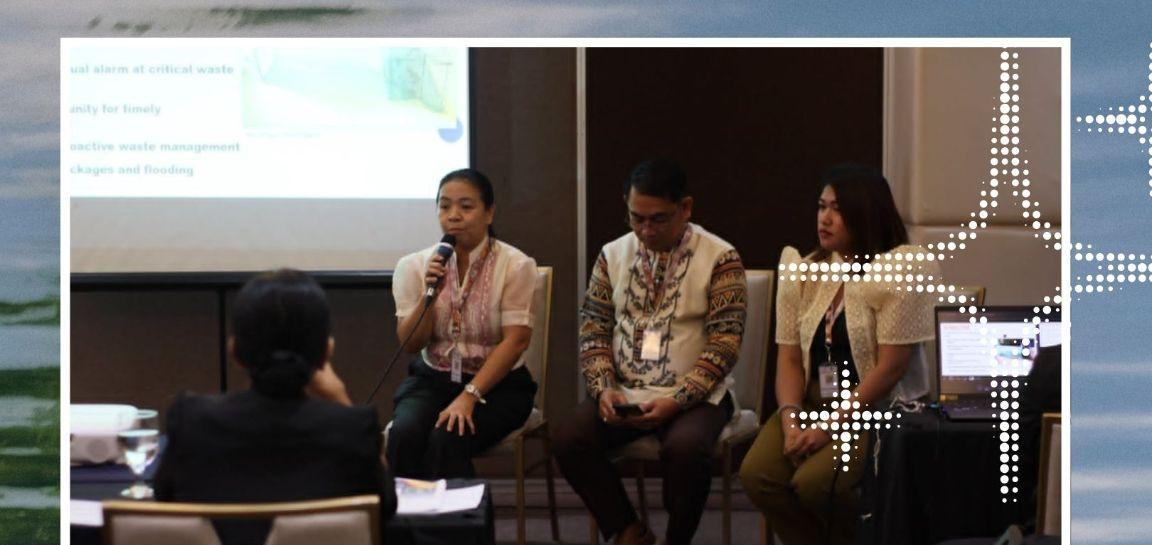
Asst. Prof. Germo (left, with microphone) discussing the S.A.L.A. prototype during the conference's panel session.
Germo's team built a drainage filtration prototype around an Arduino-based capacity sensor, paired with a buzzer and LED indicators that trigger once waste buildup in a filter reaches a critical level, programmed using the Arduino and Processing platforms. Using a descriptive quantitative design built on grand-mean analysis, the researchers field-tested the prototype at RH 8, measuring how far the buzzer's sound and the LED's light could still be reliably detected: the buzzer registered as “highly audible” within 15 meters and remained “moderately audible” at 30 meters, while the LED signal held “very good visibility” out to 21 meters and stayed visible at the full 30-meter test distance. The device was then evaluated on sensing accuracy, buzzer performance, its effectiveness at flagging clogging, accessibility and ease of use, and alarm reliability.
Across every one of those measures, the prototype scored “high functionality,” giving Germo's team evidence that a simple, inexpensive sensor can catch a clogging drainage filter before it fails outright. That early catch is the point: by flagging a blockage before it floods a canal, the device supports cleaner water flow, keeps solid waste from building up unseen in drainage systems, and gives maintenance crews the lead time to clear a filter instead of responding to a flood already underway, work aimed squarely at reducing pollution and improving water quality at the neighborhood level.
Presented under the conference's Sustainable Development theme, the research gave MSU-Maguindanao a venue to share a homegrown engineering solution with an international academic audience and positions the prototype for further testing and possible field deployment. Cotabato City's drainage-dependent barangays stand to gain a low-cost monitoring tool once that next step is taken, and Germo's work adds to MSU-Maguindanao's growing body of practical, locally grounded research on water and sanitation management in BARMM.