Data on the water, fisheries, and livelihoods of 930 residents around Ligawasan Marsh became five policy recommendations that local governments validated in October 2025, as Mindanao State University–Maguindanao gave national and Bangsamoro government direct input into policy development on sustainable development, from identifying problems to monitoring interventions. Its research and extension teams helped the Department of Budget and Management (DBM), the Office of the Presidential Adviser on Peace, Reconciliation and Unity (OPAPRU), BARMM ministries, and local governments identify problems and challenges, develop policies and strategies, and monitor and report on interventions.
Identifying Problems and Challenges
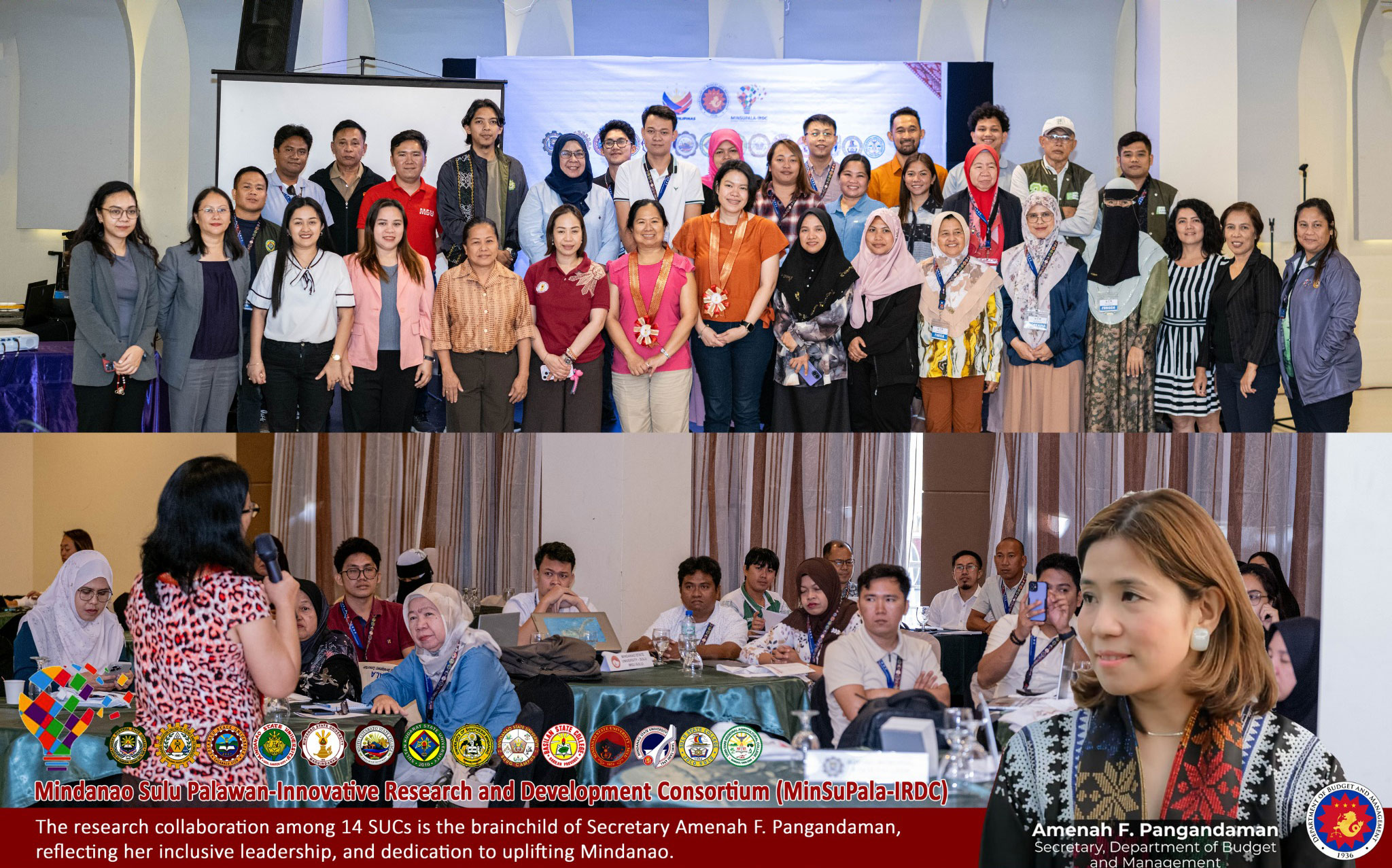
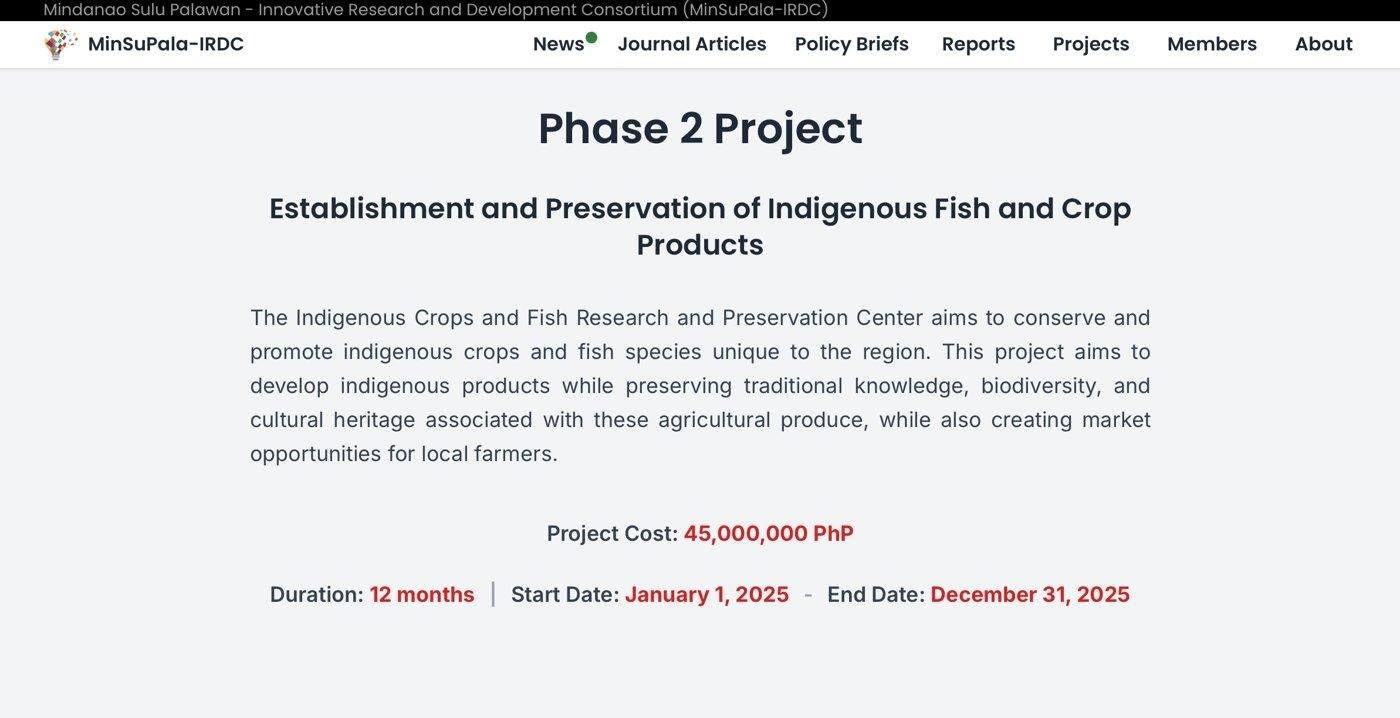
The largest of these efforts runs through the Mindanao–Sulu–Palawan Innovative Research and Development Consortium (MinSuPala–IRDC), a network funded by the Department of Budget and Management (DBM) and led by MSU–Maguindanao. Local governments around the major water bodies of Central Mindanao had little local data on the condition of their rivers, marshes, and fisheries. In the consortium’s first phase, the University’s ₱5,000,000 (about US$87,300) component assessed water quality, inland capture fisheries, watershed conditions, and the livelihoods of 930 residents around Ligawasan Marsh, working with the Ministry of Environment, Natural Resources and Energy (MENRE), the Ministry of Agriculture, Fisheries and Agrarian Reform (MAFAR), and the local governments of Cotabato City, Kabuntalan, Northern Kabuntalan, Talitay, and Datu Piang, and produced five policy recommendations. The University then led Phase 2, “Establishment and Preservation of Indigenous Fish and Crop Products,” carried out by nine member institutions from January to December 2025. DBM funds each phase of the consortium’s work at ₱45,000,000 (about US$786,000), of which the University’s Phase 2 component received ₱10,000,000 (about US$174,700).
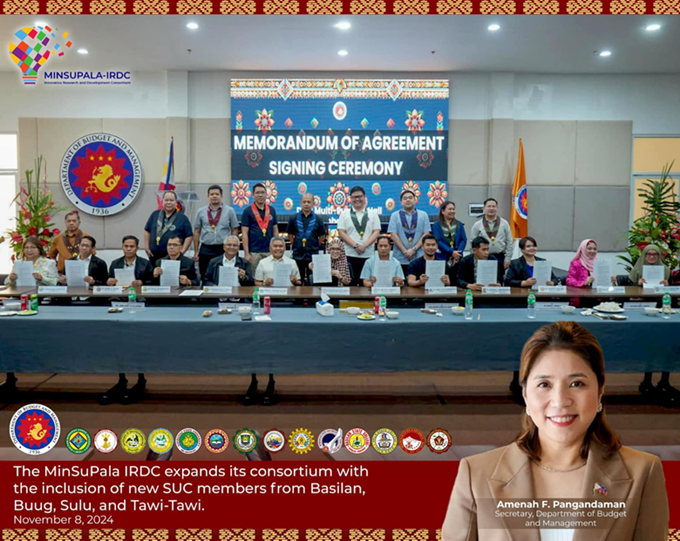
The network itself has grown to reach more of the region. On November 13, 2023, at the Department of Budget and Management Region XI office in Davao City, MSU–Maguindanao and the existing members signed a Memorandum of Agreement admitting state universities and colleges in Sulu, Basilan, and Tawi-Tawi, extending the consortium’s research on the region’s waters and resources to the island provinces. The consortium now has 14 member state universities and colleges.
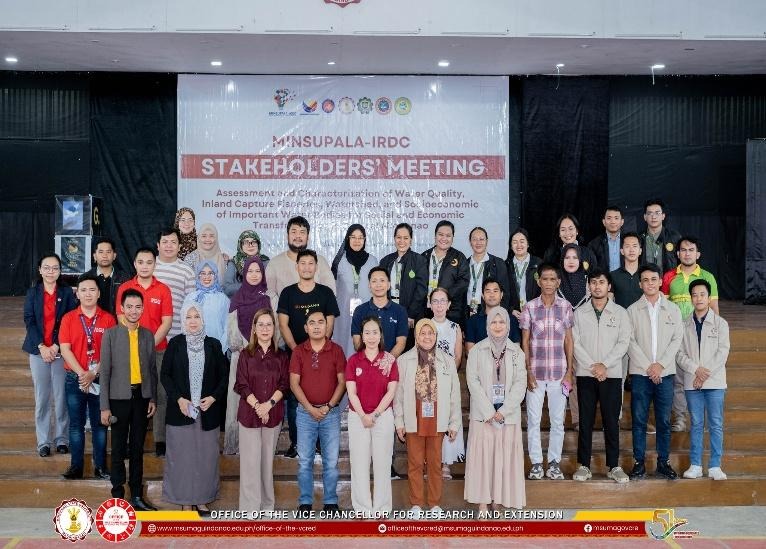
The consortium first tested its findings with the agencies that would use them. On February 27, 2025, MSU–Maguindanao hosted the MinSuPala–IRDC Stakeholders’ Consultation, where research teams from MSU–Maguindanao, the University of Southern Mindanao–Kidapawan City Campus, Cotabato State University, and Adiong Memorial State College presented their assessments of water quality, fisheries, watershed conditions, and socio-economic conditions in Ligawasan Marsh, Lake Buluan, the Rio Grande de Mindanao, and Lake Lanao. Representatives of the Ministry of Agriculture, Fisheries and Agrarian Reform–BARMM, the Bangsamoro Planning and Development Authority, the Department of Science and Technology–PCAARRD, the Provincial Environment, Natural Resources and Energy Office of Maguindanao, environmental organizations, fisherfolk associations, and the local governments of Datu Piang, Talitay, Northern Kabuntalan, Cotabato City, Mangudadatu, and Sultan Kudarat discussed the findings, aligned them with local conservation and resource management plans, and helped shape the policy recommendations for conserving and managing these water bodies.
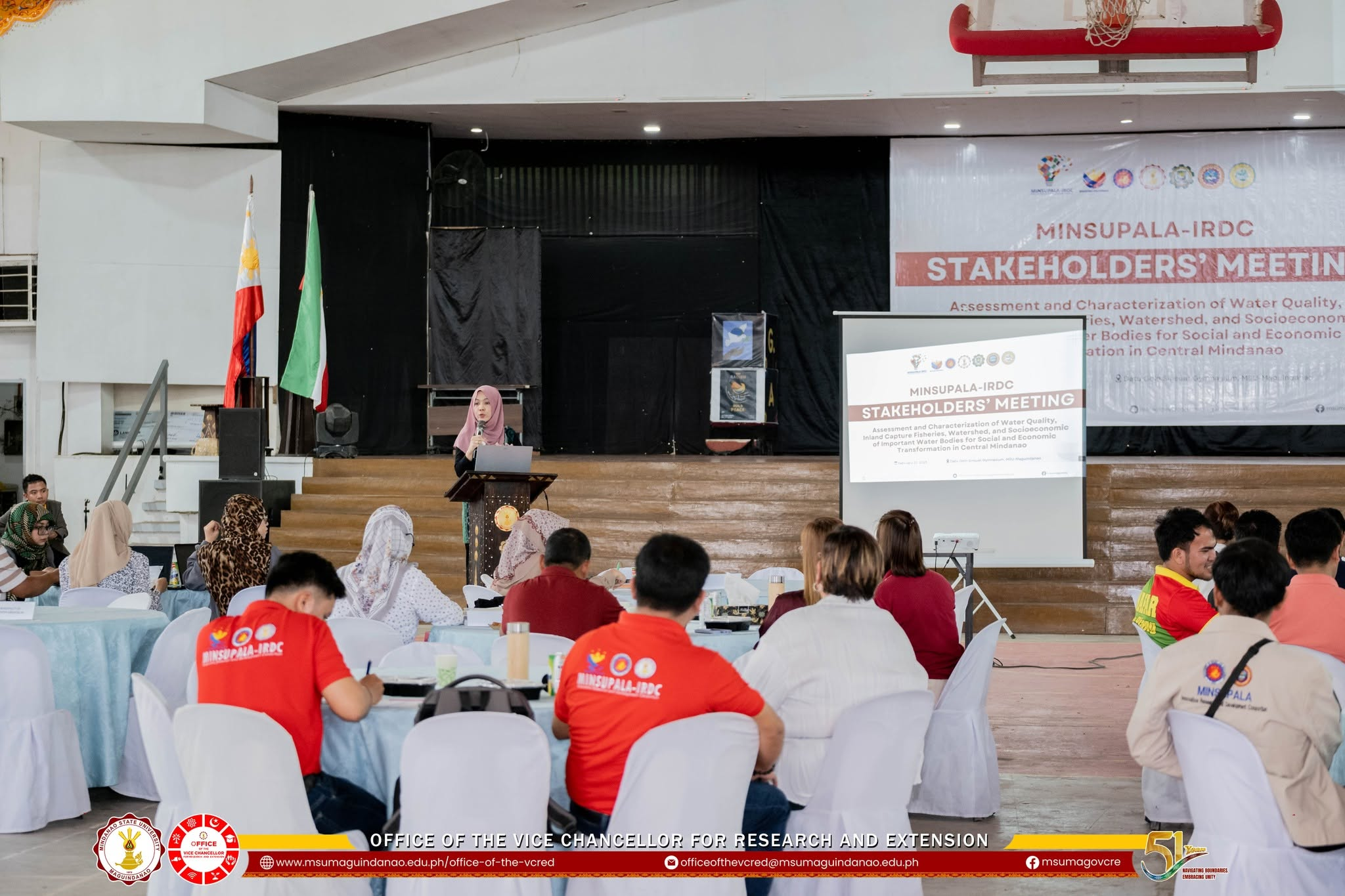
Chancellor Limbona delivers her message to government agencies, local governments, and fisherfolk associations at the Stakeholders’ Consultation, Datu Odin Sinsuat Gymnasium, February 27, 2025.
The University’s Phase 2 team is set out in Special Order No. 234, s. 2025, issued by Chancellor Bai Hejira Nefertiti M. Limbona on September 23, 2025. Dr. Raquel D. Santiago-Arenas serves as Project Coordinator over four projects: Nutritional Analysis, led by Asst. Prof. Always A. Germo; Market Potential and Value Chain Analysis, led by Asst. Prof. Irene S. Aquino; Agronomic Practices Assessment, led by Mr. Dominic B. Masecambo; and Establishment of Demo Farm and Knowledge Materials, led by Mr. John Louie C. Natan. Dr. Joel C. Arenas, Dr. Ramjie Y. Odin, and Engr. Bai Aljannah S. Macalandong served as a consultant.
Developing Policies and Strategies
In July 2025, the Phase 2 team led by Asst. Prof. Irene S. Aquino held coordination meetings with the five local governments and conducted key informant interviews with fisherfolk, farmers, and cooperatives to identify the native crops and fish most worth conserving. In October 2025, a team led by Mr. John Louie C. Natan, Study Leader of Inland Capture Fisheries, with technical support from Ms. Rhea Mae C. Talaron, presented the Phase 1 results and policy recommendations to each local government and its barangays. Cotabato City, under Mayor Mohammad Ali Matabalao, was represented by Agriculture Technologist Ms. Priyanka B. Saji-Sabpeten; Kabuntalan, under Mayor Datu Sharif Diocolano, by Municipal Administrator Mr. Efrel Oric Midtimbang; Datu Piang, under Mayor Victor Samama, by Executive Assistant Ms. Sherriejean S. Ampatuan; Talitay, under Mayor Sidik Amiril, by MAFAR Municipal Officer Mr. Dasib Mendato; and Northern Kabuntalan, under Mayor Datu Umbra Diocolano, by Administrator Mr. Allan Cando. Local officials, barangay representatives, and community members validated the findings and chose gabi (taro) and okra as priority crops, and haluan, native katipa, and popoyu as priority indigenous fish; each local government affirmed its readiness to work with the consortium on Phase 2.
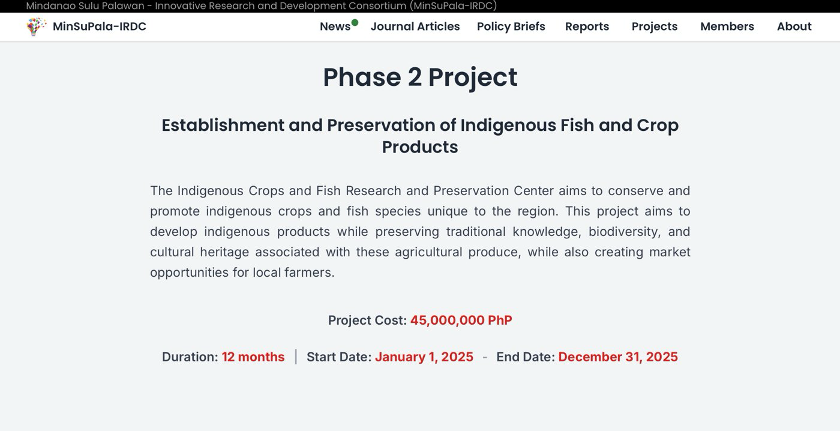
The MinSuPala–IRDC project page documents the DBM-funded work that MSU–Maguindanao leads with five Central Mindanao local governments, 2025
The same steps, from identifying a problem to recommending a policy, guided a second project in the uplands. Funded by the Ministry of Science and Technology–BARMM with ₱1,199,418 (about US$20,950), it ran from June 2024 to July 2025 with MENRE and the LGU of Upi. The College of Forestry and Environmental Studies characterized the South Upi Forest Watershed and assessed its vulnerability to landslides, providing MENRE and the municipality with a watershed vulnerability map and policy recommendations for managing the area.
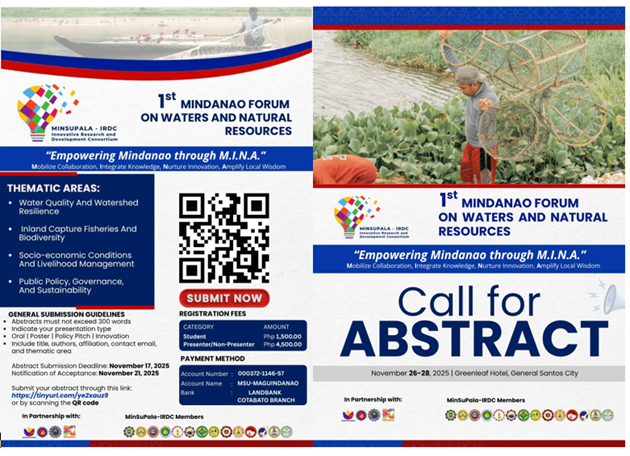
Policy input also runs through national development agencies. On July 30, 2025, Chancellor Limbona, who chairs the consortium, and DBM Region XII Director Akmad J. Usman, its Executive Director, paid a courtesy visit to Secretary Leo Magno of the Mindanao Development Authority (MinDA) and held an exploratory meeting with Executive Director Janet M. Lopoz on working together on a Mindanao Forum on Waters and Natural Resources. MinDA Director III Olie B. Dagala of the Investment Promotions and Public Affairs Office and Chief Public Relations Officer Dr. Adrian Tamayo attended, with Vice Chancellor Raquel D. Santiago-Arenas and Ms. Aljannah Macalandong of the University. The meeting led to the 1st Mindanao Forum on Waters and Natural Resources in General Santos City from November 26 to 28, 2025, where the consortium turned over its Phase 1 reports and published books to Director Usman and DBM XII, moving its research from outputs to policy application.
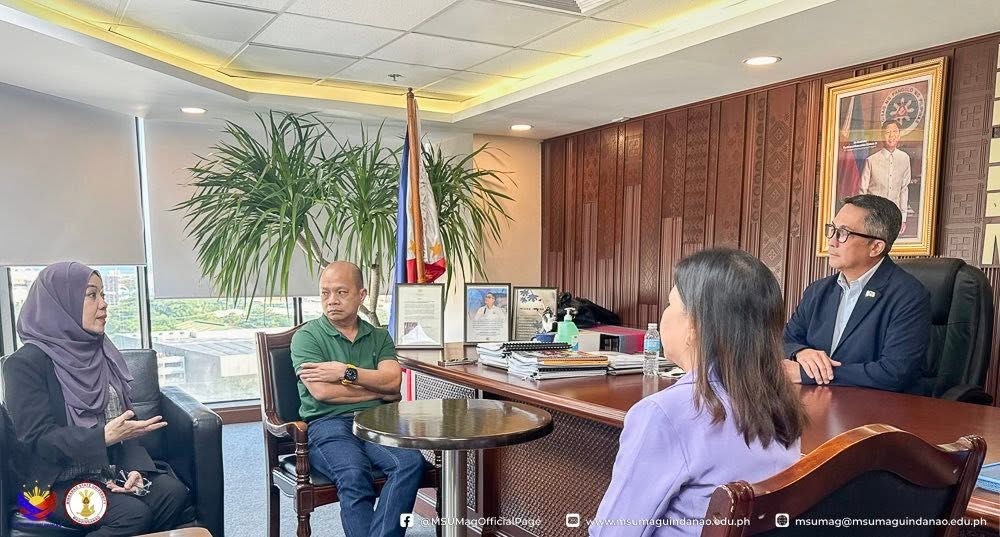
Chancellor Limbona and DBM Region XII Director Akmad J. Usman meet MinDA Secretary Leo Magno and Executive Director Janet M. Lopoz, July 30, 2025
The University also gave the national legislature direct input on peace education policy. On September 16, 2025, Chancellor Limbona, with DWPS Technical Working Group Chairperson Grant Warren Lu and DWPS faculty members Dr. Arceli B. Naraga and Ms. Aljannah Macalandong, submitted the University’s position paper to the House Committee on Higher and Technical Education at its 2nd regular meeting, which deliberated on House Resolution No. 160 commending the MSU Board of Regents and MSU–Maguindanao for pioneering the Diploma in Women, Peace and Security. The position paper presented the program as a model of peace-oriented higher education that other institutions could replicate. Committee Chairperson Rep. Jude Acidre thanked the University for its work in peace education, and Vice Chairperson Rep. Eulogio R. Rodriguez sponsored the resolution for adoption. The resolution remains pending in the House.
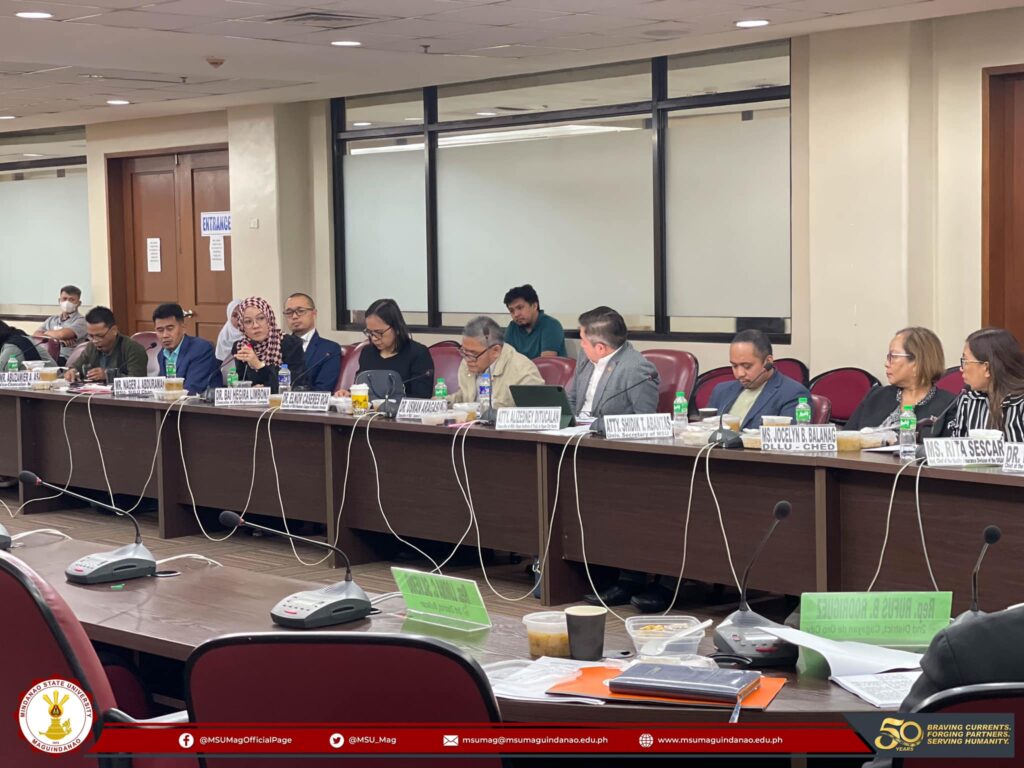
Chancellor Limbona submits the University’s position paper on the Diploma in Women, Peace and Security to the House Committee on Higher and Technical Education, September 16, 2025.
Strategies also depend on the officials who carry them out. On August 12, 2025, at the Institute of Management, Chancellor Limbona and Regis Chapman, Representative and Country Director of the United Nations World Food Programme (WFP), signed a Memorandum of Agreement for a 2025–2027 partnership under which the University contributes experts in food systems, climate adaptation, and gender-responsive programming to help priority barangays prepare Local Climate Change Adaptation Plans and to strengthen farmer cooperatives, while WFP provides technical resources and exchange visits. Under this partnership, in September 2025, University extension staff Sarah Jane Mokamad, Lahmudin Abdulhadi, and Jona Fabay trained 30 MAFAR municipal officers and agricultural extension workers in a WFP-funded Training of Trainers. Each participant drafted a six-month action plan to strengthen farmer cooperatives in their municipality.
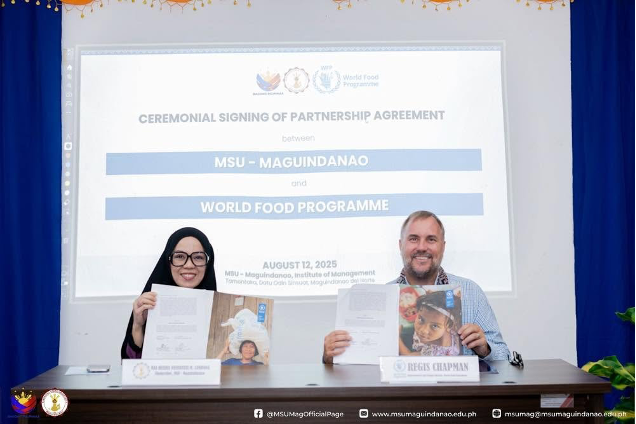
Chancellor Bai Hejira Nefertiti M. Limbona and WFP Country Director Regis Chapman sign the 2025–2027 partnership on food security and climate resilience, Institute of Management, August 12, 2025.
Monitoring and Reporting on Interventions
The Humanitarian and Development Assistance Program (HDAP) was set up in 2016 under the former Autonomous Region in Muslim Mindanao to bring health, education, social welfare, infrastructure, livelihood, and governance projects to war-affected towns, and its unfinished projects passed to the Bangsamoro Planning and Development Authority (BPDA) after the transition to BARMM. College of Public Affairs and Governance faculty Tahir K. Salipada, Sajid P. Abdula, and Datuali Paguital Abdula evaluated the program with Khairon A. Sura of the BPDA. They surveyed 100 beneficiaries, 50 each in Mamasapano and Datu Saudi Ampatuan. They found that the program had an extensive impact on social services, economic services, and peace and governance, but that delivery was delayed by local peace and order conditions (Edelweiss Applied Science and Technology, Vol. 9, No. 6, 2025).
For OPAPRU’s camp transformation program, part of the Normalization Track of the Comprehensive Agreement on the Bangsamoro, the University implemented ₱32.36 million (about US$565,200) in livelihood projects in Camps Badre, Omar, and Abubakar. In 2024, beneficiaries first completed a Values Transformation Training funded by the Bangsamoro Development Agency before their technical training. On June 18, 2025, with OPAPRU, the University turned over the Camp Abubakar projects, including a newly constructed kitchen facility for the Calagan Women’s Marketing Cooperative and the Gawad Kalinga Village Togaig Farmer’s Marketing Cooperative, supporting women-led enterprise and the reintegration of decommissioned combatants. Officials of the Office of the Special Assistant to the President, OPAPRU, and the Philippine Marine Corps, together with the municipal government of Barira and the Camp Abubakar MILF camp coordinators, witnessed the turnover. The community kitchens built in the other camps were completed in 2025 and are scheduled for turnover. After the training, the University holds Kamustahan sessions, follow-up check-ins with the cooperatives, as its mechanism for monitoring the projects, and it reports on them with OPAPRU and the Joint Task Forces on Camps Transformation.
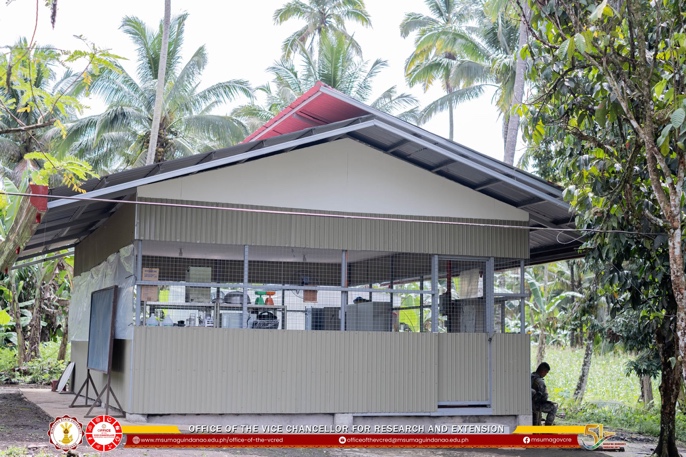
The newly turned over kitchen facility in Camp Abubakar, Barira, Maguindanao del Norte, on June 18, 2025.
From Recommendations to Policy, and What Comes Next
As a result, five local governments now hold validated priorities for conserving their indigenous crops and fish, MENRE has a hazard map for the South Upi watershed, the regional planning authority has field evidence on why its assistance was delayed, and the House Committee on Higher and Technical Education has the University’s position on peace-oriented higher education. The consortium carries this work into Phase 3 in 2026, which will develop and market products from the priority crops and fish. Through its 2025–2027 partnership with WFP, the University will also continue to help priority barangays prepare local climate change adaptation plans, and its Kamustahan sessions will keep track of the camp livelihood projects so that they stay productive for the cooperatives that run them.