Institutional Sustainability Policy and Environmental Protection Framework
Protecting aquatic ecosystems from physical disturbances, chemical contamination, and biological degradation is an important part of the University's commitment to environmental sustainability and responsible natural resource management. Through watershed management planning, water quality research, fisheries assessments, environmental policies, and partnerships with government agencies and local communities, Mindanao State University–Maguindanao (MSU–Maguindanao) undertakes initiatives to identify and address factors that may adversely affect rivers, lakes, marshlands, watersheds, and other aquatic environments. These efforts are reflected in the University's research and development activities and stakeholder engagements conducted in 2025.
The University's sustainability framework provides policy guidance for addressing environmental impacts associated with institutional operations. The Sustainability Policy approved under MSU Board of Regents Resolution No. 358, series of 2023, contains provisions on waste management, water protection, and biodiversity conservation. Under Article VII, Section 1(e) – Waste Management and Recycling, the policy directs the adoption or continued implementation of guidelines for handling electronic waste, chemicals, chemical waste, and biohazardous waste. Section 2(b) – Water calls for regular checking of water sources for heavy metals and other contaminants. In addition, Section 1(b) promotes comprehensive solid waste management, while Section 1(l) requires waste segregation at source. These provisions provide guidance for preventing contamination and reducing the possibility of pollutants entering drainage systems and aquatic environments.
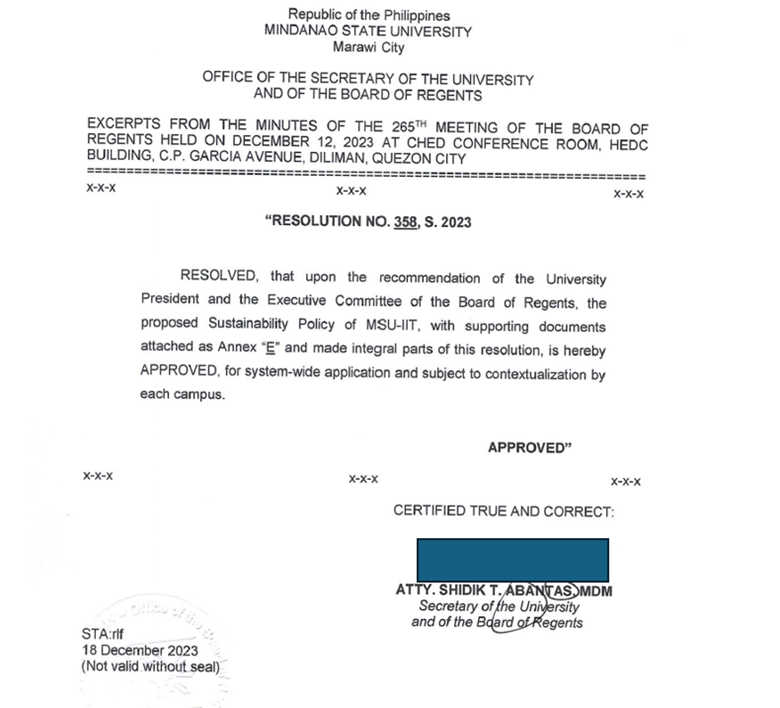
Official MSU System Board of Regents Resolution No. 358, Series of 2023, approving the MSU-IIT Sustainability Policy for system-wide implementation, subject to contextualization by each campus, establishing an institutional framework for strengthening environmental protection, sustainable resource management, and campus-wide sustainability initiatives.
Watershed Protection and Management to Minimize Physical Alterations
A major component of the University's efforts to minimize physical alterations of aquatic ecosystems is watershed protection and the management of environmentally sensitive areas. In 2025, the University implemented the MOST–BARMM-funded research project entitled “Characterization of the South Upi Forest Watershed cum Landslide Vulnerability Assessment: Basis for Enhanced Protection and Management Plan.” The project was monitored by the Ministry of Science and Technology (MOST–BARMM) on February 7, 2025, as part of its oversight of the University's research and development initiatives. The resulting South Upi Forest Watershed Enhanced Protection and Management Plan (2025–2030) provides a management framework addressing watershed conditions, landslide vulnerability, sustainable land use, vegetation protection, erosion control, and community participation. These measures are relevant to minimizing soil erosion, sedimentation, and physical disturbances that may affect downstream water bodies and aquatic habitats.
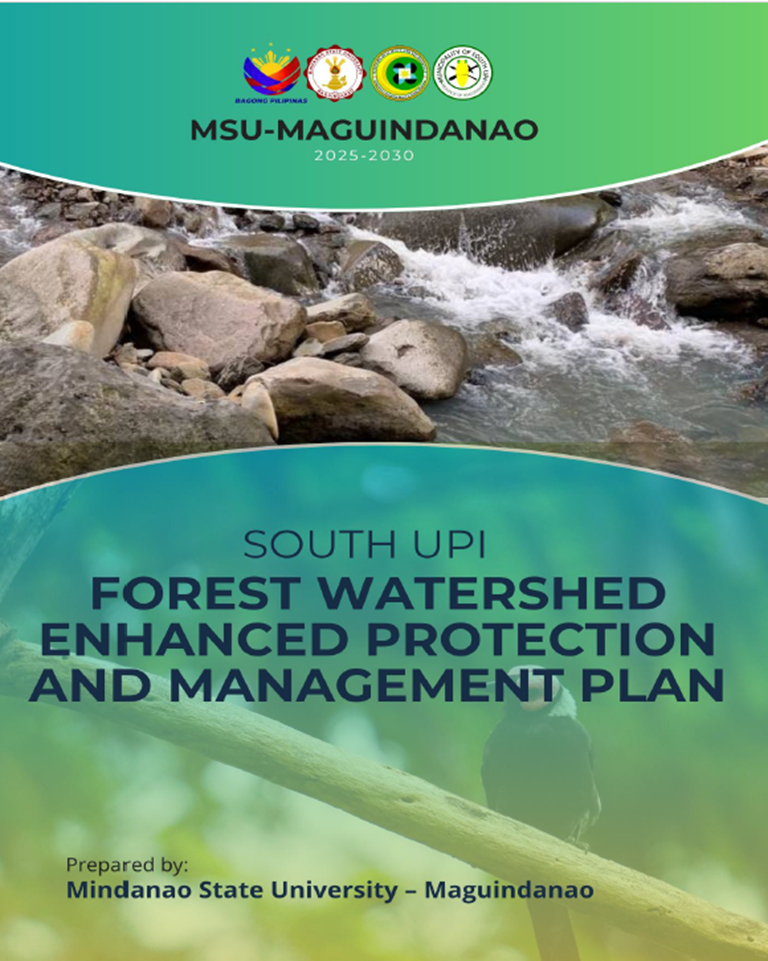
The South Upi Forest Watershed Enhanced Protection and Management Plan (2025–2030), developed through a MOST–BARMM-funded research initiative, provides management recommendations for watershed protection, sustainable land use, and the reduction of environmental risks.
Water Quality Research and Assessment of Chemical Alterations
The University also addresses chemical and physical alterations of aquatic ecosystems through its participation in the Mindanao, Sulu, Palawan–Innovative Research and Development Consortium (MinSuPala-IRDC). Its research initiative, “Assessment and Characterization of Water Quality, Inland Capture Fisheries, Watershed, and Socio-economic Aspects of Important Water Bodies for Social and Economic Transformation in Central Mindanao,” generated scientific information on important aquatic environments, including Ligawasan Marsh, Lake Buluan, the Rio Grande de Mindanao, and Lake Lanao. On February 27, 2025, MSU–Maguindanao hosted the MinSuPala-IRDC Stakeholders' Consultation, where researchers from participating state universities and colleges presented their findings on water quality, inland capture fisheries, watershed conditions, and socioeconomic factors affecting these water bodies. The consultation provided an opportunity for researchers, policymakers, local government representatives, and other stakeholders to discuss environmental concerns and develop research-based recommendations for aquatic resource conservation and management.
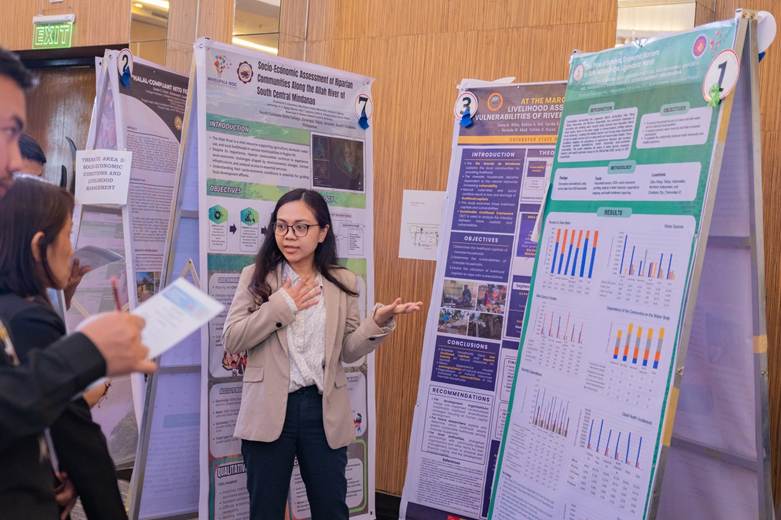
Researchers and stakeholders participate in the MinSuPala-IRDC consultation hosted by MSU–Maguindanao on February 27, 2025, sharing research findings on water quality, inland capture fisheries, watershed conditions, and community livelihoods.
Knowledge Exchange and Collaboration for Aquatic Ecosystem Management
These research efforts were further shared during the 1st Mindanao Forum on Waters and Natural Resources, held on November 26–28, 2025, at Greenleaf Hotel, General Santos City. Through its leadership of MinSuPala-IRDC, the University helped advance regional discussions on water quality, watershed resilience, inland capture fisheries, biodiversity, socioeconomic conditions, and natural resource governance. The forum brought together researchers, government agencies, policymakers, academic institutions, and development partners to exchange scientific findings and discuss approaches to sustainable water and natural resource management. Its research presentations and policy discussions provided opportunities to translate scientific information into recommendations for watershed protection, aquatic biodiversity conservation, and improved management of inland water resources.
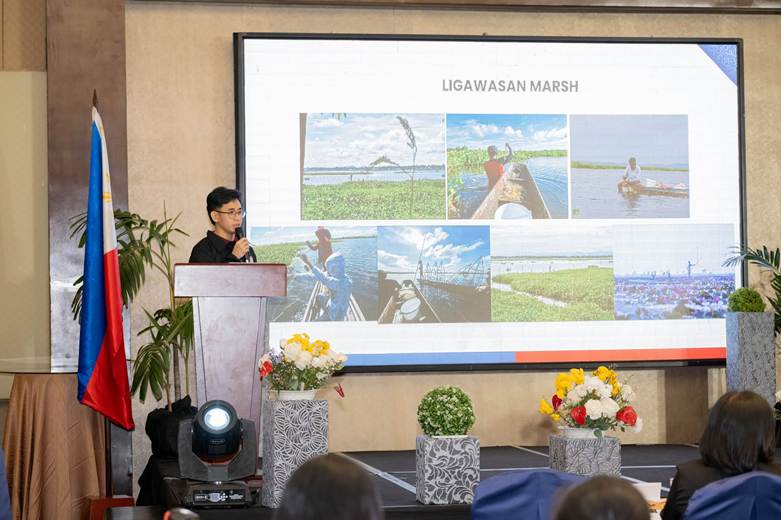
Researcher present scientific findings during the 1st Mindanao Forum on Waters and Natural Resources, covering water quality and watershed resilience, inland capture fisheries and biodiversity, socioeconomic conditions, and public policy and governance.
Fisheries Research and the Conservation of Aquatic Biodiversity
The University's research and development initiatives also contribute to understanding biological changes in aquatic ecosystems. Through its assessment of the Ligawasan Marsh giant freshwater prawn (Macrobrachium rosenbergii) fishery and its research on native catfish (Clarias macrocephalus) seedstock production, the University generates information relevant to aquatic species, fisheries resources, and sustainable production practices. These studies support the development of science-based approaches to managing freshwater fisheries and reducing pressures on naturally occurring aquatic resources. The University's broader inland fisheries research also provides opportunities to assess fish populations, habitat conditions, and the sustainability of fishing and aquaculture activities.
Continuing Institutional Efforts to Minimize Aquatic Ecosystem Alterations
The University's continuing environmental management approach emphasizes watershed protection to minimize erosion and sedimentation, water quality assessment to identify potential contaminants, proper handling and disposal of hazardous and biological waste, responsible wastewater management in research and aquaculture facilities, and research-based approaches to aquatic habitat and biodiversity conservation. Coordination with government agencies, local government units, academic institutions, and community stakeholders further supports the development of appropriate interventions for the protection of aquatic ecosystems.
Through its institutional sustainability framework, the South Upi watershed management initiative, MinSuPala-IRDC research activities, and regional stakeholder engagements, MSU–Maguindanao maintains a continuing approach to identifying and addressing physical, chemical, and biological pressures affecting aquatic ecosystems. These efforts provide a scientific and management basis for protecting water quality, reducing habitat degradation, conserving aquatic biodiversity, and promoting the sustainable management of rivers, lakes, marshlands, and other important water resources.