The University recognizes the importance of protecting water quality and preventing pollution to safeguard aquatic ecosystems, wildlife, and public health. As part of its commitment to environmental sustainability, the University adheres to applicable Philippine laws, regulations, and standards governing water quality management and wastewater discharge, particularly the Philippine Clean Water Act of 2004 (Republic Act No. 9275), DENR Administrative Order No. 2016-08, and DENR Administrative Order No. 2021-19. These regulations provide the water quality guidelines and general effluent standards for protecting receiving water bodies and controlling pollution from wastewater discharges.
The University's Sustainability Policy further supports this commitment through Article VII, Section 2(b) – Water, which directs the University to “Regularly check water sources for heavy metals and other contaminants.” In addition, Article VII, Section 1(e) – Waste Management and Recycling provides for the proper handling and management of chemicals, chemical waste, and biohazardous waste. These provisions establish institutional directions for monitoring water quality and preventing contamination from University activities, including those involving laboratories, research facilities, and other campus operations.
As part of its water quality monitoring and research initiatives, the University conducted physicochemical assessments of selected inland aquatic sampling sites in Talitay, Datu Piang, Northern Kabuntalan, Kabuntalan, Cotabato City, and Sifaran. The assessment covered eight sampling locations and measured four parameters: pH, water temperature, dissolved oxygen (DO), and electrical conductivity (EC). The recorded pH values ranged from 7.51 ± 0.10 to 8.54 ± 0.09, while water temperature ranged from 29.77 ± 0.15°C to 34.20 ± 0.30°C. Dissolved oxygen measurements ranged from 1.07 ± 0.12 to 8.52 ± 0.10 mg/L, and electrical conductivity ranged from 539.33 ± 8.08 to 730.00 ± 7.00 mS/m. These results provide baseline information on the physicochemical conditions of the sampled inland waters and can support the assessment of aquatic environmental conditions and the identification of sites that may require further investigation or monitoring.
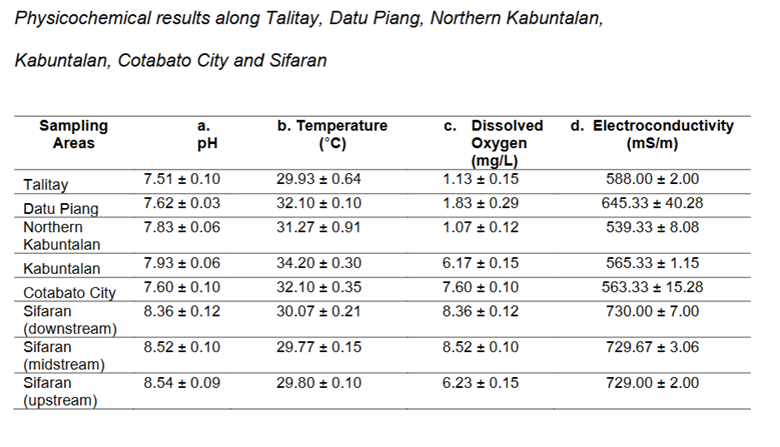
Physicochemical characteristics of water samples collected from selected sites in Talitay, Datu Piang, Northern Kabuntalan, Kabuntalan, Cotabato City, and Sifaran.
The University also recognizes the importance of managing wastewater and potentially hazardous substances generated by its laboratories, hatcheries, aquaculture facilities, canteens, and other campus operations. In this regard, its wastewater management practices are guided by applicable DENR requirements, including the General Effluent Standards under DENR Administrative Order No. 2016-08, as updated by DENR Administrative Order No. 2021-19 for selected parameters. Where applicable, facilities discharging regulated wastewater are subject to the discharge permit, effluent monitoring, and reporting requirements under Republic Act No. 9275. Proper handling and management of wastewater, chemicals, and other potentially harmful substances are important measures for preventing contamination of drainage systems and receiving water bodies.
Through its Sustainability Policy, water quality monitoring activities, and adherence to applicable national environmental regulations, the University maintains an institutional framework for water quality protection, wastewater management, and pollution prevention. The physicochemical assessment results contribute scientific information that can guide further monitoring and management of inland aquatic ecosystems, including rivers, lakes, and marshlands in Central Mindanao. These efforts support the protection of aquatic habitats and wildlife while contributing to the safeguarding of public health and the welfare of surrounding communities.