SDG2
Livelihood Projects Reach 2,075 Beneficiaries in Camps Badre, Omar, and Abubakar as MSU–Maguindanao Extends Outreach Education to the Wider Community
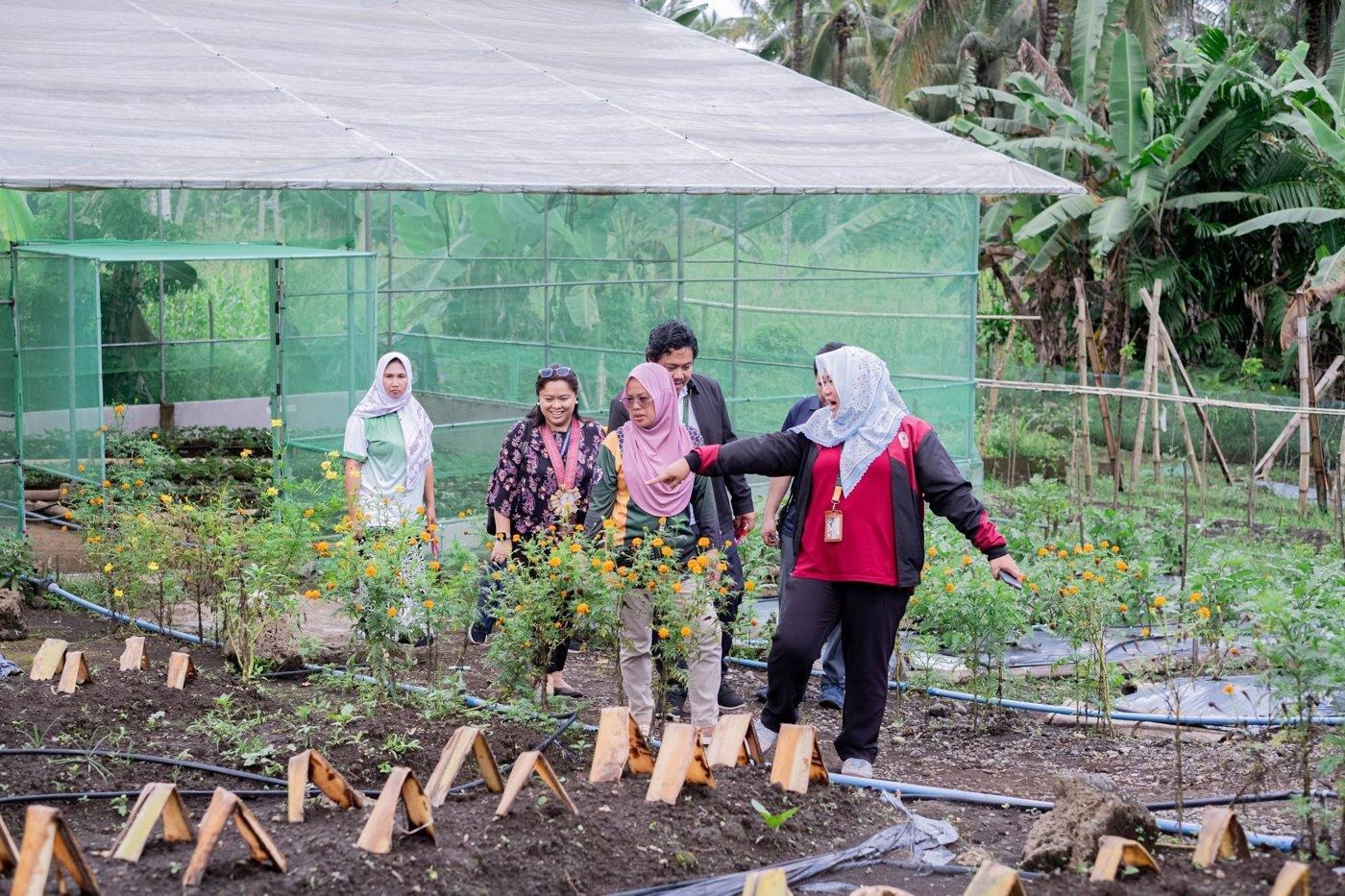
Drip irrigation, halal goat raising, and cooperative management were among the skills taught in Camps Badre, Omar, and Abubakar, where livelihood projects of Mindanao State University–Maguindanao reached 2,075 beneficiaries, part of the University’s dedicated outreach educational activities for the wider community. The University also held voter education sessions in 20 barangays, ran a review program for Grade 12 learners from remote communities, and offered career guidance and a job fair for its alumni.For Local Residents of Camps Badre, Omar, and AbubakarUnder the peace agreement between the government and the Moro Islamic Liberation Front, the camps are being transformed into peaceful and productive civilian communities, and their residents, including former combatants and their families, need skills for new livelihoods. Under the camp transformation program funded by the Office of the Presidential Adviser on Peace, Reconciliation and Unity and coordinated with the Joint Task Forces on Camps Transformation, University teams led by Program Leader Dr. Raquel D. Santiago-Arenas reached 695 beneficiaries in Camp Badre and 720 in Camp Omar (₱10,182,314 each) and 660 in Camp Abubakar (₱12,000,000) from July 2024 to August 2025.In 2024, before any technical training, beneficiaries in the three camps first completed a Values Transformation Training, a ₱7,289,310 (about US$127,300) program funded by the Bangsamoro Development Agency that reached 500 beneficiaries. The technical training then covered drip irrigation, soil analysis, vermiculture and organic fertilizer, halal goat raising, native chicken production, fish farming, food processing, financial literacy, and cooperative management. The projects serve ten cooperatives and community organizations, three of them women’s groups. On June 18, 2025, the University and OPAPRU turned over the Camp Abubakar projects, including a newly constructed kitchen facility for the Calagan Women’s Marketing Cooperative and the Gawad Kalinga Village Togaig Farmer’s Marketing Cooperative, while the community kitchens in the other camps, completed in 2025, are scheduled for turnover. After the training, University teams hold Kamustahan sessions and follow-up check-ins with the cooperatives to monitor how the projects are doing. The projects now benefit 95 cooperative members, and each cooperative earns an average monthly income of ₱18,000 (about US$314). In Camp Abubakar, the new poultry house now yields at least 25 eggs a day. Hadja Farisah M. Abas, president of the Sigay Kutawaton RTW Women’s Marketing Cooperative in Camp Badre, said that income from organic vegetables now helps members cover their daily expenses and their children’s school allowance.The camp cooperatives now run their own farm and food enterprises, and the University plans to strengthen their value chains and markets in the next phases of the program.Cooperative members and University extension personnel inspect the climate-smart vegetable farm set up through the camp transformation program.Hadja Farisah M. Abas, president of the Sigay Kutawaton RTW Women’s Marketing Cooperative, attests to the income members now earn from organic vegetables.For local residents of Maguindanao barangaysAhead of the first Bangsamoro parliamentary elections, 15 Political Science faculty, with 13 BA Political Science students serving as the secretariat, held voter education sessions on September 27, 2025, in 20 barangays of Datu Salibo, Datu Anggal Midtimbang, and Datu Odin Sinsuat, explaining the peace process that created BARMM, the new parliamentary system, and how to vote. From August 23 to September 13, 2025, the University also ran a free SASE Review Program on four Saturdays for Grade 12 learners from disadvantaged and remote communities, covering Mathematics, Science, English, and Aptitude to prepare them for the University’s admission and scholarship examination.MSU–Maguindanao Voter Education Champions and LENTE gather with barangay residents after a Voters’ Education Campaign session on the BARMM parliamentary system, September 27, 2025University reviewers prepare Grade 12 learners from remote communities for the admission and scholarship examination, 2025.For alumniThe University held a one-day Job Fair and Career Guidance on June 13, 2025, at its Datu Odin Sinsuat Gymnasium with the Ministry of Labor and Employment (MOLE) of BARMM, organized through the Division of Student Affairs, for alumni, fresh graduates, graduating students, and other job seekers. The fair answered a persistent gap between finishing a degree and finding work, particularly for graduates from underserved communities who have few chances to meet employers close to home. A career guidance lecture prepared participants to choose career paths and meet employer expectations, and the Philippine Coast Guard, the Lamsan Group of Companies, 3ME Manpower Services, VXI Global Holdings, and SM SaveMore presented their vacancies, explained their qualifications and recruitment procedures, and met applicants on site. More than 200 job seekers took part, 66 of them alumni of the University.Alumni, fresh graduates, and other job seekers register for the Job Fair and Career Guidance with MOLE-BARMM, Datu Odin Sinsuat Gymnasium, June 13, 2025.Graduating students and job-seeking alumni register for the Job Fair and Career Guidance, University Gymnasium, June 13, 2025
October 5, 2025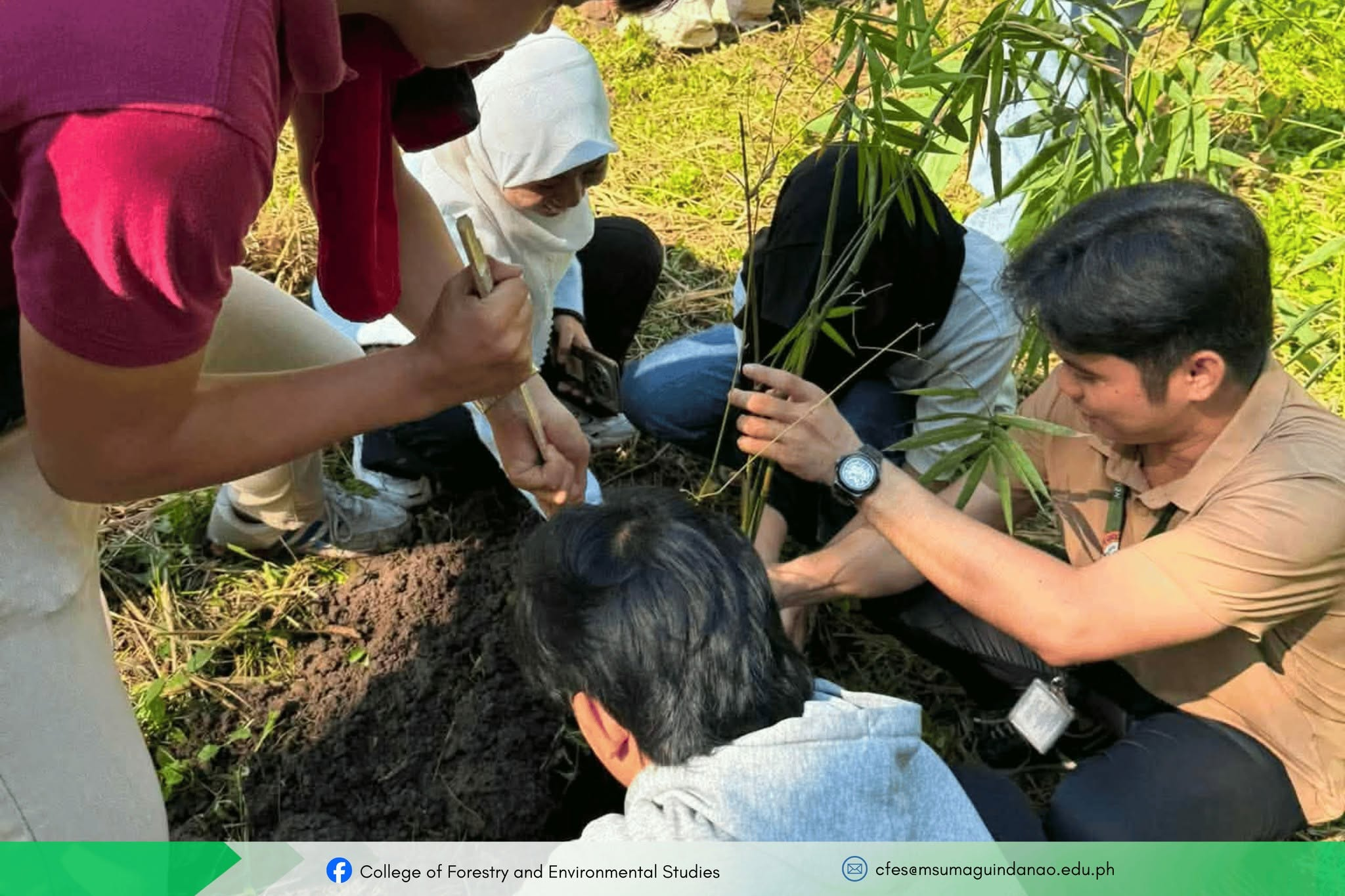
Nearly 500 Graduates Plant Bamboo and Fruit Trees Along Brar Creek in MSU-Maguindanao's Send-Off Tradition
Before they crossed the stage, 498 graduating students of Mindanao State University-Maguindanao (MSU-Maguindanao) spent a morning with their hands in the soil. The College of Forestry and Environmental Studies (CFES) organized a campus-wide tree-planting activity along Brar Creek, turning what has become a graduation tradition into a hands-on lesson in environmental stewardship.MSU-Maguindanao Students Planting TreeStudents from different colleges worked in coordinated groups to plant bamboo, avocado, and lanzones in open and underutilized spaces along the creek. CFES selected the sites and species specifically to stabilize the creek bank, reduce soil erosion, and restore vegetative cover in an area that had been vulnerable to degradation.MSU-Maguindanao Students Planting TreeThe choice of fruit-bearing species was deliberate. Beyond their ecological role, avocado and lanzones trees introduce a future source of food and potential income once mature, extending the initiative’s value well past the planting day itself. In line with the broader push toward zero hunger and sustainable, resilient food production, the initiative pairs tree-based food sources with erosion control and ecosystem restoration along Brar Creek. It likewise reflects the University’s wider commitment to responsible resource use, climate action, and the kind of collective effort that comes from nearly 500 students working toward a shared environmental goal.For the graduating batch, the activity offered something a diploma alone cannot: a direct, physical stake in the campus they are leaving behind. Faculty and CFES personnel benefited as well, applying their technical expertise in site-appropriate species selection while gaining a living site for future research, monitoring, and instruction. The University community as a whole strengthened its capacity to mobilize large groups of students around a shared sustainability goal.The planted trees along Brar Creek are meant to keep working long after Batch 2026 has moved on — stabilizing soil, supporting biodiversity, and eventually bearing fruit. MSU-Maguindanao intends the practice to continue with future graduating batches, building a growing green corridor along the creek and reinforcing a culture of environmental responsibility that graduates carry into their own communities across BARMM.
July 24, 2025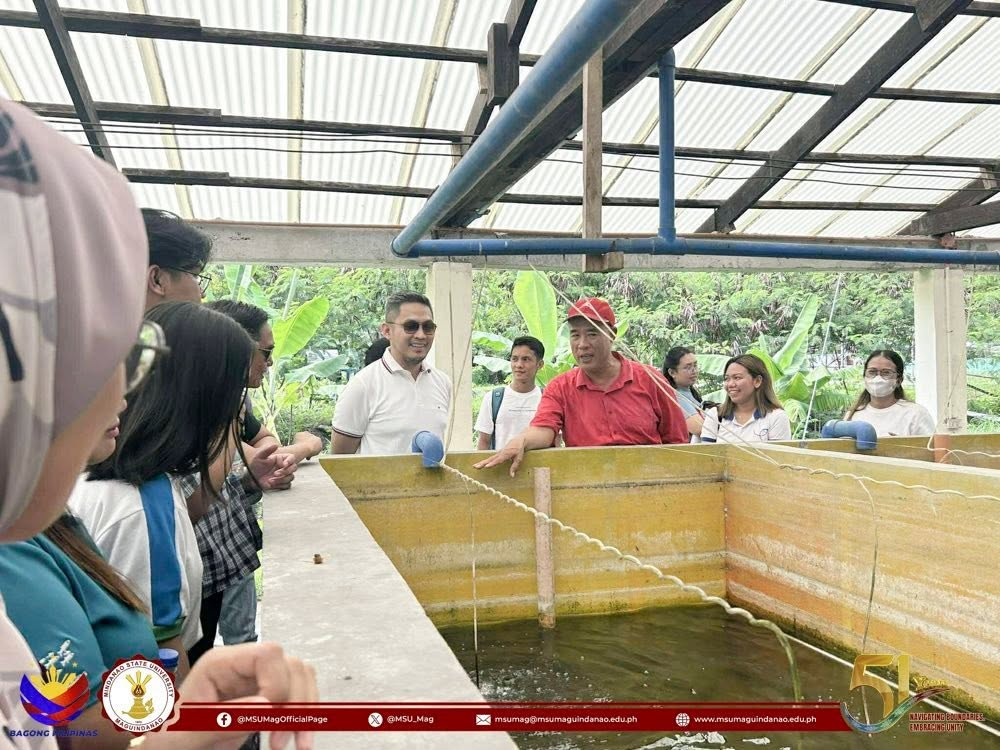
MSU-Maguindanao Leads Five-University Research Push to Strengthen Salt-Tolerant Tilapia Farming
Mindanao State University-Maguindanao (MSU-Maguindanao) joined four partner universities on June 19, 2025, for the Inception Meeting of the National Tilapia R&D Program, Program B, Productivity Enhancement of SPIN Tilapia Culture Systems, a research effort supported by the Department of Science and Technology, Philippine Council for Agriculture, Aquatic and Natural Resources Research and Development (DOST-PCAARRD).Facility VisitationDr. Ramjie Y. Odin, Dean of the College of Fisheries at MSU-Maguindanao, serves as Overall Program Leader for Program B and as Leader of Project 1 on improved hatchery and grow-out systems, coordinating a five-project research network built with Capiz State University, Northern Iloilo State University, Zamboanga State College of Marine Sciences and Technology, and the University of the Philippines.Workshop ParticipantsMore productive and cost-efficient culture systems suited to saline conditions are the program's central goal, aiming to increase the productivity of tilapia farmers and aquaculture communities in salinity-affected waters, contributing to efforts to end hunger and ensure access to sufficient food, while strengthening the resilience of aquatic food production against climate variability.For MSU-Maguindanao, leading a program of this scale reinforces its growing role in national aquaculture research, one the University expects to build on as the five projects generate technologies for fishery agencies and communities across the Philippines.
June 19, 2025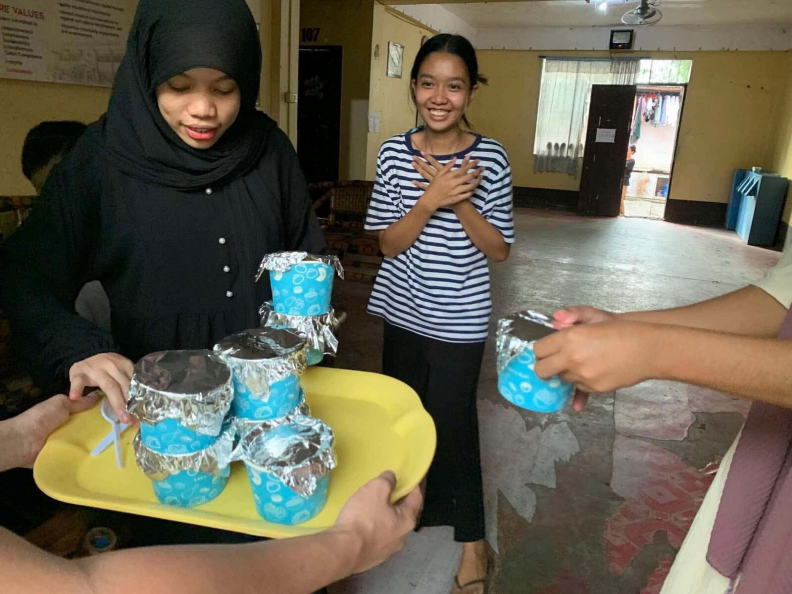
Annual Free Iftar Keeps Fasting Students Fed During Ramadan
For students of Mindanao State University–Maguindanao (MSU–Maguindanao), breaking the fast during Ramadan does not depend on what they can afford. Every Ramadan, the Supreme Student Council (SSC) serves free iftar meals, funded by the University, to students staying at the University dormitory, so that those who stay for late classes, live far from home, or have little money for food can break their fast together on a free meal. The most recent iftar, held on March 14, 2025, served about 50 dormitory students.Students at the University dormitory receive free iftar meals, funded by MSU–Maguindanao, ahead of breaking their fast during Ramadan 2025.Iftar meals and fresh watermelon are portioned for dormitory students on March 14, 2025.This yearly meal support rests on a formal commitment. The University's Sustainability Policy directs it to ensure that "food security and the overall well-being of academics, staff, and students are upheld on the campus" and to provide affordable, healthy, and safe food options in campus canteens (Article VII, Section 7). On ordinary school days, that rule keeps full rice meals affordable for students in the campus canteens.Article VII, Section 7 of the MSU–Maguindanao Sustainability Policy, which commits the University to uphold food security for students, faculty, and staff and to provide affordable, healthy, and safe food options on campus.The same spirit of sharing food reaches beyond campus. On March 22, 2025, the College of Engineering and Computing Sciences held its Annual Free Iftar Program for learners of three Islamic institutions in Datu Anggal Midtimbang, Maguindanao del Sur, with the Society of Agricultural and Biosystems Engineering, the PSABE-PPG Maguindanao Chapter, the CE and IT Departments, the MSU-Maguindanao Faculty Union, and the Engineering and Computing Sciences Student Organization. Together, these efforts help keep safe, nutritious, and sufficient food within reach of students, especially those on the tightest budgets.Each coming Ramadan, the University intends to keep free iftar a fixed part of its support for students.
April 21, 2025