Mindanao State University–Maguindanao adopted its Harmonized Research, Extension, and Development (RED) Agenda for 2025–2030, approved by the MSU Board of Regents through Resolution No. 245, s. 2025, at its 271st meeting on June 10, 2025. The agenda sets the priorities that guide the University’s research and extension for six years. Its stated objective is to generate new knowledge, sharpen the focus on priority research, extension, and development areas, harness emerging technologies, and apply evidence-based strategies that address the needs of communities and promote equitable regional development.
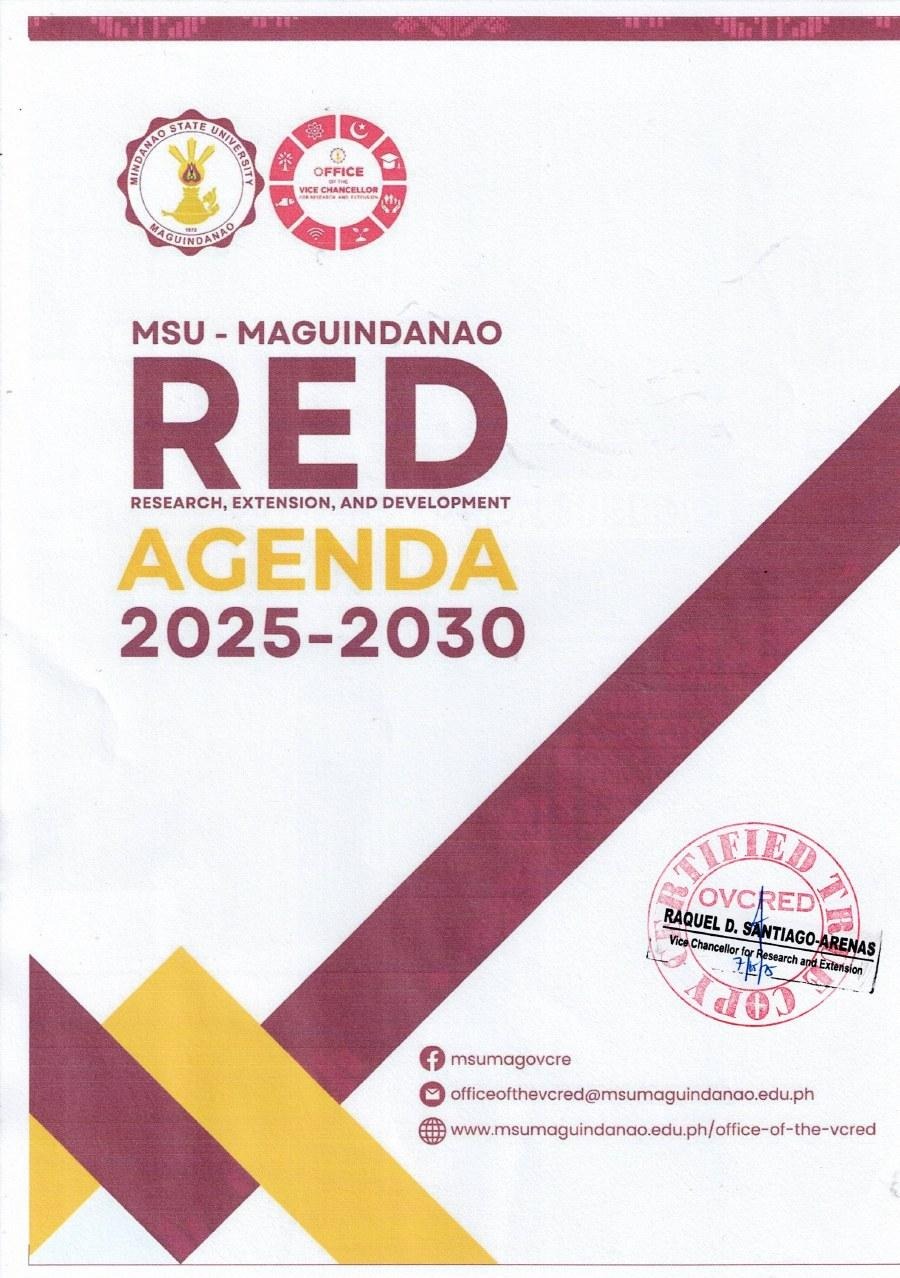
Cover of the MSU–Maguindanao RED Agenda 2025–2030, issued by the Office of the Vice Chancellor for Research and Extension
The agenda covers eight research disciplines, 64 research agenda, and 362 research priorities: Agricultural Innovation and Sustainability; Aquatic Research, Resources, and Livelihoods; the Green Agenda; Governance for Inclusive Nation Building; Health Systems and Services; Inclusive Education for Sustainable Futures; Industry, Energy, and Emerging Technologies; and Women, Peace and Security, Indigenous, and Halal Studies. Each priority is mapped to the United Nations 2030 Agenda for Sustainable Development and to the national 8-Point Socioeconomic Agenda.
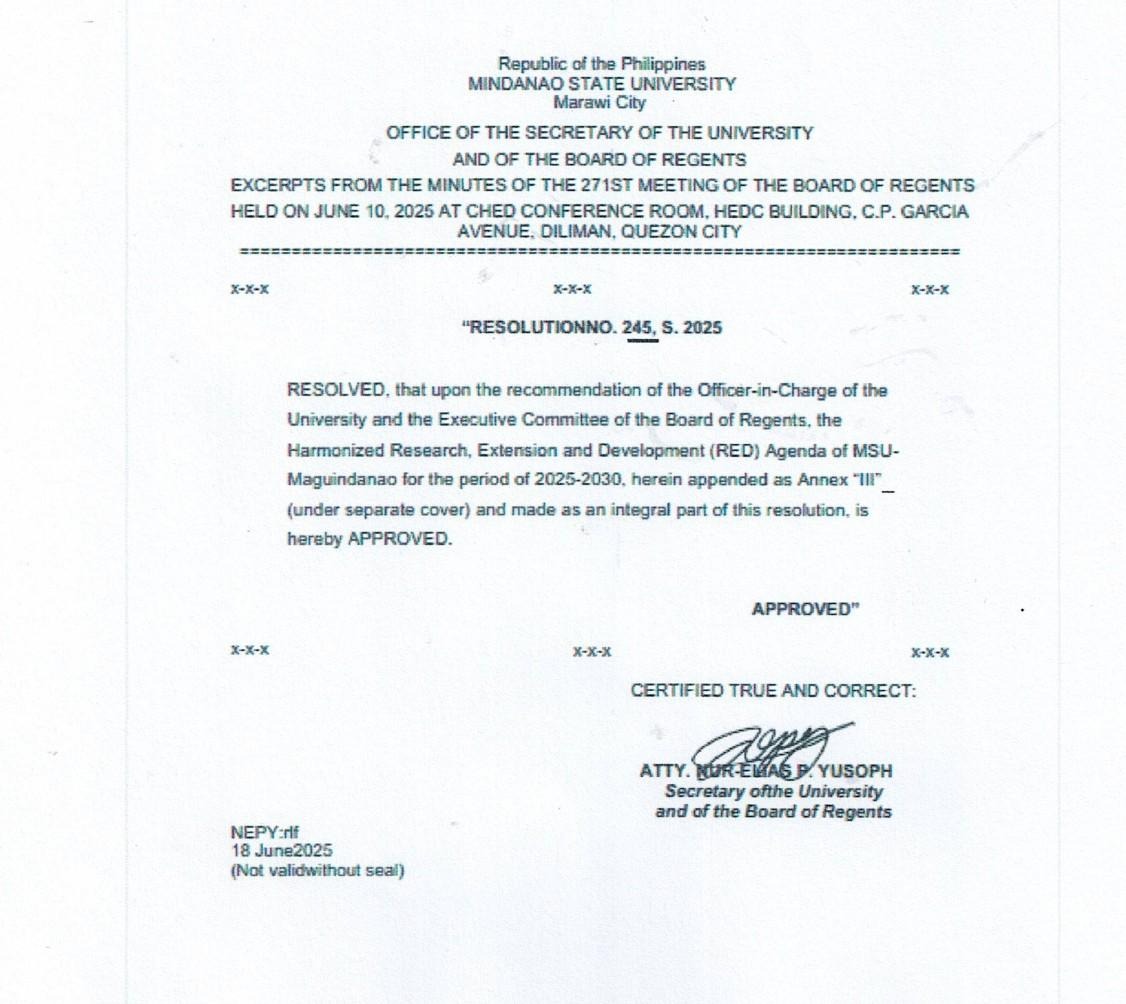
Excerpt from the minutes of the 271st meeting of the MSU Board of Regents, June 10, 2025, approving the Harmonized RED Agenda through Resolution No. 245, s. 2025.
Two of the eight disciplines direct research toward peace, justice, and strong institutions. Governance for Inclusive Nation Building, with 7 research agenda and 36 priorities, covers human security, the delivery of social services in BARMM, policy research, and the role of women and youth in governance, including youth political engagement in the BARMM parliamentary process, the participation of women and youth in barangay governance and local development planning, and the role of women and youth in implementing the Bangsamoro Organic Law. Women, Peace and Security, Indigenous, and Halal Studies, with 7 research agenda and 60 priorities, covers community-based peacebuilding, the effectiveness of existing peacebuilding initiatives, conflict resolution drawing on Islamic traditions and Indigenous mechanisms, BARMM security, ancestral domain conflicts, and women’s roles as peacebuilders. Across all disciplines, 32 research priorities are aligned with peace, justice, and strong institutions.
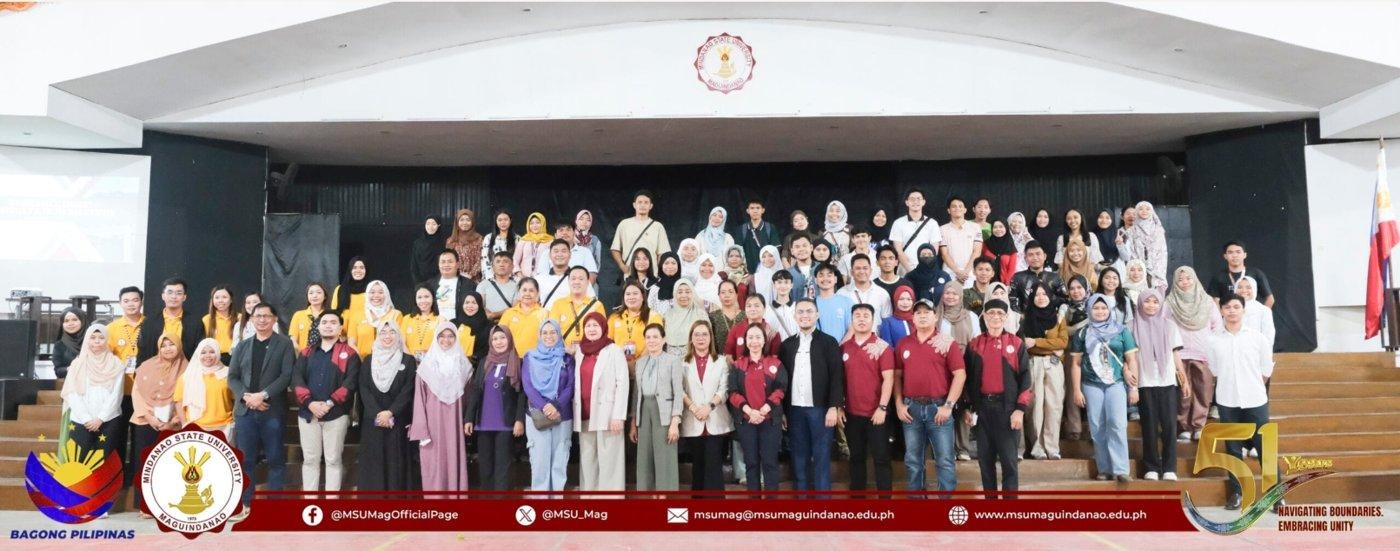
The agenda was developed through consultation. The seven colleges identified their research and extension priorities during the Core Values Revisit and RED Agenda Revision workshop in Kitaotao, Bukidnon, August 8–10, 2024, attended by the Chancellor, Vice Chancellors, deans, directors, heads of offices, and student representatives. The draft was presented to parents, alumni, students, and representatives of the Ministry of Public Works, the Ministry of Health, the Integrated Provincial Health Office of Maguindanao, and the Rural Health Unit of Datu Odin Sinsuat at the Stakeholders’ Consultation Meeting on February 28, 2025, and refined by the Research and Extension Committee on May 8, 2025, before its submission to the Board of Regents.
The Office of the Vice Chancellor for Research and Extension and the Research and Extension Committee coordinate implementation, and research and extension proposals are expected to align with the agenda’s priorities.
By committing the University’s research to human security, inclusive governance, and peacebuilding, and by setting these priorities through consultation with communities and government agencies, the agenda supports evidence-based policy for effective, accountable, and inclusive institutions and contributes to reducing violence and sustaining peace in the Bangsamoro.
Mindanao State University–Maguindanao will use the agenda to guide research and extension funding through 2030, report on the projects carried out under it, and review its priorities as the needs of the region change.