In 2025, Mindanao State University–Maguindanao (MSU–Maguindanao) collaborated with international development organizations, non-governmental institutions, and academic partners to tackle the Sustainable Development Goals (SDGs) through inclusive education, peacebuilding, technical capacity development, food security, and climate resilience. These institutional engagements brought together academic expertise, development resources, and community-based approaches to address sustainable development challenges in the Bangsamoro Autonomous Region in Muslim Mindanao (BARMM).
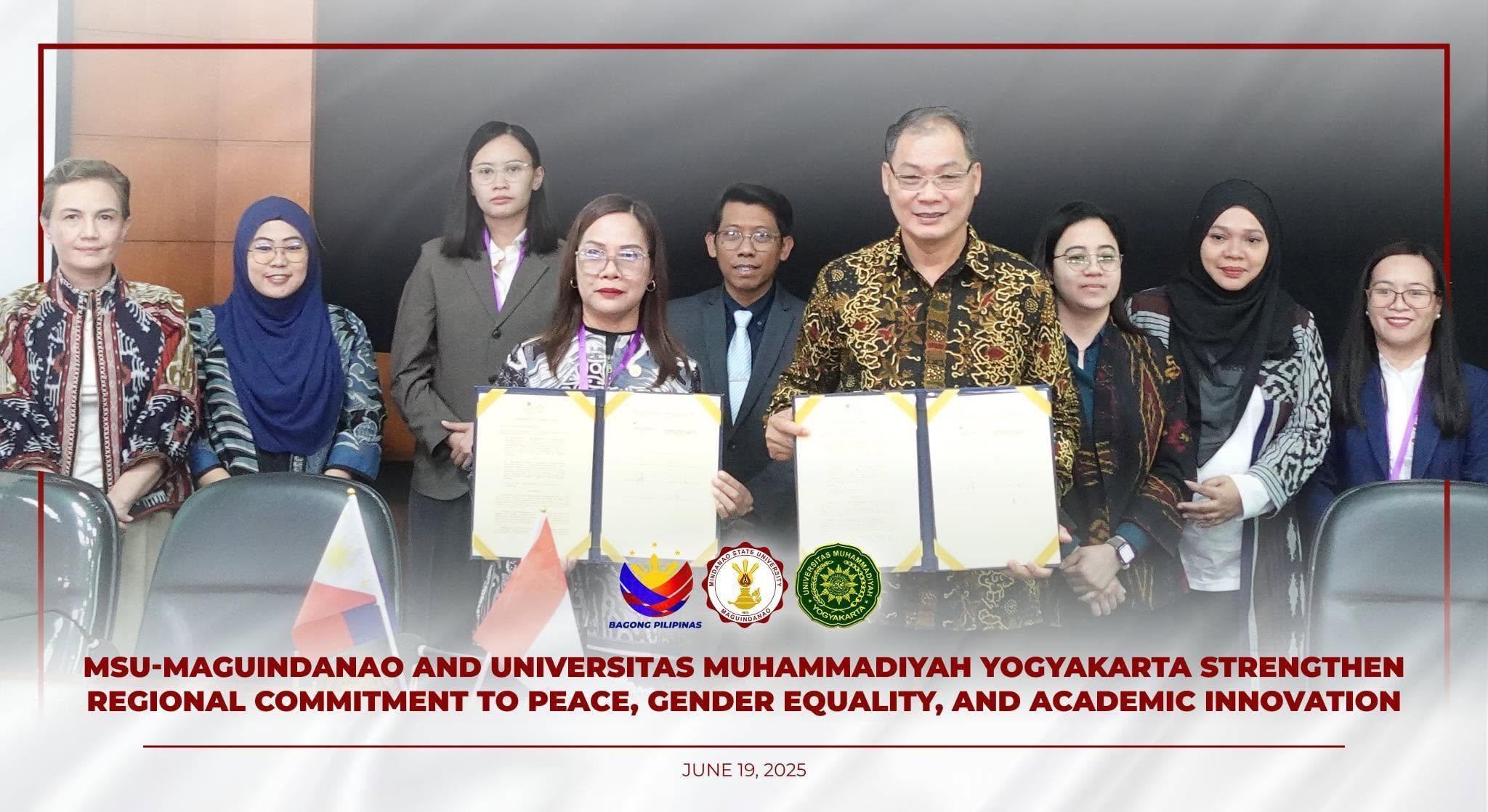
Through its collaboration with the United Nations Development Programme (UNDP) Philippines, supported by the British Embassy Manila and the Philippine Center for Islam and Democracy, the University participated in the International Learning Exchange on Women, Peace and Security held in Yogyakarta, Indonesia, on June 18–20, 2025. The initiative supported the University's Diploma in Women, Peace and Security through international knowledge sharing, institutional visits, and policy dialogues. It also facilitated academic agreements with three Indonesian universities, promoting women's leadership, gender-responsive education, inclusive participation in peacebuilding, and international cooperation for sustainable development.
The University also entered into a Memorandum of Agreement with the Asian Center of Education, Research and Tutelage for Innovation (ACERT) and MSU–Tawi-Tawi College of Technology and Oceanography, announced on January 24, 2025, to develop an Indigenous Peoples Education Framework for BARMM. This collaboration established a foundation for advancing culturally responsive education, inclusive learning opportunities, recognition of Indigenous knowledge, and educational equity through partnerships between academic institutions and nongovernmental organizations.
In engineering and technological education, MSU–Maguindanao engaged with Zuitt Learning Institute, Inc. through a consultative meeting reported on October 30, 2025. The engagement explored integrating applied technical training and industry-oriented learning into engineering laboratory courses. It aimed to strengthen technical and vocational skills, improve education-to-employment pathways, and support technological innovation and capacity development in BARMM.
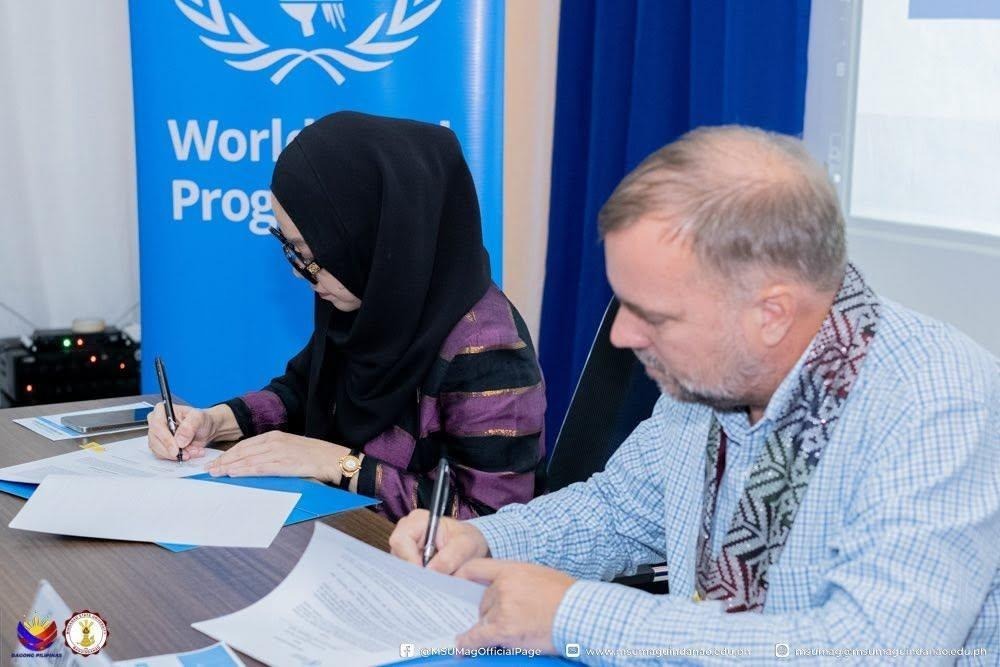
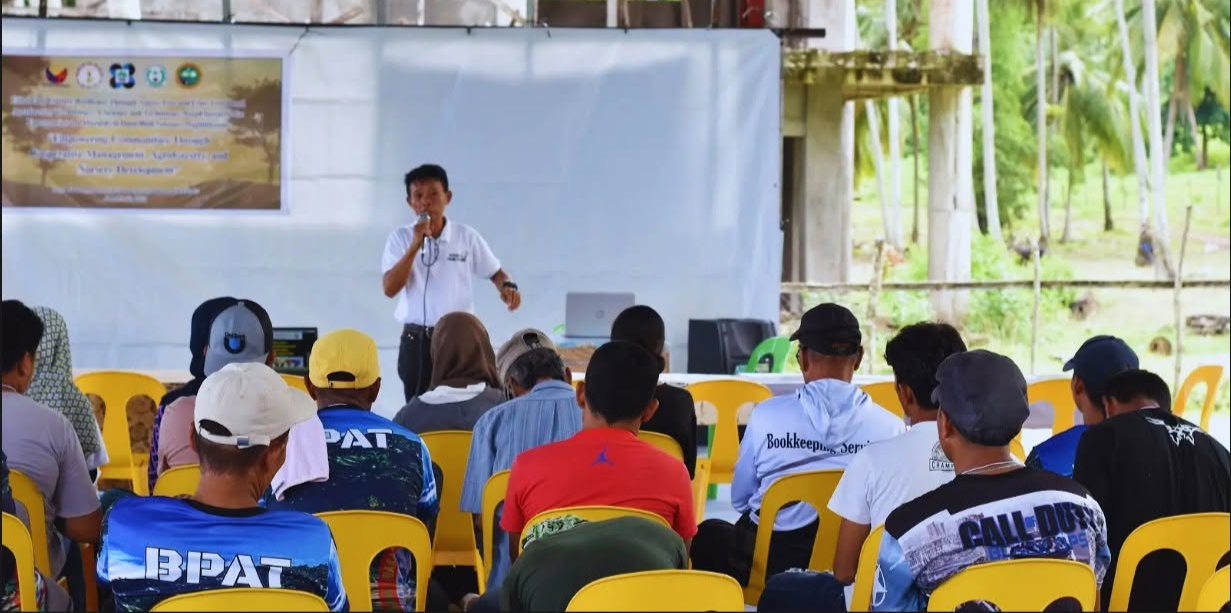
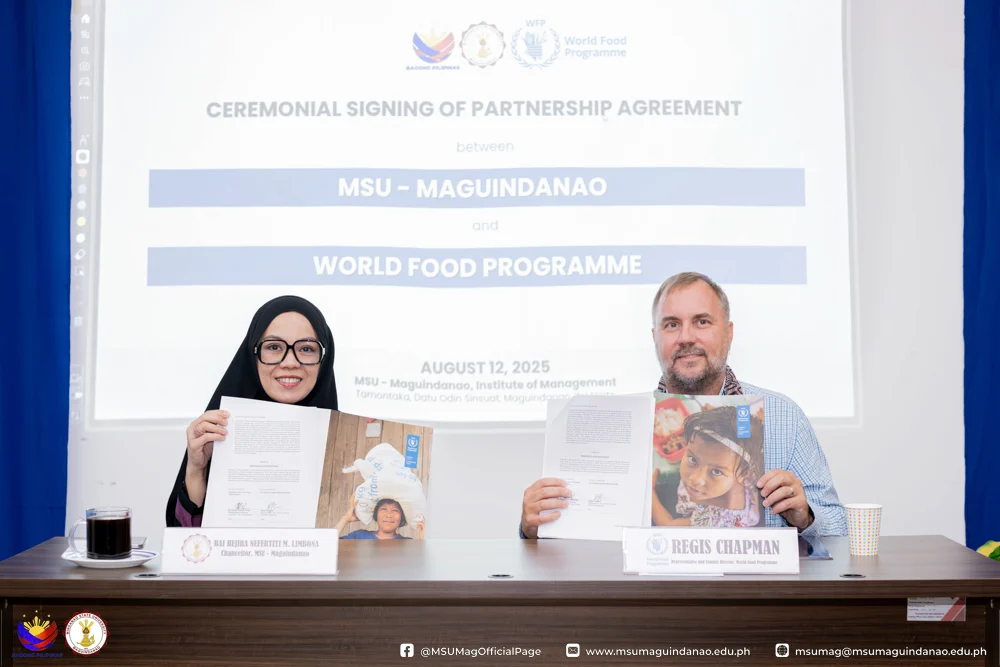
On August 12, 2025, the University formalized its partnership with the United Nations World Food Programme (WFP) through a Memorandum of Agreement focused on food security, nutrition, and climate resilience. The accompanying 2025–2027 cooperation work plan identified collaborative initiatives in smallholder farmer capacity-building, climate-smart agriculture, local climate change adaptation planning, watershed management, post-harvest loss reduction, and sustainable agricultural livelihoods. By combining research and extension expertise with international development cooperation, the partnership established a framework for addressing hunger, strengthening community resilience, and promoting sustainable food systems.
These collaborations reflect MSU–Maguindanao's institutional commitment to sharing knowledge, expertise, technology, and resources through international cooperation, capacity-building, and multi-stakeholder partnerships. By connecting academic instruction, research, and community engagement with local and international development priorities, the University supports inclusive education, gender equality, peaceful and inclusive societies, sustainable agriculture, climate adaptation, and equitable socioeconomic development.
MSU–Maguindanao will continue expanding partnerships with nongovernmental organizations, international development institutions, and academic networks to mobilize knowledge and resources, enhance capacity-building, and support the implementation of the Sustainable Development Goals through measurable, community-responsive initiatives that contribute to a more inclusive, resilient, and sustainable Bangsamoro.