Mindanao State University-Maguindanao (MSUMag), through its College of Forestry and Environmental Studies (CFES), participated in the BARMM Multi-Stakeholders Simultaneous Mangrove Planting - Year Two on July 26, 2026, in celebration of World Mangrove Day. Implemented by Kutawato Greenland Initiatives, Inc. (KGI) with support from the Ministry of Environment, Natural Resources, and Energy (MENRE), the activity aimed to restore mangrove ecosystems and strengthen coastal resilience in a region where communities are exposed to climate-related hazards such as storm surges, flooding, and erosion. The planting was held simultaneously across five coastal sites in Cotabato City, Tawi-Tawi, Basilan, and Maguindanao del Norte, where 1,674 volunteers planted 13,785 mangrove propagules and seedlings.
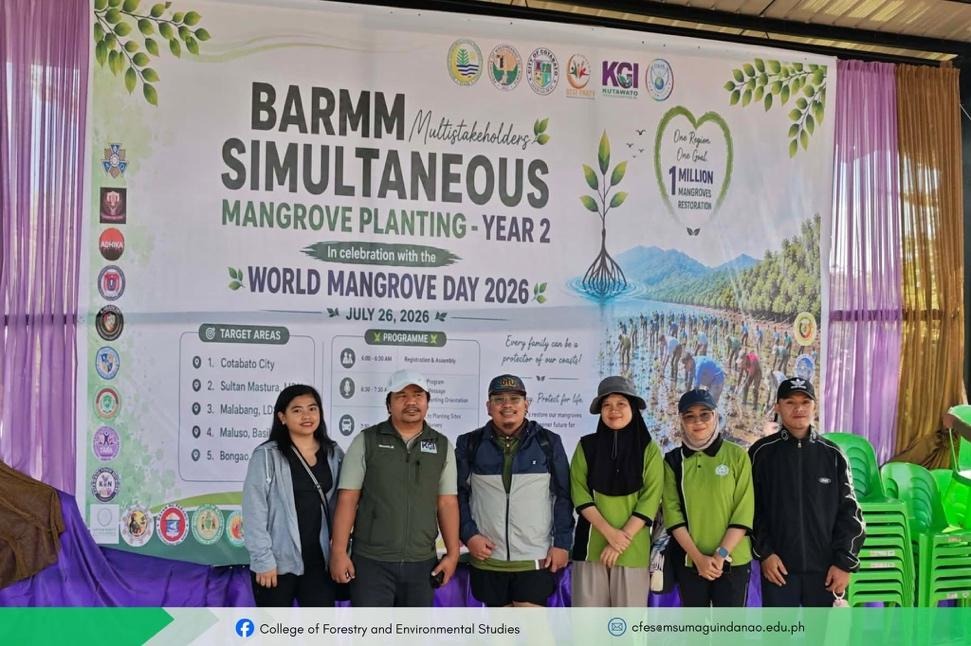
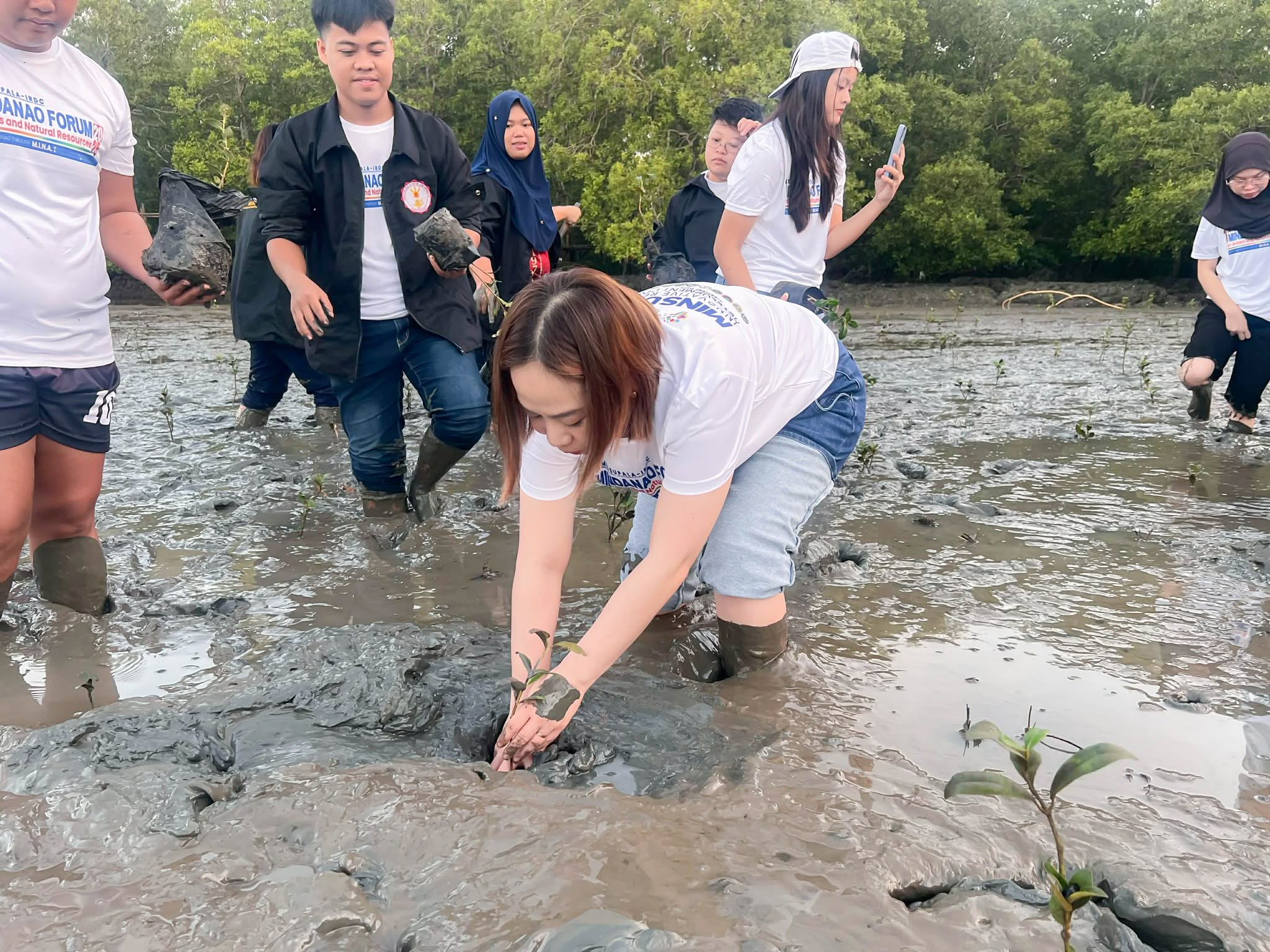
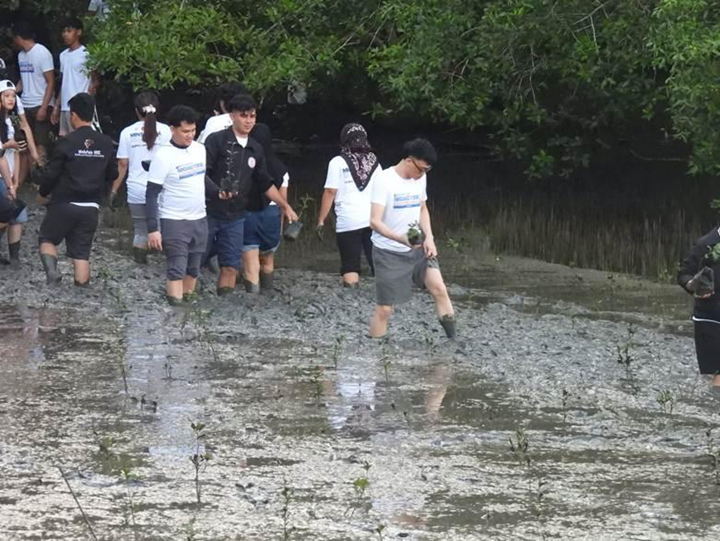
CFES participants planting mangroves, with the University’s prescribed watermark. Suggested caption: “MSU-Maguindanao CFES volunteers during the BARMM Multi-Stakeholders Simultaneous Mangrove Planting - Year Two.
Participants came from government agencies, local government units, academic institutions, civil society organizations, youth groups, law-enforcement agencies, and community volunteers, showing a strong multi-sector partnership for regional conservation. The primary beneficiaries are the mangrove ecosystems and the coastal communities near the planting sites, which stand to gain from restored natural coastal protection, while the volunteers and partner institutions, including MSUMag, are secondary beneficiaries who contributed to collective environmental action.
The initiative supports SDG 13: Climate Action by helping coastal communities build resilience against climate-related hazards. Its main contribution is environmental: mangroves act as natural coastal defenses, so restoring them is a form of ecosystem-based adaptation that also supports biodiversity and coastal ecosystem health. It also contributes socially by engaging students, youth, government, and community members in hands-on climate action and building a shared sense of responsibility for coastal protection. Continued monitoring and protection will be essential to ensure the survival and long-term benefits of the planted seedlings. Through its participation, MSU-Maguindanao strengthens its role in regional environmental partnerships and community-based climate action beyond the University campus.