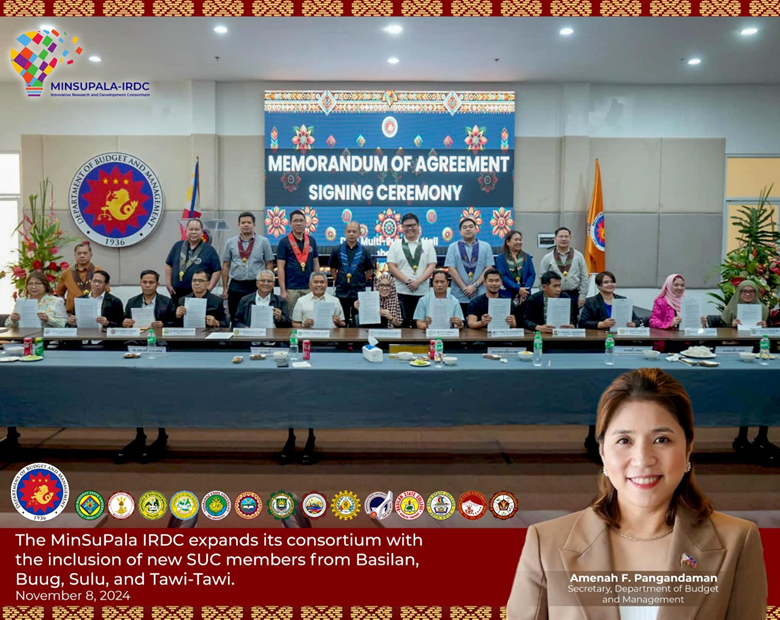
Scientific research, policy discussions, and collaboration among academic institutions, government agencies, and communities play an important role in protecting aquatic ecosystems and ensuring the sustainable use of fisheries and water resources. Through its leadership of the Mindanao, Sulu, Palawan–Innovative Research and Development Consortium (MinSuPala-IRDC) and its participation in national fisheries initiatives, Mindanao State University–Maguindanao supported and helped organize events that promoted the conservation and sustainable management of lakes, rivers, marshlands, inland fisheries, and marine resources. These activities provided platforms for presenting scientific findings, discussing environmental and fisheries concerns, and developing collaborative approaches to aquatic resource management.
1st Mindanao Forum on Waters and Natural Resources
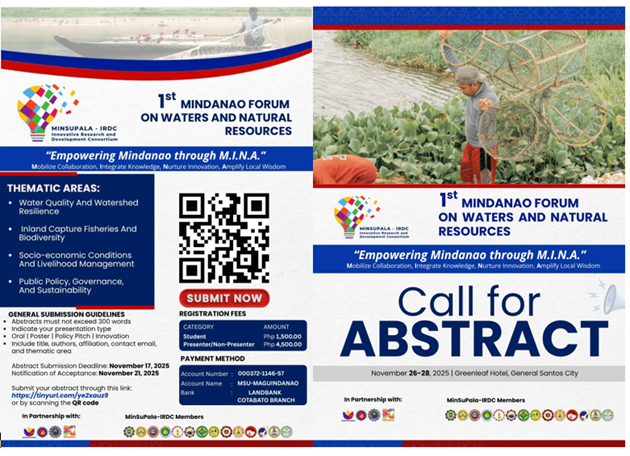
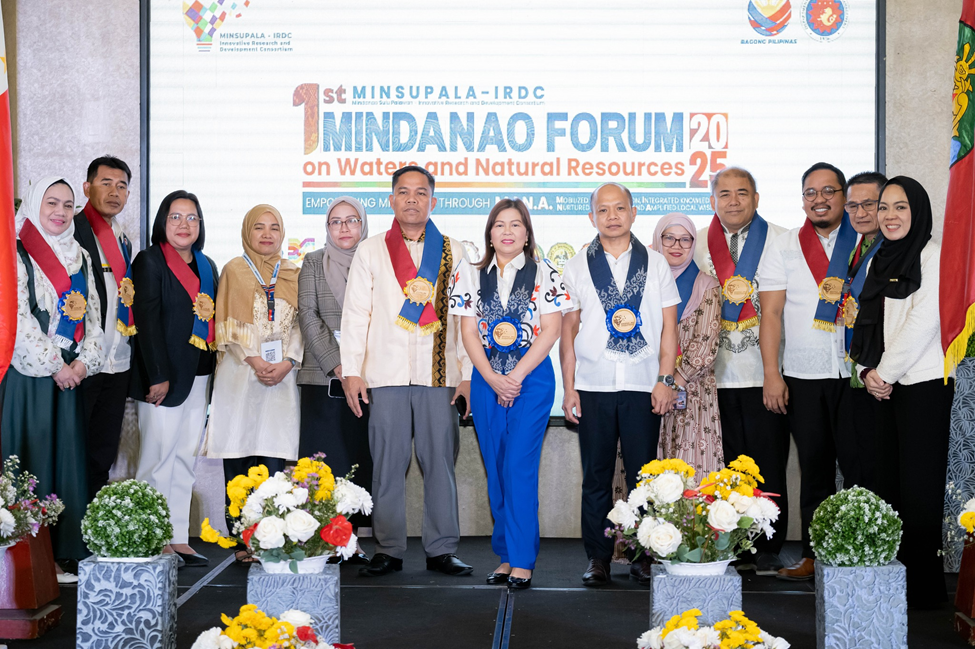
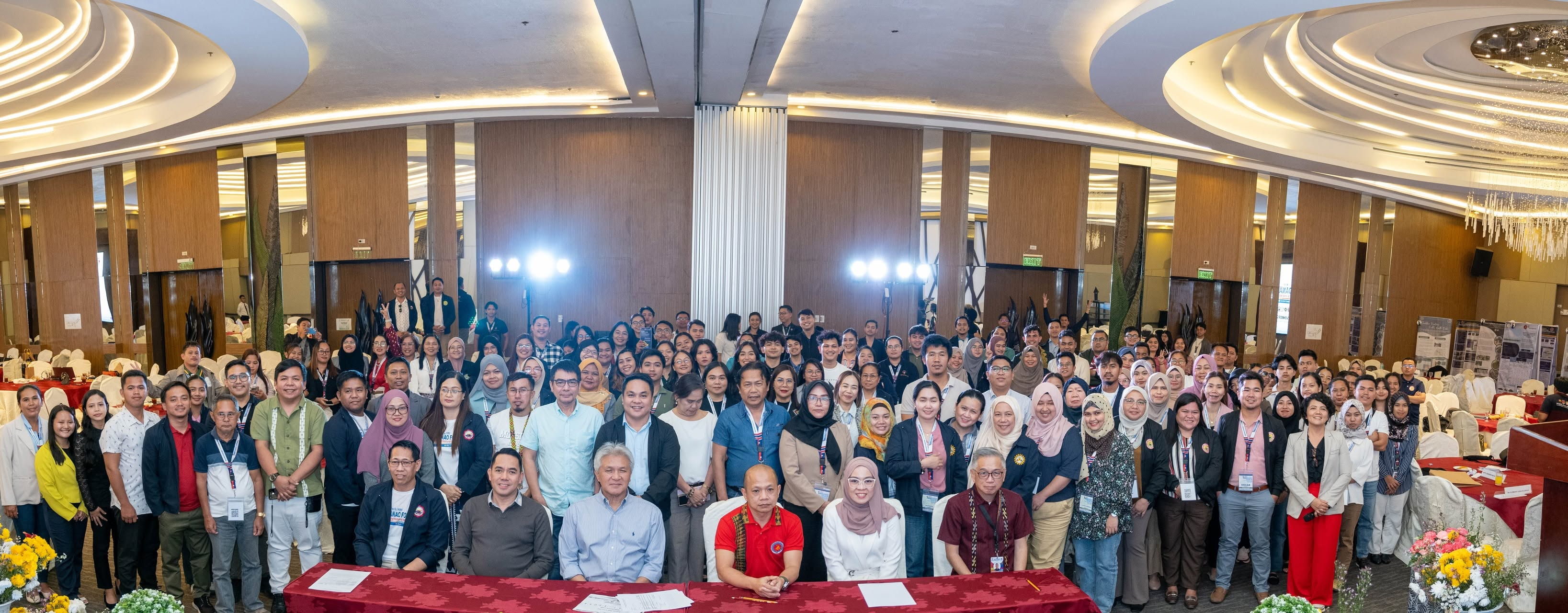
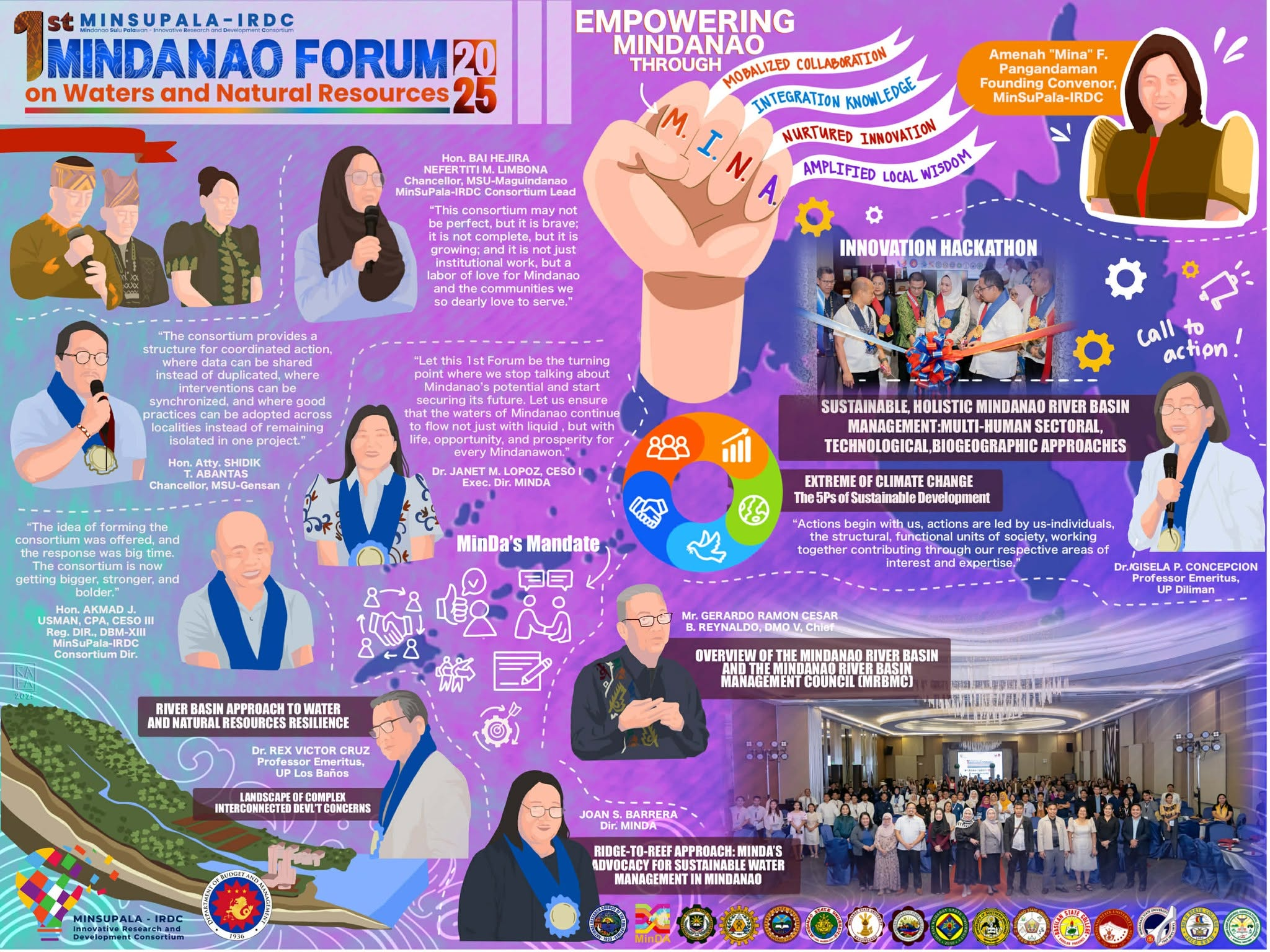
One of these major initiatives was the 1st Mindanao Forum on Waters and Natural Resources, held on November 26–28, 2025, at Greenleaf Hotel, General Santos City. Through MinSuPala-IRDC, the University supported the three-day forum, which brought together representatives from nine state universities and colleges, government agencies, local government units, research institutions, and community stakeholders. Led by MSU–Maguindanao Chancellor Dr. Bai Hejira Nefertiti M. Limbona, as MinSuPala-IRDC Lead, the initiative was conducted in partnership with the Mindanao Development Authority (MinDA) and the National Research Council of the Philippines (NRCP).
Building on the consortium's first phase of research, supported by the Department of Budget and Management (DBM), the forum featured scientific assessments and research findings on water quality, inland capture fisheries, watershed conditions, and community livelihoods across major Mindanao water bodies. These included Lake Lanao, Ligawasan Marsh, Lake Buluan, Lake Sebu, the Rio Grande de Mindanao, and the Pulangi River. The presentations provided participants with research-based information on the environmental conditions, fisheries resources, and socioeconomic concerns affecting these ecosystems.
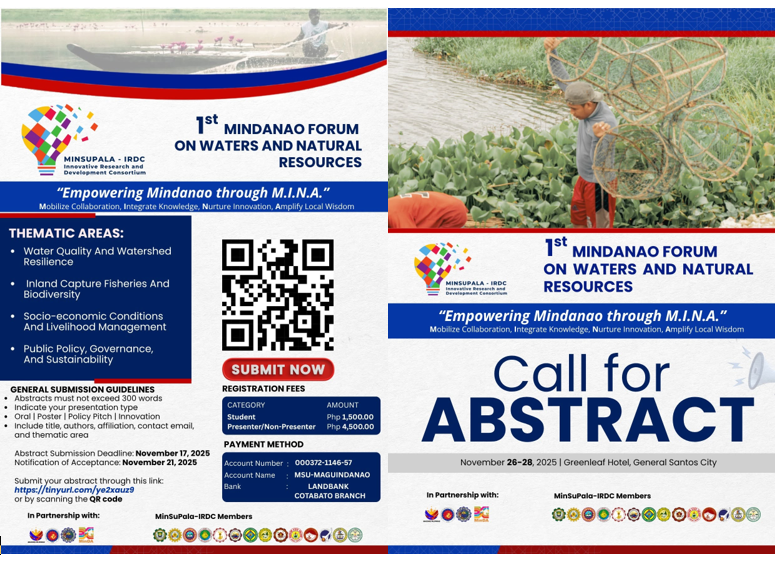
Promotional poster of the 1st Mindanao Forum on Waters and Natural Resources, organized by MinSuPala-IRDC, featuring the theme “Empowering Mindanao through M.I.N.A.” and its four thematic areas: water quality and watershed resilience, inland capture fisheries and biodiversity, socioeconomic conditions and livelihood management, and public policy, governance, and sustainability.
Faculty members and researchers from MSU–Maguindanao presented assessment results and shared findings that could help guide local planning, resource management, and the development of appropriate conservation initiatives.
MSU–Maguindanao faculty members present research findings on water quality, inland capture fisheries, watershed conditions, and community livelihoods across major Mindanao water bodies.
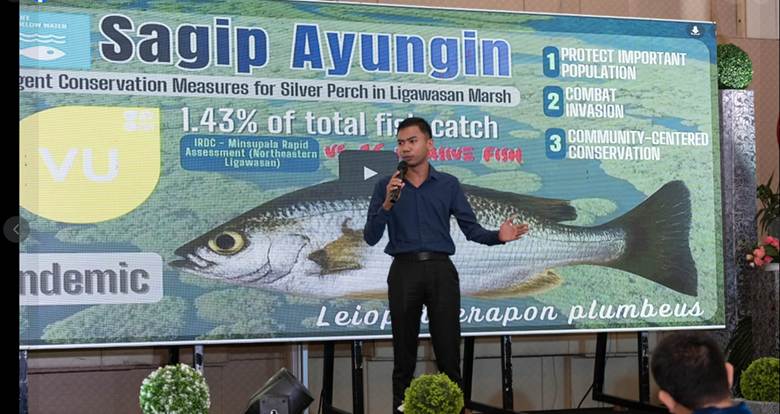
Mr. John Louie C. Natan of MSU–Maguindanao presents research findings during the 1st Mindanao Forum on Waters and Natural Resources.
Through research presentations, policy workshops, and innovation activities, the forum connected scientific findings with discussions on practical approaches to aquatic ecosystem conservation and sustainable resource management. Participants exchanged ideas on sustainable fisheries management, biodiversity protection, water quality improvement, watershed conservation, and ecosystem restoration. The discussions also emphasized responsible fishing practices, the sustainable utilization of aquatic resources, and the protection of habitats that support inland fish populations and other aquatic organisms.
The forum further provided an opportunity to discuss the effects of human activities and environmental pressures on inland water ecosystems and the communities that depend on them. By bringing together researchers, government representatives, local institutions, and community stakeholders, the event encouraged the sharing of experiences and the identification of common priorities for protecting aquatic habitats and maintaining the ecological functions of lakes, rivers, and marshlands. The research findings and policy discussions also provided a basis for identifying possible interventions that support ecosystem resilience, food security, and sustainable community livelihoods.
Second Philippine Small-Scale Fisheries National Symposium
At the national level, the University also participated in organizing the Second Philippine Small-Scale Fisheries National Symposium (PSSFNS2), held on October 21–23, 2025, at the International Convention Center of the MSU Main Campus in Marawi City. Organized under the National Consortium for Small-Scale Fisheries Research and Development, also known as Too Big To Ignore (TBTI) Philippines, the symposium was hosted by the Mindanao State University System, with its constituent universities, including MSU–Maguindanao, participating in the organization of the event. With the theme “From Recognition to Action: Advancing Sustainable Small-Scale Fisheries in the Philippines,” the symposium served as a national platform for discussing research, policies, and practical initiatives that support the sustainability of small-scale fisheries.
The three-day symposium gathered more than 300 participants, including fisherfolk, fisheries managers, researchers, policymakers, local government representatives, students, non-government organizations, and development partners. Through a keynote lecture, seven plenary sessions, and parallel discussions, participants explored eight thematic areas: inland and marine small-scale fisheries, fisheries management and governance, fisheries economics, sociocultural aspects of fisheries, climate change and resilience, gender, technology and innovation, and arts and small-scale fisheries.
The discussions highlighted the importance of protecting aquatic and marine resources while sustaining the livelihoods of fishing communities. Participants examined concerns related to overfishing, illegal, unreported and unregulated fishing, destructive fishing practices, climate change, and the interactions between small-scale and commercial fisheries. The symposium also provided opportunities to share research findings, discuss fisheries policies, and identify approaches to strengthening fisheries governance, protecting fishing communities, and promoting responsible resource utilization. By bringing national fisheries stakeholders together, the event strengthened knowledge exchange and encouraged collective action toward more inclusive and sustainable fisheries management.
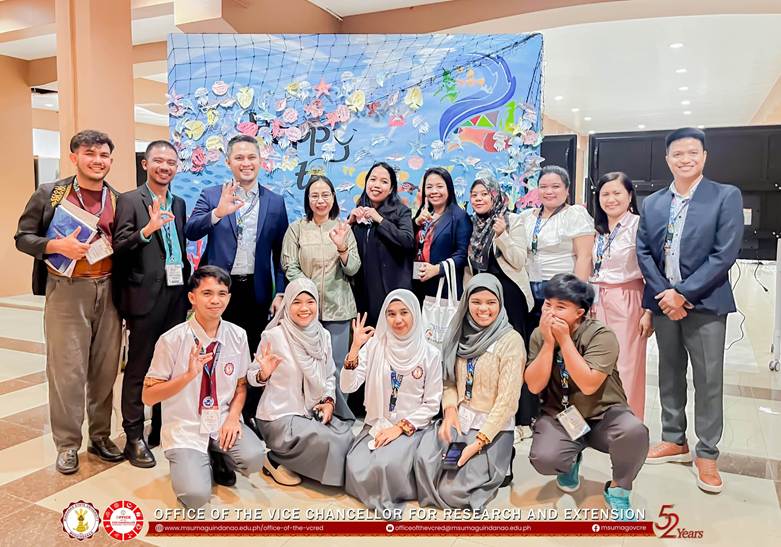
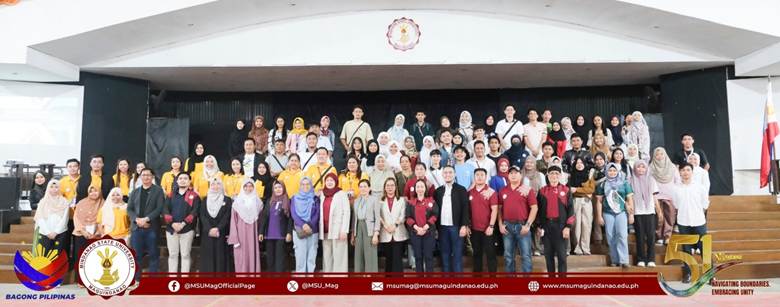
Delegates, researchers, fisheries practitioners, and other stakeholders gather during the Second Philippine Small-Scale Fisheries National Symposium at the MSU Main Campus in Marawi City, October 21–23, 2025.
Through the 1st Mindanao Forum on Waters and Natural Resources and the Second Philippine Small-Scale Fisheries National Symposium, MSU–Maguindanao demonstrated its support for institutional collaboration, scientific knowledge-sharing, and stakeholder participation in aquatic resource conservation. These engagements connected research with policy and community discussions, strengthened partnerships with academic institutions and government agencies, and promoted greater awareness of the importance of protecting freshwater and marine ecosystems. Together, these initiatives reflect the University's continuing contribution to the conservation of aquatic biodiversity, sustainable fisheries management, and the responsible use of inland and marine resources.