Healthy rivers, lakes, wetlands, mangroves, and watersheds are essential to biodiversity, food security, and the livelihoods of communities. Their protection requires cooperation among academic institutions, government agencies, local government units (LGUs), and the people who depend on these resources. Through research collaborations, environmental monitoring, community consultations, and habitat conservation activities, the University works with local partners to promote the responsible management of shared aquatic and watershed ecosystems across the region.
MinSuPala-IRDC: Bringing Research Institutions and Communities Together for Aquatic Ecosystem Management
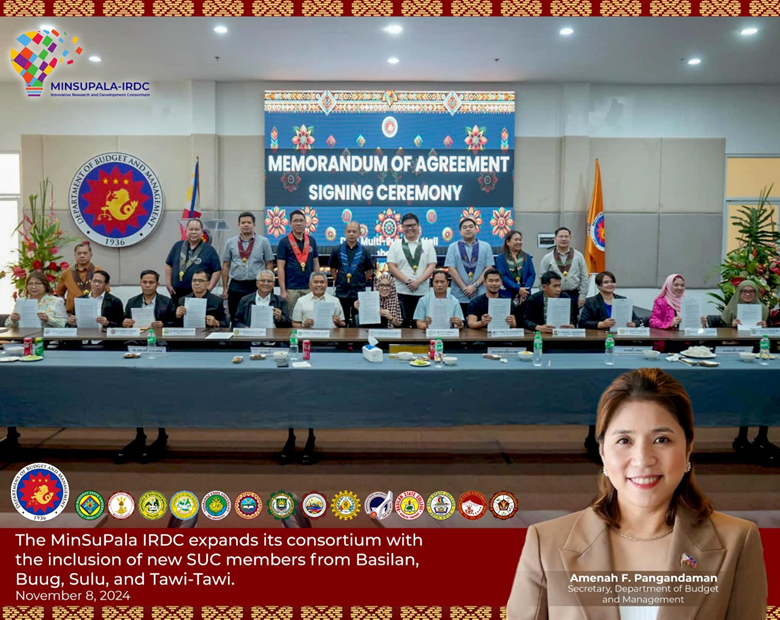
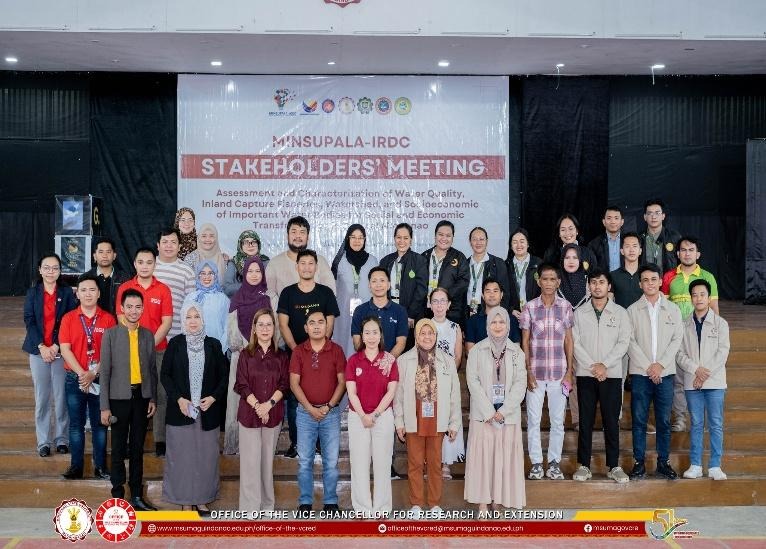
Through the Mindanao-Sulu-Palawan Regional Research, Development, and Innovation Consortium (MinSuPala-IRDC), the University works with partner state universities and colleges, government agencies, LGUs, and community stakeholders to address environmental and resource-management concerns. On February 27, 2025, it hosted a stakeholders’ consultation that brought together researchers from four state universities and colleges, representatives of government agencies, local stakeholders, and fisherfolk associations. The discussions covered research findings concerning Ligawasan Marsh, Lake Buluan, the Rio Grande de Mindanao, and Lake Lanao, particularly on water quality, inland capture fisheries, watershed conditions, and socioeconomic factors affecting these ecosystems.
The consultation provided an opportunity for researchers and stakeholders to discuss the implications of research findings and identify areas where scientific information could support local environmental planning and resource management. Participating institutions and agencies included representatives from MAFAR-BARMM, the Bangsamoro Planning and Development Authority, DOST-PCAARRD, and provincial environmental offices, among others. The discussions emphasized the importance of research-based recommendations in protecting aquatic habitats, conserving biodiversity, preventing pollution, and promoting sustainable inland fisheries.
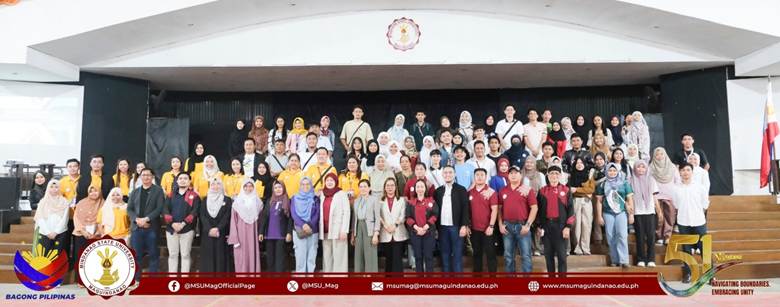
Researchers, government representatives, LGU officials, and community stakeholders participate in the MinSuPala-IRDC stakeholders’ consultation on research findings and environmental concerns affecting major inland water bodies in Mindanao.
Partnership with Local Government Units for Indigenous Fish and Crop Conservation
Collaboration with LGUs is also central to the second phase of the MinSuPala-IRDC initiative, titled “Establishment and Preservation of Indigenous Fish and Crop Products.” Supported by a ₱5-million (US$86,948.81) allocation from the Department of Budget and Management (DBM), the project seeks to identify and support the conservation and sustainable use of indigenous fish and crop resources.
From July 23 to 25, 2025, project representatives conducted coordination meetings with LGUs in Cotabato City and the municipalities of Kabuntalan, Talitay, Datu Piang, and Northern Kabuntalan. These meetings helped establish coordination with local government partners and provided an opportunity to discuss community participation in the project.
The team also conducted a Prioritization Tool Survey involving LGU representatives, community leaders, farmers, and fisherfolk. The activity gathered local perspectives on indigenous fish and crop species, biodiversity concerns, and conservation priorities. By involving communities and local institutions in identifying important resources and concerns, the initiative aims to ensure that research and development activities respond to local conditions and support the sustainable use of biological resources.
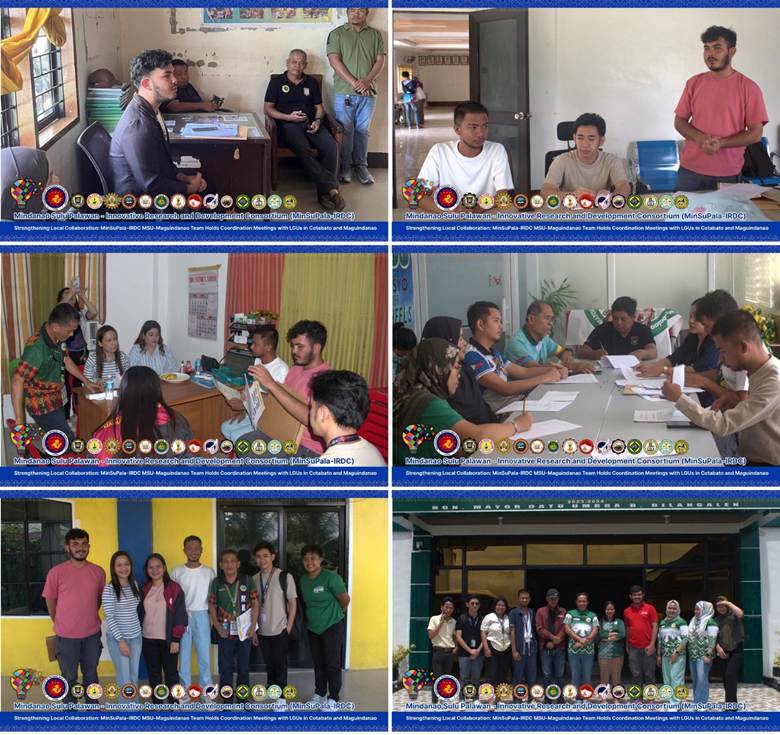
Project representatives meet with LGU officials and community stakeholders during the July 2025 coordination activities and Prioritization Tool Survey for the MinSuPala-IRDC project on indigenous fish and crop products.
Collaboration with MENRE-EMS for River Monitoring and Protection
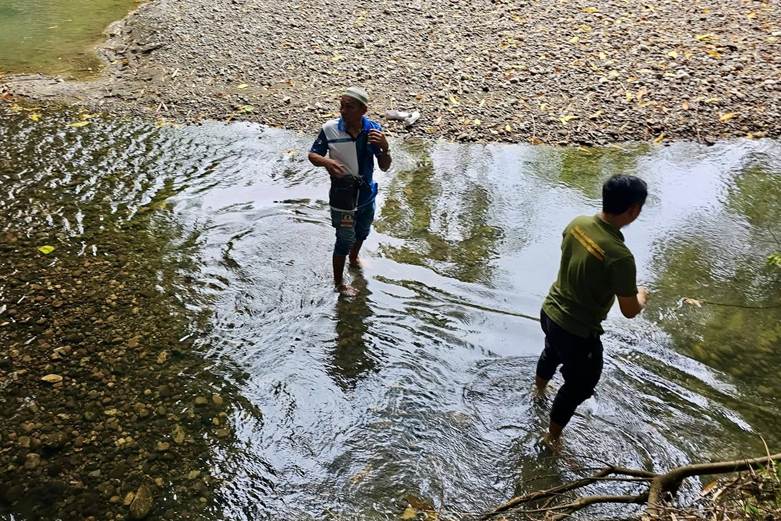
Partnerships with environmental agencies and local governments also support the monitoring and protection of rivers. On June 30, 2025, the College of Forestry and Environmental Science worked with the Ministry of Environment, Natural Resources and Energy–Environmental Management Services (MENRE-EMS) in launching the Brar River Pilot Water Sampling Program and continuing water-quality monitoring activities in the Simuay River.
The activity included an orientation on standardized water-sampling procedures and waterbody classification for faculty members, students, and LGU personnel. The discussions provided participants with guidance on the proper conduct of water sampling and the assessment of river conditions, consistent with the principles and requirements of Republic Act No. 9275, or the Philippine Clean Water Act of 2004. The involvement of local government personnel and community stakeholders helps strengthen coordination and awareness of the importance of maintaining river water quality.
This collaboration builds on the University's participation in the Adopt-an-Estero program, established in 2022. Under this partnership, MENRE-EMS conducts regular water sampling at three established monitoring stations along the Simuay River, with the University serving as an institutional partner. These activities provide a continuing basis for cooperation in environmental monitoring and river protection.
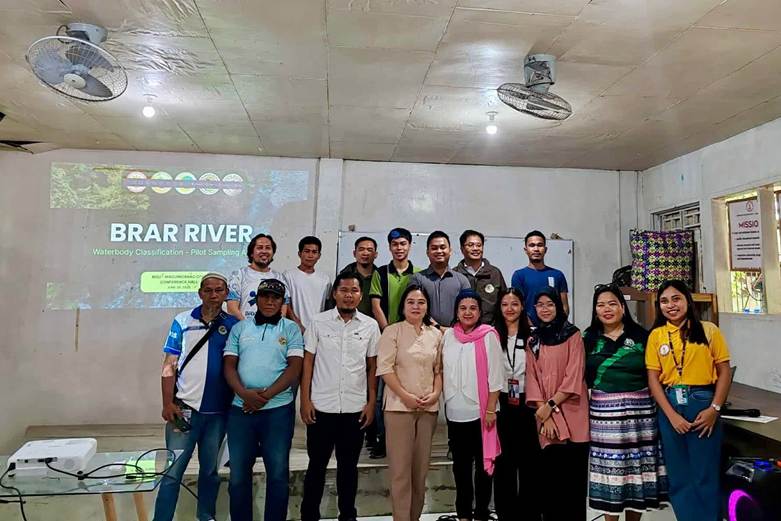
MSU-Maguindanao faculty members, MENRE-EMS personnel, and local stakeholders participate in an orientation and knowledge-sharing session on Brar River waterbody classification and the pilot water-sampling activity in 2025.
Partnership with Indigenous Teduray Communities and Local Stakeholders for Watershed Protection
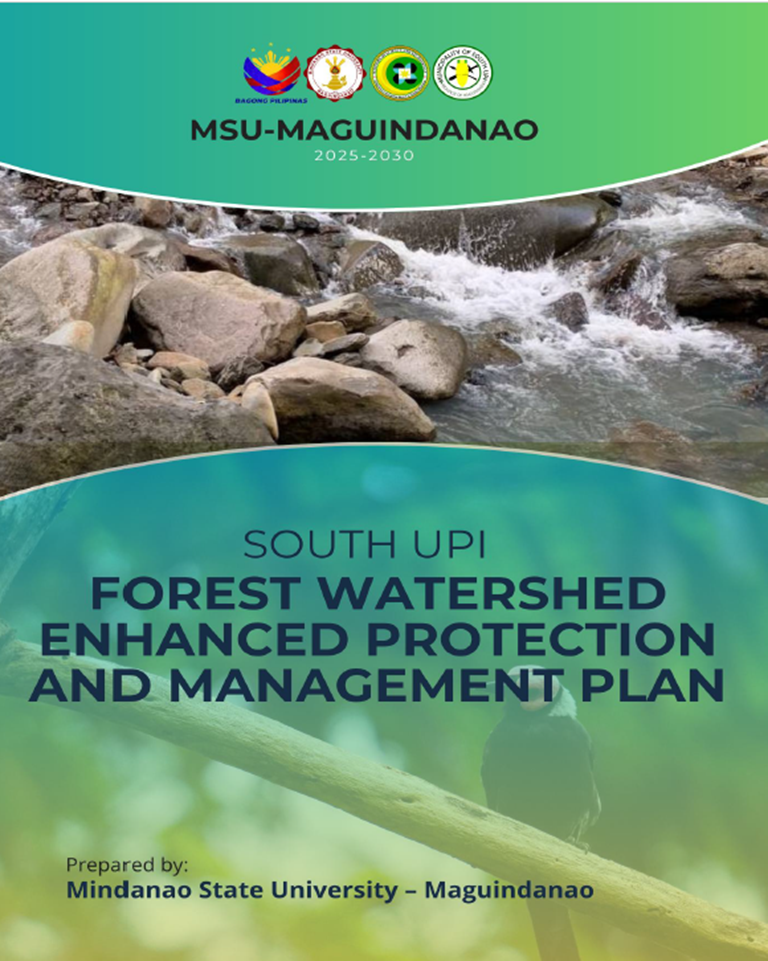
The protection of aquatic ecosystems also requires attention to the watersheds and surrounding landscapes that influence the condition of rivers and other inland water bodies. In 2025, the University supported the development of the South Upi Forest Watershed Enhanced Protection and Management Plan for 2025–2030, funded by the Ministry of Science and Technology–BARMM (MOST-BARMM).
The initiative covers approximately 1,894 hectares across five barangays—Romangaob, Looy, Bongo, Kigan, and Pandan—in the Municipality of South Upi, Maguindanao del Sur. The planning process involved consultations with LGUs, Indigenous Teduray communities, farmers, and other local stakeholders. Baseline data gathering, GIS mapping, biodiversity and habitat profiling, and field observations were undertaken to help establish the basis for watershed planning.
The proposed management framework identifies priority directions for watershed protection, including sustainable land use, agroforestry, assisted natural regeneration, native species planting, habitat conservation, and community-based environmental protection. By involving Indigenous communities and local institutions in the planning process, the initiative recognizes the importance of local knowledge and participation in managing forest and watershed resources. Protecting these areas also supports the long-term condition of connected rivers and aquatic habitats.
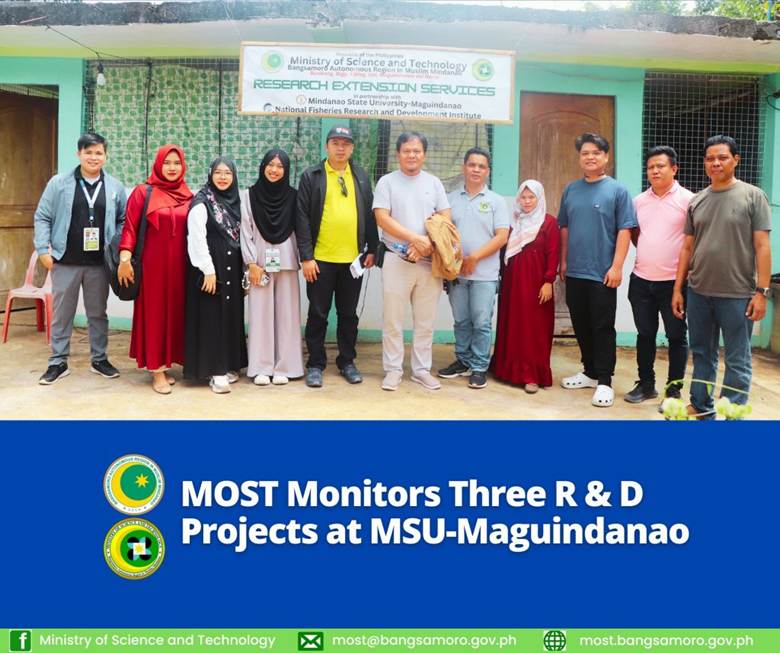
MSU–Maguindanao and MOST–BARMM research team members, together with local stakeholders, during the field assessment and consultation for the South Upi Forest Watershed Enhanced Protection and Management Plan.
Collaboration with Partner Universities and Communities for Mangrove Habitat Restoration
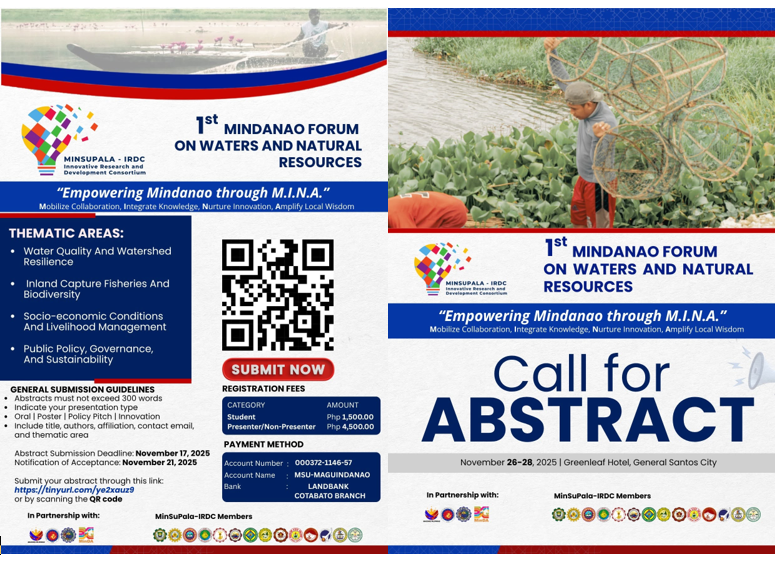
Cooperation among academic institutions and local stakeholders was further demonstrated through a mangrove-planting activity at the Baluan Mangrove Sanctuary on November 28, 2025. The activity was conducted with partner state universities and colleges under MinSuPala-IRDC as part of the environmental action component of the 1st Mindanao Forum on Waters and Natural Resources, held from November 26 to 28, 2025, in General Santos City.
A total of 107 mangrove seedlings were planted during the activity. The initiative provided a practical opportunity for participating institutions and partners to take part in mangrove habitat conservation and promote awareness of the importance of coastal and aquatic ecosystems. It also complemented the forum's broader discussions on water resources, watershed resilience, inland fisheries, aquatic biodiversity, sustainable livelihoods, and environmental governance.
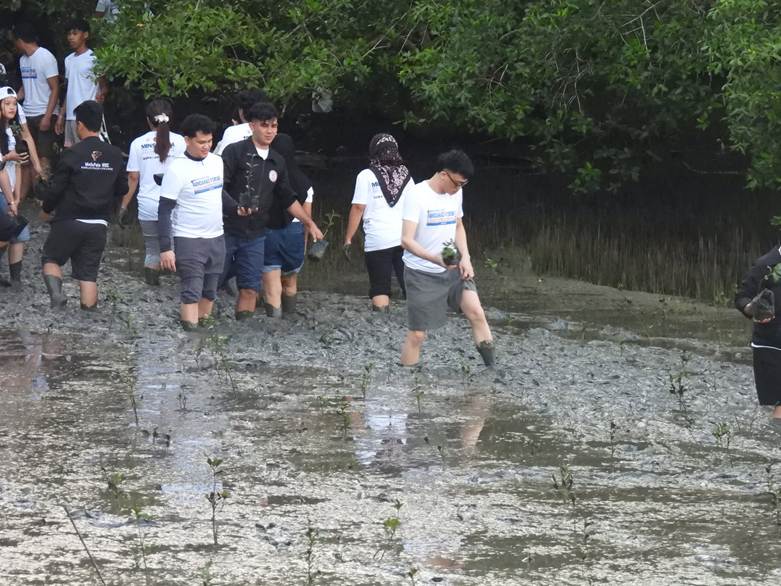
Representatives of partner universities and participating stakeholders plant 107 mangrove seedlings at the Baluan Mangrove Sanctuary on November 28, 2025, as part of the environmental action activity of the 1st Mindanao Forum on Waters and Natural Resources.
Sustaining Partnerships for Shared Ecosystem Protection
These collaborations demonstrate the importance of working with local communities, LGUs, government agencies, Indigenous groups, and partner academic institutions in addressing shared environmental concerns. From river monitoring and watershed planning to biodiversity prioritization and mangrove planting, the activities provide opportunities to combine research, local knowledge, and community participation in environmental management.