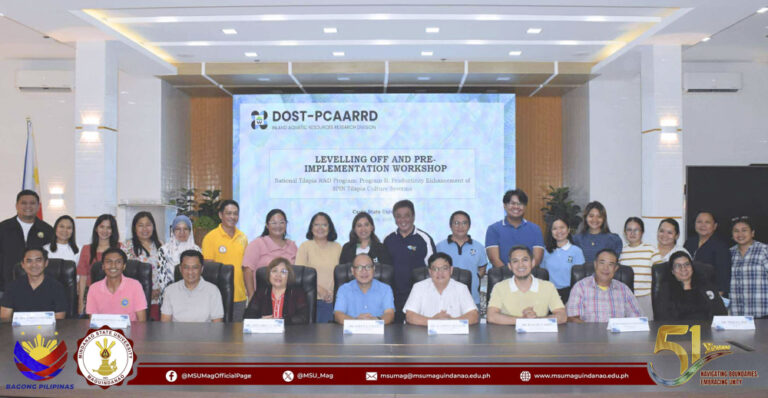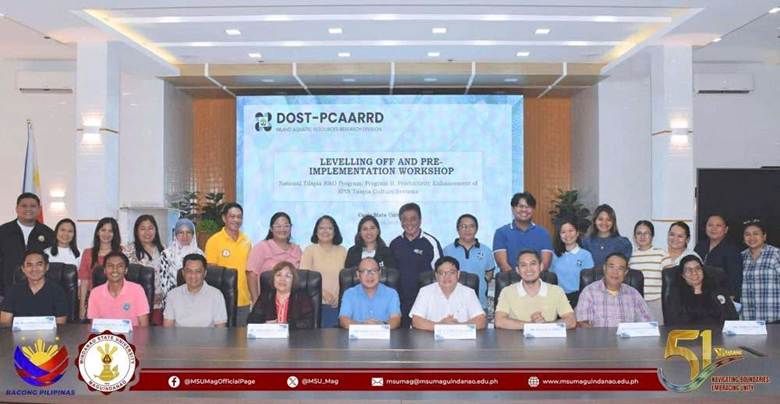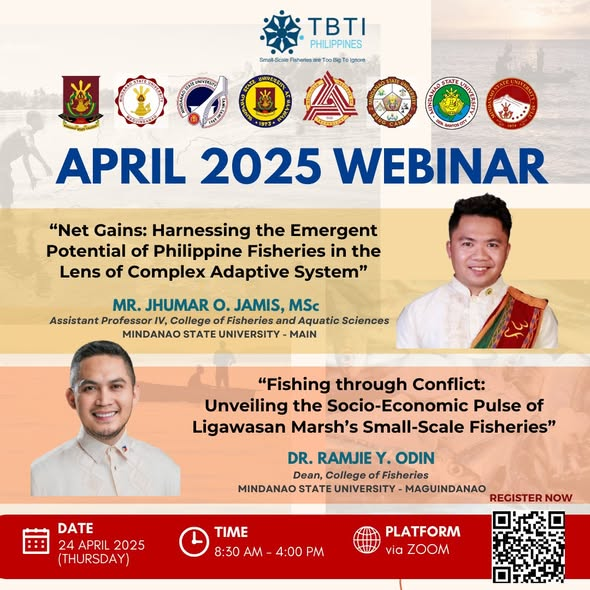
MSU–Maguindanao, through its College of Fisheries, leads the National Tilapia Research and Development Program, Program B: Productivity Enhancement of SPIN Tilapia Culture Systems, funded by the Department of Science and Technology–Philippine Council for Agriculture, Aquatic and Natural Resources Research and Development (DOST–PCAARRD). The program works on the Saline-tolerant Population of Improved Nilotica (SPIN). Dr. Ramjie Y. Odin, Dean of the College of Fisheries, serves as Overall Program Leader and Project 1 Leader, with Capiz State University, Northern Iloilo State University, Zamboanga State College of Marine Sciences and Technology and the University of the Philippines Visayas as partners. The program’s inception meeting was held on 19 June 2025 at Capiz State University.
Across five projects, the program develops technologies that reduce the environmental footprint of aquaculture:
- Locally developed probiotics improve fish health and reduce reliance on chemical treatments that can enter receiving waters.
- Microbial-based nursery production improves water quality within culture systems.
- Refined feeding strategies cut uneaten feed, a major source of nutrient pollution in ponds and nearby waters.
- Improved hatchery, grow-out, acclimation and transport methods reduce fish losses and wasted resources.
Together, these technologies help fish farmers produce more while placing less pressure on surrounding aquatic ecosystems.
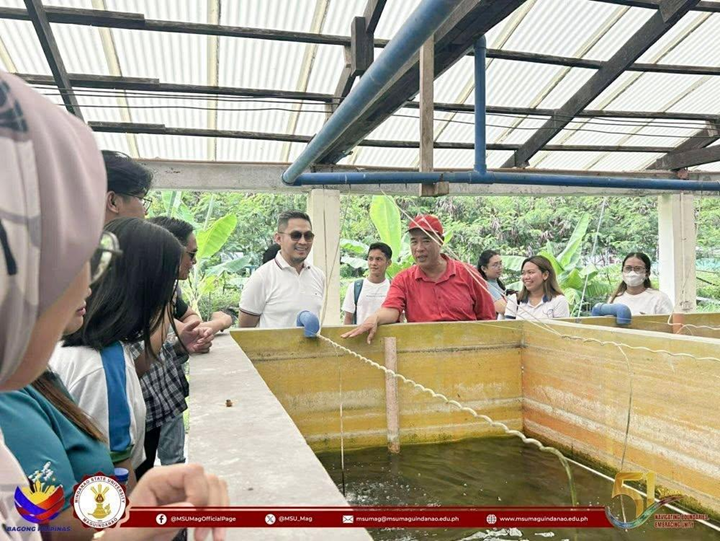
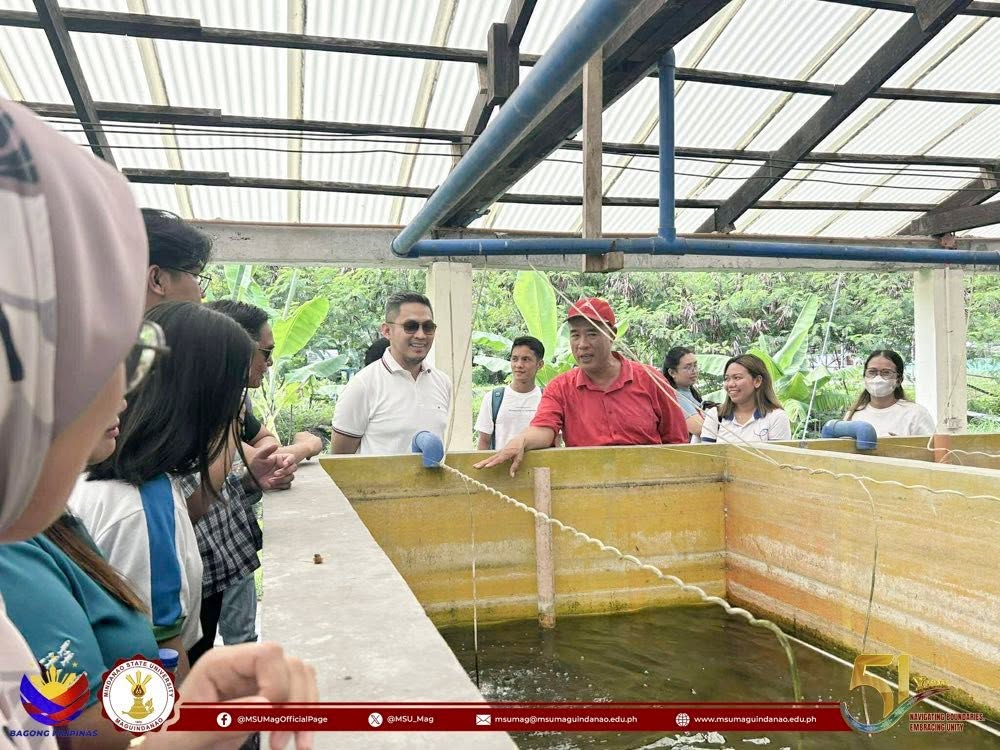
Dr. Ramjie Y. Odin, Overall Program Leader, on a field visit to the project area with DOST–PCAARRD representatives.
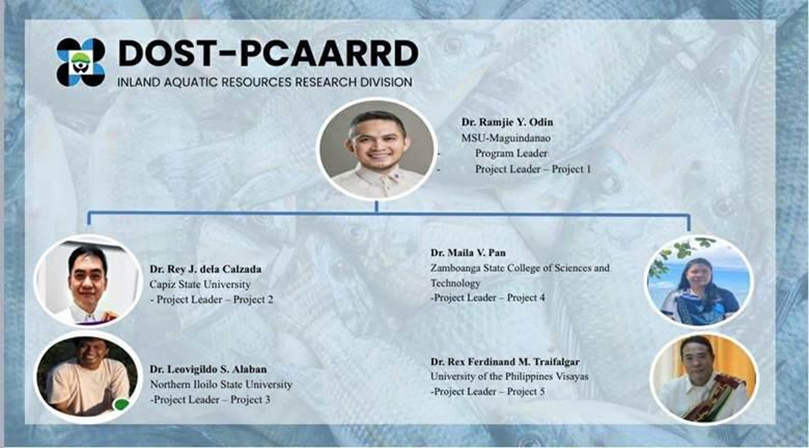
Organizational structure of the National Tilapia R&D Program B and its partner institutions.