Academic Programs for Developing Fisheries Professionals and Practitioners
Sustainable fisheries, aquaculture, and responsible tourism play important roles in protecting aquatic ecosystems, supporting food security, and creating livelihood opportunities for local communities. Mindanao State University–Maguindanao (MSU–Maguindanao) contributes to these objectives through its academic programs, research initiatives, extension activities, and partnerships with government agencies, research institutions, and community organizations. Through these initiatives, the University promotes scientific knowledge, technical skills, and responsible resource-use practices that support sustainable fisheries production, aquaculture development, aquatic biodiversity conservation, and community livelihood improvement.
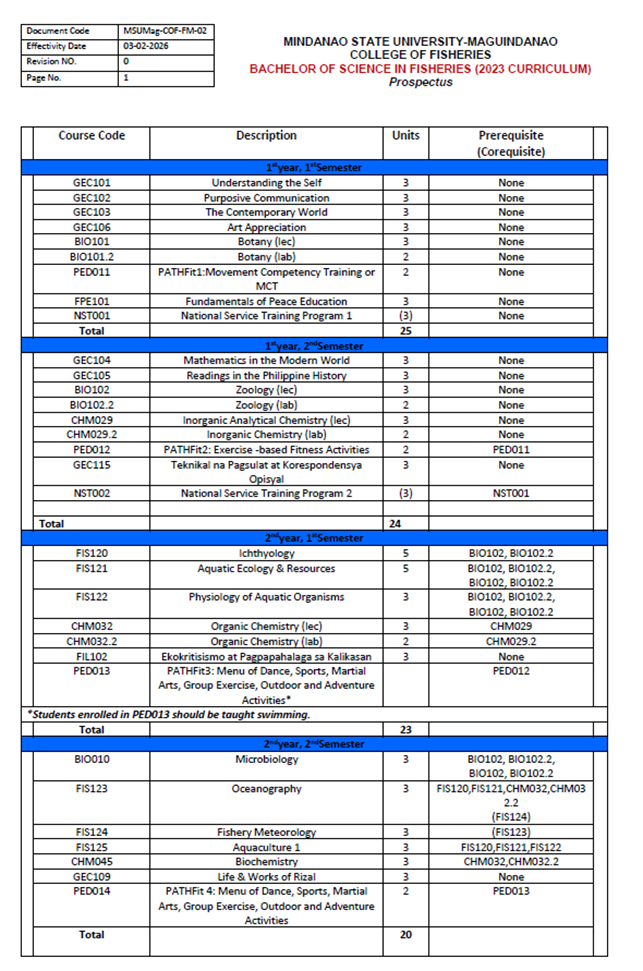
The University's academic offerings provide a foundation for developing professionals and technical personnel in fisheries and aquaculture. These include the Bachelor of Science in Fisheries, the Diploma in Fisheries Technology major in Aquaculture, and the Diploma in Fisheries Technology major in Fish Processing. Their curricula cover relevant areas such as capture fisheries, sustainable aquaculture, hatchery management, fish nutrition, fish health management, fisheries management, fish processing, and post-harvest technology. Through classroom instruction, laboratory activities, practical exercises, and industry exposure, students develop the scientific knowledge and technical competencies needed for responsible fisheries operations, sustainable aquaculture production, and the efficient utilization of aquatic resources.
Research and Technology Development for Sustainable Aquaculture
Beyond formal academic instruction, the University extends fisheries and aquaculture education to local communities through research collaborations and livelihood development initiatives. One of its research contributions in 2025 was its participation in the National Tilapia Research and Development Program: Program B – Productivity Enhancement of SPIN Tilapia Culture Systems, funded by the Department of Science and Technology–Philippine Council for Agriculture, Aquatic and Natural Resources Research and Development (DOST–PCAARRD). Led by Dr. Ramjie Y. Odin, the initiative involved collaboration with Capiz State University, Northern Iloilo State University, Zamboanga State College of Marine Sciences and Technology, and the University of the Philippines. The research focused on improving saline-tolerant tilapia culture systems to support aquaculture productivity, production efficiency, and sustainability. The project contributes scientific information that can support improved aquaculture practices and the transfer of appropriate technologies to the fisheries sector.
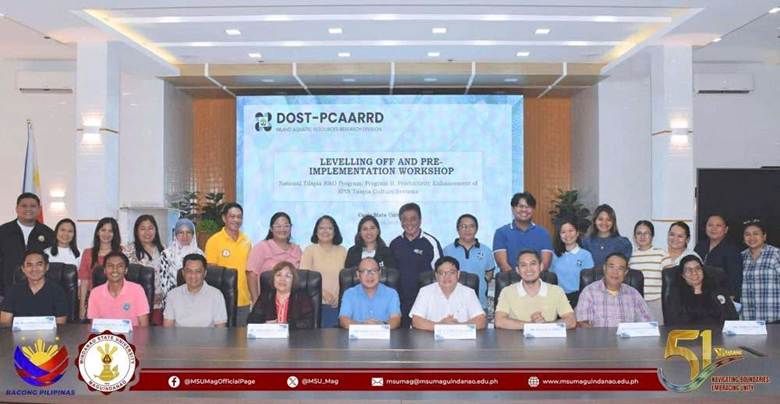
MSU–Maguindanao leads a collaborative national research program, supported by DOST-PCAARRD, to enhance salinity-tolerant tilapia culture systems through research, innovation, and institutional partnerships
Community-Based Training and Livelihood Development
The University's community outreach was further demonstrated through its partnership with the Office of the Presidential Adviser on Peace, Reconciliation and Unity (OPAPRU). From 2023 to 2025, MSU–Maguindanao implemented agricultural livelihood initiatives in Camps Abubakar, Badre, and Omar, involving former Moro Islamic Liberation Front (MILF) combatants, their families, farmers, and community organizations. These initiatives provided technical lectures, hands-on demonstrations, and practical training in fish farming, tilapia and catfish production, aquaculture management, integrated farming, and enterprise development. Participants gained practical knowledge and skills that can be applied to household food production, community-based aquaculture, and livelihood development.
These activities also provide opportunities for government practitioners, local government personnel, fisheries technicians, agricultural extension workers, and other community-based development workers to learn about and apply improved fisheries and aquaculture practices.
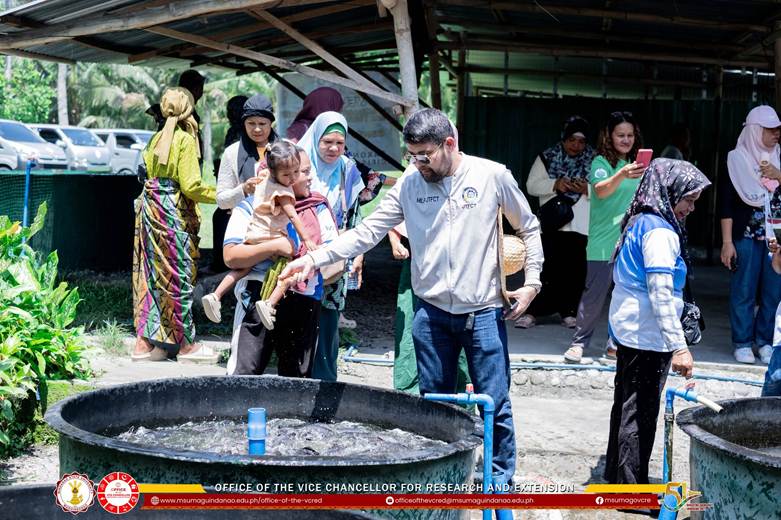
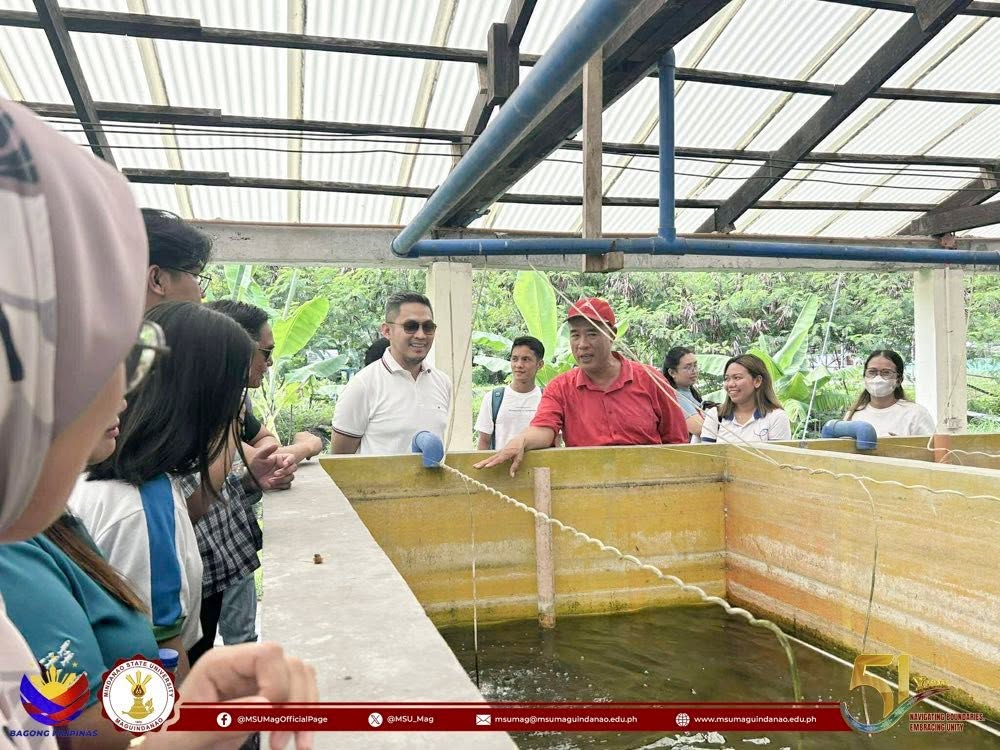
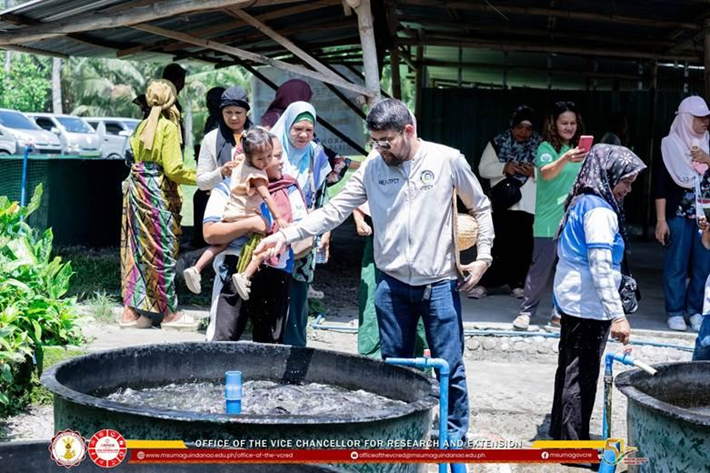
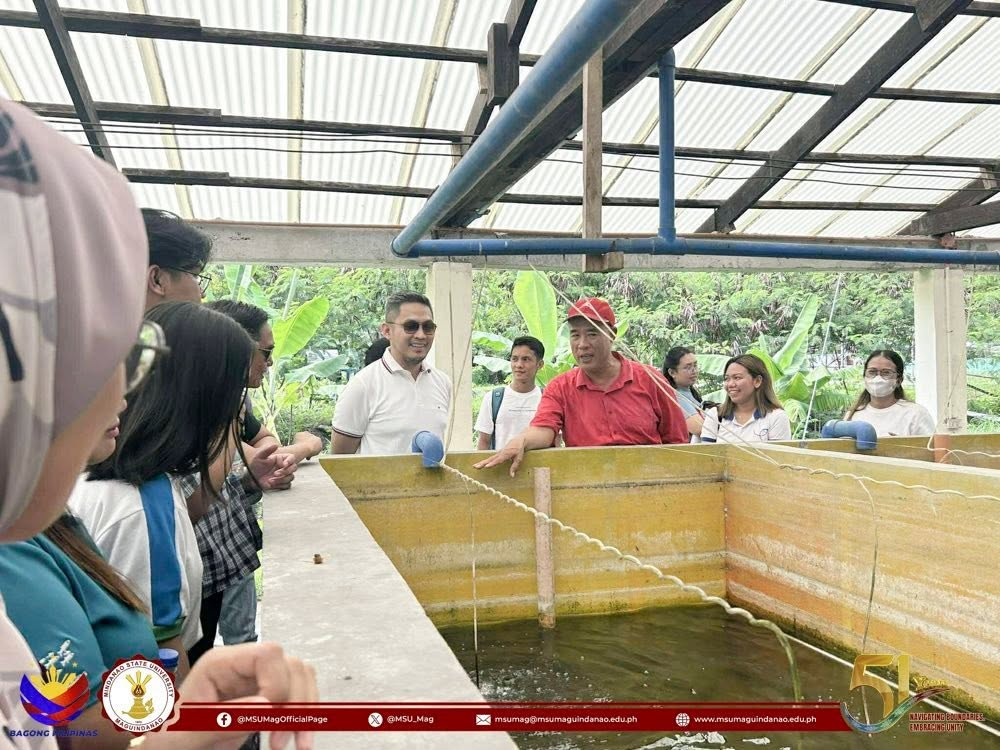
Partner farmers participate in a hands-on demonstration on proper fish feeding practices and fish tank management, gaining practical knowledge on feeding techniques and basic aquaculture production.
Training on Agri-Aqua Production and Enterprise Development
From 2024 to 2025, the University also implemented the Enhancement of Agri-Aqua Value Production and Value Chain of Economically Important Commodities in Camp Abubakar, with funding of ₱12,000,000 (USD 215,000.00). The project provided training in agricultural and aquaculture production, product processing, packaging, and marketing. It aimed to improve community production capacities, increase the value of locally produced commodities, and strengthen livelihood and enterprise opportunities.
During the same period, the University implemented the Development of Science and Technology-Based Climate-Smart Mixed Farming System for Crop, Fish, and Livestock Production in Camps Omar and Badre, with ₱10,182,314.00 (USD 173, 000.00) allocated to each project location. Through technical training, demonstrations, and integrated production activities, participants learned climate-smart approaches to fish farming, crop cultivation, and livestock production. These interventions promoted diversified food production, efficient resource utilization, and more resilient agricultural livelihoods.
Community participants also received practical instruction in aquaculture operations, farm management, product handling, storage, processing, packaging, branding, and enterprise development. These activities helped beneficiaries strengthen their capacity to produce and market agricultural and fisheries products for local consumption and potential participation in trade fairs, exhibitions, and other market opportunities. By combining technical instruction with livelihood and enterprise development, the University helps translate fisheries and aquaculture knowledge into practical economic opportunities for participating communities.
The University's community-based training and extension activities provide practical learning opportunities for farmers, fisherfolk, government practitioners, and local development personnel. Where supported by the project arrangements, these training activities are provided free of charge to beneficiaries.
Knowledge Sharing and Professional Development in Sustainable Fisheries
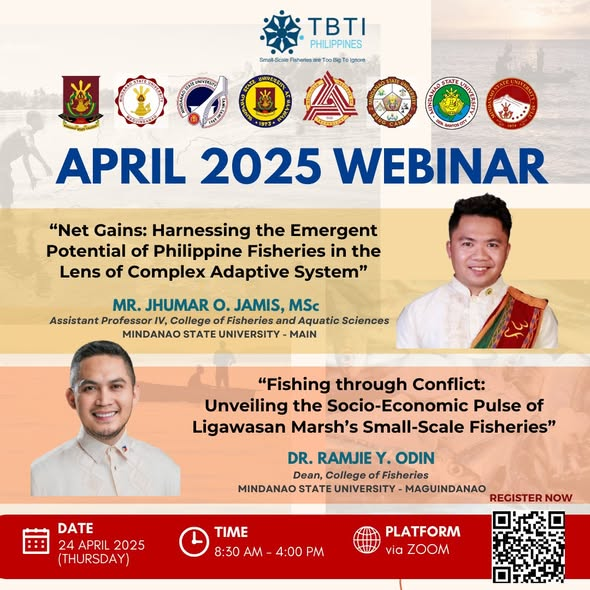
At the national level, the University contributed to knowledge-sharing activities on sustainable fisheries. On April 24, 2025, it participated in the TBTI Philippines 2025 April Webinar Series, which brought together researchers, faculty members, students, and fisheries practitioners to discuss small-scale fisheries, seaweed development, and sustainable aquatic resource management. Dr. Ramjie Y. Odin presented the study entitled “Fishing through Conflict: Unveiling the Socio-Economic Pulse of Ligawasan Marsh's Small-Scale Fisheries.” The presentation highlighted the socioeconomic conditions and challenges experienced by fishing communities in Ligawasan Marsh and provided an opportunity to share research findings relevant to small-scale fisheries management.
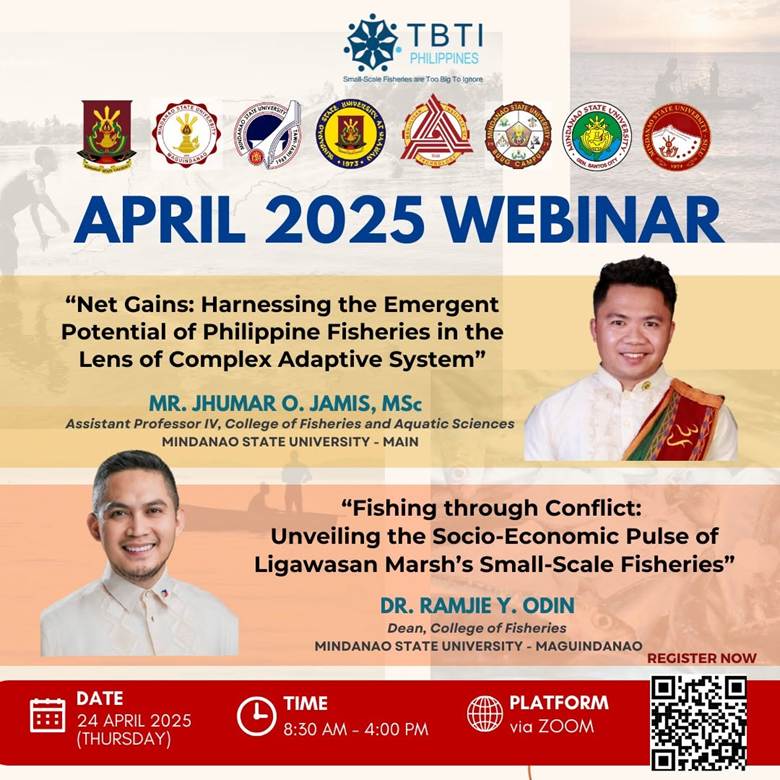
Dr. Ramjie Y. Odin, Dean of the College of Fisheries, MSU–Maguindanao, presents a research discussion on the socio-economic conditions, livelihoods, and challenges of small-scale fishing communities in Ligawasan Marsh, highlighting the relationship between fisheries and local conflict.
Furthermore, MSU–Maguindanao participated in the Second Philippine Small-Scale Fisheries National Symposium, held on October 21–23, 2025, at the MSU Main Campus in Marawi City. With more than 300 participants, the symposium provided a national platform for fisherfolk, researchers, fisheries managers, local government representatives, policymakers, and development partners to discuss sustainable fisheries management. Topics included inland and marine fisheries, fisheries governance, climate resilience, technological innovations, and the socioeconomic conditions of small-scale fishing communities. The University's participation strengthened opportunities for research dissemination, professional exchange, and engagement with stakeholders involved in fisheries development and management.
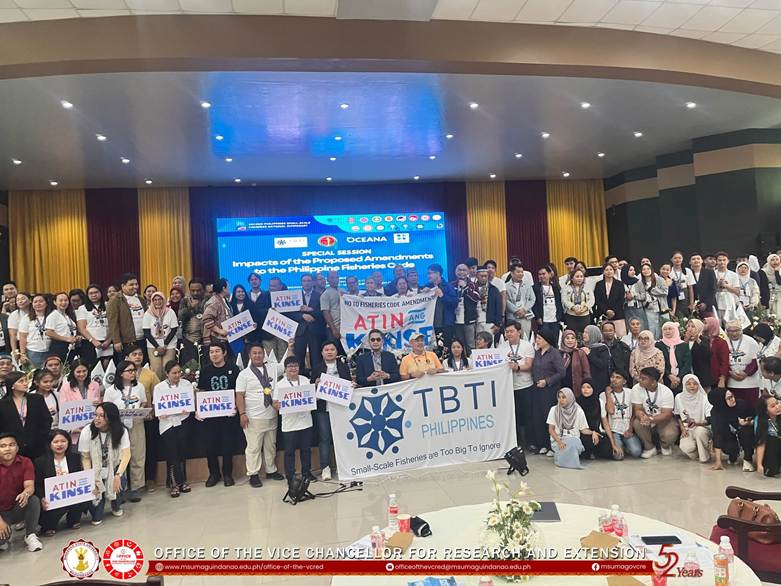
MSU–Maguindanao joins the national advocacy for sustainable small-scale fisheries, reaffirming its commitment to responsible fisheries management, the protection of aquatic resources, and the promotion of sustainable livelihoods among local fishing communities
Research and Conservation Supporting Responsible Tourism
The University's research and conservation activities also provide relevant scientific foundations for responsible nature-based tourism. Studies on the conservation value of the Philippine duck and community support for mangrove conservation in Katunggan Coastal Ecopark highlight the importance of protecting wetland and coastal habitats, promoting environmental awareness, and encouraging community participation in conservation. These research contributions are relevant to the development of responsible tourism approaches in natural environments, where the protection of biodiversity and ecosystem integrity is essential. Maintaining healthy wetlands, mangroves, and other aquatic habitats helps preserve the natural resources that may support educational visits, nature appreciation, and community-based tourism opportunities.
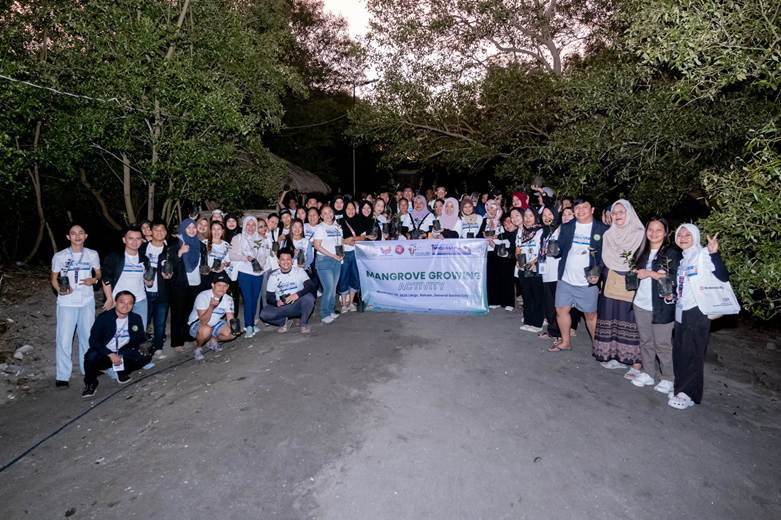
MSU–Maguindanao participates in the 1st Mindanao Forum on Waters and Natural Resources, highlighting its commitment to environmental conservation and sustainable resource management through a mangrove-growing activity that promotes coastal rehabilitation and the protection of aquatic ecosystems.
Institutional Contribution to Community Education and Outreach
Through its academic programs, collaborative research, technical training, community livelihood projects, and participation in national fisheries knowledge-sharing activities, MSU–Maguindanao extends fisheries and aquaculture education to students, former MILF combatants, farming households, local organizations, and fisheries stakeholders.
Its educational and outreach activities also benefit government practitioners, local government personnel, fisheries managers, agricultural extension workers, and other professionals involved in fisheries and aquaculture development. These initiatives strengthen practical skills, promote sustainable aquaculture production, support fisheries-related livelihoods, and encourage responsible utilization of aquatic resources.
By connecting scientific knowledge with community needs and institutional partnerships, the University contributes to sustainable fisheries and aquaculture development while providing a foundation for responsible tourism and aquatic ecosystem conservation.