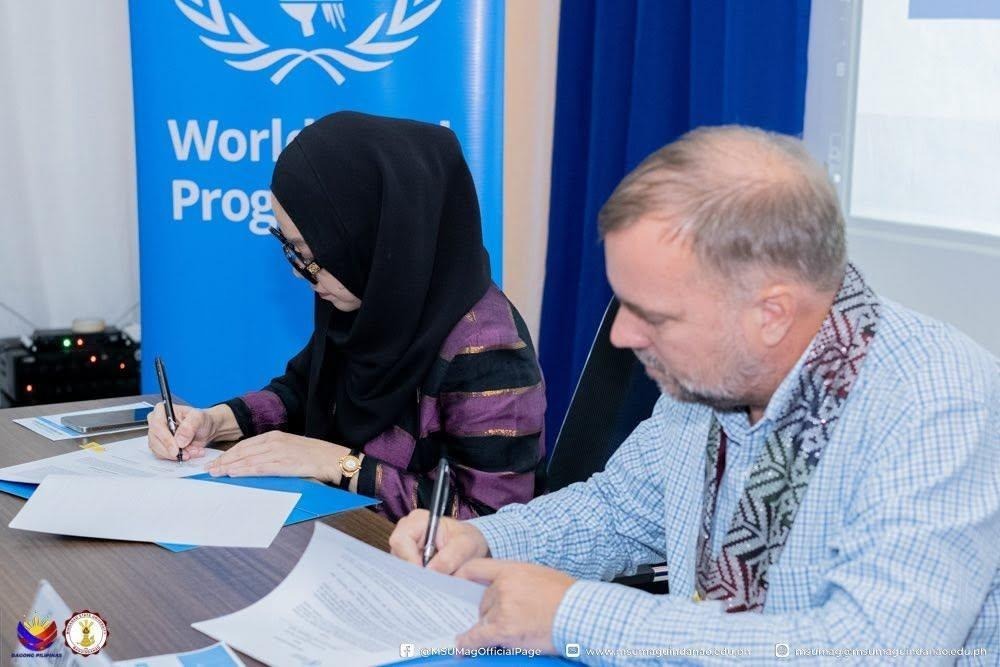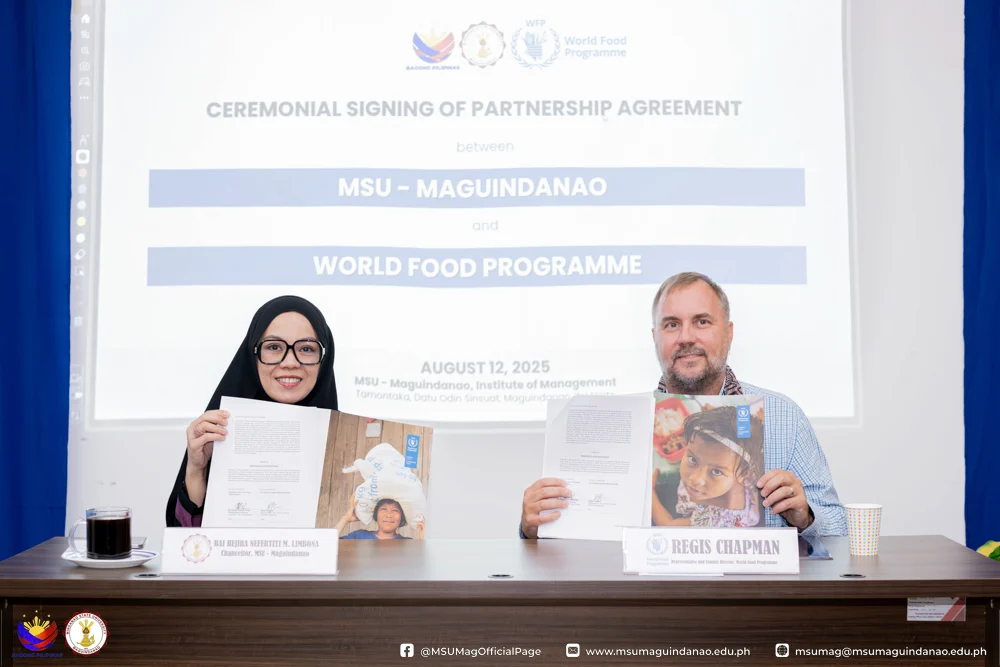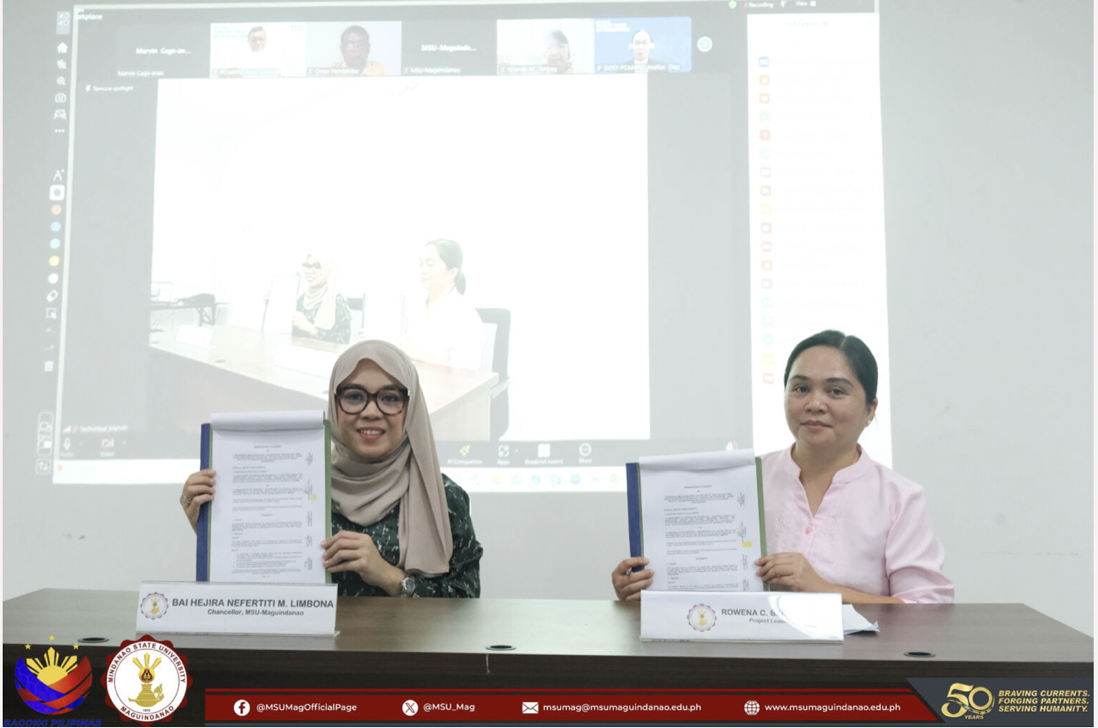
Mindanao State University–Maguindanao (MSU–Maguindanao) and the United Nations World Food Programme (WFP) signed a Memorandum of Agreement on August 12, 2025, at the University’s Institute of Management, formalizing a partnership on food security, nutrition, and climate resilience in the Bangsamoro Autonomous Region in Muslim Mindanao (BARMM). Chancellor Dr. Bai Hejira Nefertiti M. Limbona and WFP Representative and Country Director Regis Chapman signed the agreement, witnessed by WFP Cotabato Sub-Office Head Lyca Sarenas and University faculty, directors, and project staff.
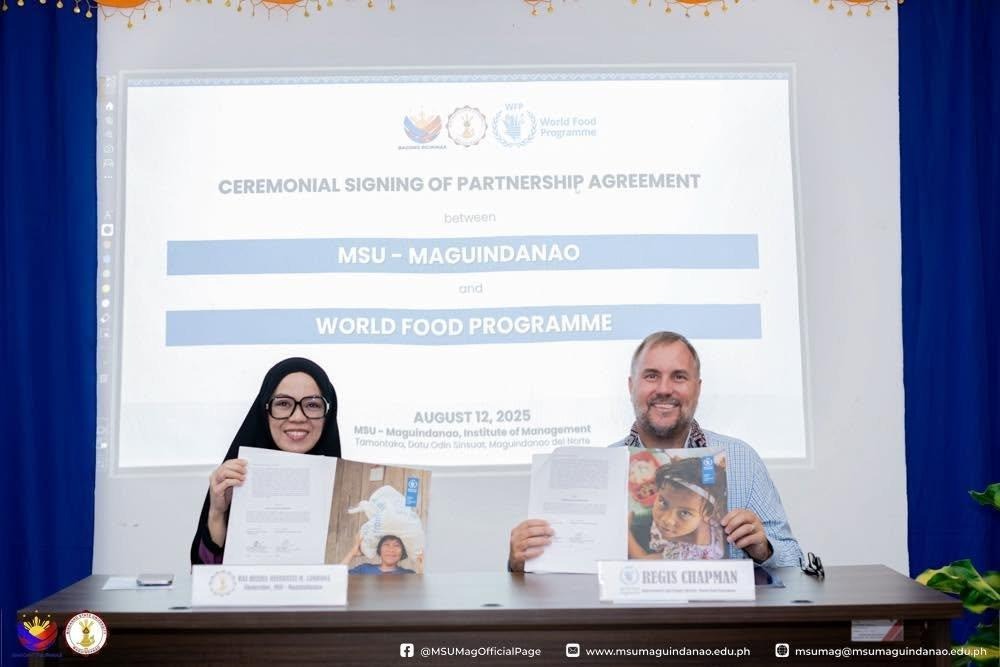
Chancellor Dr. Bai Hejira Nefertiti M. Limbona and WFP Representative and Country Director Regis Chapman sign the partnership agreement on August 12, 2025
The agreement builds on community-based participatory planning workshops the two institutions conducted in Maguindanao del Sur and Maguindanao del Norte. Under it, MSU–Maguindanao deploys its experts in food systems, climate adaptation, and gender-responsive programming to support WFP projects, while WFP provides technical resources and exchange visits. The University’s Office of the Vice Chancellor for Research and Extension anchors the partnership.
A joint 2025–2027 work plan commits the partners to train smallholder farmers in climate-smart agriculture, help priority barangays prepare Local Climate Change Adaptation Plans, reduce post-harvest losses, add value to agricultural products, strengthen cooperatives with culturally appropriate tools, and integrate food security and nutrition into the University’s curriculum.
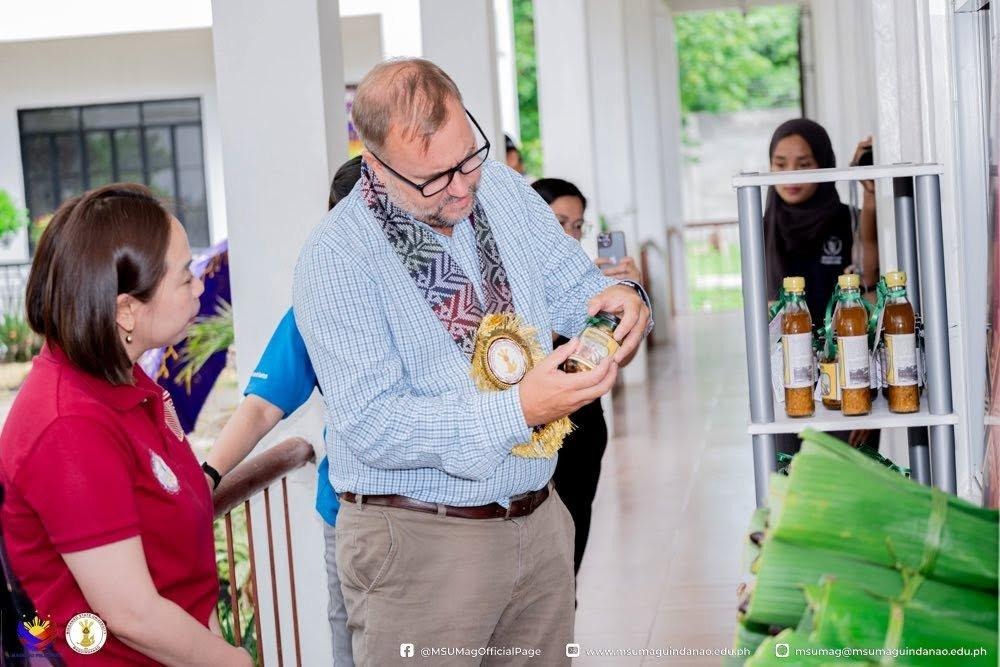
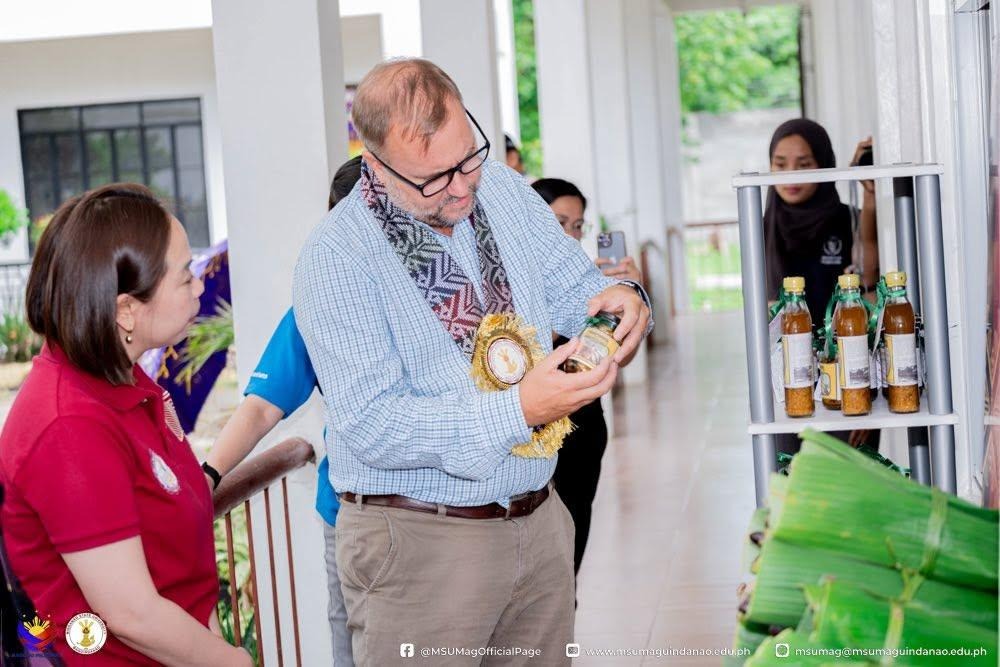
MSU–Maguindanao and WFP representatives examine locally developed agricultural products during the partnership signing.
Through pairing local academic expertise with the technical resources of a United Nations agency, the partnership brings international support to targeted capacity-building in the region and fosters a multi-stakeholder partnership that shares knowledge, expertise, and technology. It works to increase the productivity and incomes of small-scale food producers and to strengthen communities’ resilience and adaptive capacity to climate-related hazards.
With cooperation set through 2027, MSU–Maguindanao serves as a technical partner, not only a beneficiary, in WFP’s work for food security in the Bangsamoro.