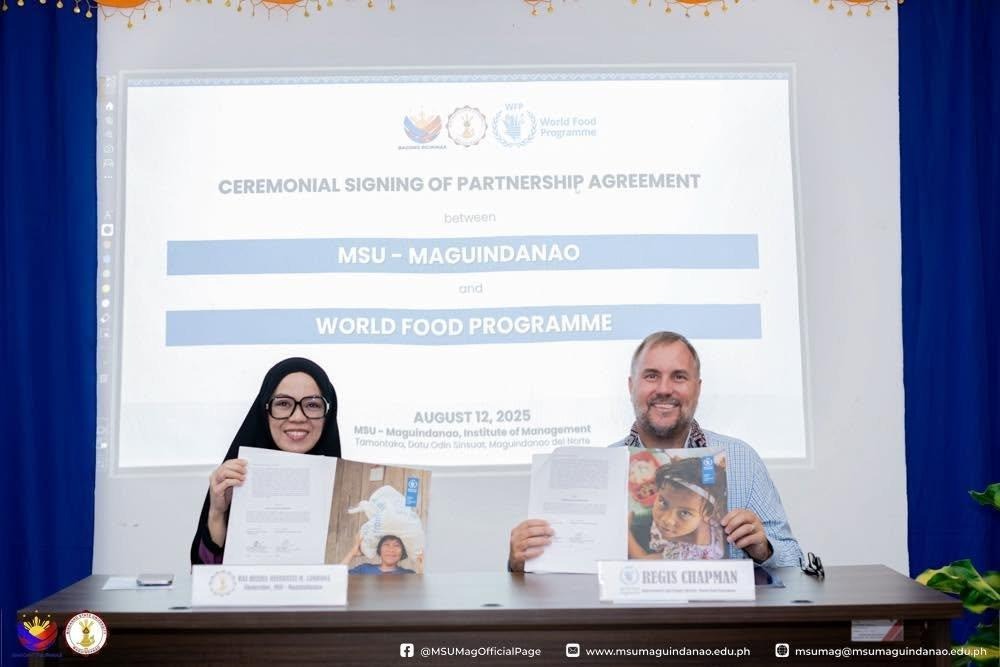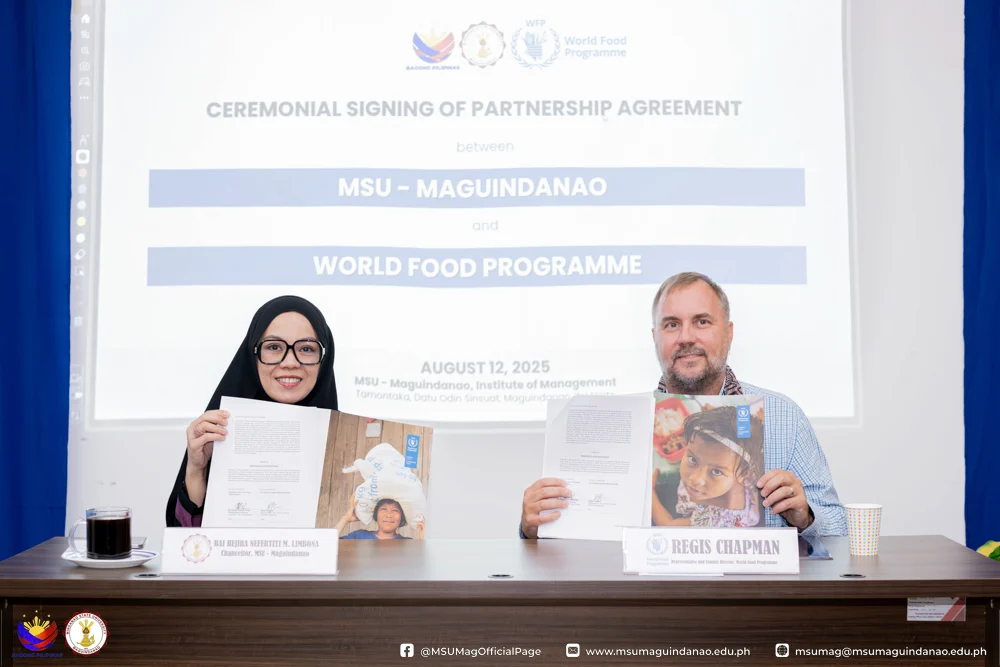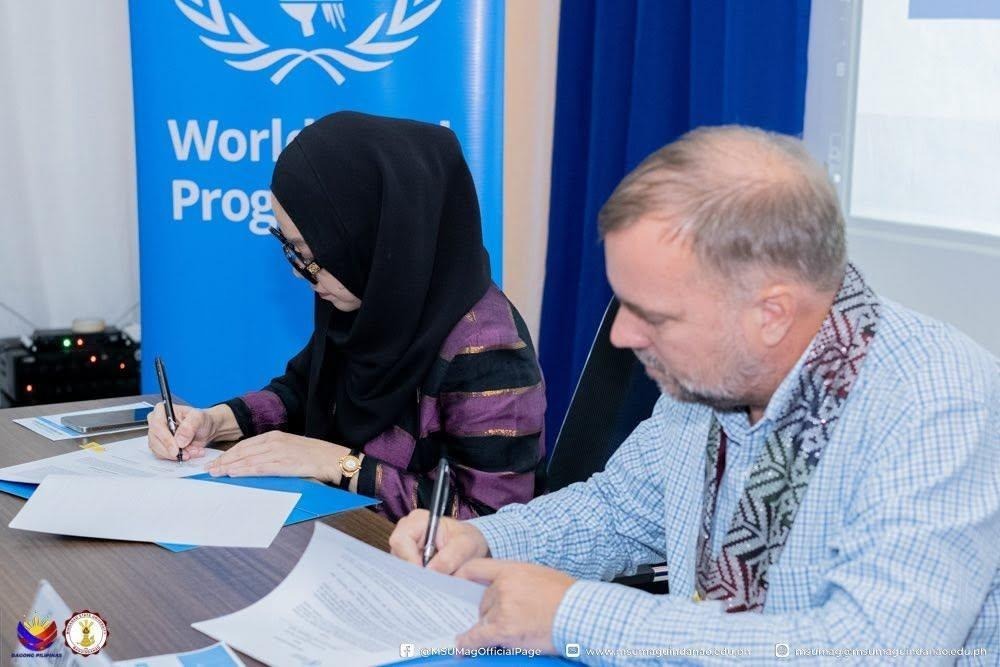
Mindanao State University-Maguindanao (MSU-Maguindanao), led by Chancellor Bai Hejira Nefertiti M. Limbona, has signed a Memorandum of Agreement with the United Nations World Food Programme (WFP), represented by Representative and Country Director Regis Chapman. The signing took place at the Institute of Management. The partnership aims to advance food security, nutrition, and climate resilience in the Bangsamoro Autonomous Region in Muslim Mindanao (BARMM), particularly for smallholder farmers, cooperatives, and vulnerable and underserved communities.
Chancellor Limbona emphasized the University’s role in generating and sharing scientific data, developing solutions to food and nutrition insecurity, and supporting the BARMM government’s initiatives. Country Director Chapman highlighted the value of combining WFP’s global expertise with MSU-Maguindanao’s local knowledge to address hunger and promote climate-resilient communities.
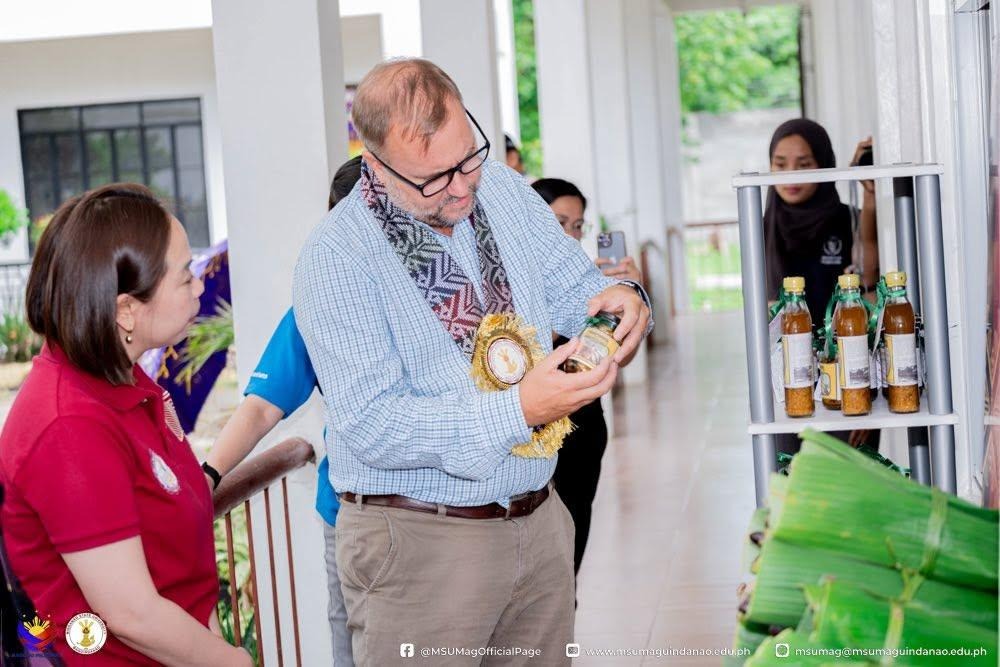
WFP Representative and Country Director Regis Chapman views products produced by partner-farmers under the MILF Camps Transformation Program
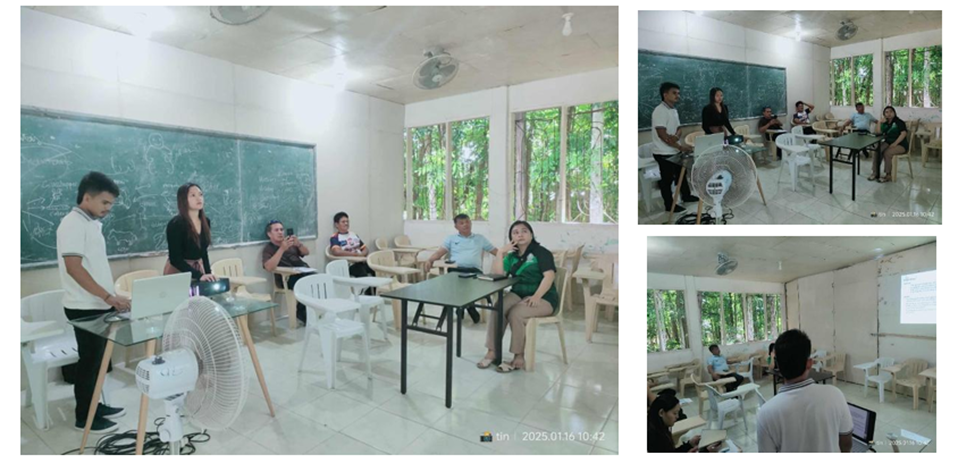
Under the 2025-2027 cooperation work plan, the partnership strengthens farming communit adaptive capacity through climate-smart agriculture training, watershed management, and post-harvest loss reduction. These efforts help communities withstand climate-related hazards and protect their food and livelihoods, contributing to the resilience and adaptation goals of SDG 13.
The development of Local Climate Change Adaptation Plans (LCCAPs) in priority barangays integrates climate measures into local planning, while MSU-Maguindanao’s generation and sharing of scientific data supports the BARMM government’s climate-related decision-making. The partnership also builds the capacity of smallholder farmers and cooperatives and integrates food security and nutrition resources into the University’s curriculum, thereby enhancing awareness and institutional capacity on climate action.
MSU-Maguindanao will mobilize experts in food systems, climate adaptation, and gender-responsive programming to support WFP projects, while WFP will provide technical resources and facilitate exchange visits to promote best practices. The initiatives prioritize vulnerable and underserved communities most exposed to climate-related challenges, through culturally sensitive tools for cooperatives and gender-responsive programming that ensure marginalized groups are included in climate action. This builds on the 2024 Community-Based Participatory Planning workshops in Maguindanao del Sur and Maguindanao del Norte, which identified livelihood challenges and environmental stressors in local communities.
Through this partnership, MSU-Maguindanao and WFP aim to strengthen local capacities and support climate adaptation, sustainable livelihoods, and food security in BARMM.
WFP Cotabato Sub-Office Head Lyca Sarenas, WFP team members, and MSU-Maguindanao graduate program coordinators, project staff, directors, faculty, and other personnel attended the MOA signing.