Through partnerships with government agencies, local communities, and research institutions, Mindanao State University–Maguindanao (MSU–Maguindanao) advances collaborative efforts to conserve and rehabilitate shared ecosystems.
Promoting Community-Based Agroforestry and Ecosystem Restoration
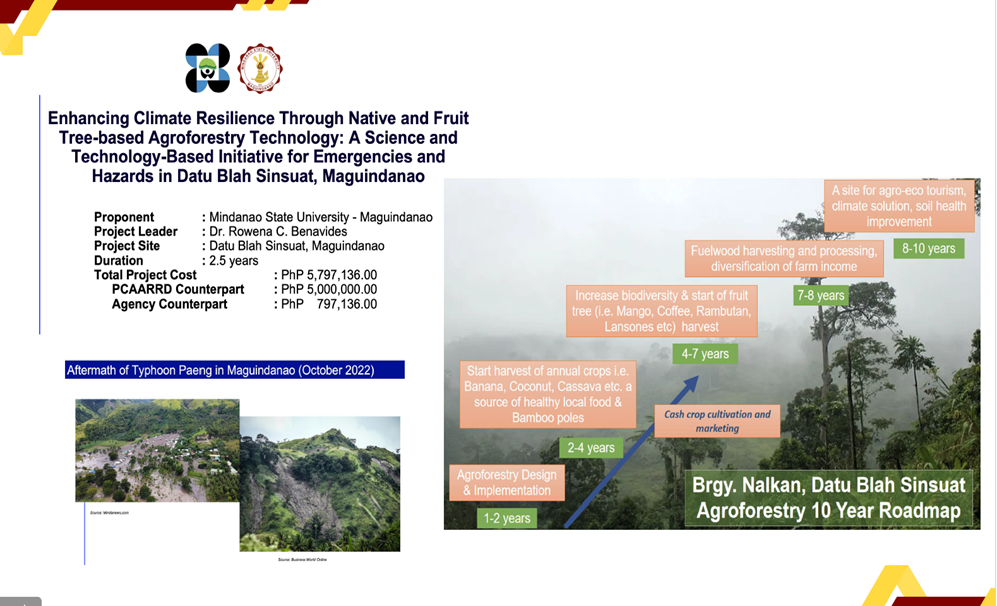
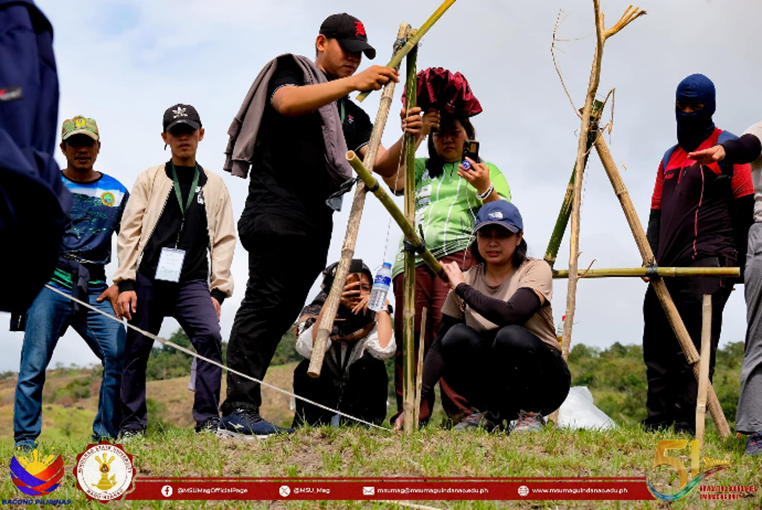
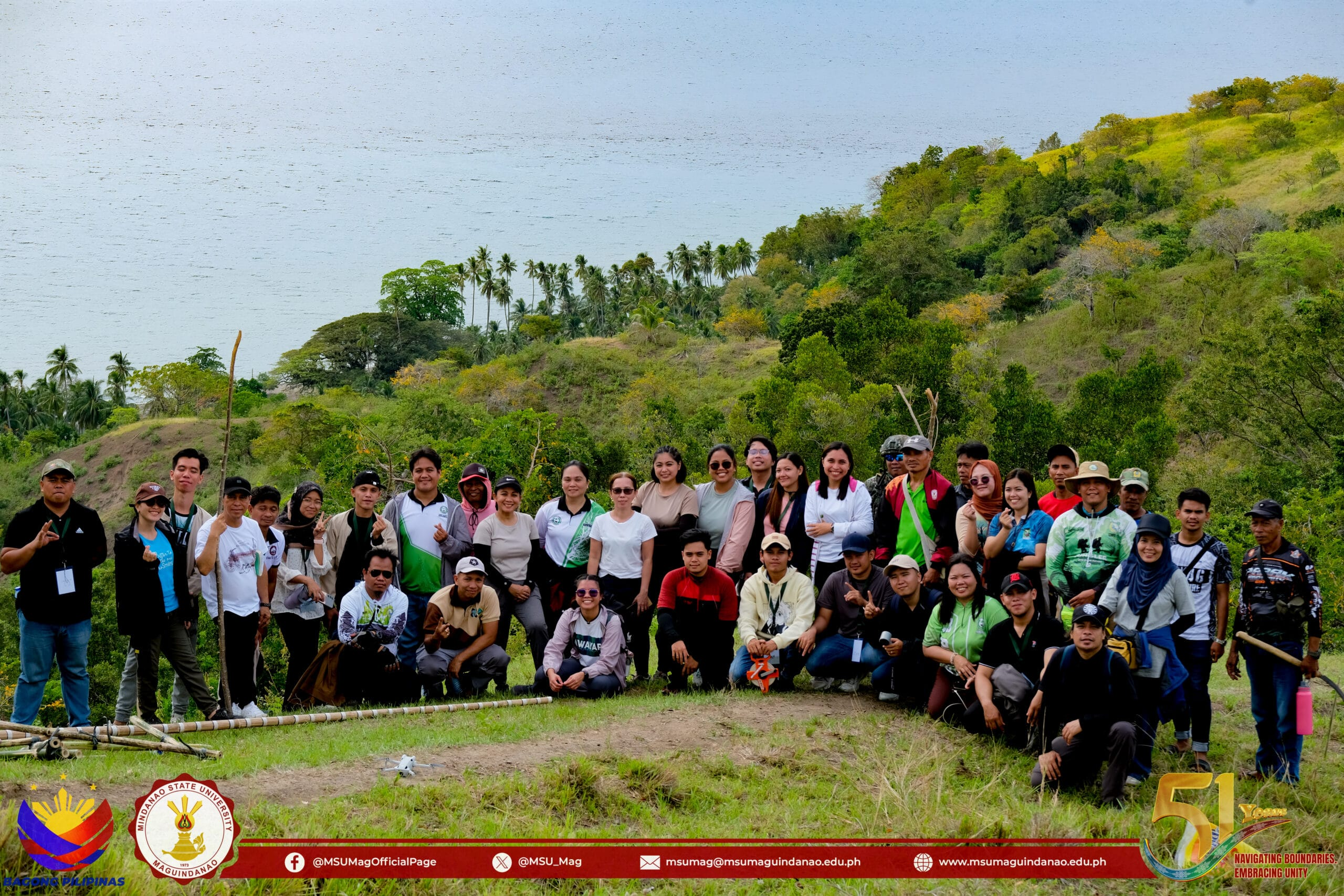
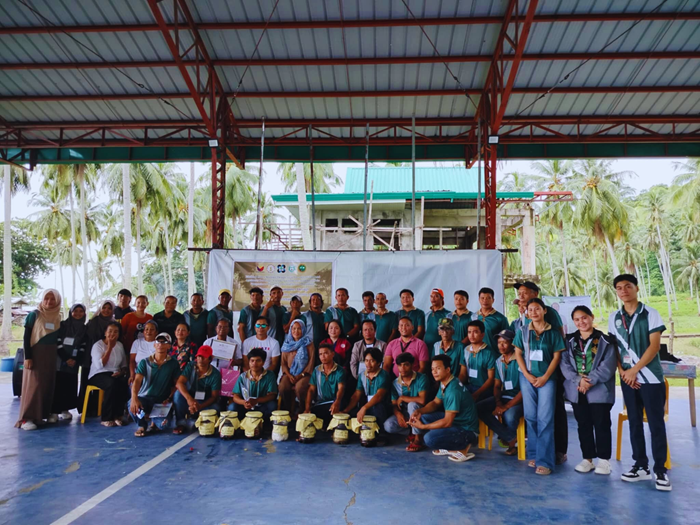
In February 2025, the University, through its College of Forestry and Environmental Studies (CFES), formally launched the project “Enhancing Climate Resilience through Native and Fruit Tree-Based Agroforestry Technology: A Science and Technology-Based Initiative for Emergencies and Hazards in Datu Blah Sinsuat, Maguindanao.” Funded by the Department of Science and Technology–Philippine Council for Agriculture, Aquatic and Natural Resources Research and Development (DOST–PCAARRD), with a budget of ₱5 million, the project promotes the rehabilitation of degraded upland areas through native and fruit tree-based agroforestry. Implemented in Datu Blah Sinsuat, the initiative engages local communities in project activities and decision-making while strengthening the technical capacity of agroforestry practitioners. Through community participation, the project encourages shared responsibility for restoring degraded landscapes, conserving soil and water resources, and improving the resilience of upland ecosystems.
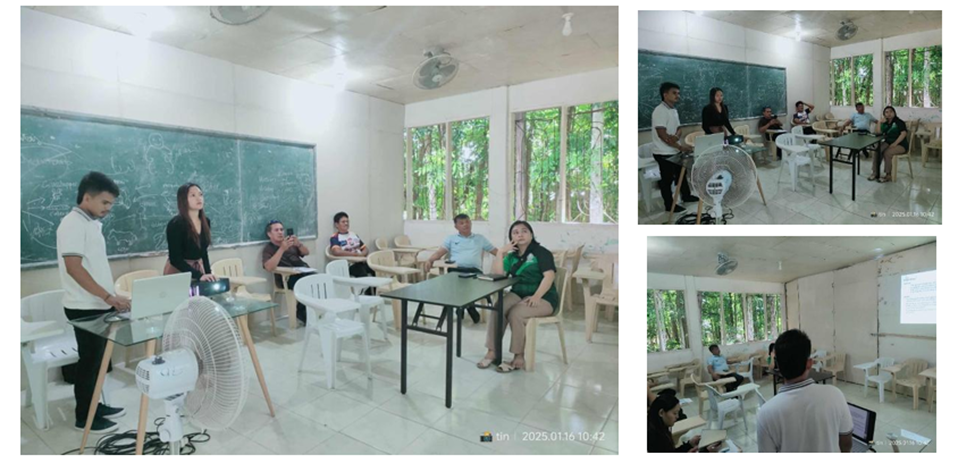
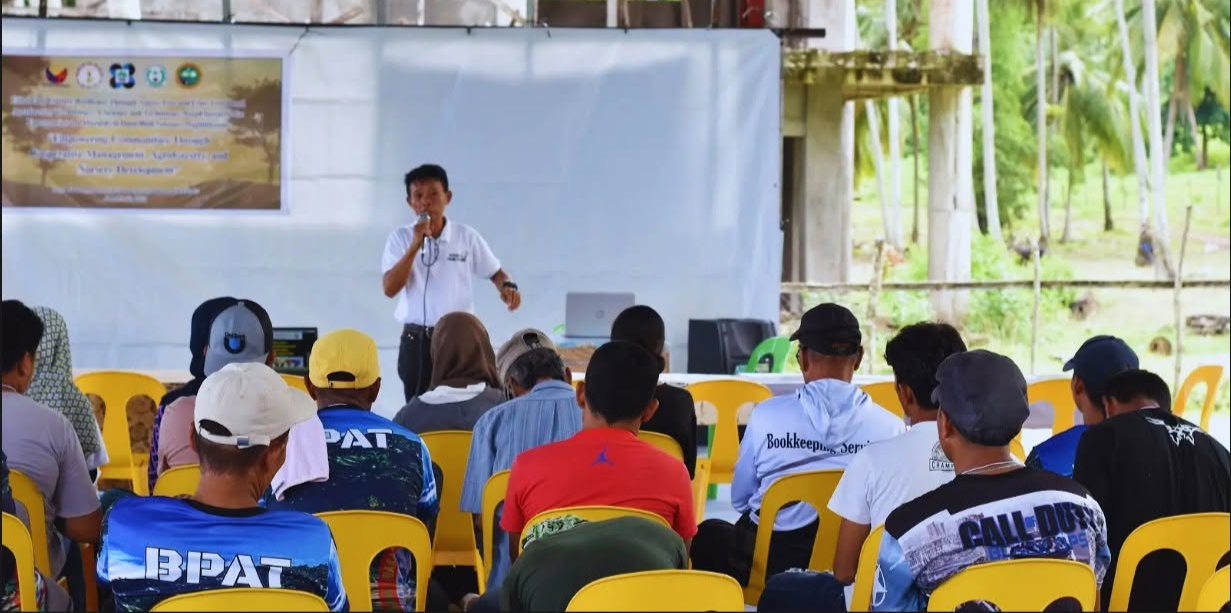
Coordination Meeting with Barangay Officials of Nalkan, Datu Blah Sinsuat on the finalization of nursery establishment plan held on January 16, 2025 at CFES, MSU-Maguindanao Campus
Advancing Community Resilience through the MSU-Maguindanao–WFP Partnership
On August 12, 2025, MSU–Maguindanao formalized a partnership with the United Nations World Food Programme (WFP) through a Memorandum of Agreement (MOA) to advance food security, sustainable agriculture, and climate-resilient communities in the Bangsamoro Autonomous Region in Muslim Mindanao (BARMM). Under their 2025–2027 cooperation work plan, the partners identified initiatives on smallholder farmer capacity building, climate-smart agriculture, local climate change adaptation planning, and watershed management. By combining the University's research and extension expertise with WFP's technical resources, the partnership supports local capacities and promotes collaborative approaches to managing agricultural landscapes and protecting shared natural resources.
Supporting Sustainable Agricultural Landscapes through Coconut Planting
The University further expanded its environmental partnerships through the Massive Coconut Planting Program (MCPP) in collaboration with the Philippine Coconut Authority (PCA). The two institutions formalized their partnership through an MOA signed on October 22, 2025, in Quezon City. With ₱2.09 million in PCA funding, the one-year initiative supports the cultivation and distribution of 22,000 high-quality coconut seedlings in Maguindanao. The partnership aims to improve farm productivity, increase farmers' income, and strengthen sustainable coconut production through planting and replanting activities, nursery establishment, technical assistance, and regular monitoring. By supporting farmers and promoting tree-based agricultural production, the initiative contributes to sustainable land use and the development of productive agricultural landscapes.
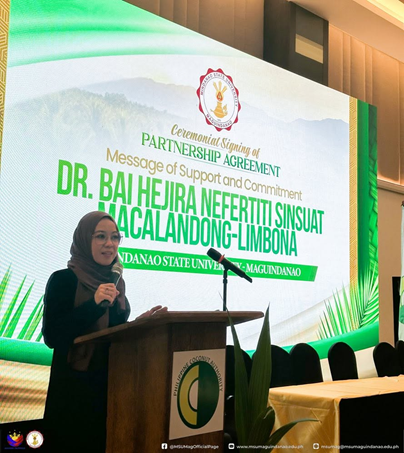
Chancellor Bai Hejira M. Limbona delivers Message of Support and Commitment during the Ceremonial Signing of Partnership Agreement with Philippine Coconut Authority on October 22, 2025 at Quezon City, Philippines
Strengthening Regional Collaboration for Natural Resource Conservation
Beyond its local and agricultural partnerships, MSU–Maguindanao strengthened regional collaboration through its leadership in the Mindanao Sulu Palawan–Innovative Research and Development Consortium (MinSuPala-IRDC), which has expanded from 9 founding institutions to 16 member universities and colleges. The Consortium organized the 1st Mindanao Forum on Waters and Natural Resources on November 26–28, 2025, in General Santos City, bringing together more than 190 researchers, policymakers, faculty experts, and development partners from Mindanao, Sulu, and Palawan. The forum provided a platform for sharing scientific research, building institutional partnerships, and advancing sustainable water and natural resource governance. Through its collaborative research initiatives, participating institutions contribute scientific information to support evidence-based policymaking and the sustainable management of shared ecosystems and natural resources.
Through these partnerships, MSU–Maguindanao promotes collective action in restoring degraded landscapes, supporting sustainable agricultural practices, strengthening watershed management, and conserving natural resources. By engaging local communities, farmers, government agencies, and research institutions, the University contributes to shared responsibility and sustained collaboration in maintaining and protecting ecosystems.