Promoting responsible fishing practices and strengthening fisheries governance require continued education, informed policy discussions, and active participation among fishing communities and other stakeholders. Through the College of Fisheries and its research and development initiatives, the University conducted and participated in educational and knowledge-sharing activities that addressed key concerns affecting aquatic resources, including overfishing, illegal, unreported and unregulated (IUU) fishing, and destructive fishing practices. These initiatives provided opportunities to discuss fisheries laws, share research findings, improve understanding of resource management, and emphasize the importance of protecting aquatic ecosystems and the livelihoods of small-scale fishers.
Policy Education on Commercial Fishing and Municipal Waters
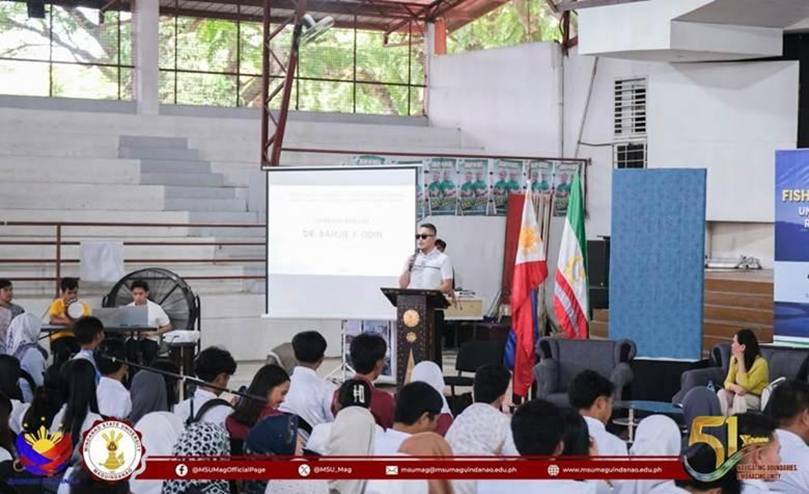
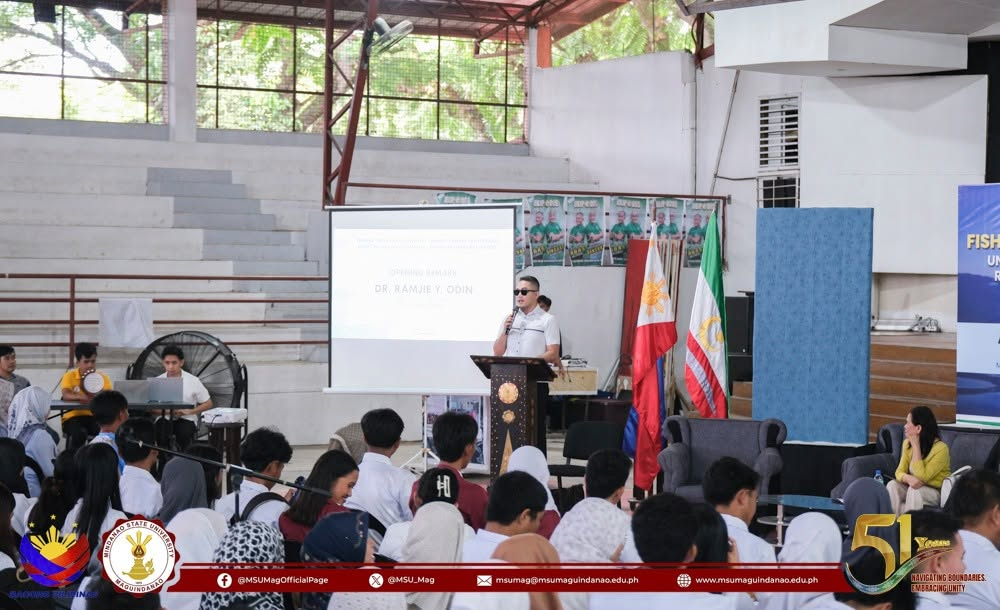
A major local initiative was the policy seminar entitled “Understanding the Supreme Court Ruling Allowing Commercial Fishing in Municipal Waters,” held on May 5, 2025, at the Datu Odin Sinsuat Gymnasium, MSU–Maguindanao, Dalican, Datu Odin Sinsuat, Maguindanao del Norte. Organized by the College of Fisheries, the seminar aimed to strengthen participants’ understanding of fisheries laws and governance, particularly the implications of allowing commercial fishing activities in municipal waters and their potential effects on local fishing livelihoods.
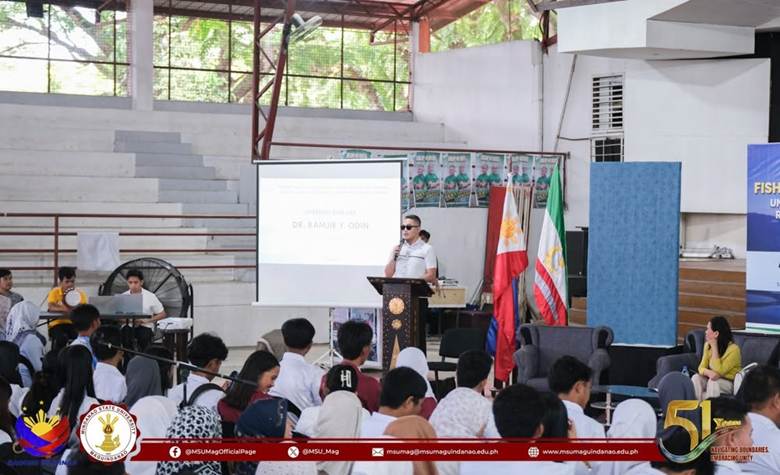
Dr. Ramjie Y. Odin delivers the opening remarks during the policy seminar at the Datu Odin Sinsuat Gymnasium, MSU–Maguindanao, on May 5, 2025.
The seminar featured Atty. Mohammad Muktadir A. Estrella, Director General of the BARMM Ministry of Social Services and Development, who discussed the legal foundations of the Supreme Court ruling, the responsibilities of municipal governments under Republic Act No. 8550, or the Philippine Fisheries Code, and relevant provisions of the Bangsamoro Organic Law (Republic Act No. 11054). Dr. Mohammadtaha S. Pendaliday, Director of the BARMM Ministry of Agriculture, Fisheries, and Agrarian Reform (MAFAR), also shared insights on regional fisheries regulatory frameworks. The activity concluded with the signing of a Commitment Wall, expressing support for the protection and sustainable management of municipal fisheries.
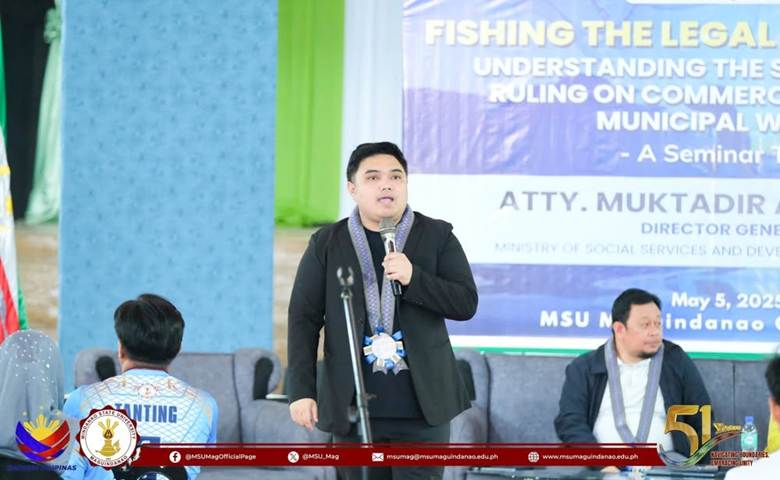
Atty. Mohammad Muktadir A. Estrella shares his insights on policy and small-scale fisheries governance during the seminar.
The discussions provided students and faculty members with a better understanding of fisheries regulations, municipal water governance, and the importance of safeguarding the rights and livelihoods of small-scale fishing communities. They also emphasized the role of effective regulation and science-based fisheries management in preventing the overexploitation of aquatic resources and promoting responsible fishing practices.
Community-Based Research Dissemination and Stakeholder Consultations through MinSuPala-IRDC
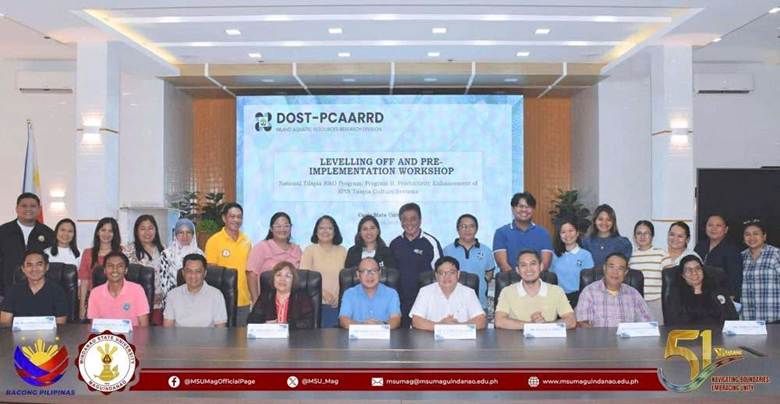
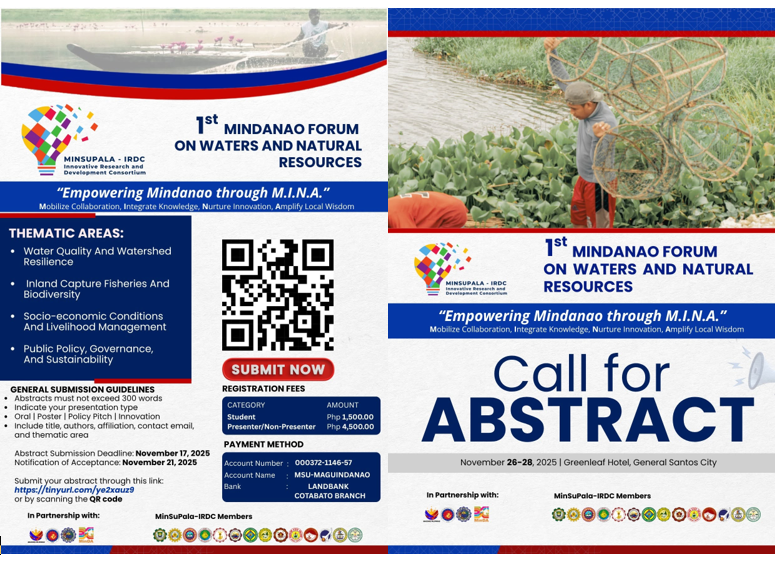
Community-level research dissemination and stakeholder consultations were also carried out through the Mindanao Sulu Palawan – Innovative Research and Development Consortium (MinSuPala-IRDC) at MSU–Maguindanao. During its month-long activities in 2025, the consortium presented Phase 1 project results and policy recommendations across partner areas, including Cotabato City, Kabuntalan, Talitay, Northern Kabuntalan, and Datu Piang. These activities brought together representatives from local government units, barangay local government units, and community stakeholders to validate research findings, exchange insights, and identify priorities for the succeeding phase of the project.
The Phase 1 research covered inland capture fisheries, water quality assessments, and socioeconomic surveys, generating baseline information on aquatic resources, environmental conditions, and community livelihoods. The presentations and consultations provided local stakeholders with opportunities to discuss the findings and their implications for resource management. Key Informant Interviews with fisherfolk, farmers, and cooperatives further helped identify priorities for Phase 2, including the development of initiatives involving indigenous fish species such as haluan, native katipa, and popoyu. Through these engagements, MinSuPala-IRDC promoted the use of research-based information in local planning and strengthened collaboration toward sustainable inland fisheries management and the protection of indigenous aquatic resources.
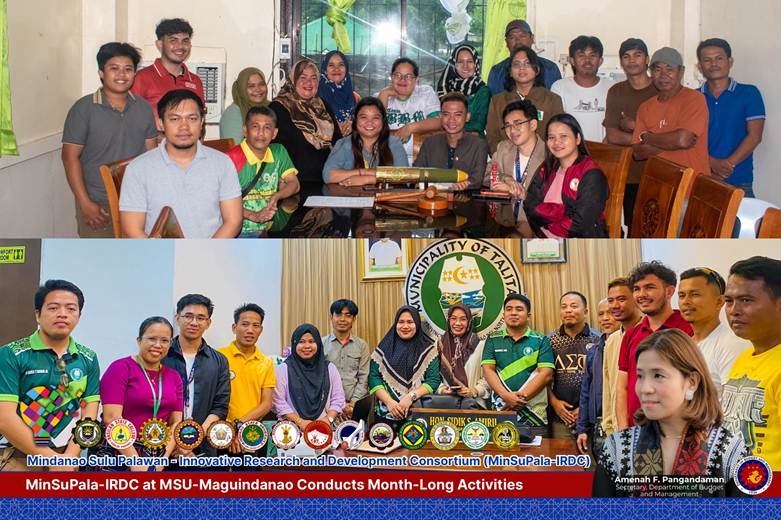
MinSuPala-IRDC research team presents Phase 1 findings and policy recommendations to local government representatives and community stakeholders during the 2025 consultations.
National Fisheries Education and Knowledge Exchange through the Second Philippine Small-Scale Fisheries National Symposium
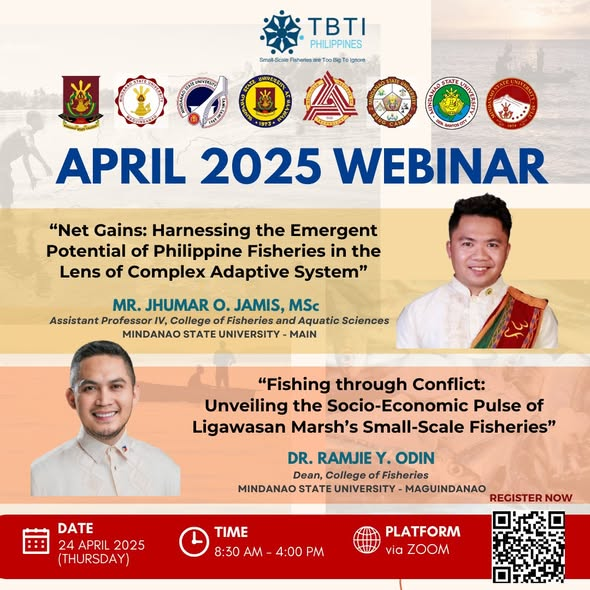
At the national level, the University, as a participating constituent university of the Mindanao State University System, contributed to the organization of the Second Philippine Small-Scale Fisheries National Symposium (PSSFNS2), held on October 21–23, 2025, at the MSU Main Campus in Marawi City. With the theme “From Recognition to Action: Advancing Sustainable Small-Scale Fisheries in the Philippines,” the symposium served as a venue for fisheries education, stakeholder engagement, and the exchange of knowledge and experiences on sustainable fisheries management.
The three-day event gathered more than 300 participants, including fisherfolk, fisheries managers, researchers, local government representatives, policymakers, non-government organizations, and development partners. Through a keynote lecture, seven plenary sessions, and parallel discussions, participants examined issues concerning inland and marine fisheries, fisheries governance, climate resilience, technological innovations, and the socioeconomic conditions of fishing communities.
The symposium also addressed major threats to aquatic resources, including overfishing, IUU fishing, and destructive fishing practices. Discussions covered the National Plan of Action for Small-Scale Fisheries, updates from the Food and Agriculture Organization (FAO) and the Bureau of Fisheries and Aquatic Resources (BFAR), and proposed amendments to the Philippine Fisheries Code. Research presentations on coral reef ecosystems, small pelagic fish, and interactions between small-scale and commercial fisheries further contributed to discussions on the ecological and governance challenges affecting fisheries resources.
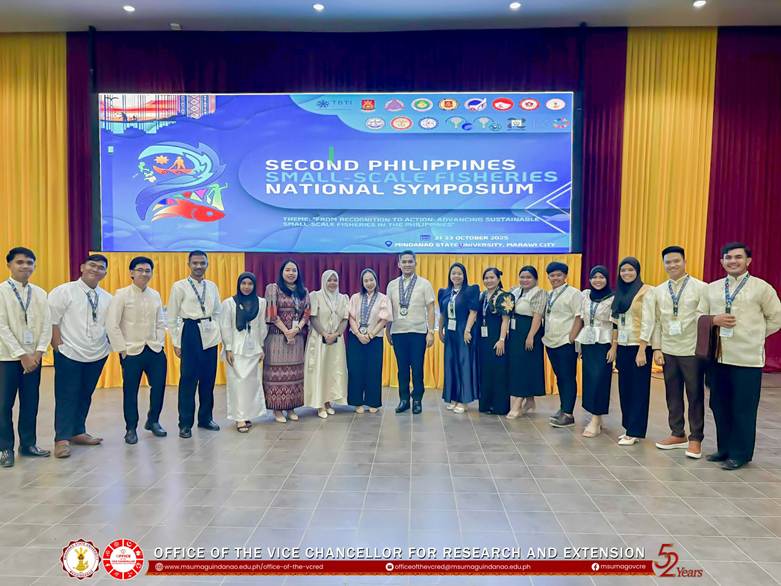
Mindanao State University–Maguindanao actively participates in and serves as one of the hosts of the three-day fisheries symposium held at Mindanao State University–Marawi
Through these local and national engagements, the University extended fisheries education and knowledge-sharing beyond the classroom by bringing together students, faculty members, fisherfolk, fisheries practitioners, government representatives, and other stakeholders. The activities highlighted the importance of responsible fishing practices, effective fisheries regulation, protection of municipal waters, and the sustainable use of aquatic resources. They also strengthened awareness of the challenges posed by overfishing, IUU fishing, and destructive fishing practices, reinforcing the University's contribution to fisheries education, aquatic biodiversity conservation, evidence-based fisheries management, and the protection of communities whose livelihoods depend on healthy aquatic ecosystems.