Articles
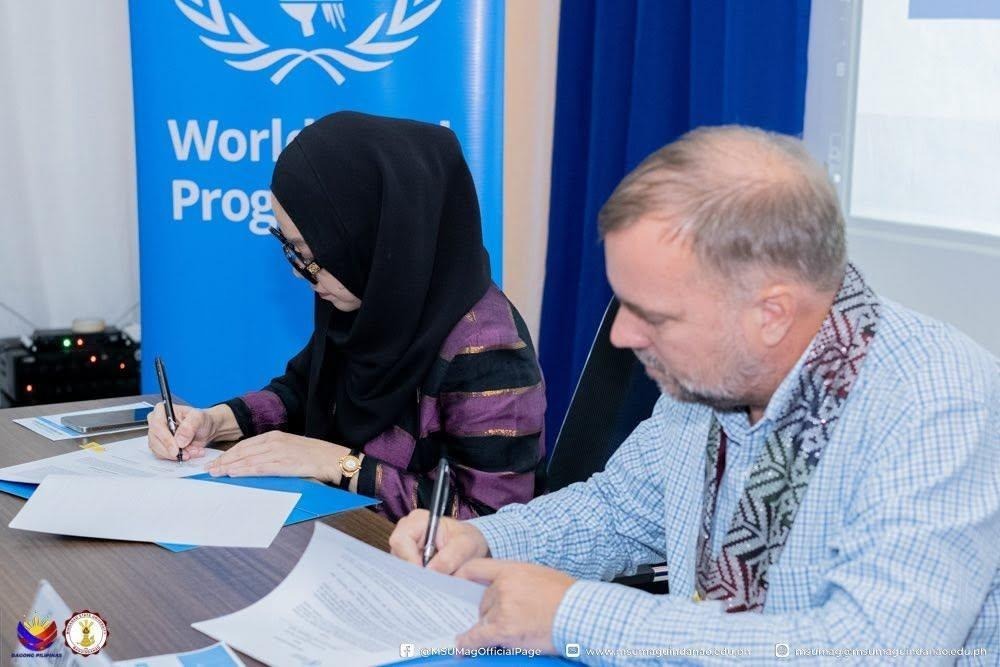
MSU–Maguindanao, World Food Programme Partners for Food Security, Nutrition and Climate-Resilient Communities in BARMM
A Memorandum of Agreement (MOA) was signed between Mindanao State University–Maguindanao (MSU–Maguindanao), led by Chancellor Bai Hejira Nefertiti M. Limbona, and the United Nations World Food Programme (WFP), represented by Representative and Country Director Regis Chapman, at the Institute of Management. The partnership established a 2025–2027 cooperation framework to advance food security, nutrition, sustainable agricultural production, and climate resilience in the Bangsamoro Autonomous Region in Muslim Mindanao (BARMM).Formal signing of the partnership agreement between MSU–Maguindanao Chancellor Bai Hejira Nefertiti M. Limbona and World Food Programme Representative and Country Director Regis Chapman, establishing the institutional framework for the 2025–2027 cooperation programUnder the cooperation framework, joint initiatives include capacity building for smallholder farmers, climate-smart agriculture training, watershed management, post-harvest loss reduction, value addition in agricultural products, and the integration of food security and nutrition resources into the university curriculum. The partnership has also supported the development of Local Climate Change Adaptation Plans in priority barangays and promoted culturally responsive tools for local cooperatives.MSU–Maguindanao and World Food Programme representatives following the ceremonial signing of the partnership agreement on 12 August 2025The partnership promotes responsible consumption and production through initiatives designed to reduce food losses along production and supply chains, encourage sustainable management and efficient use of natural resources, and improve agricultural resource efficiency. Through technical cooperation, knowledge exchange, and curriculum integration, MSU–Maguindanao and WFP also support education and awareness on sustainable development and environmentally responsible agricultural practices.MSU–Maguindanao and World Food Programme representatives following the ceremonial signing of the partnership agreement on 12 August 2025MSU–Maguindanao remains committed to translating this partnership into sustainable agricultural practices and community-based solutions that minimize food waste, strengthen resource efficiency, and promote responsible consumption and production while supporting food security and climate-resilient communities across BARMM.
September 1, 2025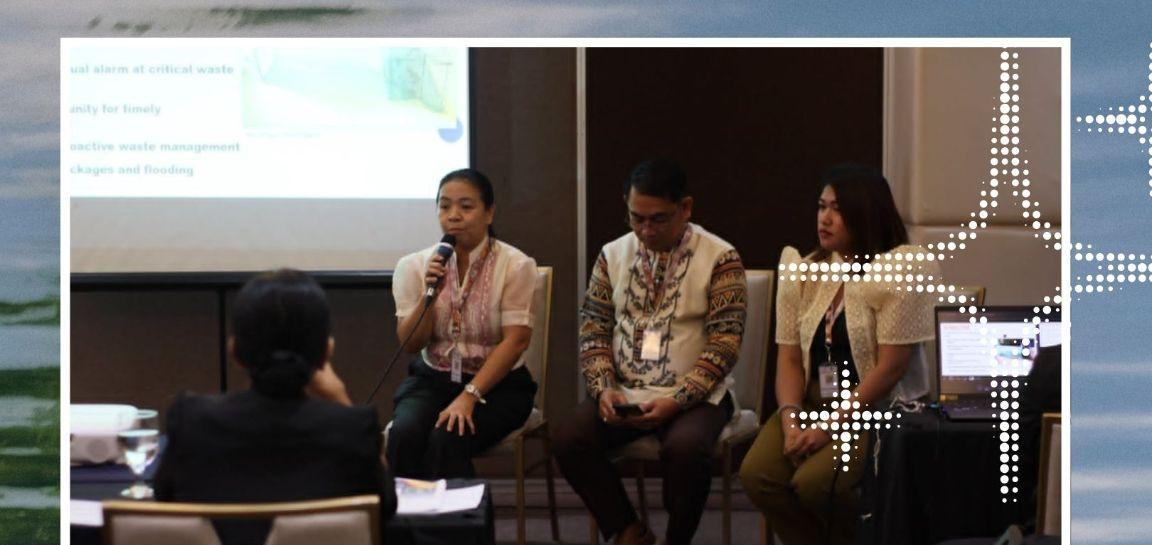
MSU-Maguindanao Researcher Builds Low-Cost Sensor to Catch Clogged Drainage Before It Floods Cotabato City
“S.A.L.A.: Smart Automatic Alert System for Solid Waste Drainage Filters,” a research project presented at the ATU-Net International Conference on Innovation and Entrepreneurship in Computing, Engineering, and Science Education (ATU-Net InvENT 2025) in Cagayan de Oro City in July 2025, introduces a low-cost early-warning device for one of Cotabato City's persistent problems: drainage canals that clog with solid waste and send floodwater into residential streets. The project was developed by Asst. Prof. Always A. Germo of Mindanao State University-Maguindanao (MSU-Maguindanao), carried out through an interschool collaboration that paired the University's own research capacity with partner institutions to design a practical, locally built response to the clogging that routinely afflicts the city's drainage system, particularly the flood-prone barangay of RH 8.Asst. Prof. Germo (left, with microphone) discussing the S.A.L.A. prototype during the conference's panel session.Germo's team built a drainage filtration prototype around an Arduino-based capacity sensor, paired with a buzzer and LED indicators that trigger once waste buildup in a filter reaches a critical level, programmed using the Arduino and Processing platforms. Using a descriptive quantitative design built on grand-mean analysis, the researchers field-tested the prototype at RH 8, measuring how far the buzzer's sound and the LED's light could still be reliably detected: the buzzer registered as “highly audible” within 15 meters and remained “moderately audible” at 30 meters, while the LED signal held “very good visibility” out to 21 meters and stayed visible at the full 30-meter test distance. The device was then evaluated on sensing accuracy, buzzer performance, its effectiveness at flagging clogging, accessibility and ease of use, and alarm reliability.Across every one of those measures, the prototype scored “high functionality,” giving Germo's team evidence that a simple, inexpensive sensor can catch a clogging drainage filter before it fails outright. That early catch is the point: by flagging a blockage before it floods a canal, the device supports cleaner water flow, keeps solid waste from building up unseen in drainage systems, and gives maintenance crews the lead time to clear a filter instead of responding to a flood already underway, work aimed squarely at reducing pollution and improving water quality at the neighborhood level.Presented under the conference's Sustainable Development theme, the research gave MSU-Maguindanao a venue to share a homegrown engineering solution with an international academic audience and positions the prototype for further testing and possible field deployment. Cotabato City's drainage-dependent barangays stand to gain a low-cost monitoring tool once that next step is taken, and Germo's work adds to MSU-Maguindanao's growing body of practical, locally grounded research on water and sanitation management in BARMM.
August 31, 2025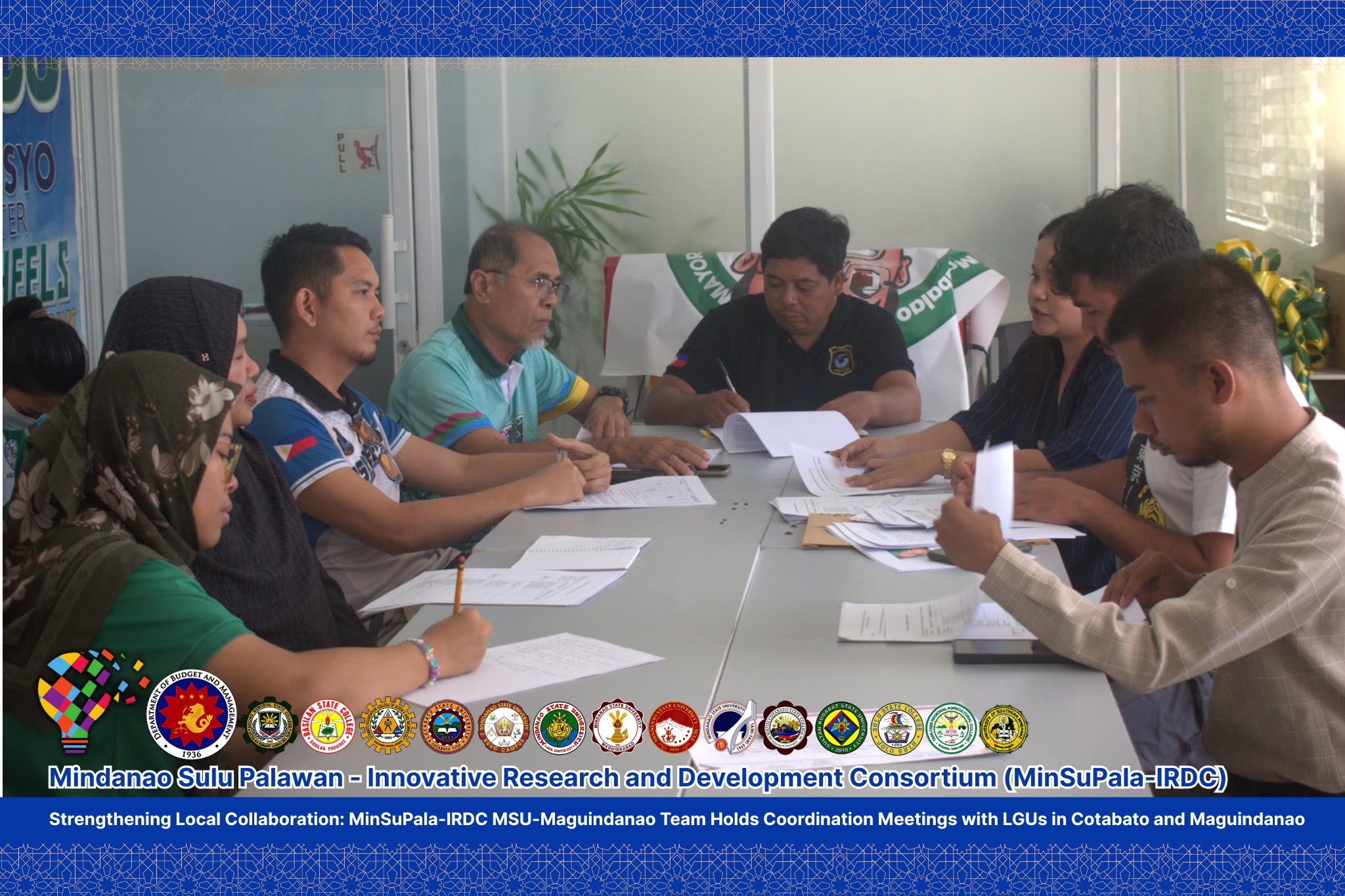
Strengthening Local Collaboration: MinSuPala-IRDC MSU-Maguindanao Team Holds Coordination Meetings with in Cotabato City and Maguindanao Del Norte for Preservation of Indigenous Crops and Fish Species
In a series of productive dialogues held from July 23 to 25, 2025, the MSU-Maguindanao MinSuPala-IRDC project team convened coordination meetings with the Local Government Units (LGUs) of Cotabato City, Kabuntalan (Maguindanao del Norte), Talitay (Maguindanao del Norte), Datu Piang (Maguindanao del Sur), and Northern Kabuntalan (Maguindanao del Norte). These meetings served as a vital platform for launching the second phase of the consortium’s flagship project titled “Establishment and Preservation of Indigenous Fish and Crop Products.”Strengthening Local Collaboration: MinSuPala-IRDC MSU-Maguindanao Team Holds Coordination Meetings with LGUs in Cotabato and Maguindanao for Phase 2 ProjectThe project aims to protect and promote indigenous fish and crop species that are vital to the culture, livelihood, and food traditions of local communities in the region. By enhancing food security and supporting sustainable farming and fishing practices, the initiative seeks to improve the well-being of local populations. As part of the coordination meetings, the MinSuPala-IRDC team conducted the Prioritization Tool Survey, which allowed community leaders, farmers, and fisherfolk to identify the most important indigenous species for preservation. Their input will guide the research team on conducting the Phase 2 project.Local Government Units (LGUs) expressed strong support and committed to partnering with the project team. They recognized the potential of the project to help preserve natural resources and improve community life. The meetings also strengthened the collaboration between MSU-Maguindanao and the LGUs, setting a solid foundation for Phase 2.The success of these coordination meetings was made possible through the unwavering support of MSU-Maguindanao Chancellor Bai Hejira Nefertiti M. Limbona, whose leadership continues to inspire innovation and collaboration across the university’s research and extension initiatives. The active participation of the project team members—composed of faculty researchers and staff—ensured meaningful engagements with stakeholders and facilitated the smooth conduct of the activity. With this collective effort, the project is now well-positioned to move forward with more focused, community-based actions to conserve and sustain indigenous fish and crop species for future generations.
August 26, 2025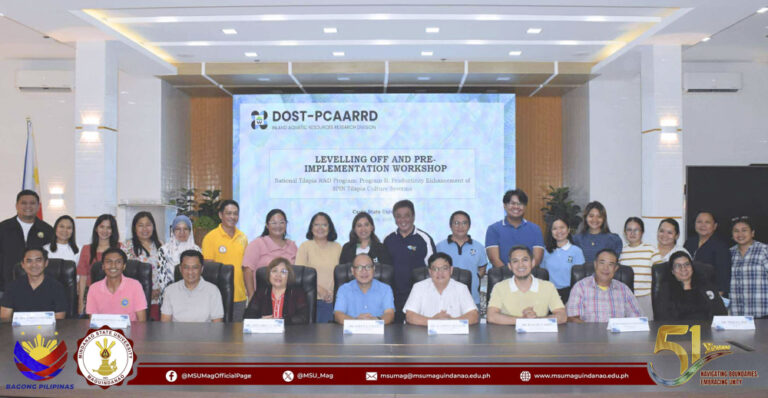
MSU-Maguindanao Leads National R&D Program on Saline-Tolerant Tilapia Production
Mindanao State University–Maguindanao, through Dr. Ramjie Y. Odin, Dean of the College of Fisheries, leads Program B of the DOST-PCAARRD National Tilapia R&D Program, Productivity Enhancement of SPIN Tilapia Culture Systems. The inception meeting was held on June 19, 2025, at Capiz State University to coordinate research activities aimed at improving saline-tolerant tilapia production, sustainability, and cost-efficiency.Dr. Ramjie Y. Odin, Dean of the College of Fisheries with other officials of state universities, leads Program B of the DOST-PCAARRD National Tilapia R&D Program, Productivity Enhancement of SPIN Tilapia Culture Systems The national initiative brings together MSU-Maguindanao, Capiz State University, Northern Iloilo State University, Zamboanga State College of Marine Sciences and Technology, and the University of the Philippines. Its five interconnected projects focus on improved hatchery and grow-out systems, feeding strategies, microbial-based nursery production, acclimation and transport, and local probiotics.The program directly involves researchers and participating academic institutions. Its research outputs may also benefit aquaculture practitioners and local food systems through improved production technologies and more cost-efficient saline-tolerant tilapia culture systems.The initiative is relevant to Sustainable Development Goal 13 (Climate Action) insofar as research on saline-tolerant tilapia may support adaptation to changing environmental conditions. Through collaborative research, coordinated methodologies, and improved project monitoring, the program strengthens national aquaculture research capacity and explores approaches to more sustainable production.
August 10, 2025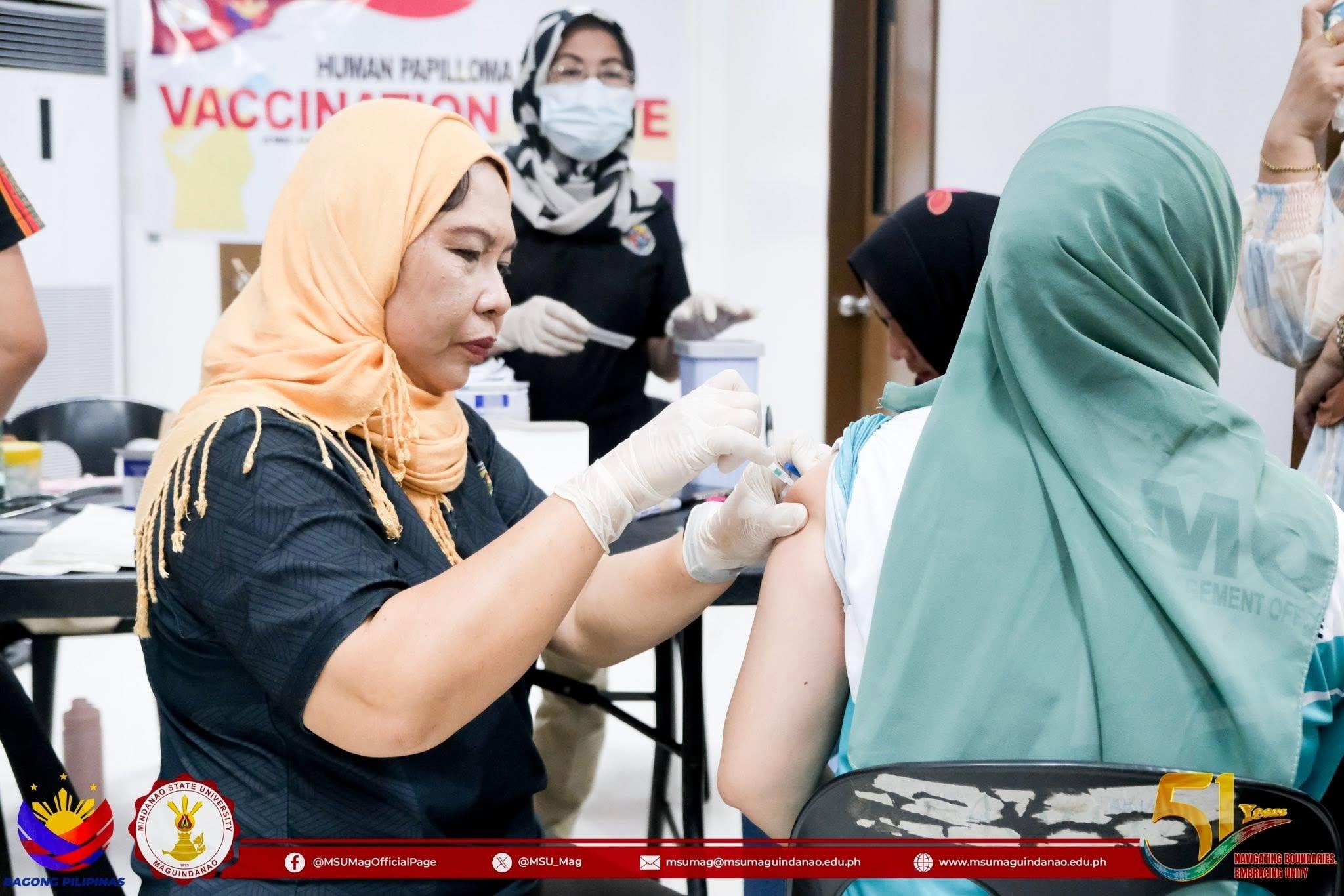
MSU–Maguindanao and Government Health Agencies Collaborate to Vaccinate 111 Employees Against HPV
Mindanao State University–Maguindanao strengthened its employee wellness initiatives through a free Human Papillomavirus (HPV) Vaccination Drive conducted on June 13, 2025, at the University Infirmary Facility. Implemented by the MSU–Maguindanao Infirmary Personnel and the Human Resource Management Office (HRMO), in partnership with the Datu Odin Sinsuat District Hospital (DOSDH), with vaccines provided by the Ministry of Health (MOH), the initiative resulted in the vaccination of 111 university employees.MSU–Maguindanao employees receive free HPV vaccination at the University Infirmary Facility on June 13, 2025.HPV infection is associated with several cancers, including cervical, anal, and oropharyngeal cancers, making preventive vaccination an important public health intervention. By bringing vaccination services directly to the workplace, the University improved employees’ access to preventive healthcare. The Infirmary and HRMO coordinated employee participation, while DOSDH provided health personnel and technical support, and the MOH supplied the vaccines.The activity demonstrates how collaboration between a public higher education institution and government health agencies can help deliver essential preventive services to university personnel. Faculty members, researchers, administrative personnel, and support staff were the direct beneficiaries. The initiative also reinforced the role of employee wellness in sustaining the University's teaching, research, administrative, and student-support functions.Building on this partnership, continued coordination with public health agencies can help sustain access to preventive healthcare and strengthen workplace health initiatives. Follow-up monitoring of vaccination coverage and employee health outcomes would further help assess the program's longer-term benefits and inform future institutional wellness interventions.
August 7, 2025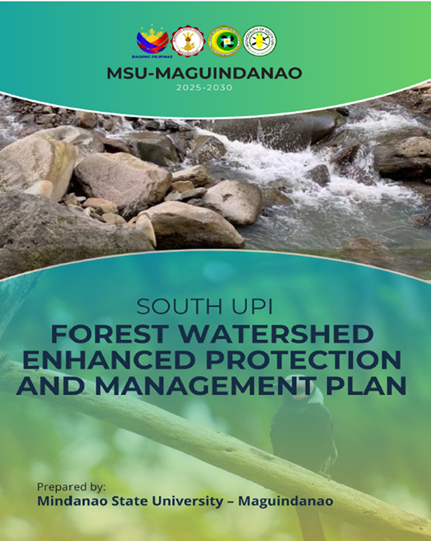
Protecting the South Upi Watershed, from Forest to Fish
Healthy watersheds keep rivers clean and aquatic habitats intact. In 2025, MSU–Maguindanao developed the South Upi Forest Watershed Enhanced Protection and Management Plan (2025–2030) through the research project “Characterization of South Upi Forest Watershed cum Landslide Vulnerability Assessment: Basis for Enhanced Protection and Management Plan,” funded by the Ministry of Science and Technology–BARMM (MOST–BARMM).The plan covers about 1,894 hectares across five barangays of South Upi, Maguindanao del Sur: Romangaob, Looy, Bongo, Kigan and Pandan. Baseline data collection, GIS mapping, biodiversity and habitat profiling and landslide vulnerability assessment identified the pressures on the watershed: illegal logging, land conversion, unsustainable farming, soil erosion, landslides, biodiversity loss and potential degradation of water quality.The five-year plan responds with seven strategies:Watershed zoning and protection of critical and environmentally sensitive areasSustainable land-use management to limit forest degradation and soil erosionForest rehabilitation through assisted natural regeneration, agroforestry and native species plantingBiodiversity and habitat conservationWater resource management to protect water sources and water qualityCommunity-based environmental protectionEnvironmental monitoring and institutional coordinationThe plan was built with the people who live in the watershed. LGUs, Indigenous Teduray communities, farmers and other stakeholders took part in field assessments and consultations, contributing local and traditional knowledge to the plan. In February 2025, the University also trained South Upi and North Upi LGU personnel in advanced QGIS mapping so they can monitor land use and update the plan themselves.The strategy is grounded in the aquatic species of the area. MinSuPala-IRDC assessments of inland capture fisheries and the 2025 community prioritisation of indigenous fish species, including haluan, native katipa and popoyu, identify the species that depend on clean, well-protected waters downstream.South Upi Forest Watershed Enhanced Protection and Management Plan (2025–2030).MSU–Maguindanao and MOST–BARMM researchers with local officials and members of the Indigenous Teduray community during field assessment and consultation.
August 7, 2025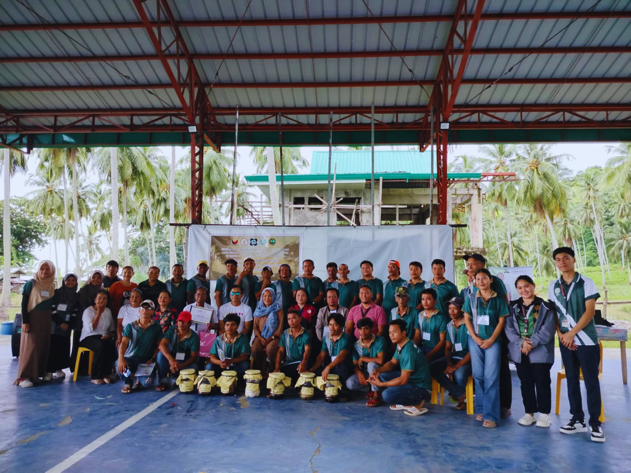
MSU-Maguindanao Equips Local Communities With Science-Based Strategies For Climate Action
The College of Forestry and Environmental Studies (CFES) of MSU-Maguindanao conducted a two-day seminar-workshop on Empowering Communities Through Cooperative Management, Agroforestry, and Nursery Development on June 16-17, 2025, in Datu Blah Sinsuat, Maguindanao del Norte. The activity is part of the DOST-PCAARRD-funded project “Enhancing Climate Resilience through Native Tree and Fruit Tree-Based Agroforestry Technology,” and it advances Sustainable Development Goal 13: Climate Action.Participants during the two-day seminar-workshop on Empowering Communities through Cooperative Management, Agroforestry, and Nursery Development in Datu Blah Sinsuat, Maguindanao del NorteThe training aimed to equip local communities with practical, science-based strategies to address climate-related challenges. These strategies covered sustainable land use, cooperative building, nursery development, and organic farming.The resource speakers guided the sessions. Prof. Musa Dicolano opened with a discussion on values transformation, laying the groundwork for lasting change in community attitudes and practices. Prof. Datuali Abdula followed with the principles of cooperative management, helping participants understand how collective action can sustain community-led initiatives. Prof. Omor Pendaliday then lectured on agroforestry practices, while Forester Nazrollah Pendaliday offered practical guidance on nursery development. Engr. Andres Mirar closed the technical sessions by demonstrating how to produce organic fertilizer using locally available materials, an approach that lowers farming costs and promotes environmentally sound agriculture.The seminar-workshop gathered the project’s community beneficiaries in Datu Blah Sinsuat, Maguindanao del Norte together with five students from CFES, creating a valuable exchange between local farmers and the next generation of forestry and environmental professionals. Through this initiative, knowledge and leadership come together to cultivate resilient, self-reliant communities ready to face both environmental and economic challenges.The activity's success also reflects the leadership of Chancellor Bai Hejira Neferititi M. Limbona, who continues to support environmental initiatives. Her commitment to climate change mitigation and ecological awareness is aligned with MSU-Maguindanao’s mission of responsive community engagement and empowerment. By linking research, education, and community engagement, the university shows that meaningful climate action begins at the local level, where people, trees, and cooperative effort grow together.
August 1, 2025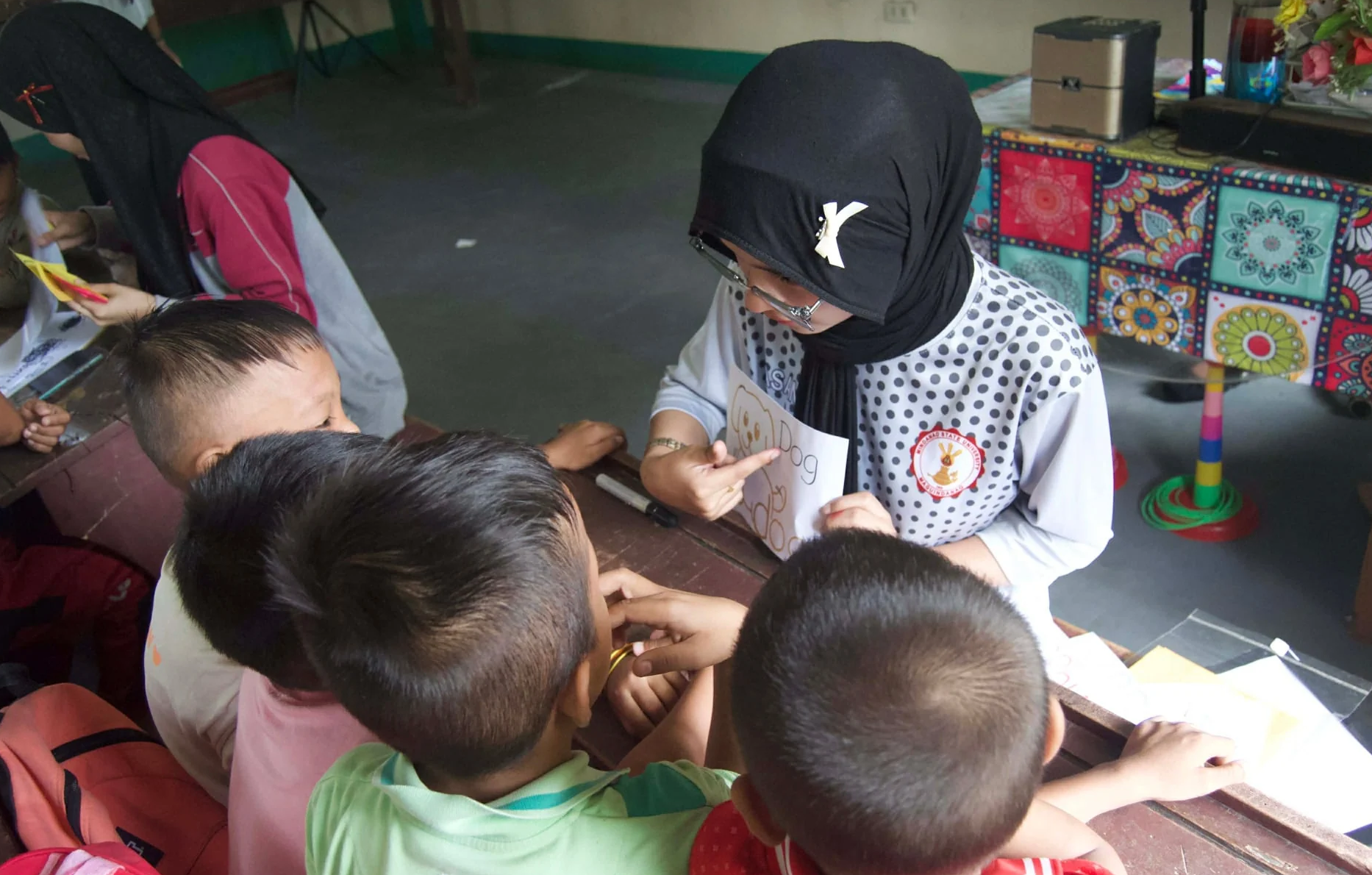
University-Led Literacy and Numeracy Outreach at Adaon Elementary School
Mindanao State University–Maguindanao, through its College of Education and National Service Training Program (NSTP) Office, conducted the Basic English (Reading and Writing) Literacy and Numeracy Programme in Barangay Adaon, Datu Anggal Midtimbang, Maguindanao del Sur. Implemented in partnership with Adaon Elementary School and Barangay Adaon, the initiative provided supplementary instruction to elementary pupils experiencing difficulties in reading, writing, and basic arithmetic.Initial assessments at Adaon Elementary School identified significant learning gaps among Grade 1 and Grade 2 pupils. Of the 28 pupils assessed, 26 (92.86%) were classified as non-readers or at the frustration level, with none demonstrating independent reading proficiency. Difficulties in writing and basic arithmetic were also observed. Based on the identified needs, the programme served 30 pupils requiring literacy and numeracy support.A Literacy Training Service (LTS) student-tutor guides pupils in phonics, word recognition, and basic reading exercises.Post-assessment results showed improvements in pupils' learning performance. Among the 28 pupils assessed in reading, 96.43% reached the instructional or independent reading levels, compared with none at the beginning of the programme. The reported results also showed that 74.19% attained Fair to Excellent ratings in writing, while 51.62% achieved Proficient or Advanced performance in arithmetic.To deliver the intervention, the University deployed 29 Literacy Training Service (LTS) students as tutors under the supervision of College of Education faculty members. The student-tutors conducted 21 instructional sessions covering phonics, word recognition, reading comprehension, spelling, sentence construction, number recognition, basic mathematical operations, and problem-solving. Teaching strategies included guided exercises, educational games, drills, and individualized learning assistance. A feeding programme was also conducted from April 18 to May 31, 2025, to support the pupils' participation.Led by Dr. Maeda L. Kadtong, NSTP Coordinator, the initiative involved College of Education faculty members, student-tutors, school personnel, and community partners. It also provided LTS students with supervised community teaching experience through lesson preparation, tutoring, and learner assessment.Through this community-based educational outreach, MSU–Maguindanao extended its instructional services to a local public elementary school while providing its NSTP students with opportunities to apply their teaching skills in an actual learning environment. The initiative demonstrated the University's contribution to improving foundational literacy and numeracy through direct engagement with local schools and communities.
July 30, 2025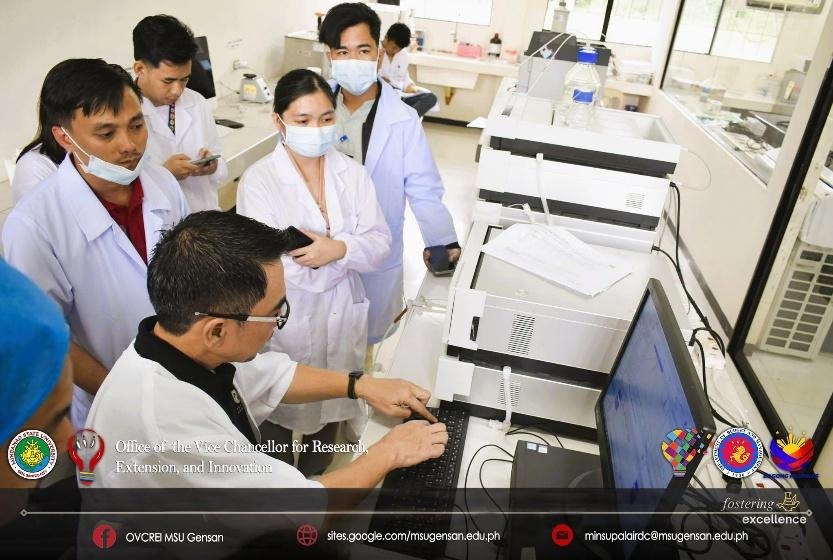
MinSuPala-IRDC Enhances Indigenous Product Development through Nutritional Assays Training
The Mindanao-Sulu-Palawan Innovative Research and Development Consortium (MinSuPala-IRDC) headed by the Mindanao State University–Maguindanao conducted the Training-Workshop on Preliminary Nutritional Assays of Indigenous Crops and Fishes for Product Development at MSU–General Santos City. The DBM-funded event sought to develop scientific research and value added product development from indigenous agriculture and aquatic resources.Training-Workshop on Preliminary Nutritional Assays of Indigenous Crops and Fishes Hosted by MSU-GensanHeld under the leadership of Dr. Jaime A. Namocatcat in coordination with the MSU–General Santos Office of the Vice Chancellor for Research, Extension, and Innovation, the workshop involved the participation of faculty members and researchers of 13 State Universities and Colleges in conducting training on nutritional analysis, chromatography, food microbiology, nutraceutical and cosmeceutical assays, and molecular biology.Training-Workshop on SessionAs an outcome of the training, the research capabilities and collaboration of the participating institutions were enhanced. In addition to gaining knowledge in laboratory skills, the researchers were directly trained in the development of scientific products. The local farmers, fisherfolks, producers, and industries may be the future beneficiaries of such product innovations.Through the continued collaboration in the consortium, the training serves as a steppingstone to the development of innovative products out of indigenous resources and application of scientific research into practice.
July 29, 2025