Articles
Teaching Communities to Protect Their Freshwater Ecosystems
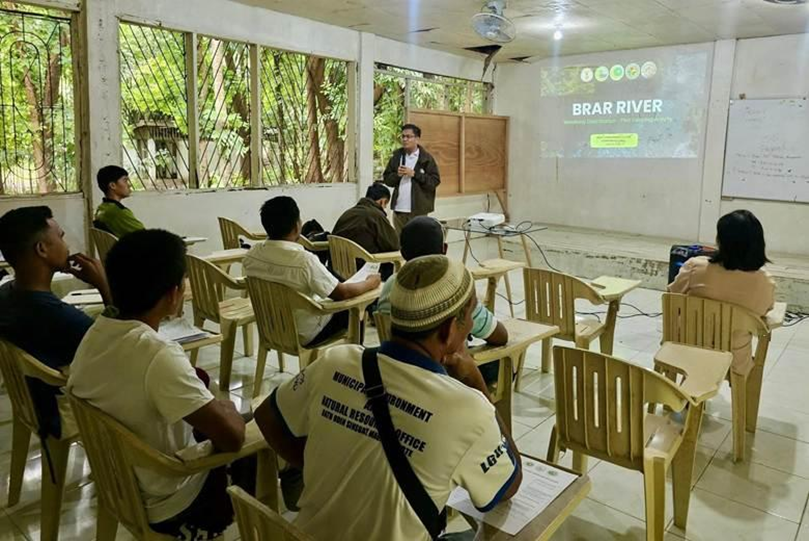
In 2025, MSU–Maguindanao offered free education on freshwater ecosystems to local governments, agencies, fisherfolk and students in Maguindanao del Norte and del Sur, covering river water sampling, the condition of major inland water bodies, and the mapping skills needed to manage water ecosystems. All of these activities were offered free of charge to participants.These activities and outreach programs are supported by the University’s degree programs in fisheries, aquaculture and agricultural water management, which develop the professionals who carry this knowledge into the field. The offering of the Bachelor of Science in Fisheries (BS Fisheries), with a curriculum totaling 180 units cover relevant areas such as aquatic ecology, capture fisheries, sustainable aquaculture, fisheries management, fish processing. The Bachelor of Science in Agricultural and Biosystems Engineering (BS ABE) covers irrigation and drainage engineering, hydrometeorology, and land and water conservation engineering. Likewise, the Bachelor of Science in Forestry and the Bachelor of Science in Environmental Studies provide guidance on watershed management, landslide susceptibility mapping, and ecosystem valuation. These degree programs prepare the professionals who carry the technical skills and knowledge into the communities.Training local governments to monitor their riversOn 30 June 2025, the faculty from Bachelor of Science in Forestry in partnership with the Ministry of Environment, Natural Resources, and Energy–Environmental Management Services (MENRE–EMS) of BARMM and the Local Government Unit (LGU) of Datu Odin Sinsuat (DOS) launched the Brar River Pilot Water Sampling Program. An orientation trained faculty members, students and LGU personnel in standardized water-sampling procedures and waterbody classification under the Philippine Clean Water Act (Republic Act No. 9275), giving local partners the skills to assess river conditions themselves.Orientation on standardized water-sampling procedures and waterbody classification for faculty, students and LGU personnel, 30 June 2025.Sharing research on Mindanao’s inland watersOn 27 February 2025, MSU–Maguindanao convened a MinSuPala-IRDC stakeholder consultation with researchers from other state universities and colleges: University of Southern Mindanao-Kidapawan City Campus (USM-KCC), Cotabato State University (CotSU), and Adiong Memorial State College (AMSC), government agencies including Ministry of Agriculture, Fihseries and Agrarian Reform (MAFAR–BARMM), the Bangsamoro Planning and Development Authority (BPDA), Department of Science and Technology – Philippine Council for Agriculture, Aquatic and Natural Resources Research and Development (DOST–PCAARRD) and provincial environmental offices, local government units and fisherfolk associations. The stakeholders' meeting provided a plated for the researchers to present their assessments on water quality, fisheries, watershed conditions, and socio-economic factors affecting the critical water bodies such as Ligawasan Marsh, Lake Buluan, the Rio Grande de Mindanao, and Lake Lanao. The findings provide scientific data for policy-making and conservation strategies aimed at protecting these ecosystems while ensuring their socio-economic benefits for local communities.Bringing together experts and stakeholders during the Stakeholders' Consultation Meeting hosted by MSU–Maguindanao at the DOS Gymnasium, 27 February 2025.Building watershed mapping skillsOn 5–7 February 2025, the project team of the Ministry of Science and Technology (MOST)-funded project “Characterization of South Upi Forest Watershed cum Landslide Vulnerability Assessment: basis for enhanced protection and management plan" conducted the Application Training on Advanced Quantum Geographic Information System (QGIS) at the Balay Silangan Conference Hall in Nuro, Upi, for personnel of the Local Government Units of South Upi and North Upi and MENRE-BARMM. Participants learned to produce land use and land cover maps and to apply geospatial tools to watershed management and landslide vulnerability assessment.The Application Training on Advanced Quantum Geographic Information System (QGIS) guided the participants to develop susceptibility mapping and overlay analyses
July 25, 2025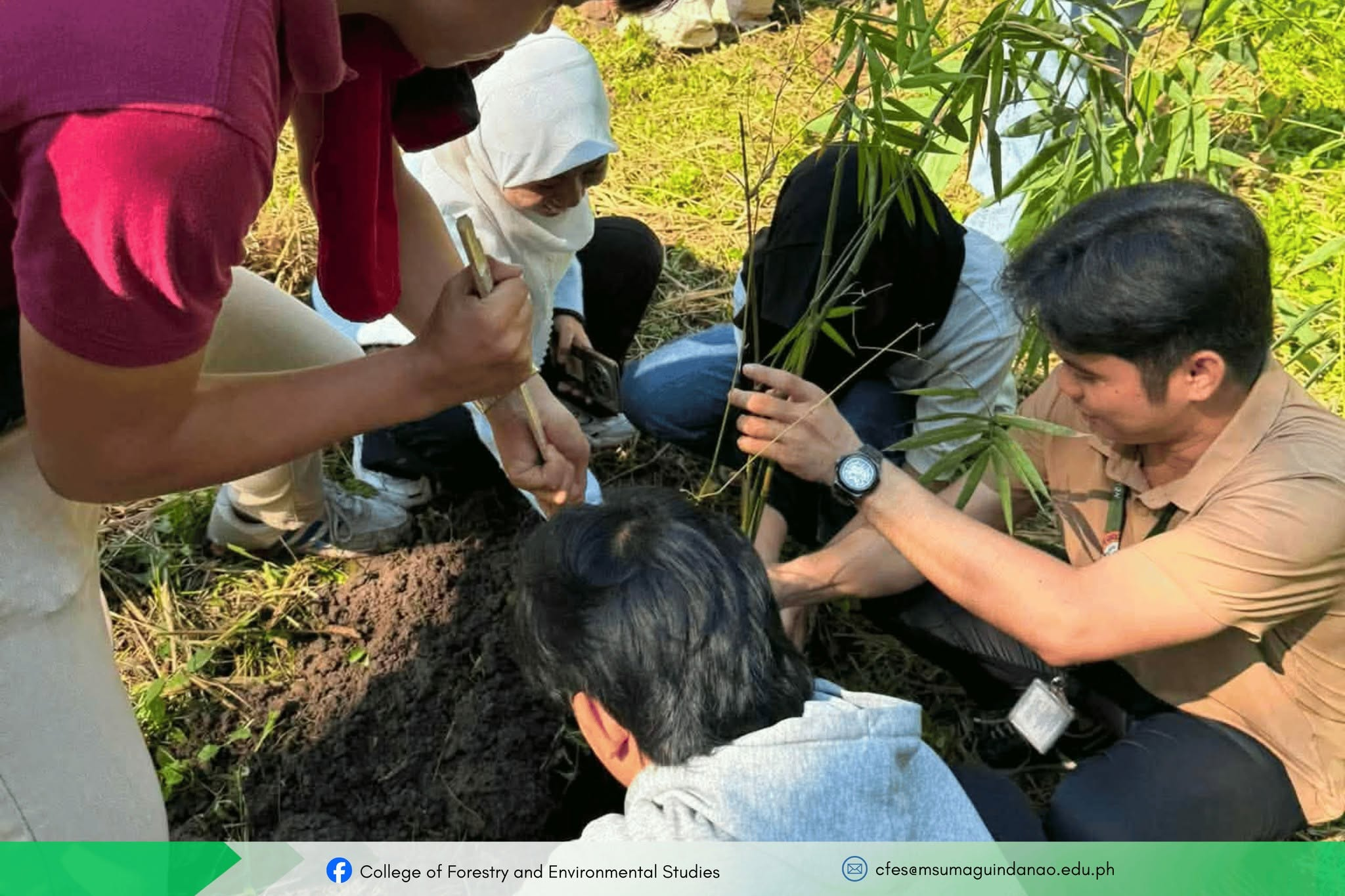
Nearly 500 Graduates Plant Bamboo and Fruit Trees Along Brar Creek in MSU-Maguindanao's Send-Off Tradition
Before they crossed the stage, 498 graduating students of Mindanao State University-Maguindanao (MSU-Maguindanao) spent a morning with their hands in the soil. The College of Forestry and Environmental Studies (CFES) organized a campus-wide tree-planting activity along Brar Creek, turning what has become a graduation tradition into a hands-on lesson in environmental stewardship.MSU-Maguindanao Students Planting TreeStudents from different colleges worked in coordinated groups to plant bamboo, avocado, and lanzones in open and underutilized spaces along the creek. CFES selected the sites and species specifically to stabilize the creek bank, reduce soil erosion, and restore vegetative cover in an area that had been vulnerable to degradation.MSU-Maguindanao Students Planting TreeThe choice of fruit-bearing species was deliberate. Beyond their ecological role, avocado and lanzones trees introduce a future source of food and potential income once mature, extending the initiative’s value well past the planting day itself. In line with the broader push toward zero hunger and sustainable, resilient food production, the initiative pairs tree-based food sources with erosion control and ecosystem restoration along Brar Creek. It likewise reflects the University’s wider commitment to responsible resource use, climate action, and the kind of collective effort that comes from nearly 500 students working toward a shared environmental goal.For the graduating batch, the activity offered something a diploma alone cannot: a direct, physical stake in the campus they are leaving behind. Faculty and CFES personnel benefited as well, applying their technical expertise in site-appropriate species selection while gaining a living site for future research, monitoring, and instruction. The University community as a whole strengthened its capacity to mobilize large groups of students around a shared sustainability goal.The planted trees along Brar Creek are meant to keep working long after Batch 2026 has moved on — stabilizing soil, supporting biodiversity, and eventually bearing fruit. MSU-Maguindanao intends the practice to continue with future graduating batches, building a growing green corridor along the creek and reinforcing a culture of environmental responsibility that graduates carry into their own communities across BARMM.
July 24, 2025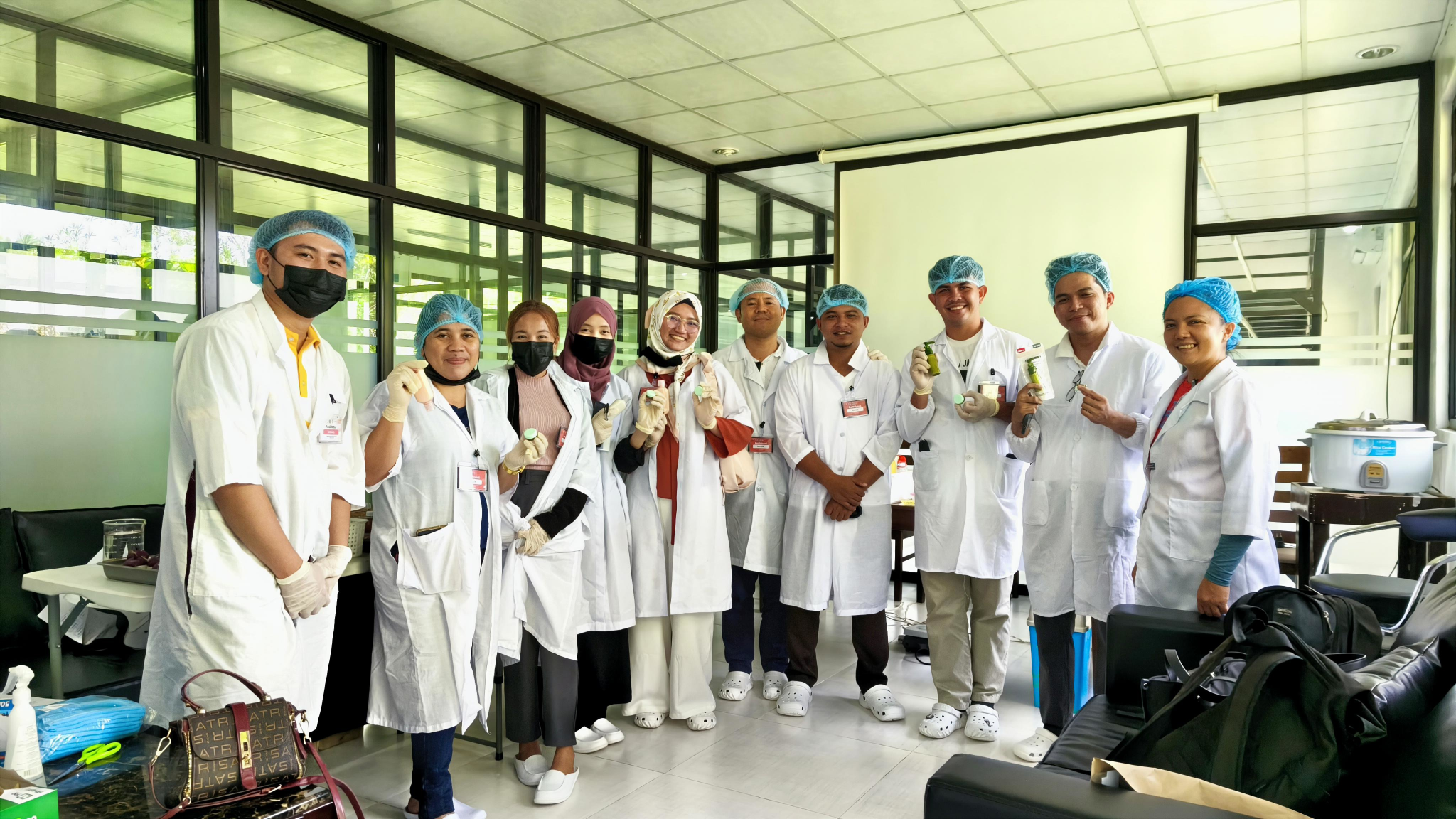
MSU-Maguindanao and MinSuPala–IRDC Harness the Nutritional and Economic Potential of Indigenous Species
The Mindanao State University–Maguindanao joined forces with 12 other State Universities and Colleges (SUCs) across Mindanao for an intensive "Training-Workshop on Preliminary Nutritional Assays of Indigenous Crops and Fishes for Product Development" hosted by MSU-General Santos. Funded by the Department of Budget and Management (DBM) under the MinSuPala–Innovative Research and Development Consortium (IRDC), the three-day initiative trained regional researchers to perform advanced laboratory assays to analyze and commercialize native aquatic and agricultural species.Nutritional Analysis TrainingThrough hands-on laboratory sessions, researchers evaluated raw indigenous fish and crops to build precise nutritional profiles and create high-value product prototypes, including functional food items, nutraceuticals, and cosmeceuticals. Dr. Bai Hejira Nefertiti M. Limbona, the Chancellor of MSU-Maguindanao, Atty. Shidik T. Abantas, the Chancellor of MSU-GenSan, and Dr. Christine Dawn G. Obemio, the MSU-GenSan Vice Chancellor for Research, championed the multi-institutional network that unties academic institutions from mainland Mindanao to island provinces like Basilan, Sulu, and Tawi-Tawi.This high-impact initiative advances sustainable management and protection of indigenous crops and fishes to avoid significant adverse impacts; effectively regulate harvesting; and implement science-based management plans by supporting small-scale fishers. By converting raw native fish into high-value nutritional products, it equips local institutions to maximize the economic returns of indigenous species without increasing fishing pressure. Through these collaborative efforts, MSU-Maguindanao accelerates scientific innovation that strengthens regional food security, protects aquatic biological resources, and elevates local livelihoods.
July 8, 2025MSU-Maguindanao’s CFES Strengthens Stewardship for Life on Land through Forestry Day 2025
On May 29, 2025, the College of Forestry and Environmental Studies (CFES) of Mindanao State University–Maguindanao (MSU-Maguindanao) conducted CFES Forestry Day 2025: Celebrating Legacy, Advancing Stewardship for Life on Land. As an annual institutional tradition, the activity reaffirmed the College’s commitment to forestry education, environmental protection, and the sustainable management of natural resources. It highlighted the continuing need to develop competent and environmentally responsible forestry professionals who can address deforestation, land degradation, and biodiversity loss in Maguindanao and the Bangsamoro Autonomous Region in Muslim Mindanao (BARMM).Led by CFES Dean Dr. Rowena C. Benavides, the celebration brought together students, faculty members, alumni, and representatives of the Provincial Environment and Natural Resources Offices (PENRO) of Maguindanao del Norte and Maguindanao del Sur, the Community Environment and Natural Resources Office (CENRO) of Tacurong, Sultan Kudarat, and former officials of DENR-ARMM. The program featured messages from environmental governance leaders, professional guidance for students, recognition of retired and long-serving faculty members of the college, and alumni engagement. These activities strengthened collaboration between the University and government environmental agencies while emphasizing the responsibility of future foresters to protect forests, conserve biodiversity, and promote sustainable land use.The primary beneficiaries were CFES students and faculty members, who gained professional insights, strengthened their commitment to environmental stewardship, and established opportunities for future collaboration with environmental agencies. Secondary beneficiaries included alumni, government partners, and communities across Maguindanao and BARMM, which may benefit from stronger institutional linkages and a continuing supply of trained forestry professionals. By bringing together academic and environmental governance stakeholders, the activity reinforced the University's role in developing human resources and partnerships that support responsible natural resource management and community well-being.As part of its continuing commitment, MSU-Maguindanao, through CFES, promotes biodiversity conservation, sustainable forest management, and the protection of terrestrial ecosystems. Through environmental education and strengthened partnerships, the College envisions a future where life on land is protected, and natural resources are sustainably managed for generations to come.
July 6, 2025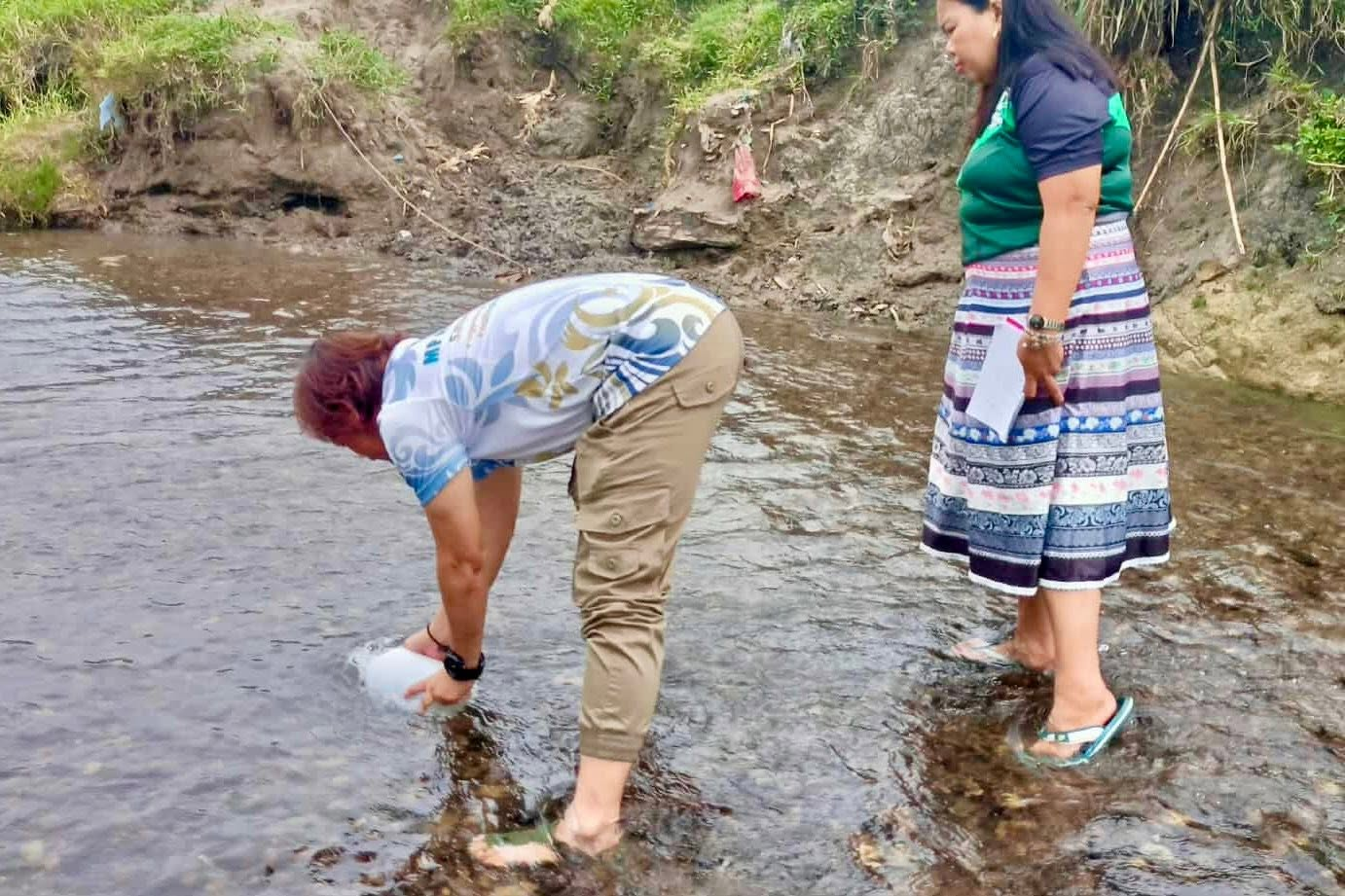
MSU-Maguindanao Joins BARMM MENRE in Launching Brar River Pilot Water Sampling Program
TAMONTAKA, Maguindanao del Norte - Mindanao State University-Maguindanao (MSU-Maguindanao), through its College of Forestry and Environmental Studies (CFES), joined the BARMM Ministry of Environment, Natural Resources and Energy (MENRE) and the local government of Datu Odin Sinsuat for the launch of the Brar River Pilot Water Sampling Program, with an orientation session held at the CFES Hall on June 30, 2025.Water Sampling in Brar RiverLed by MENRE's Environment Management Services (EMS) under Minister Akmad A. Brahim, the orientation introduced faculty, students, and partner stakeholders to waterbody classification and standardized protocols for water sampling and monitoring, in line with Republic Act No. 9275, the Clean Water Act. CFES Dean Dr. Rowena Benavides led the MSU-Maguindanao contingent, alongside Engr. Muslimin Paglala representing the LGU of Datu Odin Sinsuat, building on the two institutions' Adopt-an-Estero partnership formalized in 2022.Consistent, standardized water sampling is what turns isolated readings into evidence that can guide real water-resource decisions, and that is exactly what this program is built to produce, feeding directly into efforts to improve water quality through regular monitoring and to strengthen the region's capacity for sustainable water-resource management. EMS continues to track Simuay River through three established sampling stations under the same standards, giving MSU-Maguindanao faculty, students, and researchers a live setting to apply their training, the LGU of Datu Odin Sinsuat and MENRE a shared technical basis for environmental decisions, and Bangsamoro communities along the river a growing body of evidence to support the protection of the water they depend on.The program extends MSU-Maguindanao's environmental role beyond the campus, with the University expecting the Adopt-an-Estero partnership and its continuing river monitoring to open further collaboration with schools, civil society, and other stakeholders working on water-resource protection across BARMM.
July 5, 2025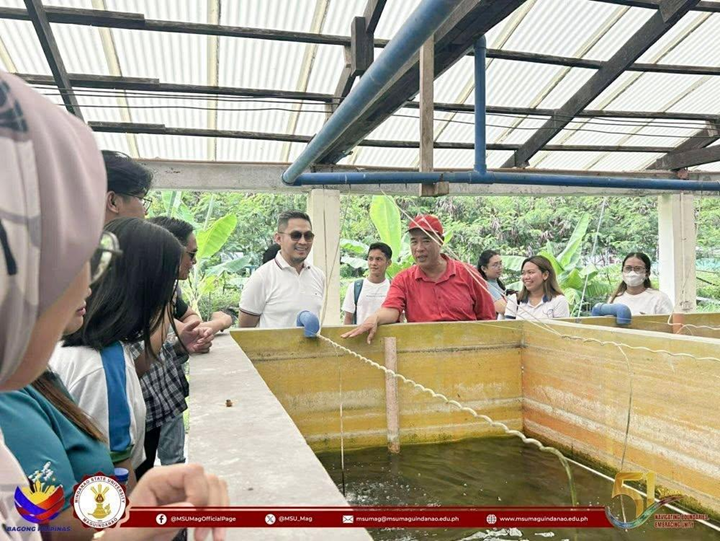
Developing Aquaculture Technologies That Protect Water Quality
MSU–Maguindanao, through its College of Fisheries, leads the National Tilapia Research and Development Program, Program B: Productivity Enhancement of SPIN Tilapia Culture Systems, funded by the Department of Science and Technology–Philippine Council for Agriculture, Aquatic and Natural Resources Research and Development (DOST–PCAARRD). The program works on the Saline-tolerant Population of Improved Nilotica (SPIN). Dr. Ramjie Y. Odin, Dean of the College of Fisheries, serves as Overall Program Leader and Project 1 Leader, with Capiz State University, Northern Iloilo State University, Zamboanga State College of Marine Sciences and Technology and the University of the Philippines Visayas as partners. The program’s inception meeting was held on 19 June 2025 at Capiz State University.Across five projects, the program develops technologies that reduce the environmental footprint of aquaculture:Locally developed probiotics improve fish health and reduce reliance on chemical treatments that can enter receiving waters.Microbial-based nursery production improves water quality within culture systems.Refined feeding strategies cut uneaten feed, a major source of nutrient pollution in ponds and nearby waters.Improved hatchery, grow-out, acclimation and transport methods reduce fish losses and wasted resources.Together, these technologies help fish farmers produce more while placing less pressure on surrounding aquatic ecosystems.Dr. Ramjie Y. Odin, Overall Program Leader, on a field visit to the project area with DOST–PCAARRD representatives.Organizational structure of the National Tilapia R&D Program B and its partner institutions.
June 30, 2025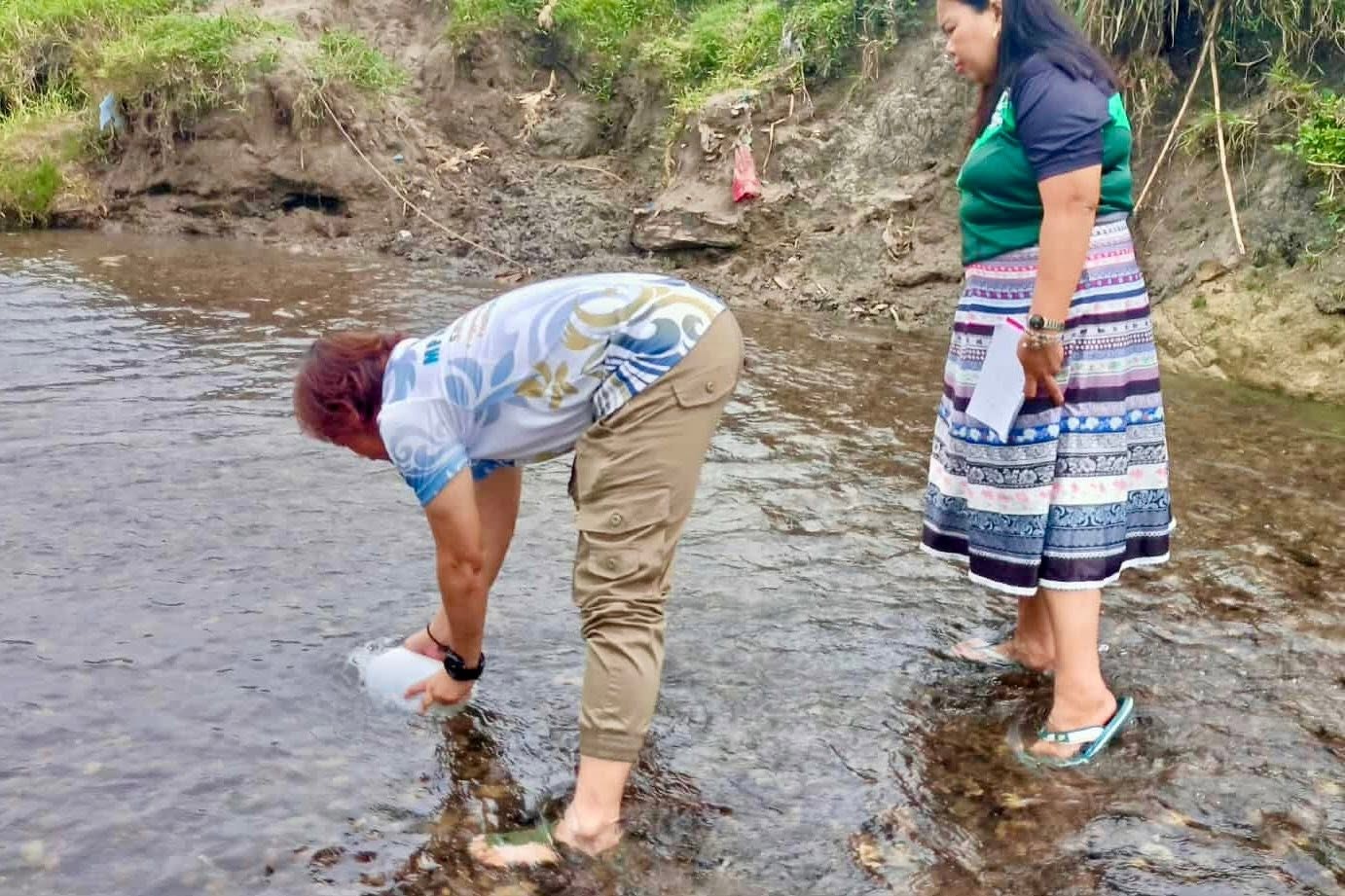
MSU-Maguindanao, MENRE-BARMM, and LGU DOS Mobilize Joint River Water Quality Monitoring and Protection Initiative
The Mindanao State University–Maguindanao, through the College of Forestry and Environmental Science (CFES), joined forces with the BARMM Ministry of Environment, Natural Resources, and Energy - Environmental Management Services (MENRE-EMS) and the Local Government Unit of Datu Odin Sinsuat (LGU-DOS) to launch the Brar River Pilot Water Sampling Program and continue water quality monitoring for the Simuay River.Water samplingThe program was officially launched during an orientation held at the MSU-Maguindanao CFES Hall, introducing faculty, students, and LGU personnel to standardized water sampling procedures and waterbody classification. Led by Dr. Rowena Benavides, the CFES Dean, together with representatives of the LGU of Datu Odin Sinsuat, headed by Engr. Muslimin Paglala, the activity trained academic and local stakeholders in hands-on environmental monitoring in accordance with Republic Act No. 9275, or the Philippine Clean Water Act of 2004. In parallel, MENRE-EMS continues regular water sampling across three established monitoring stations along the Simuay River.Lecture and orientation on the sampling activityBuilding on the Adopt-an-Estero partnership started in 2022, this team effort stops trash from rivers and streams from reaching the ocean, keeping marine life safe while helping scientists learn more about protecting our waters. By tracking upstream river quality and training students in scientific sampling methods, the partners prevent land-based pollutants from reaching downstream aquatic and coastal ecosystems. Moving forward, MSU-Maguindanao remains committed to expanding its research and extension efforts to protect local watersheds and promote sustainable environmental governance.
June 30, 2025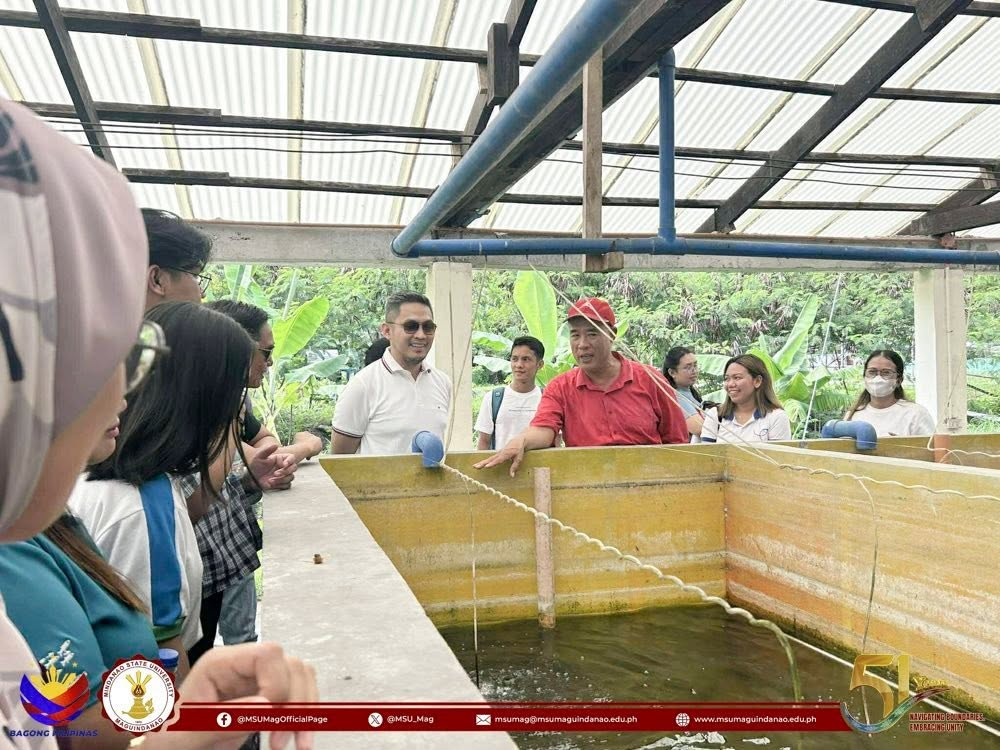
MSU-Maguindanao Leads Five-University Research Push to Strengthen Salt-Tolerant Tilapia Farming
Mindanao State University-Maguindanao (MSU-Maguindanao) joined four partner universities on June 19, 2025, for the Inception Meeting of the National Tilapia R&D Program, Program B, Productivity Enhancement of SPIN Tilapia Culture Systems, a research effort supported by the Department of Science and Technology, Philippine Council for Agriculture, Aquatic and Natural Resources Research and Development (DOST-PCAARRD).Facility VisitationDr. Ramjie Y. Odin, Dean of the College of Fisheries at MSU-Maguindanao, serves as Overall Program Leader for Program B and as Leader of Project 1 on improved hatchery and grow-out systems, coordinating a five-project research network built with Capiz State University, Northern Iloilo State University, Zamboanga State College of Marine Sciences and Technology, and the University of the Philippines.Workshop ParticipantsMore productive and cost-efficient culture systems suited to saline conditions are the program's central goal, aiming to increase the productivity of tilapia farmers and aquaculture communities in salinity-affected waters, contributing to efforts to end hunger and ensure access to sufficient food, while strengthening the resilience of aquatic food production against climate variability.For MSU-Maguindanao, leading a program of this scale reinforces its growing role in national aquaculture research, one the University expects to build on as the five projects generate technologies for fishery agencies and communities across the Philippines.
June 19, 2025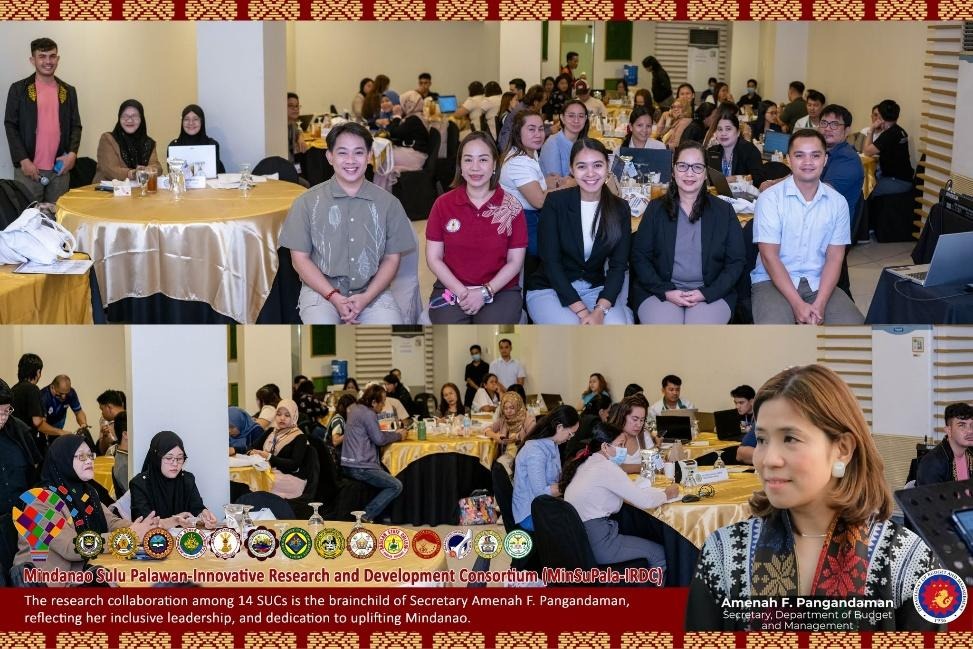
MinSuPala-IRDC Promotes Indigenous Species Through Design of Survey Tool and Value Chain Workshop
The Mindanao-Sulu-Palawan Innovative Research and Development Consortium (MinSuPala-IRDC) organized the **Workshop on Designing Survey Tools and Protocols for Market Potential and Value Chain Analysis of Indigenous Species** on May 28–29, 2025, at Oroderm City Functions and Events Place, Davao City. The activity sought to develop methodologies that can assess the production, marketing, and economic potentials of indigenous plants and fish species.State Universities and Colleges' researchers got technical guidance on survey designs, market potential and value chain analyses from Assistant Professor Shemaiah Gail P. Placencia and Ms. Carol Q. Balgos of UP Mindanao. Associate Professor Grant Warren D. Lu of MSU-Maguindanao talked about the gender-responsive research approach, while Dr. Raquel D. Santiago-Arenas guided on research prioritization and planning.The activity came up with a harmonized research prioritization framework and protocol that will serve as guide in succeeding activities. Technical capabilities of the participating researchers were further strengthened through this activity and they also learned new research methodologies, while farmers, fisherfolks, indigenous people, and local businesses can get market information and product development assistance in the future.The framework serves as a basis for further collaboration, value chain development, and research innovations towards sustainable livelihood and business enterprise development.
June 18, 2025