Articles
MSU–Maguindanao and Philippine Red Cross Collaborate in Mobile Blood Donation Drive
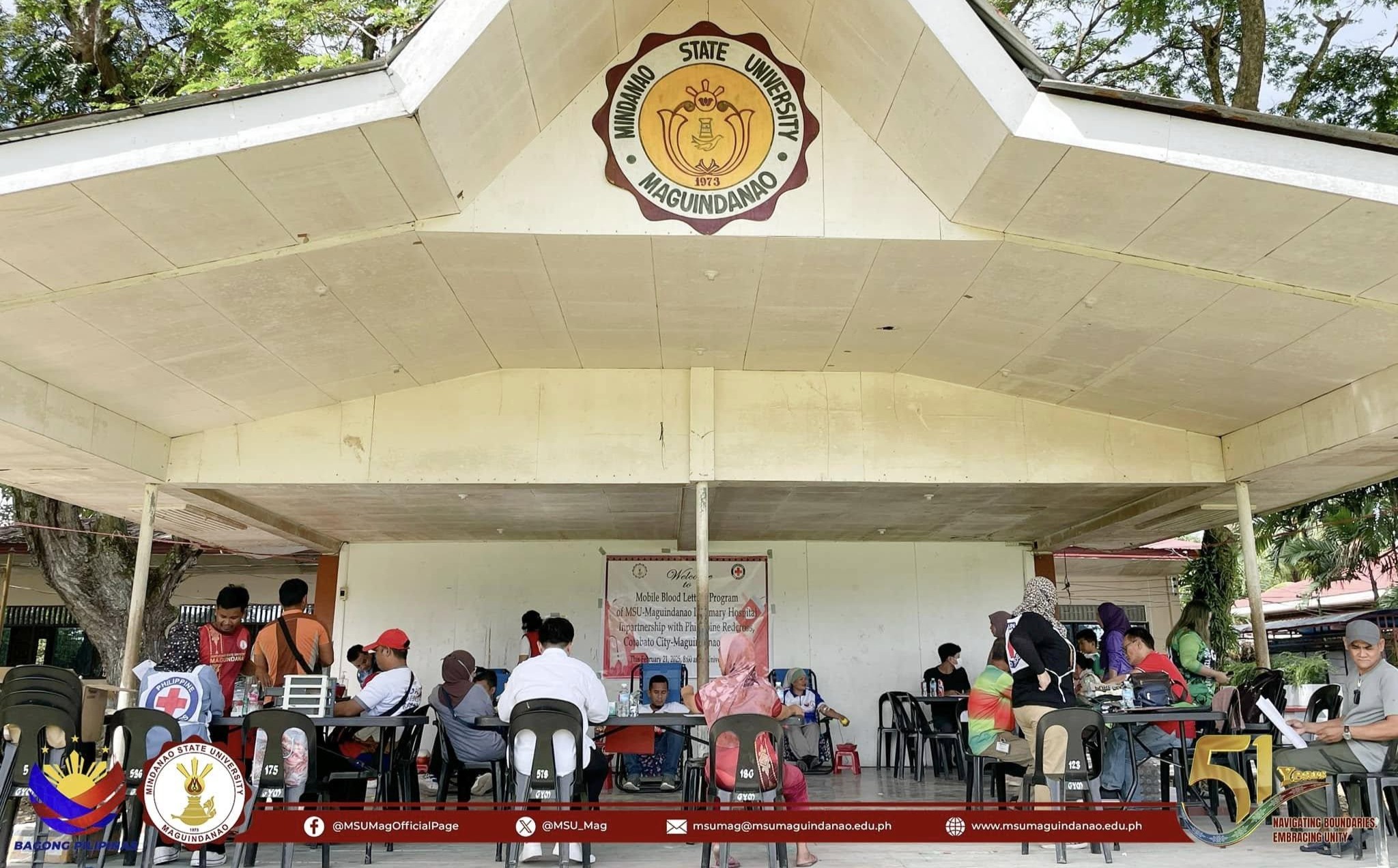
Mindanao State University–Maguindanao, through its Infirmary Hospital, partnered with the Philippine Red Cross–Cotabato City–Maguindanao Chapter conducted a half-day Mobile Blood Donation Drive on February 21, 2025, at the University Field Stage. The initiative mobilized university employees and students to participate in voluntary blood donation, with approximately 30 individuals donating blood in support of efforts to maintain an adequate blood supply for patients requiring transfusions and emergency medical care.University employees participated in the Mobile Blood Donation Drive at the MSU–Maguindanao University Field Stage on February 21, 2025.The activity connected the University community with a broader public health need. MSU–Maguindanao facilitated participation and provided the venue, while the Philippine Red Cross served as its external partner in the blood donation initiative. Through this collaboration, the University encouraged volunteerism and shared responsibility for supporting patients who may require blood during surgery, medical emergencies, and other critical situations.Through its partnership with the Philippine Red Cross, the University linked campus-based volunteerism with a wider public health service. The participation of approximately 30 donors demonstrates a tangible contribution to blood donation efforts, while the initiative reinforced the role of higher education institutions in mobilizing their communities to support essential healthcare needs.Sustained collaboration with the Philippine Red Cross and other health organizations can help encourage regular voluntary blood donation and broaden participation in community health initiatives. Future drives, supported by documentation of the volume of blood collected and the resulting services to patients, could further demonstrate the University's contribution to local blood-service needs and community health.
April 25, 2025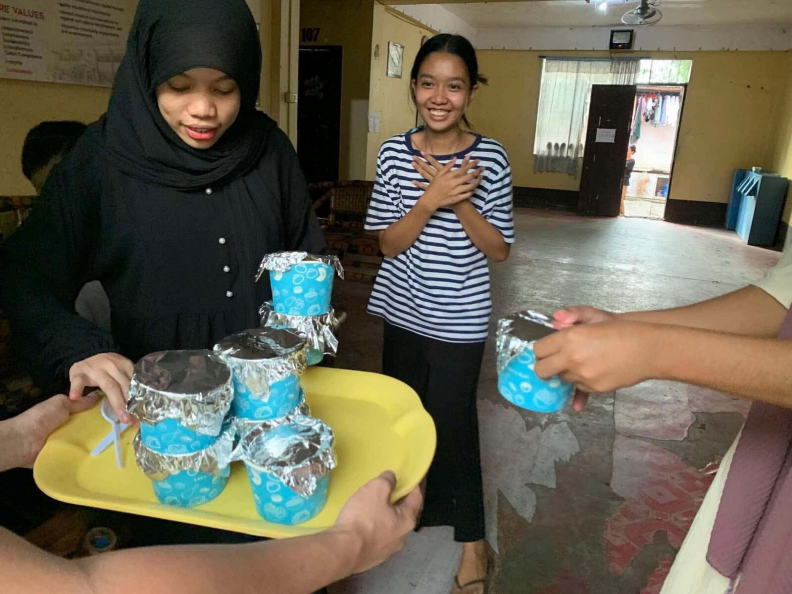
Annual Free Iftar Keeps Fasting Students Fed During Ramadan
For students of Mindanao State University–Maguindanao (MSU–Maguindanao), breaking the fast during Ramadan does not depend on what they can afford. Every Ramadan, the Supreme Student Council (SSC) serves free iftar meals, funded by the University, to students staying at the University dormitory, so that those who stay for late classes, live far from home, or have little money for food can break their fast together on a free meal. The most recent iftar, held on March 14, 2025, served about 50 dormitory students.Students at the University dormitory receive free iftar meals, funded by MSU–Maguindanao, ahead of breaking their fast during Ramadan 2025.Iftar meals and fresh watermelon are portioned for dormitory students on March 14, 2025.This yearly meal support rests on a formal commitment. The University's Sustainability Policy directs it to ensure that "food security and the overall well-being of academics, staff, and students are upheld on the campus" and to provide affordable, healthy, and safe food options in campus canteens (Article VII, Section 7). On ordinary school days, that rule keeps full rice meals affordable for students in the campus canteens.Article VII, Section 7 of the MSU–Maguindanao Sustainability Policy, which commits the University to uphold food security for students, faculty, and staff and to provide affordable, healthy, and safe food options on campus.The same spirit of sharing food reaches beyond campus. On March 22, 2025, the College of Engineering and Computing Sciences held its Annual Free Iftar Program for learners of three Islamic institutions in Datu Anggal Midtimbang, Maguindanao del Sur, with the Society of Agricultural and Biosystems Engineering, the PSABE-PPG Maguindanao Chapter, the CE and IT Departments, the MSU-Maguindanao Faculty Union, and the Engineering and Computing Sciences Student Organization. Together, these efforts help keep safe, nutritious, and sufficient food within reach of students, especially those on the tightest budgets.Each coming Ramadan, the University intends to keep free iftar a fixed part of its support for students.
April 21, 2025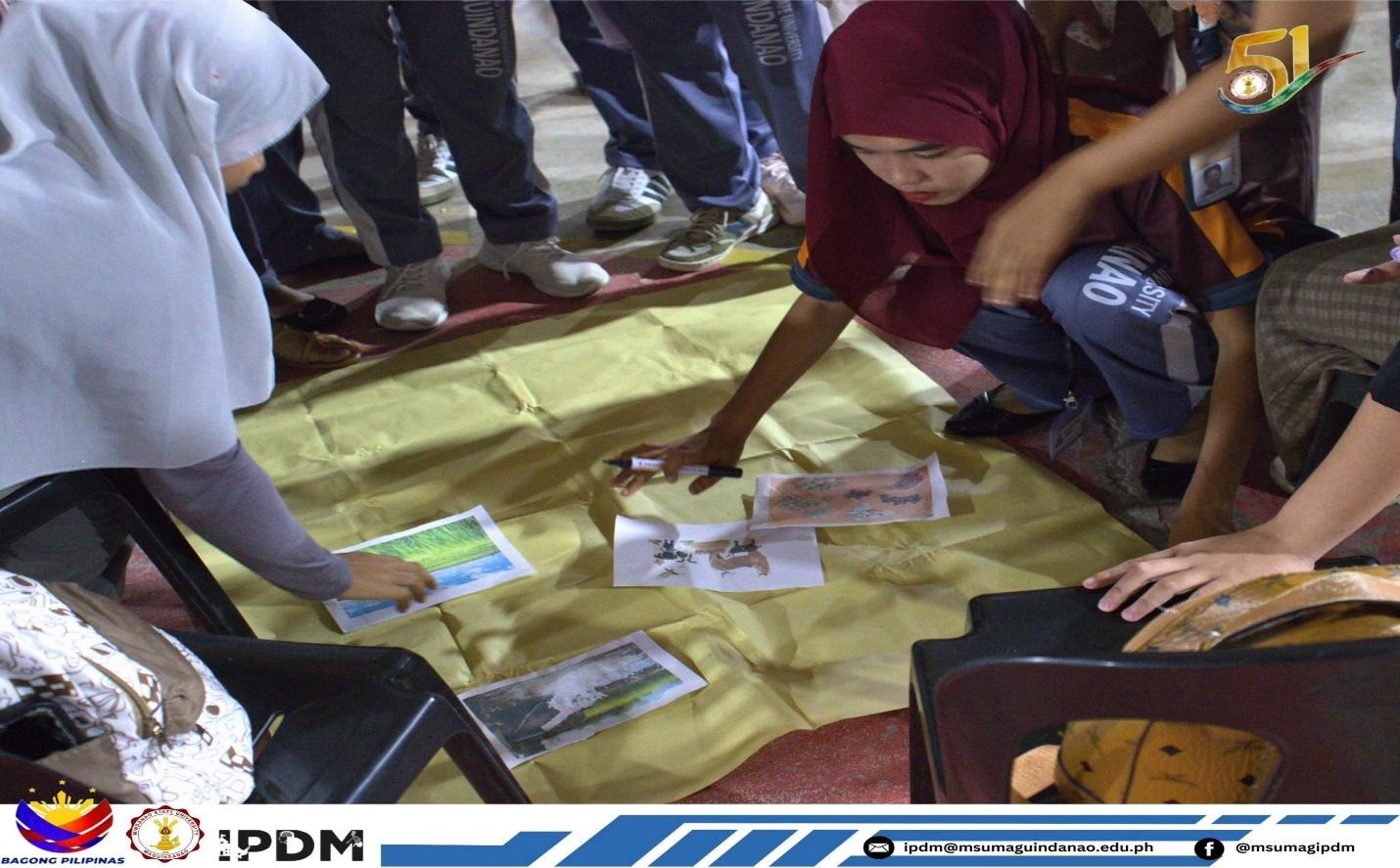
Planting Seeds of Peace: MSU–Maguindanao Conducts FPE101 Session on Agricultural Development
Agricultural development plays an important role in promoting peace by addressing poverty, strengthening food security, and expanding livelihood opportunities. Recognizing this connection, Mindanao State University–Maguindanao, through its Institute for Peace and Development in Mindanao (IPDM), in collaboration with the College of Agriculture (COA), conducted an FPE101 session on Agricultural Development in Support of Peace on February 7, 2025. Facilitated by Ms. Ma. Fe Cordon, the session engaged agriculture students in examining how sustainable agriculture can contribute to community resilience and lasting peace.The discussion highlighted how sustainable agricultural practices, equitable access to resources, and community-based farming initiatives can strengthen self-sufficiency and economic resilience. Through interactive discussions and real-world examples, students examined how agricultural development can help address poverty, expand livelihood opportunities, and contribute to lasting peace, particularly in conflict-affected communities.Agriculture serves not only as a source of food but also as a pathway to livelihood generation, poverty reduction, and peacebuilding. The session encouraged students to recognize their role as future agricultural professionals in supporting farming communities and advancing inclusive development across the Bangsamoro region.The institution will continue to integrate peace education and sustainable agricultural development into its academic activities to prepare graduates who can help strengthen rural livelihoods, improve food security, and promote lasting peace in Bangsamoro communities.
April 12, 2025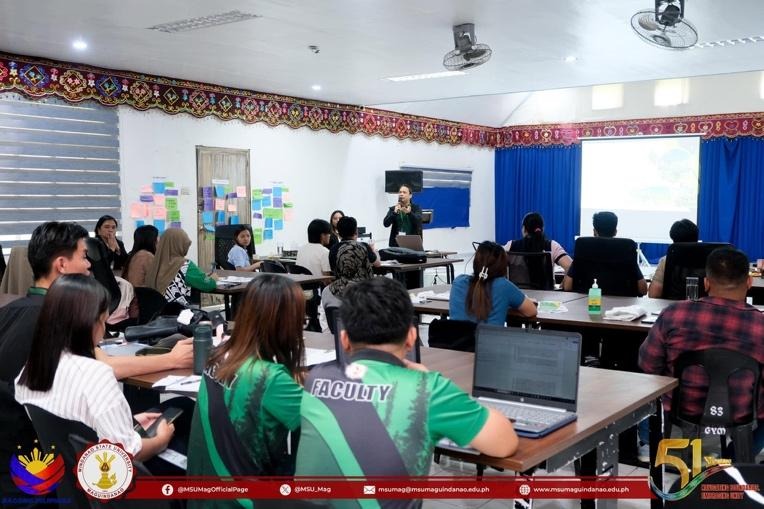
MSU-Maguindanao Launches DOST-PCAARRD-Funded Agroforestry Project to Take Urgent Climate Action in Datu Blah Sinsuat
Mindanao State University-Maguindanao, through its College of Forestry and Environmental Studies, has launched a ₱5-million research and extension project to combat climate change and its impacts on upland communities in Datu Blah Sinsuat, Maguindanao del Norte. Titled “Enhancing Climate Resilience Through Native and Fruit Tree-Based Agroforestry Technology: A Science and Technology-Based Initiative for Emergencies and Hazards in Datu Blah Sinsuat, Maguindanao,” the project is funded by the Department of Science and Technology-Philippine Council for Agriculture, Aquatic, and Natural Resources Research and Development (DOST-PCAARRD). It aims to enhance climate resilience and promote sustainable agriculture through agroforestry technology.Trainers’ Training on Agroforestry Establishment and Development at the Training Center Hall A, MSU-Maguindanao on February 25, 2025. Upland communities of Datu Blah Sinsuat are the primary beneficiaries, gaining climate-resilient land-use systems and livelihood support. Agroforestry practitioners and farmers will receive technical training, local government units gain a science-based approach to climate mitigation and hazard preparedness, and CFES faculty, researchers, and students benefit from applied research and extension opportunities.This activity supports SDG 13 to take urgent action to combat climate change and its impacts. The project contributes to this goal by taking urgent action on both fronts. As the Chancellor noted, its technology aids climate change prevention and mitigation, while native and fruit tree-based agroforestry helps upland communities withstand climate-related emergencies and hazards. Practitioner training, community participation in decision-making, and engagement with local government and the provincial environment office build the knowledge and local capacity needed to sustain climate action beyond the project period.MSU-Maguindanao will continue implementing the project with the community and its partners, and will report results, including trees planted, practitioners trained, and adaptation measures adopted, as monitoring data becomes available.
April 11, 2025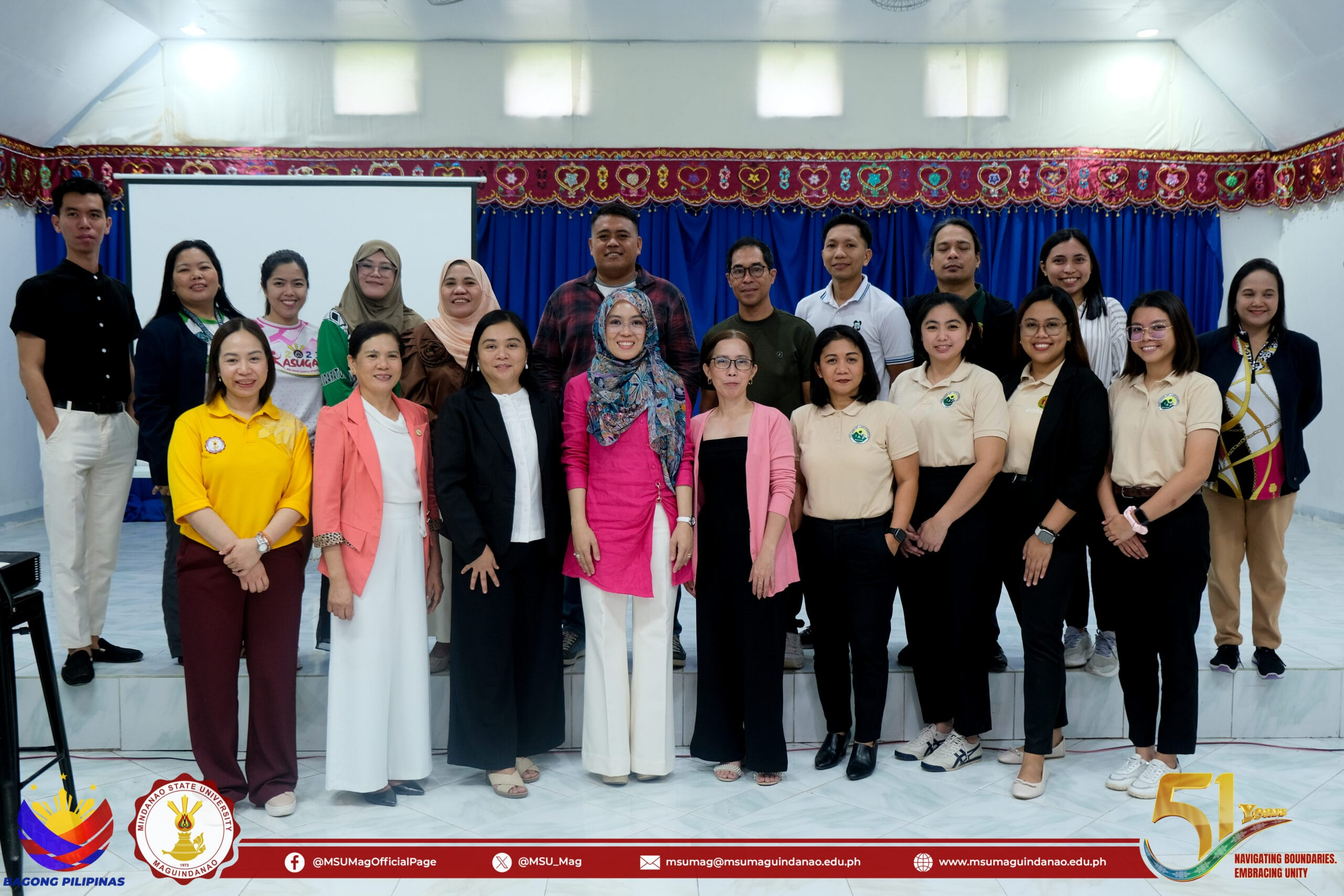
MSU–Maguindanao Launches ₱5-Million Agroforestry Project to Strengthen Climate Resilience in Datu Blah Sinsuat
The Mindanao State University–Maguindanao (MSU–Maguindanao), through its College of Forestry and Environmental Studies, launched a ₱5-million project aimed at strengthening climate resilience and promoting sustainable agriculture through native and fruit tree-based agroforestry technology.Funded by the Department of Science and Technology–Philippine Council for Agriculture, Aquatic and Natural Resources Research and Development (DOST-PCAARRD), the project, titled “Enhancing Climate Resilience Through Native and Fruit Tree-Based Agroforestry Technology: A Science and Technology-Based Initiative for Emergencies and Hazards in Datu Blah Sinsuat, Maguindanao,” seeks to help communities respond to climate-related hazards while supporting sustainable livelihoods.MSU–Maguindanao Chancellor Bai Hejira Nefertiti M. Limbona expressed support for the initiative, highlighting its potential to provide local communities with science-based technologies that contribute to climate change mitigation and strengthen socioeconomic activities. The project also emphasizes community participation in planning and implementation to encourage local ownership and ensure the sustainability of its outcomes.Through technical training and the promotion of agroforestry practices, the initiative aims to strengthen the capacities of local practitioners and upland communities. Integrating native and fruit-bearing trees into agricultural systems can help protect soil, support biodiversity, improve land management, and provide additional livelihood opportunities for farming households.These efforts contribute to the broader objectives of Sustainable Development Goal 11 (SDG 11): Sustainable Cities and Communities, particularly strengthening resilience to climate-related disasters and reducing the environmental impact of communities. By promoting nature-based solutions and improving local preparedness, the project can help communities become better equipped to manage environmental risks while sustaining their natural resources.The primary beneficiaries include upland communities, local farmers, and agroforestry practitioners in Datu Blah Sinsuat. In the long term, the project is expected to support more sustainable farming systems, strengthen local livelihoods, and encourage responsible stewardship of the environment, helping build communities that are more resilient to climate change and environmental hazards.Through this science-based initiative, MSU–Maguindanao continues to advance research and community engagement that translate scientific knowledge into practical solutions for sustainable development in BARMM.
April 1, 2025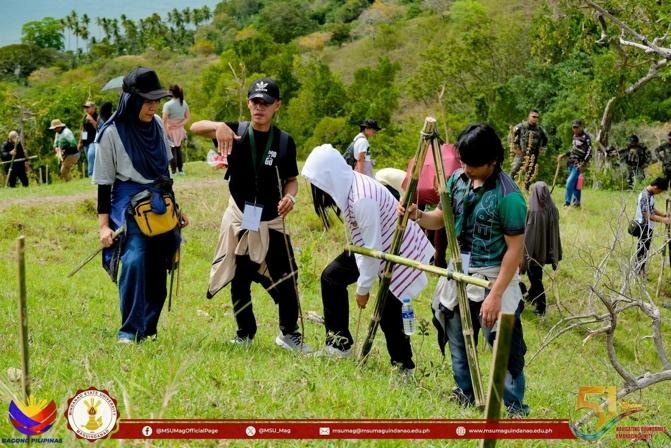
MSU–Maguindanao, UPLB Equip Trainers with ALCAMS Skills for Climate-Resilient Agroforestry
Mindanao State University-Maguindanao, in partnership with the University of the Philippines Los Baños-Institute of Agroforestry (UPLB-IAF), conducted a three-day Training of Trainers on Agroforestry Establishment and Development Using the Agroforestry Land Capability Assessment and Mapping Scheme (ALCAMS).Participants conducting a hands-on slope assessment using an A-frame in the upland field site, linking land capability evaluation with sustainable agroforestry planning.Funded by the Department of Science and Technology-Philippine Council for Agriculture, Aquatic and Natural Resources Research and Development (DOST-PCAARRD), the training is part of the project “Enhancing Climate Resilience through Native Tree and Fruit Tree-Based Agroforestry Technology: A Science and Technology-Based Initiative for Emergencies and Hazards in Datu Blah Sinsuat, Maguindanao.”Held at the MSU-Maguindanao Training Center and the project site in Brgy. Nalkan, Datu Blah Sinsuat, the training combined classroom discussions with field-based exercises. Participants learned agroforestry establishment, soil and water conservation, slope measurement, vegetation assessment, and soil analysis, then prepared land assessment maps and site-specific agroforestry plans.Participants and facilitators at the upland field site during the ALCAMS trainers’ training, documenting the interdisciplinary and field-based character of the activity.Developed by UPLB-IAF, ALCAMS evaluates slope, vegetation, and soil fertility to determine land suitability for agroforestry and guide appropriate conservation measures.Participants included selected students and faculty representatives from the College of Agriculture and the College of Engineering and Computing Studies of MSU-Maguindanao, who gained interdisciplinary exposure to agroforestry planning. Forestry faculty from MSU-Buug, MSU-Marawi, and MSU-Lanao del Norte Agricultural College, as well as a representative from the Ministry of Environment, Natural Resources and Energy (MENRE), also took part.The training-of-trainers approach extends technical knowledge through instruction, research, extension, and community engagement. It also supports the project’s broader goals of rehabilitating about 10 hectares of land, establishing two community nurseries, improving soil conditions, reducing erosion, and strengthening livelihood opportunities for upland communities.The ultimate beneficiaries are the farmers, landowners, and residents of Barangay Nalkan and Datu Blah Sinsuat. The training built the technical foundation for the interventions that follow, including promoting agroforestry technologies and training farmers and landowners. Community members therefore gain more than seedlings or planting activities: they benefit from agroforestry systems designed around site-specific data on slope, vegetation, soil fertility, species suitability, and conservation requirements.The activity supports Sustainable Development Goal (SDG) 13, which calls for urgent action to combat climate change and its impacts. By equipping university and government trainers with practical, science-based tools for land-use planning, it improves education and institutional capacity on climate change adaptation, strengthening community resilience to hazards such as erosion and land degradation.Through this partnership, MSU-Maguindanao applies science and technology to strengthen local capacity for sustainable land management in the Bangsamoro Autonomous Region in Muslim Mindanao (BARMM).
March 31, 2025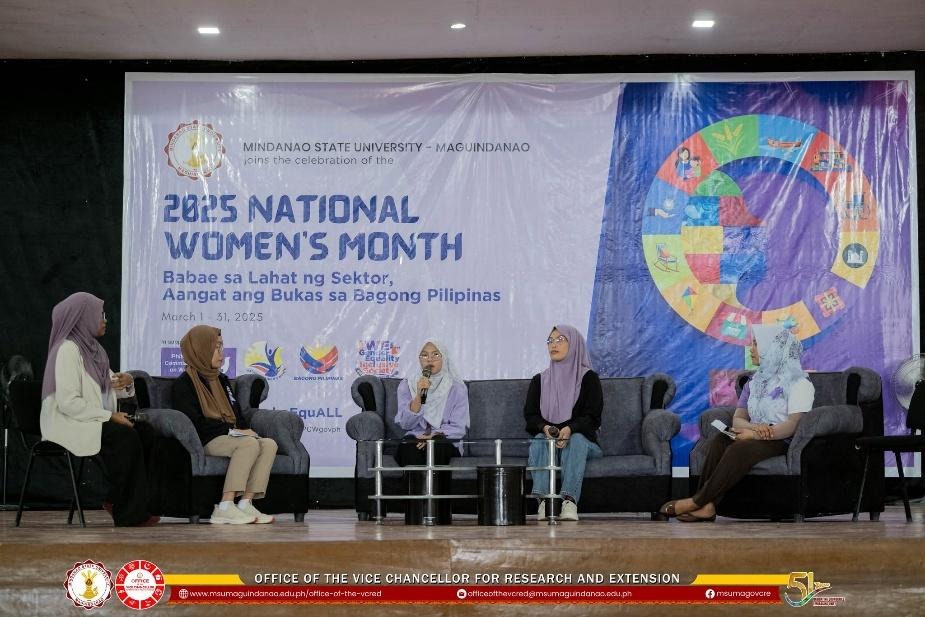
MSU–Maguindanao launches women, peace, and security diploma during National Women’s Month celebration
Mindanao State University–Maguindanao (MSU–Maguindanao) marked the 2025 National Women’s Month Celebration through “Dreams of Peace, Stories of Strength: Celebrating Women at MSU–Maguindanao,” culminating in SHETalks: Empowered Women, Thriving Communities on March 26, 2025, at the Datu Odin Sinsuat Municipal Gymnasium. The activity brought together women leaders, youth scholars, development partners, and peace actors to highlight women’s leadership, participation, livelihood initiatives, and contributions to their communities.The program provided a platform for women from Camps Abubakar, Badre, and Omar to share experiences of livelihood support and community leadership. Their stories highlighted how opportunities to participate in community initiatives can strengthen women’s visibility and involvement in local development. Women’s cooperatives also displayed their products and innovations, showcasing their enterprise activities and contributions to community life.Women leaders and participants share their experiences during SHETalks: Empowered Women, Thriving Communities, held as part of the 2025 National Women’s Month CelebrationThe event also featured MNLF scholars who discussed how the OPAPRU–MSU Study Grant Program opened higher-education opportunities and supported their aspirations. A major institutional highlight was the launch of the Diploma in Women, Peace, and Security (DWPS), a specialized academic program intended to build knowledge and competencies related to women’s participation in governance, justice, and peace processes in the Bangsamoro.Through SHETalks and the sharing of community experiences, the activity drew attention to women’s roles in leadership, peacebuilding, and local enterprise. The cooperative exhibit gave women’s groups an opportunity to present their products to participants, while the scholars’ accounts highlighted the importance of educational opportunities for young people from marginalized communities. Together, these activities provided a platform for recognizing women’s experiences and strengthening dialogue among community members, scholars, and institutional partners.Participants view the exhibit featuring profiles, products, and initiatives highlighting women’s contributions to their communities.The activity contributes to Sustainable Development Goal 5 (Gender Equality) by highlighting women’s leadership, participation in community decision-making, and opportunities to take part in economic and peacebuilding initiatives. The experiences shared by women from the three camps, the visibility provided to women’s cooperatives, and the launch of the DWPS reflect institutional efforts to recognize women’s contributions and support their participation in public and community life. The event documents these activities and opportunities; it does not measure changes in women’s decision-making power, income, or long-term participation.Women’s cooperatives showcase their products during the National Women’s Month activity at the Datu Odin Sinsuat Municipal Gymnasium.Through this initiative, MSU–Maguindanao created a space for women leaders, scholars, cooperatives, and partners to exchange experiences and highlight pathways for women’s participation in community life. Continued documentation and follow-up would help assess how these opportunities contribute over time to women’s leadership, economic participation, and engagement in peacebuilding.
March 26, 2025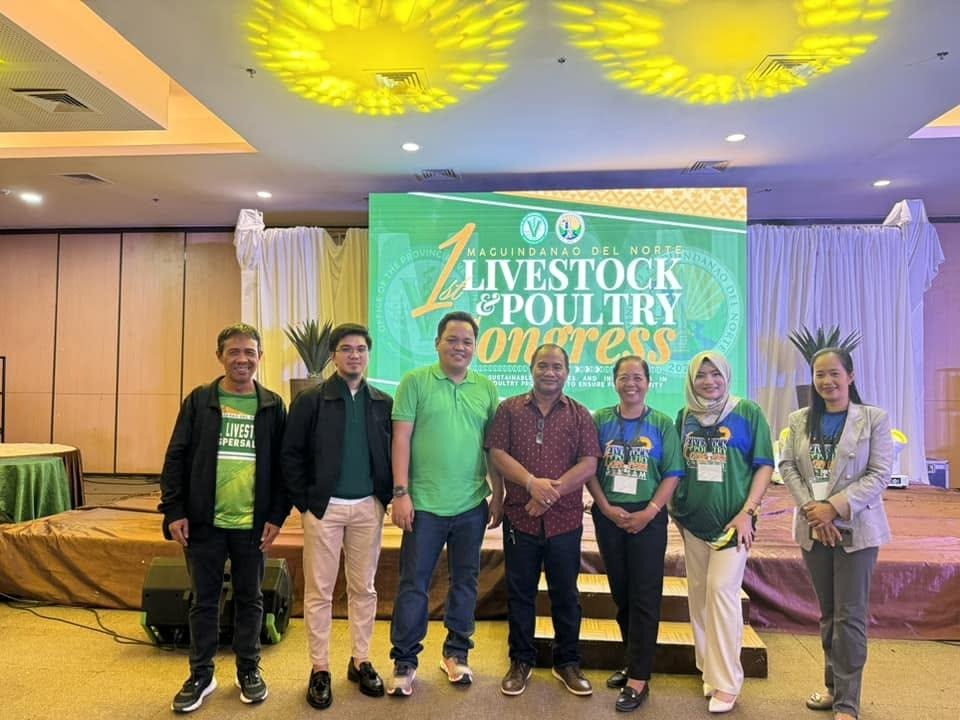
Training session on ALCAMS and agroforestry development, demonstrating the integration of scientific knowledge and practical land-management approaches
The Department of Animal Science of the College of Agriculture, Mindanao State University–Maguindanao, joined farmers, agricultural experts, and government representatives in exchanging knowledge on sustainable livestock and poultry production during the 1st Livestock and Poultry Congress held on January 14, 2025, at the Mall of Alnor, Cotabato City. Organized by the Office of the Provincial Veterinarian–Maguindanao del Norte in collaboration with the Provincial Government of Maguindanao del Norte, the Congress gathered more than 300 participants to discuss agricultural innovations and practices that support food security and rural livelihoods.Agricultural stakeholders gathered to exchange knowledge on sustainable livestock and poultry productiThe Congress featured expert discussions on livestock health, productivity, dairy production, animal care, and halal certification. Faculty members and students engaged with agricultural practitioners and other stakeholders, gaining insights into current production practices and the challenges faced by the livestock and poultry sector. The activity also provided opportunities to strengthen professional connections among academic institutions, government agencies, and farming communities.Through this knowledge exchange, farmers and livestock producers gained access to technical information that may help improve animal health, farm productivity, and sustainable production practices. Faculty members and students benefited from professional learning and direct engagement with agricultural stakeholders, while strengthened partnerships can support future collaboration in agricultural education and extension.Connecting academic expertise with the needs of farming communities can help promote more productive agricultural practices, diversify livelihood opportunities, and strengthen rural economic resilience. Continued collaboration among educational institutions, government agencies, and agricultural stakeholders can support sustainable livestock and poultry production, improve food availability, and expand livelihood opportunities across the Bangsamoro region.
March 14, 2025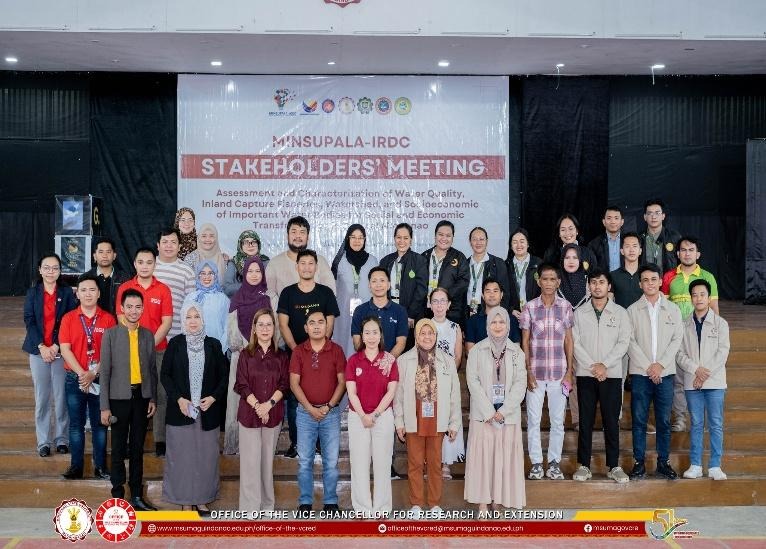
MSU-Maguindanao Joins ₱45-Million Consortium Study of Central Mindanao's Water Bodies, Fisheries, and Watersheds
“Assessment and Characterization of Water Quality, Inland Capture Fisheries, Watershed, and Socio-economic of Important Water Bodies for Social and Economic Transformation in Central Mindanao” is a twelve-month, Department of Budget and Management-funded research initiative under the Mindanao, Sulu and Palawan Innovative Research and Development Consortium (MinSuPala-IRDC), carrying a total project cost of ₱45 million and running since January 1, 2024 under the supervision of DBM Region XII. Mindanao State University-Maguindanao (MSU-Maguindanao) is one of the State Universities and Colleges taking part in the consortium, contributing to the project's research, training, field assessment, stakeholder consultation, and knowledge-sharing activities across Central Mindanao's inland water systems.Participants at the MinSuPala-IRDC Stakeholders' Meeting for the Central Mindanao water-bodies project, hosted at MSU-MaguindanaoRather than treating water quality, fisheries, watersheds, and community livelihoods as separate concerns, the project ties them together in a single integrated assessment built around four components: water-quality assessment, inland capture-fisheries assessment, watershed characterization, and a socio-economic assessment of communities dependent on these water bodies. MSU-Maguindanao researchers took part in the water-quality component's capacity-building activities, and the University hosted a 3-Day Training-Workshop on Inland Capture Fishery and Fish Abundance and Diversity Assessment on March 4-6, 2024, bringing together researchers from several participating SUCs to establish harmonized protocols for assessing fish abundance, diversity, and sustainable management in inland waters. Consortium members also trained in GIS mapping, geotagging, and database development for the watershed component, and developed a shared socio-economic survey protocol for communities along the region's water bodies.The project's water-quality field sampling and its 2025 stakeholder consultations, which brought MSU-Maguindanao and fellow consortium SUCs together with local government units from Cotabato City, Kabuntalan, Talitay, Northern Kabuntalan, and Datu Piang, along with agencies such as MAFAR-BARMM, the Bangsamoro Planning and Development Authority, and DOST-PCAARRD, have been framed around strengthening scientific understanding of water quality, supporting integrated management of water resources, and generating evidence for the conservation of water-related ecosystems across Central Mindanao's important water bodies.With Phase 1 data collection and stakeholder consultations underway, the consortium has already begun engaging fisherfolk through key informant interviews and prioritization activities to help shape Phase 2, while the baseline evidence generated so far gives local government units and agencies a shared scientific reference for environmental planning, fisheries management, and watershed conservation across the region. MSU-Maguindanao's continued participation strengthens its students' and researchers' exposure to interdisciplinary, consortium-scale water-resource research as the project moves forward.
March 7, 2025