Articles
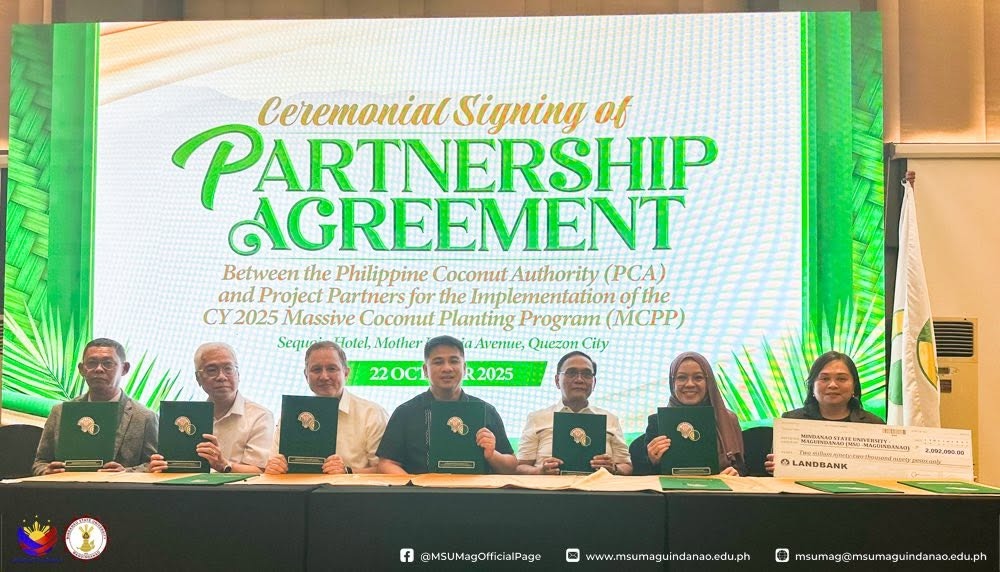
MSU-Maguindanao Partners with PCA for ₱2.09-Million Coconut Planting Program in Maguindanao
Mindanao State University–Maguindanao (MSU-Maguindanao), in partnership with the Philippine Coconut Authority (PCA), led by Administrator Dr. Dexter R. Buted, along with other partners launched the Massive Coconut Planting Program in Maguindanao through a Memorandum of Agreement signed on October 22, 2025, at the Sequoia Hotel, Quezon City. Under the one-year agreement, the PCA committed ₱2.09 million in financial support for the cultivation and distribution of 22,000 high-quality coconut seedlings to help revitalize the province’s coconut industry and promote sustainable agricultural development.MSU-Maguindanao Chancellor Dr. Bai Hejira Nefertiti and CFES Dean Dr. Rowena Benavidez, together with the representative from Philippine Coconut Authority and project partners during the the ceremonial signing of Partnership Agreement for Massive Coconut Planting Program in Maguindanao The program is supported by MSU-Maguindanao Chancellor Bai Hejira Nefertiti M. Limbona, with the involvement of Dr. Rowena C. Benavides, Dean of the College of Forestry and Environmental Studies, and PCA–BARMM, led by Regional Manager Datumanong U. Pendi. Implementation includes nursery establishment, seedling cultivation and distribution, technical assistance to farmer-beneficiaries, and monitoring to support proper planting and seedling survival.The primary beneficiaries are coconut farmers in Maguindanao, who are expected to gain access to quality planting materials and technical guidance to improve farm productivity and support future household income. The initiative also provides practical opportunities for MSU-Maguindanao faculty and personnel to contribute their expertise in forestry, environmental management, and agroforestry. Beyond individual farms, the program is expected to strengthen local agricultural livelihoods and contribute to the long-term revitalization of the province’s coconut industry.The Massive Coconut Planting Program promotes biodiversity conservation, sustainable land management, and the rehabilitation of aging coconut stands. Through the planned cultivation and distribution of 22,000 high-quality coconut seedlings, MSU-Maguindanao and its partners aim to strengthen agricultural landscapes, support soil conservation, and encourage environmentally responsible farming practices. By promoting sustainable coconut production and the responsible use of land resources, the initiative contributes to healthier terrestrial ecosystems, resilient farming communities, and the long-term sustainability of Maguindanao's agricultural sector.
November 13, 2025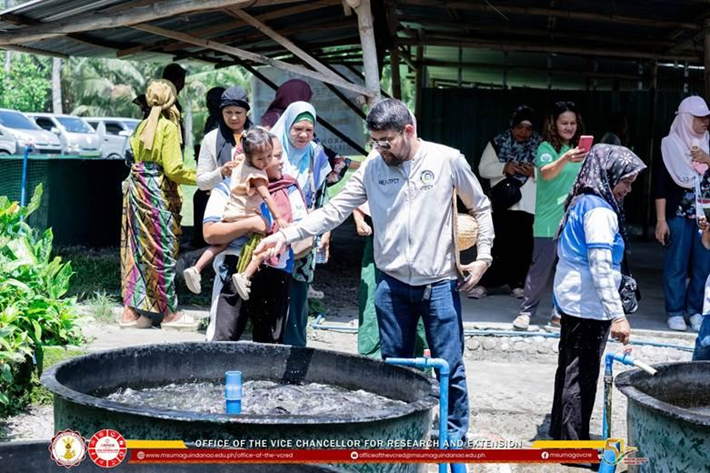
Sustainable Fisheries Knowledge for the Communities
MSU–Maguindanao brings sustainable fisheries and aquaculture knowledge to the communities that depend on them, from former combatants building new livelihoods to local governments managing inland fisheries. These training-workshops, demonstrations and learning sessions are provided free of charge to participating beneficiaries.Aquaculture training in Camps Abubakar, Badre and OmarIn partnership with the Office of the Presidential Adviser on Peace, Reconciliation and Unity (OPAPRU), and in support of the Comprehensive Agreement on the Bangsamoro (CAB), the University implemented two livelihood projects in 2024–2025: the Enhancement of Agri-Aqua Value Production and Value Chain of Economically Important Commodities in Camp Abubakar (₱12,000,000), and the Development of Science and Technology-Based Climate-Smart Mixed Farming System for Crop, Fish and Livestock Production in Camps Omar and Badre (₱10,182,314 for each site).Through lectures, hands-on demonstrations and learning visits, former Moro Islamic Liberation Front (MILF) former combatants, their families, farmers and community organizations learned tilapia and African catfish (hito) production, fish feeding and tank management, integrated farming, and the handling, processing, packaging and branding of fish products.Partner farmers in a hands-on demonstration on fish feeding and tank management.Returning research findings to local governmentsOver a month of consultations in 2025, the MinSuPala-IRDC team at MSU–Maguindanao presented Phase 1 results on inland capture fisheries, water quality and community livelihoods, with policy recommendations, to local and barangay governments and community stakeholders in Cotabato City, Kabuntalan, Talitay, Northern Kabuntalan and Datu Piang. Key informant interviews with fisherfolk, farmers and cooperatives identified priorities for the next phase of work on sustainable inland fisheries.The MinSuPala-IRDC MSU-Maguindnao research team presents Phase 1 findings and policy recommendations to local government and community stakeholders and provided an avenue to present the Phase 2 project Assessment of Indigenous Crop and Fish Species for 2025.National knowledge sharing and responsible tourismOn 24 April 2025, Dr. Ramjie Y. Odin, Dean of the College of Fisheries, presented “Fishing through Conflict: Unveiling the Socio-Economic Pulse of Ligawasan Marsh’s Small-Scale Fisheries” at the TBTI Philippines April 2025 Webinar Series, an open national forum for researchers, students and fisheries practitioners. University studies on the conservation value of the Philippine duck and community support for mangrove conservation in the Katunggan Coastal Ecopark inform responsible, nature-based tourism that protects the wetland and coastal habitats it depends on.𝗗𝗿. 𝗥𝗮𝗺𝗷𝗶𝗲 𝗬. 𝗢𝗱𝗶𝗻, Dean, College of Fisheries, Mindanao State University - Maguindanao as resource speaker during the free webinar series hosted by TBTI
November 13, 2025MSU–Maguindanao Integrates Peace Education and Women, Peace and Security into Outcomes-Based Teaching and Learning in 2025
Mindanao State University–Maguindanao promotes meaningful and inclusive education through the integration of Peace Education and Women, Peace and Security (WPS) concepts into its Outcomes-Based Education (OBE) approach. This initiative reflects the University's commitment to providing students with learning experiences that go beyond academic knowledge by promoting peace, gender equality, cultural understanding, and social responsibility.As part of its teaching and learning practices, the University incorporates Peace Education and WPS objectives into outcomes-based course syllabi and instructional modules. Faculty members integrate these concepts into intended learning outcomes, lecture discussions, classroom activities, and assessment questions, allowing students to understand how peacebuilding, gender equality, and inclusive participation relate to their respective fields of study.Through this approach, peace education becomes part of everyday classroom learning rather than being discussed only during special programs or activities. Faculty members are encouraged to design lectures and learning tasks that connect academic concepts with real-life situations involving cultural diversity, peaceful conflict resolution, women's leadership, gender equality, and community development. Students are also given opportunities to examine social issues, share perspectives, and propose solutions that promote understanding, cooperation, and respect for others.The integration of Women, Peace and Security further emphasizes the important role of women in conflict prevention, peacebuilding, decision-making, and community development. By incorporating WPS-related objectives into instructional materials, the University helps students recognize the value of women's meaningful participation in building peaceful, safe, and inclusive communities.This educational practice is particularly relevant to the University's setting in the Bangsamoro Autonomous Region in Muslim Mindanao (BARMM), where peace, cultural diversity, and inclusive development are important considerations in education. Through classroom discussions and learning activities, students are encouraged to appreciate different cultural backgrounds, understand the challenges experienced by communities, and recognize their responsibilities in contributing to lasting peace and sustainable development.Through this continuing educational effort, MSU–Maguindanao seeks to develop graduates who are not only academically prepared and professionally competent but also socially responsible, culturally sensitive, and committed to promoting peace and sustainable development. The integration of these concepts into teaching and learning reinforces the University's role in preparing students to become positive contributors to their communities and society.
November 11, 2025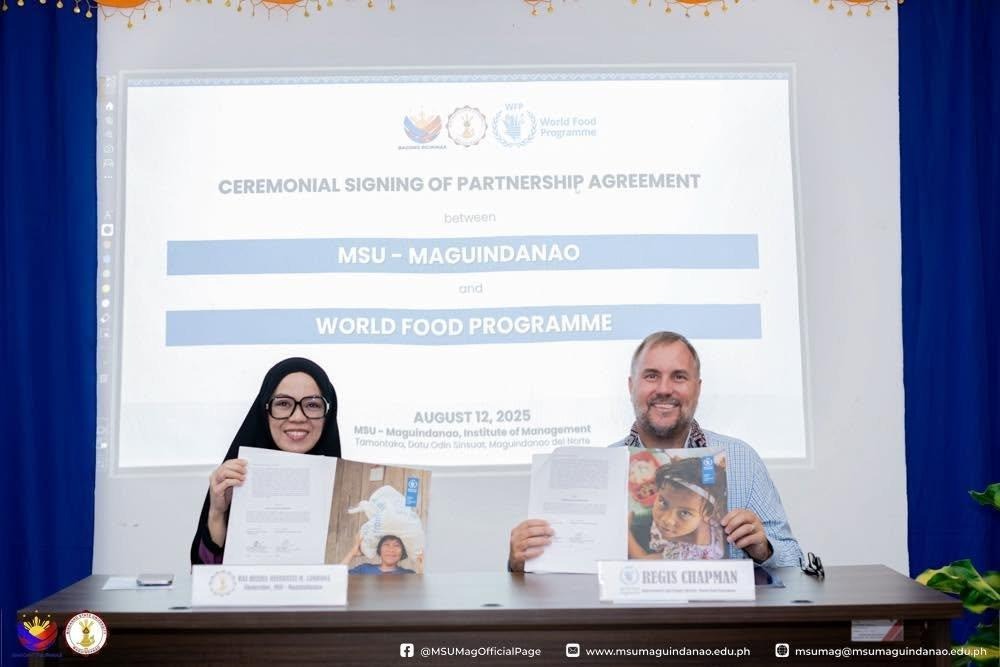
MSU–Maguindanao and the UN World Food Programme sign partnership to strengthen food security and climate resilience in BARMM
Mindanao State University–Maguindanao (MSU–Maguindanao) and the United Nations World Food Programme (WFP) signed a Memorandum of Agreement on August 12, 2025, at the University’s Institute of Management, formalizing a partnership on food security, nutrition, and climate resilience in the Bangsamoro Autonomous Region in Muslim Mindanao (BARMM). Chancellor Dr. Bai Hejira Nefertiti M. Limbona and WFP Representative and Country Director Regis Chapman signed the agreement, witnessed by WFP Cotabato Sub-Office Head Lyca Sarenas and University faculty, directors, and project staff.Chancellor Dr. Bai Hejira Nefertiti M. Limbona and WFP Representative and Country Director Regis Chapman sign the partnership agreement on August 12, 2025The agreement builds on community-based participatory planning workshops the two institutions conducted in Maguindanao del Sur and Maguindanao del Norte. Under it, MSU–Maguindanao deploys its experts in food systems, climate adaptation, and gender-responsive programming to support WFP projects, while WFP provides technical resources and exchange visits. The University’s Office of the Vice Chancellor for Research and Extension anchors the partnership.A joint 2025–2027 work plan commits the partners to train smallholder farmers in climate-smart agriculture, help priority barangays prepare Local Climate Change Adaptation Plans, reduce post-harvest losses, add value to agricultural products, strengthen cooperatives with culturally appropriate tools, and integrate food security and nutrition into the University’s curriculum.MSU–Maguindanao and WFP representatives examine locally developed agricultural products during the partnership signing.Through pairing local academic expertise with the technical resources of a United Nations agency, the partnership brings international support to targeted capacity-building in the region and fosters a multi-stakeholder partnership that shares knowledge, expertise, and technology. It works to increase the productivity and incomes of small-scale food producers and to strengthen communities’ resilience and adaptive capacity to climate-related hazards.With cooperation set through 2027, MSU–Maguindanao serves as a technical partner, not only a beneficiary, in WFP’s work for food security in the Bangsamoro.
November 11, 2025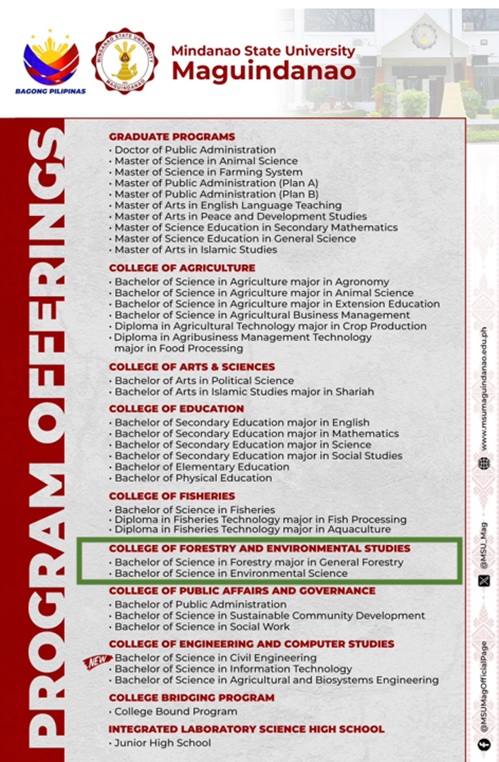
BS Forestry and BS Environmental Science Programs Strengthen the University’s Role in Ecosystem Education on Wild Flora and Fauna
As one of the state universities in the country, Mindanao State University–Maguindanao, through its College of Forestry and Environmental Studies offers two undergraduate degree programs: the Bachelor of Science in Forestry and the Bachelor of Science in Environmental Science, with students benefiting from free tuition and other school fees under Republic Act No. 10931, or the Universal Access to Quality Tertiary Education Act.These programs prepare future foresters, environmental scientists, conservation practitioners, and natural resource management professionals by developing their knowledge and competencies in ecosystem assessment, biodiversity conservation, and sustainable resource management.Both programs devote a focused set of courses to ecosystems and the wild plants and animals that live in them.The list of Program offerings of MSU-Maguindanao includes 2 programs in the College of Forestry and Environmental Studies: Bachelor of Science in Forestry, major in General Forestry, and Bachelor of Science in Environmental Science (marked in green)Bachelor of Science in Forestry, major in General Forestry. In this 177-unit program, students build their foundation in tree and plant identification through Morphology, Taxonomy, and Dendrology, and in ecological processes through Forest Ecology. They then move to the conservation and management of wild species and their habitats in Forest Wildlife and Biodiversity Conservation, Protected Area Management, and Watershed Management. Social Forestry and Community-Based Natural Resources Management prepares them to work alongside communities that depend on forest resources. Major electives such as Restoration of Degraded Ecosystems and Integrated Coastal Resources Management extend this training to damaged landscapes and coastal habitats.Bachelor of Science in Environmental Science. The 164-unit program includes five courses, totaling 18 units, on ecosystems and wild species: Fundamentals of Ecology (4 units), Plant Taxonomy and Nomenclature (4 units), Animal Taxonomy and Nomenclature (4 units), Aquatic and Terrestrial Ecosystem Management (3 units), and Forest Wildlife and Biodiversity Conservation (3 units). Students first learn how organisms interact with their environment, then identify and classify wild plants and animals, and finally apply this knowledge to managing land and water ecosystems and conserving forest species and habitats.The University extends ecosystem education beyond the classroom through its graduates, faculty-led research and extension initiatives, and published educational resources. Graduates of the BS Forestry and BS Environmental Science programs bring their competencies in species identification, biodiversity conservation, and ecosystem management into their professional practice in government agencies, environmental institutions, and community-based initiatives. Through these roles, they contribute to environmental education, conservation efforts, and the promotion of sustainable natural resource management.Faculty members of the College of Forestry and Environmental Studies and other colleges also contribute to community knowledge through research and extension activities that document local biodiversity and promote ecosystem conservation. Among these educational resources are the published books, titled “Tree Species of the Sifaran Watershed” and “Bird Species of the Sifaran Watershed”, which document the flora and fauna found in one of the province's important watersheds. These publications provide valuable reference materials for understanding local plant and bird species and their ecological importance, making research-based knowledge more accessible to students, researchers, environmental practitioners, and local stakeholders.Published books of MSU-Maguindanao on Bird Species and Trees and Shrubs of Sifaran Watershed in Barangay Sifaran, Datu Odin Sinsuat, Maguindanao, del Norte, accessible for free at the Mindanao Palawan Sulu-Innovative Research and Development Consortium (MinSuPala-IRDC) WebsiteThrough its academic programs, professional graduates, research, extension initiatives, and biodiversity publications, the University continues to make ecosystem knowledge accessible beyond its campus, promoting greater awareness and understanding of wild flora, fauna, and the importance of conserving local ecosystems.
November 10, 2025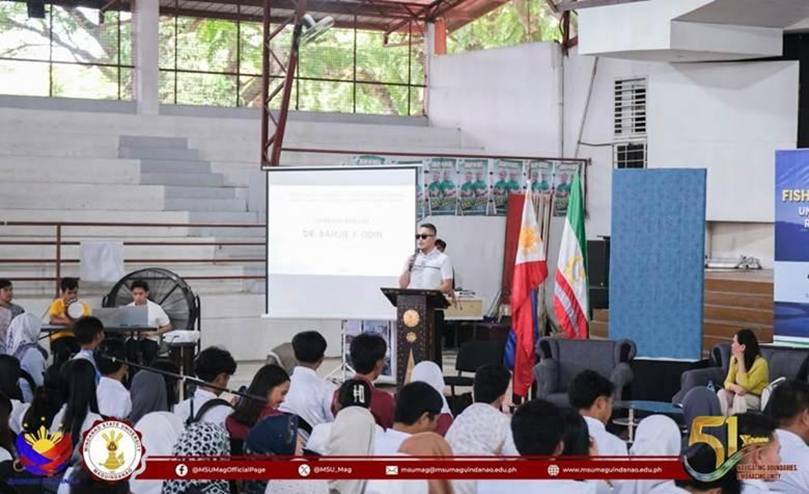
Defending Municipal Waters: Public Education Against Overfishing and Illegal Fishing
On 5 May 2025, the MSU–Maguindanao College of Fisheries held a free public policy seminar at the Datu Odin Sinsuat Gymnasium on small-scale fisheries governance and the protection of municipal waters. Open to students, faculty members and community stakeholders at no cost, the seminar examined the Supreme Court ruling on municipal waters and how effective regulation can prevent overfishing, illegal, unreported and unregulated (IUU) fishing, and destructive fishing practices.Atty. Mohammad Muktadir A. Estrella discussed the legal basis of the ruling, the responsibilities of municipal governments under the Philippine Fisheries Code (Republic Act No. 8550), and relevant provisions of the Bangsamoro Organic Law (Republic Act No. 11054). Dr. Mohammadtaha S. Pendaliday of MAFAR-BARMM explained regional fisheries regulations. Participants closed the seminar by signing a Commitment Wall pledging support for the protection of municipal fisheries.Dr. Ramjie Y. Odin opens the policy seminar on municipal fisheries at the Datu Odin Sinsuat Gymnasium, 5 May 2025Second Philippine Small-Scale Fisheries National SymposiumAs a constituent university of the MSU System, MSU–Maguindanao helped organize and co-hosted the Second Philippine Small-Scale Fisheries National Symposium on 21–23 October 2025 at the MSU Main Campus in Marawi City, under the theme “From Recognition to Action: Advancing Sustainable Small-Scale Fisheries in the Philippines.” More than 300 fisherfolk, fisheries managers, researchers, local officials, policymakers and development partners took part.The symposium confronted the main threats to fish stocks directly: overfishing, IUU fishing, destructive fishing practices, and conflicts between small-scale and commercial fisheries. Sessions covered the National Plan of Action for Small-Scale Fisheries, updates from the Food and Agriculture Organization and the Bureau of Fisheries and Aquatic Resources, proposed amendments to the Philippine Fisheries Code, and research on coral reefs and small pelagic fish.MSU–Maguindanao delegation at the Second Philippine Small-Scale Fisheries National Symposium, MSU Main Campus, 21–23 October 2025.
November 8, 2025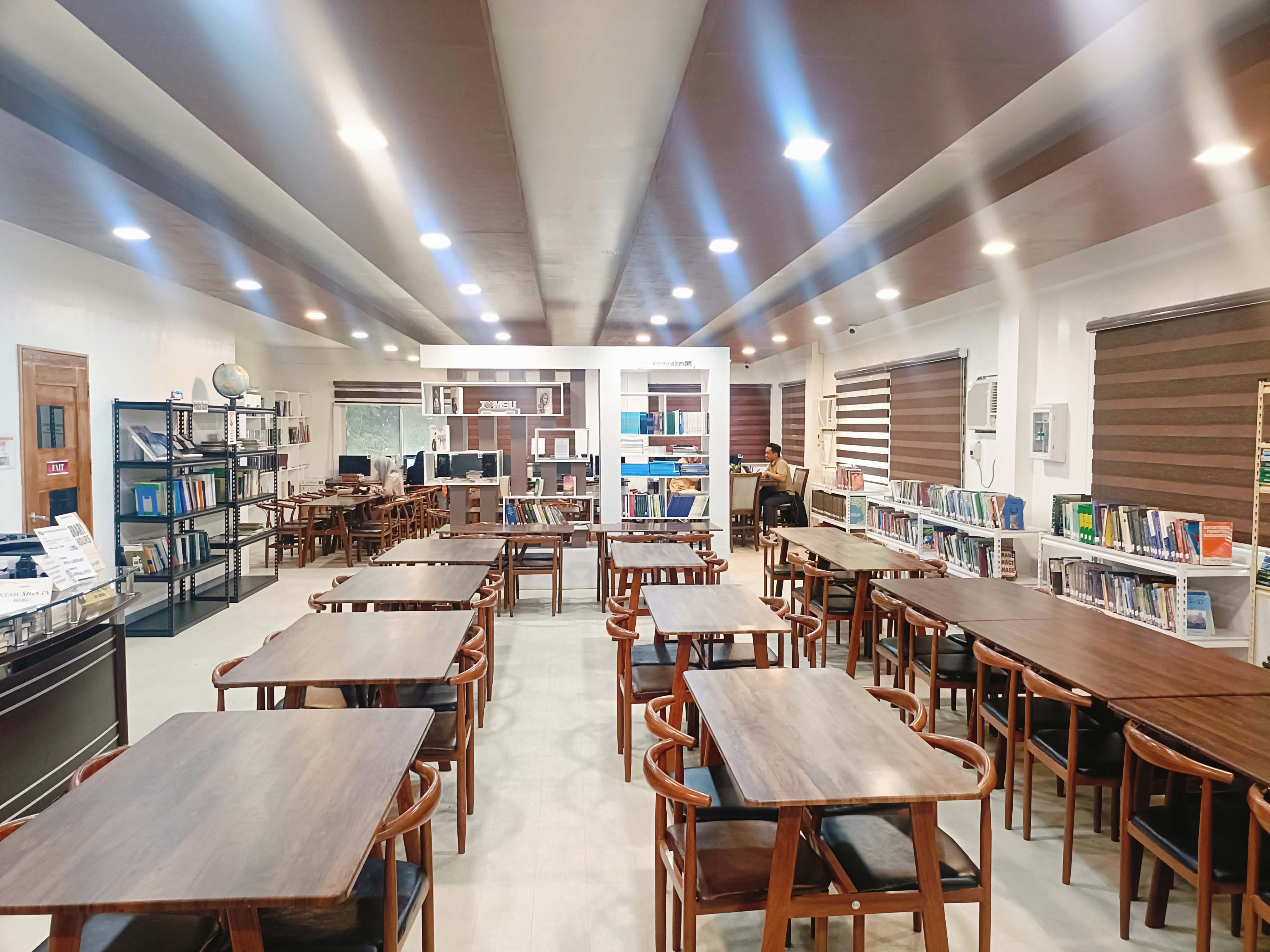
University Library Provides Free Access to Learning Resources for the Public
Providing access to educational resources to the wider community, Mindanao State University–Maguindanao recorded a total of 214 external visitors who accessed the University's library facilities and educational resources, including high school, undergraduate, and graduate students from nearby schools, colleges, and universities. This initiative reflects the University's commitment to promoting inclusive and equitable access to education. Through its established Library Users' Guide and Policies, the University accommodates external researchers, students from other educational institutions, alumni, former faculty members, government employees, and other recognized stakeholders, providing opportunities for academic research, independent learning, and knowledge acquisition. This allows individuals outside the University to utilize its library resources and facilities in support of their academic requirements and learning needs.The premises of the MSU-Maguindanao University Library, providing an accessible and conducive learning environment for students, faculty, and external visitors.The University Library provides public access to various educational resources, including books, newsletters, manuals, theses, and other reference materials for academic, professional, and research purposes. Under its existing policies, non-members are permitted to utilize library facilities free of charge for up to five days per semester. Visitors from other educational institutions are required to present valid identification cards and referral letters from their respective librarians, while representatives of organizations, associations, industries, government agencies, and non-governmental organizations are required to present valid identification cards.External visitors utilize the MSU–Maguindanao Library facilities and learning resources for reading, research, and academic studyTo ensure the responsible use and preservation of library resources, all materials are designated for room use only. Special collections, including theses, newsletters, manuals, the Qur'an, and Bibles, are available for consultation but are not permitted to be photocopied. Library computers are likewise reserved exclusively for academic activities and lawful research purposes. These measures ensure that public access remains consistent with the University's established library regulations.In addition to physical learning resources, MSU–Maguindanao also facilitates free public internet access through a Wi-Fi project of the Department of Information and Communications Technology (DICT). Available within the University Library and nearby premises, this service enables external visitors to access online educational materials, conduct research, and utilize digital information resources at no cost. The initiative complements existing library services by providing access to digital learning opportunities and helping reduce barriers to information and communication technologies.
November 7, 2025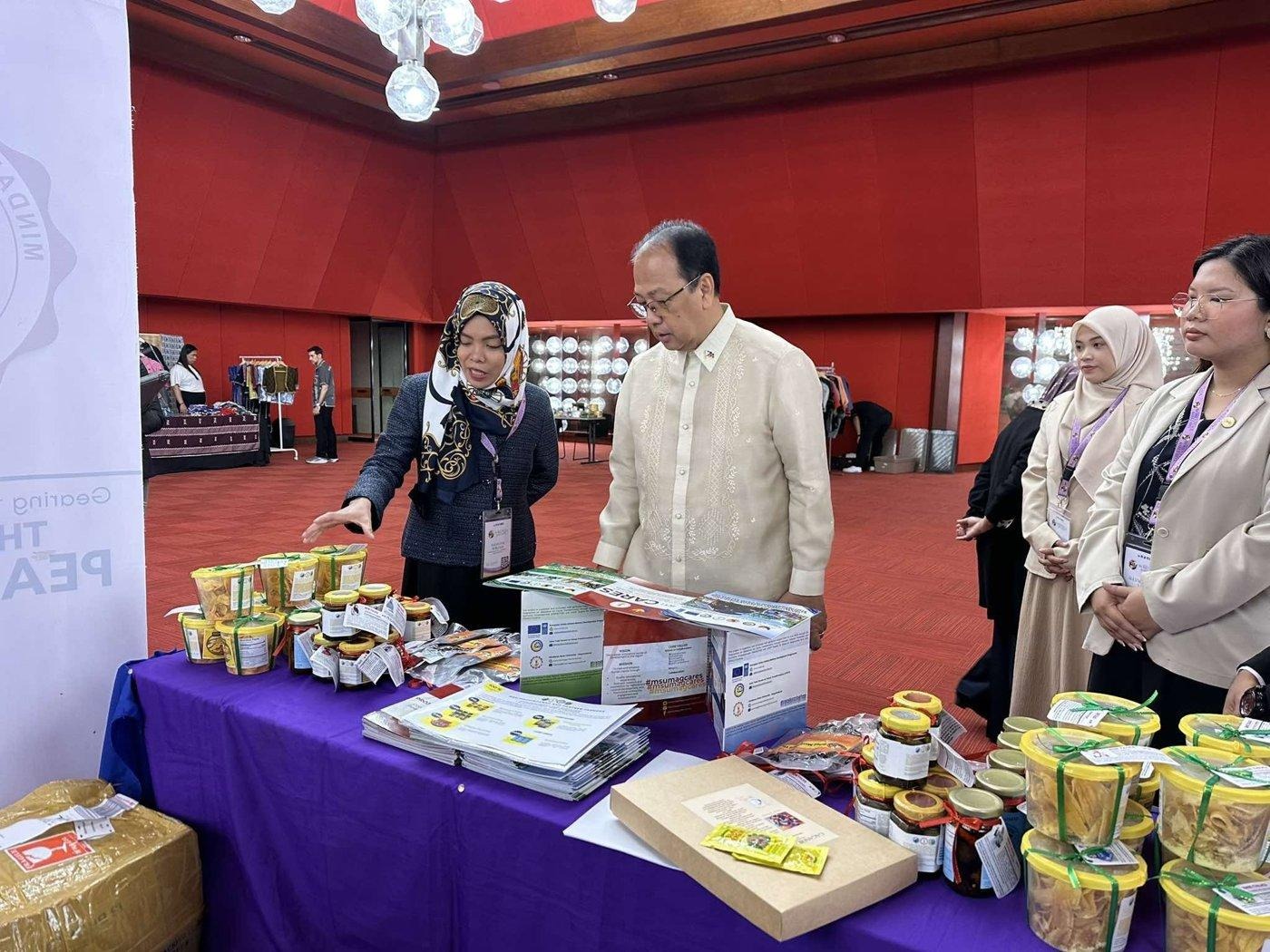
Mindanao State University–Maguindanao Delegation Strengthens National Partnerships for Its Women, Peace and Security Program at the 2025 Philippine Conference on WPS
A delegation from Mindanao State University–Maguindanao, led by Chancellor Bai Hejira Nefertiti M. Limbona, with faculty from the Diploma in Women, Peace and Security (DWPS) Program and the President of the Student UPeace Club, represented the University at the 2025 Philippine Conference on Women, Peace and Security (WPS), held on October 28 to 30, 2025, at the Philippine International Convention Center in Pasay City. The three-day national conference gathered WPS advocates, policymakers, and educators from across the country through five plenary sessions and 20 side events on inclusive governance, women's leadership, and peacebuilding.Conference guests view products and learning materials at the MSU–Maguindanao exhibit tableThroughout the conference, the delegation took part in plenary discussions and side events, exchanged knowledge with government agencies, educators, peace advocates, and civil society organizations, and introduced the DWPS to national WPS stakeholders as a program shaped by the Bangsamoro experience. DWPS faculty used the conference to build professional networks and gather insights for WPS instruction, research, and capacity-building, while the Student UPeace Club President brought a student voice from the Bangsamoro into national policy and advocacy discussions.Chancellor Limbona shares materials with Solicitor General Darlene Berberabe.The engagement benefited the participating University administrators, DWPS faculty, and student representative, and, through them, the students and faculty of the DWPS, who will draw on the knowledge and networks gained. It also widened the University's links with national agencies and organizations working on women's participation in peace and governance. By strengthening its capacity and partnerships to advance the inclusion of women, particularly those from conflict-affected Bangsamoro communities, in governance and peacebuilding, the University empowers and promotes their social and political inclusion, ensures equal opportunity, and supports women’s full participation and leadership in public life, building on effective partnerships with national agencies and civil society.The MSU–Maguindanao delegation with fellow participants at the 2025 Philippine Conference on Women, Peace and Security, PICC, Pasay City.The University will build on the partnerships formed at the conference to scale up the DWPS so that more women and young leaders in the Bangsamoro gain the knowledge and networks to help shape peace.
November 5, 2025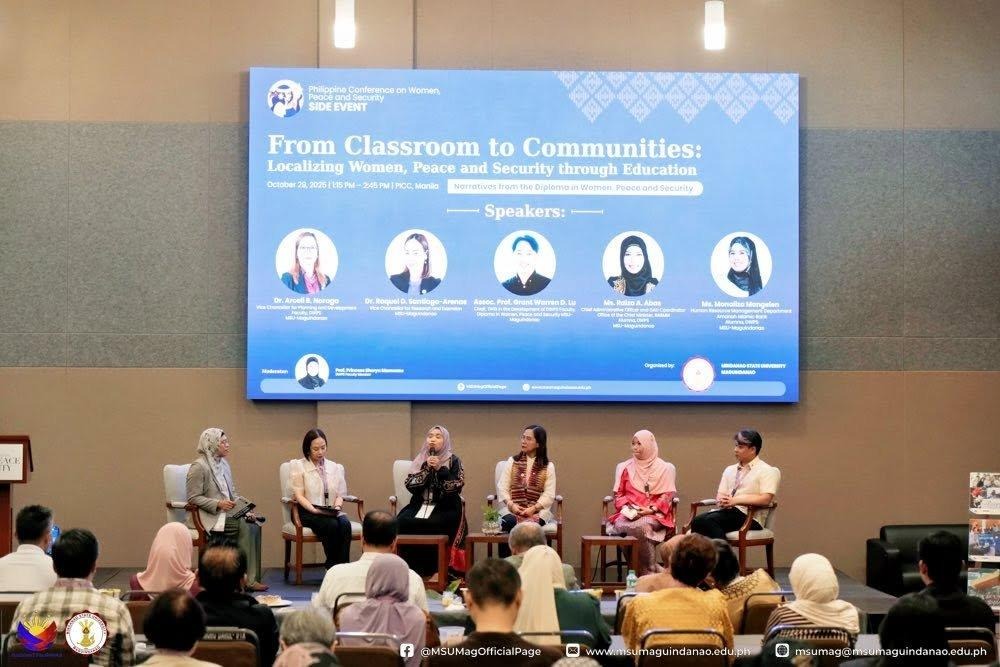
Mindanao State University–Maguindanao Convenes Side Event on Localizing Women, Peace and Security through Education at the 2025 Philippine Conference on WPS
A delegation from Mindanao State University–Maguindanao, led by Chancellor Bai Hejira Nefertiti M. Limbona, with faculty from the Diploma in Women, Peace and Security (DWPS) and the President of the Student UPeace Club, brought the University's work on women, peace and security to the 2025 Philippine Conference on Women, Peace and Security (WPS), held on October 28 to 30, 2025, at the Philippine International Convention Center in Pasay City. The three-day national conference gathered WPS advocates, policymakers, and educators through five plenary sessions and 20 side events.Speakers during the side event "From Classroom to Community: Localizing Women, Peace and Security through Education," Summit Hall 2, PICC, October 29, 2025.On October 29, the University convened one of these side events, "From Classroom to Community: Localizing Women, Peace and Security through Education," at Summit Hall 2. University officials and faculty from planning, research and extension, and the DWPS Technical Working Group presented how WPS principles are built into the University's instruction, research, and extension. They explained that the DWPS curriculum draws on community knowledge, including the guidance of community elders, so that learning stays rooted in the Bangsamoro context, and that students and working professionals in the program produce policy papers and program designs addressing women's empowerment in their own organizations and communities.The University also presented its extension work providing climate-smart agriculture and economic empowerment opportunities to mothers and wives in MILF camps. The session closed with the launch of the DWPS learning book "Dialogue Beyond Borders: Reimagining Women, Peace, and Security through the Yogyakarta-Bangsamoro Experience," which documents the exchange of lessons between peace advocates from the Bangsamoro and Yogyakarta, Indonesia. Representatives from government, civil society, the financial sector, BARMM institutions, and DWPS alumni took part in the discussions.Launch of the DWPS learning book "Dialogue Beyond Borders: Reimagining Women, Peace, and Security through the Yogyakarta-Bangsamoro Experience," October 29, 2025.The engagement strengthened partnerships between the University and national WPS stakeholders, gave DWPS faculty and students direct exposure to national policy discussions, and placed a Bangsamoro perspective in the national WPS agenda. By building the knowledge and capacity needed to remove the barriers that keep women, especially those in conflict-affected communities, from taking part in governance, peacebuilding, and economic life, the University empowers and promotes their social, economic, and political inclusion, ensures equal opportunity, and supports women’s full and effective participation and equal opportunities for leadership in public life, while advancing peaceful and inclusive societies.The MSU–Maguindanao delegation with fellow participants at the 2025 Philippine Conference on Women, Peace and Security, PICC, Pasay City.Building on the partnerships formed at the conference, the University aims to scale up the DWPS and expand its community extension work for women in MILF camps, making Mindanao State University–Maguindanao a regional hub for Women, Peace and Security education.
November 5, 2025