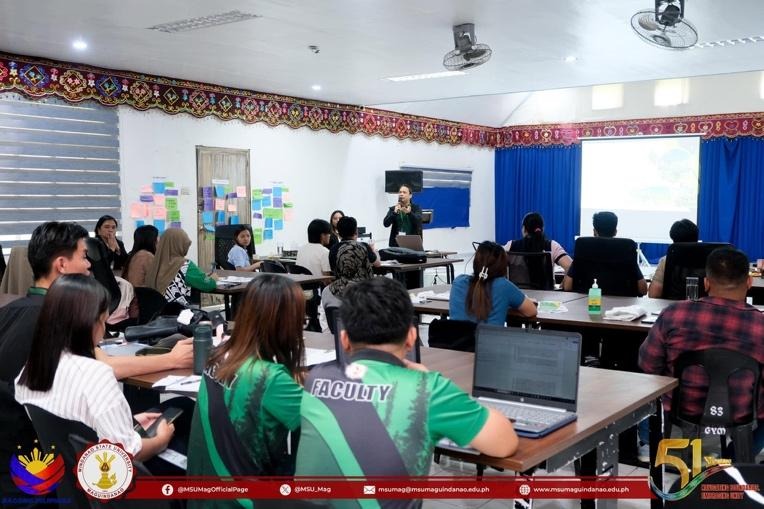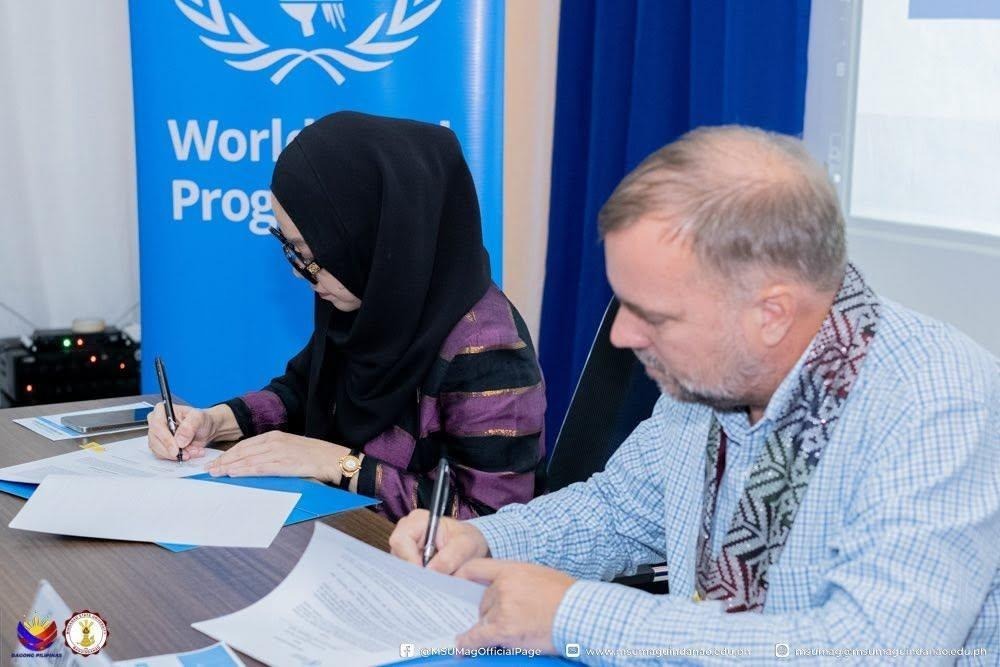
Mindanao State University–Maguindanao (MSU-Maguindanao), in partnership with the Philippine Coconut Authority (PCA), led by Administrator Dr. Dexter R. Buted, along with other partners launched the Massive Coconut Planting Program in Maguindanao through a Memorandum of Agreement signed on October 22, 2025, at the Sequoia Hotel, Quezon City. Under the one-year agreement, the PCA committed ₱2.09 million in financial support for the cultivation and distribution of 22,000 high-quality coconut seedlings to help revitalize the province’s coconut industry and promote sustainable agricultural development.
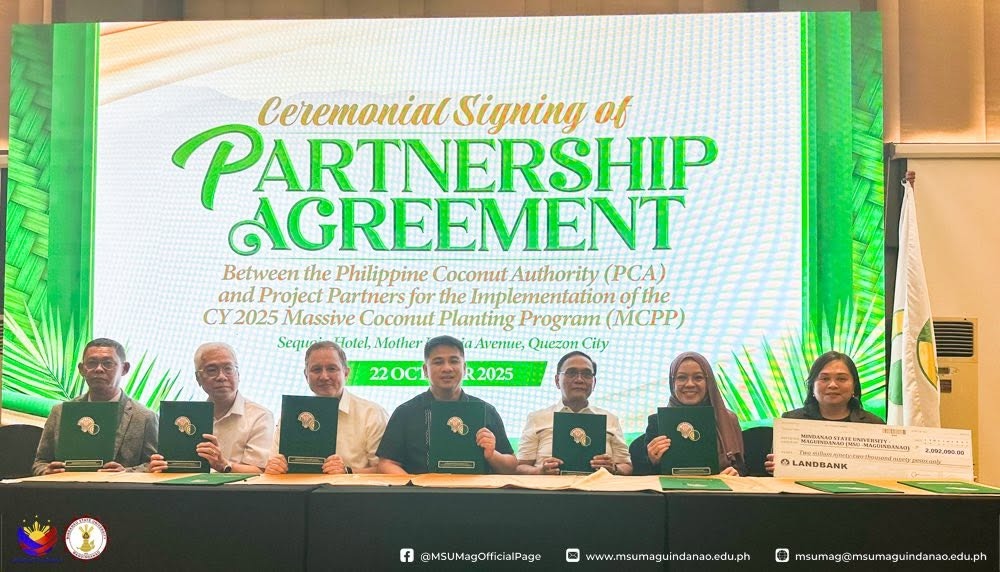
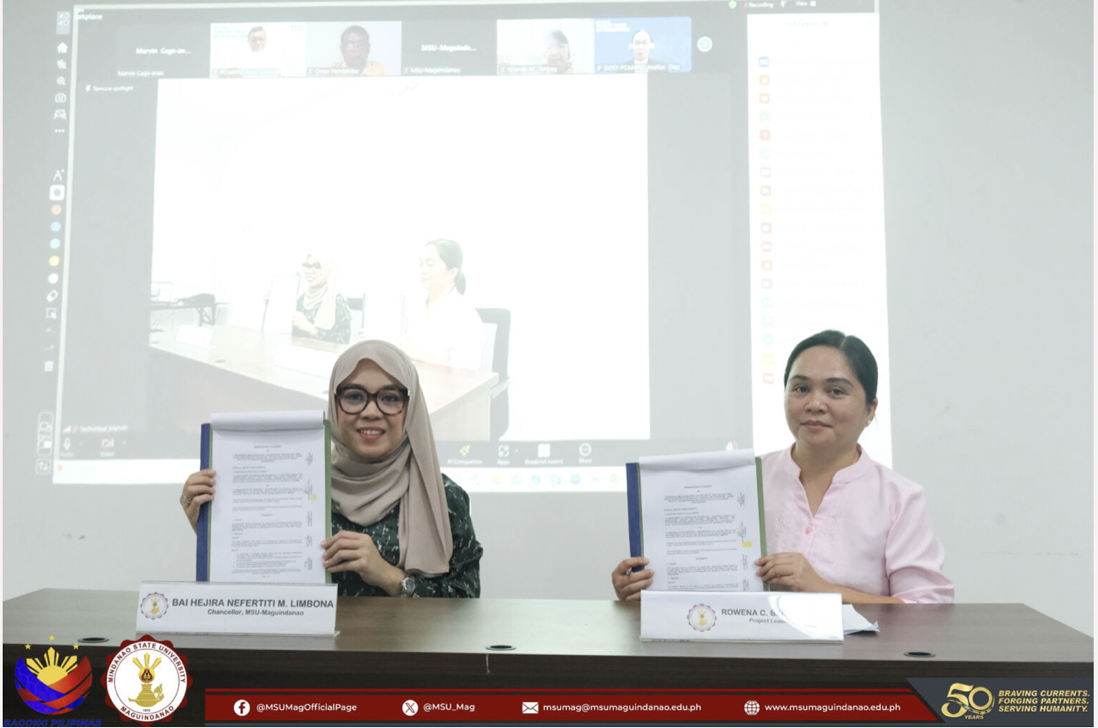
MSU-Maguindanao Chancellor Dr. Bai Hejira Nefertiti and CFES Dean Dr. Rowena Benavidez, together with the representative from Philippine Coconut Authority and project partners during the the ceremonial signing of Partnership Agreement for Massive Coconut Planting Program in Maguindanao
The program is supported by MSU-Maguindanao Chancellor Bai Hejira Nefertiti M. Limbona, with the involvement of Dr. Rowena C. Benavides, Dean of the College of Forestry and Environmental Studies, and PCA–BARMM, led by Regional Manager Datumanong U. Pendi. Implementation includes nursery establishment, seedling cultivation and distribution, technical assistance to farmer-beneficiaries, and monitoring to support proper planting and seedling survival.
The primary beneficiaries are coconut farmers in Maguindanao, who are expected to gain access to quality planting materials and technical guidance to improve farm productivity and support future household income. The initiative also provides practical opportunities for MSU-Maguindanao faculty and personnel to contribute their expertise in forestry, environmental management, and agroforestry. Beyond individual farms, the program is expected to strengthen local agricultural livelihoods and contribute to the long-term revitalization of the province’s coconut industry.
The Massive Coconut Planting Program promotes biodiversity conservation, sustainable land management, and the rehabilitation of aging coconut stands. Through the planned cultivation and distribution of 22,000 high-quality coconut seedlings, MSU-Maguindanao and its partners aim to strengthen agricultural landscapes, support soil conservation, and encourage environmentally responsible farming practices. By promoting sustainable coconut production and the responsible use of land resources, the initiative contributes to healthier terrestrial ecosystems, resilient farming communities, and the long-term sustainability of Maguindanao's agricultural sector.