SDG12
Measuring What Students Know, Value, and Do for Sustainability, a University-Wide Survey Sets the Baseline
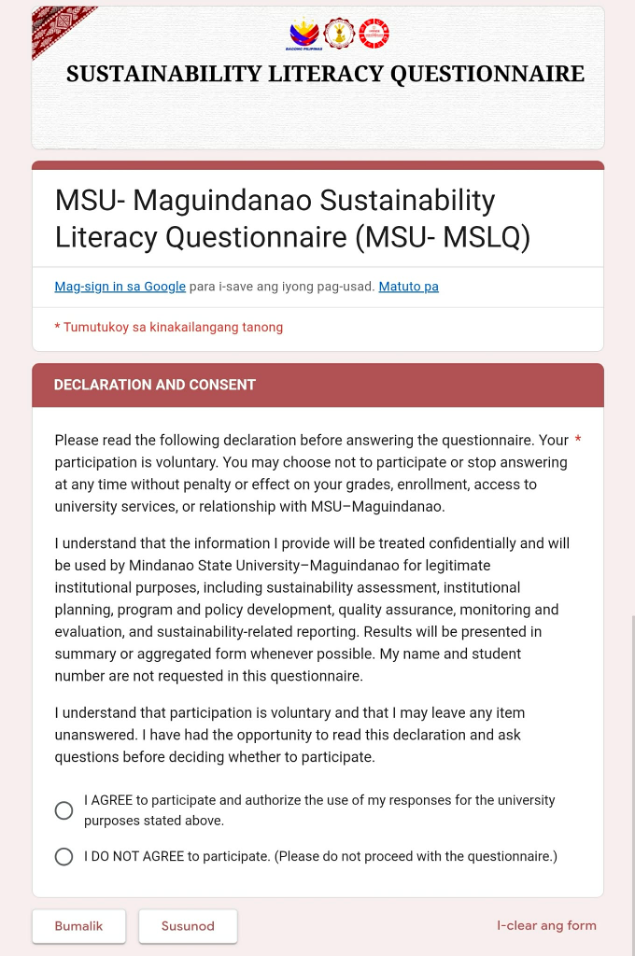
At least 87.68% of the students who answered the MSU–Maguindanao Sustainability Literacy Questionnaire (MSU–MSLQ) showed high to very high sustainability literacy in each of its five dimensions, as Mindanao State University–Maguindanao measures the sustainability literacy of its students directly rather than relying only on the courses, campaigns, and environmental activities it offers.The Office of the Vice Chancellor for Research and Extension (OVCRE) developed the MSU–MSLQ, a structured 30-item assessment that experts reviewed before use, to give the University evidence for institutional planning, quality assurance, program development, and sustainability monitoring. The questionnaire covers five dimensions: knowledge and awareness of sustainable development, the SDGs, climate change, biodiversity, and responsible consumption; values and attitudes, such as environmental responsibility, protecting resources for future generations, social equity, and the role of universities in sustainable development; systems thinking, or seeing how environmental, social, and economic concerns connect; awareness of the environmental challenges facing Maguindanao and the Bangsamoro and of the University’s responsibility toward them; and sustainable practices such as waste segregation, reducing plastic use, conserving resources, and joining sustainability activities. Students rated each item on a four-point scale, from 4 (Very High) to 1 (Very Low). OVCRE administered the questionnaire online to all undergraduate and graduate students throughout November 2025. Participation was voluntary, and the questionnaire asked for no names or student numbers.The MSU–MSLQ opens with a declaration and consent page assuring students that participation is voluntary and that no names or student numbers are collected.Values and attitudes emerged as the strongest dimension, with 92.12% of respondents rating high or very high and 78.82% rating very high. Knowledge and awareness followed at 90.64%, local and institutional sustainability awareness at 90.15%, and systems thinking and sustainability application at 88.18%. Sustainable practices and behavioral engagement recorded the lowest share at 87.68%, and the smallest very high group at 52.71%, which shows that students’ values run ahead of their everyday habits.Most respondents rate high or very high in all five dimensions, with values and attitudes strongest and sustainable practices weakest.The results, which are based on students’ own ratings, show that respondents see sustainability not only as an environmental concern but also as a matter of social equity, economic choices, institutional accountability, and community development. They give the University a baseline for each dimension and point to where its teaching and campus programs should focus next.The University aims to use these results to strengthen the dimension where students lag, by building waste segregation, plastic reduction, and resource conservation into campus activities and classes, and to deepen systems thinking through interdisciplinary teaching, research, and community-based problem-solving. OVCRE will administer the questionnaire every year, which will show whether these efforts change how students act.
December 23, 2025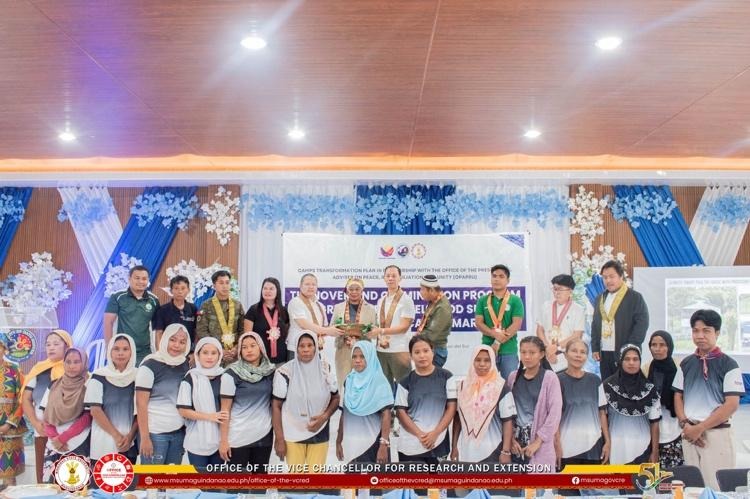
MSU-Maguindanao, OPAPRU Support Agricultural Livelihood Projects in Three MILF Camps
Mindanao State University–Maguindanao in partnership with and funded by the Office of the Presidential Adviser on Peace, Reconciliation and Unity (OPAPRU), has supported agricultural livelihood projects in Camp Omar and Camp Badre and provided a kitchen facility in Camp Abubakar under the MILF Camps Transformation Plan.Culmination and turnover of Agricultural Livelihood Support Projects for Camp Omar on June 17, 2025.The initiatives are part of the Normalization Track of the Comprehensive Agreement on the Bangsamoro (CAB), providing livelihood assistance and facilities to local cooperatives in communities covered by the camp transformation program.In Camp Omar, the Agricultural Livelihood Support Projects were turned over on June 17, 2025, at the Datu Hoffer Municipal Training Center. The assistance covered vegetable production, goat production, poultry production, and fish farming production for four beneficiary organizations: Aljasuws Agri-Business Association Cooperative, Talibadok Kauyagan Marketing Cooperative, Mujahidin a Nagapas Agri-Producer Cooperative, and Limpongo Women’s Organization.On July 16, 2025, agricultural livelihood support projects for Camp Badre were presented and turned over to the partner-farmers and beneficiaries, including the Sif-Ku Producers Cooperative, the Sigay Kutawato RTW Women’s Marketing Cooperative, the Matado Agrarian Reform Cooperative, and the Sibutuan Agricultural Cooperative.MSU–Maguindanao, partner representatives, and community stakeholders during a 2025 Camp Transformation turnover of kitchen facility at Camp Abubakar on June 18, 2025. Meanwhile, a kitchen facility was formally handed over to its beneficiaries, the Calagan Women’s Marketing Cooperative and the Gawad Kalinga Village Togaig Farmer’s Marketing Cooperative, in Camp Abubakar, Barira, Maguindanao del Norte, on June 18, 2026.The agricultural livelihood projects in Camp Omar and Camp Badre align with Sustainable Development Goal 12, which aims to ensure sustainable consumption and production patterns. By supporting vegetable, goat, poultry, and fish production among local cooperatives, the initiatives lay the groundwork for promoting sustainable agricultural practices. The turnover activities brought together representatives from OPAPRU, the Office of the Special Assistant to the President; local government units; the military; MSU-Maguindanao; project teams; and beneficiary cooperatives.Through these initiatives, MSU-Maguindanao and OPAPRU support agricultural livelihood activities and community facilities in areas covered by the peace process. The projects demonstrate the university’s engagement with local cooperatives through livelihood assistance and partnerships under the MILF Camps Transformation Plan.
October 22, 2025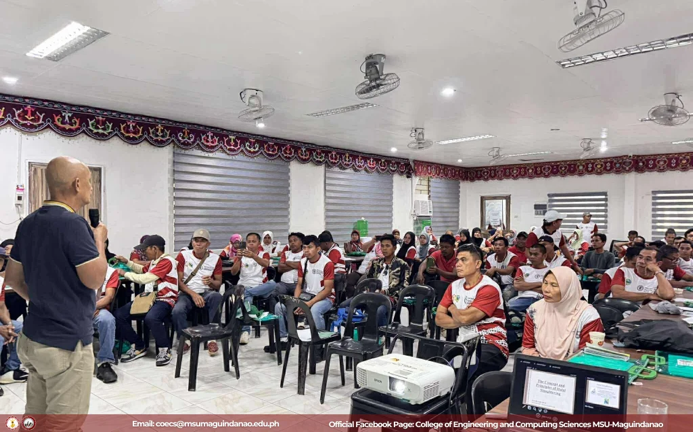
MSU–Maguindanao Implements Halal Livestock Farmer Field School and Sustainable Production Training for Goats and Cattle
Mindanao State University–Maguindanao conducted the Halal Livestock Farmer Field School and Sustainable Halal Livestock Production Capacity-Building Program for Goat and Cattle to promote sustainable and Halal-compliant livestock production in the Bangsamoro Autonomous Region in Muslim Mindanao (BARMM).The program was carried out through the College of Agriculture and the College of Engineering and Computing Sciences, in collaboration with the Food and Agriculture Organization of the United Nations (FAO) and the Ministry of Agriculture, Fisheries, and Agrarian Reform (MAFAR), under efforts to develop Halal agricultural production systems in Mindanao. The October training formed part of Project TCP/PHI/3903, Development of Halal Agricultural Production Systems in Mindanao, Phase II.On July 28, the University held the orientation in its Audio-Visual Room, followed by a field exposure at its livestock facilities. It gathered 100 farmers and agricultural technicians from Maguindanao del Norte and Maguindanao del Sur for sessions on Halal principles, animal welfare, biosecurity, and sustainable livestock management. The five-day training expanded learning through lectures, demonstrations, and hands-on activities covering herd management, nutrition and feeding, reproductive management, disease prevention, silage production, feed formulation using locally available ingredients, salt-lick production, and Halal slaughtering of cattle and goats.The primary beneficiaries were livestock farmers and agricultural technicians, while livestock-producing households, rural communities, and agricultural extension personnel may benefit from the subsequent application and dissemination of the knowledge acquired.The program contributes to Sustainable Development Goal 12 (SDG 12): Responsible Consumption and Production by promoting the sustainable management and efficient use of agricultural resources and providing farmers and agricultural technicians with relevant information and awareness of sustainable production practices.Moving forward, MSU–Maguindanao aims to continue farmer training, extension services, and partnerships to encourage the adoption of sustainable and Halal-compliant livestock practices in BARMM. Monitoring will be needed to determine the program's longer-term effects on resource use, farming practices, productivity, and income.
October 22, 2025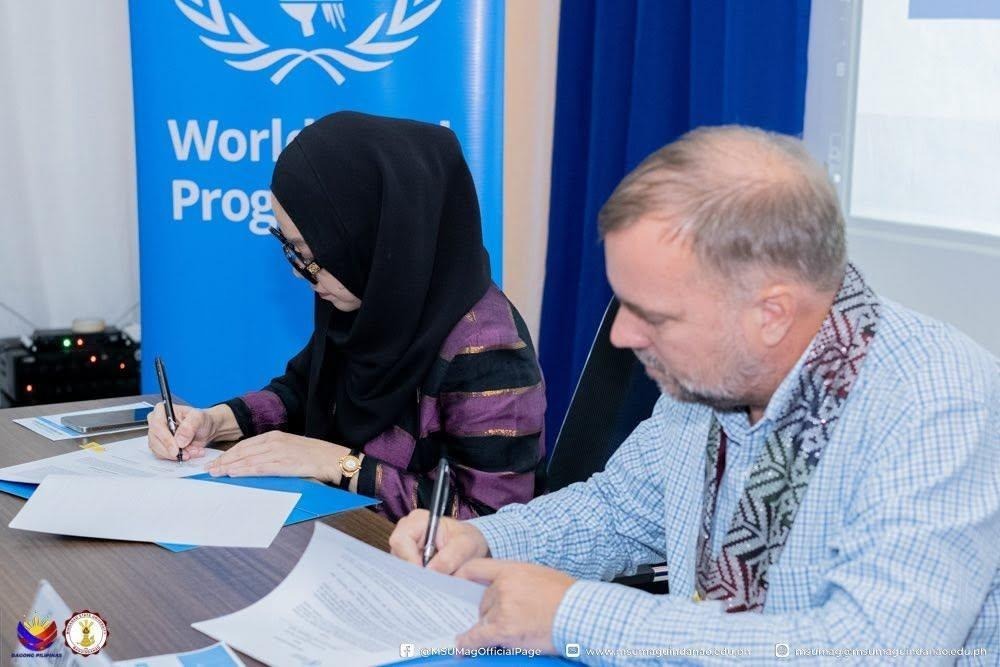
MSU–Maguindanao, World Food Programme Partners for Food Security, Nutrition and Climate-Resilient Communities in BARMM
A Memorandum of Agreement (MOA) was signed between Mindanao State University–Maguindanao (MSU–Maguindanao), led by Chancellor Bai Hejira Nefertiti M. Limbona, and the United Nations World Food Programme (WFP), represented by Representative and Country Director Regis Chapman, at the Institute of Management. The partnership established a 2025–2027 cooperation framework to advance food security, nutrition, sustainable agricultural production, and climate resilience in the Bangsamoro Autonomous Region in Muslim Mindanao (BARMM).Formal signing of the partnership agreement between MSU–Maguindanao Chancellor Bai Hejira Nefertiti M. Limbona and World Food Programme Representative and Country Director Regis Chapman, establishing the institutional framework for the 2025–2027 cooperation programUnder the cooperation framework, joint initiatives include capacity building for smallholder farmers, climate-smart agriculture training, watershed management, post-harvest loss reduction, value addition in agricultural products, and the integration of food security and nutrition resources into the university curriculum. The partnership has also supported the development of Local Climate Change Adaptation Plans in priority barangays and promoted culturally responsive tools for local cooperatives.MSU–Maguindanao and World Food Programme representatives following the ceremonial signing of the partnership agreement on 12 August 2025The partnership promotes responsible consumption and production through initiatives designed to reduce food losses along production and supply chains, encourage sustainable management and efficient use of natural resources, and improve agricultural resource efficiency. Through technical cooperation, knowledge exchange, and curriculum integration, MSU–Maguindanao and WFP also support education and awareness on sustainable development and environmentally responsible agricultural practices.MSU–Maguindanao and World Food Programme representatives following the ceremonial signing of the partnership agreement on 12 August 2025MSU–Maguindanao remains committed to translating this partnership into sustainable agricultural practices and community-based solutions that minimize food waste, strengthen resource efficiency, and promote responsible consumption and production while supporting food security and climate-resilient communities across BARMM.
September 1, 2025