Thirty-one graduates in the first cohort of the Diploma in Women, Peace and Security (DWPS) show one of the dedicated degrees and courses through which Mindanao State University–Maguindanao addresses sustainability, alongside Fundamentals of Peace Education (FPE 101), its degree programs in agriculture, forestry, environmental science, fisheries, and sustainable community development, and graduate programs such as the Master of Science in Animal Science and the Master of Arts in Peace and Development Studies.
Full Degree Programs
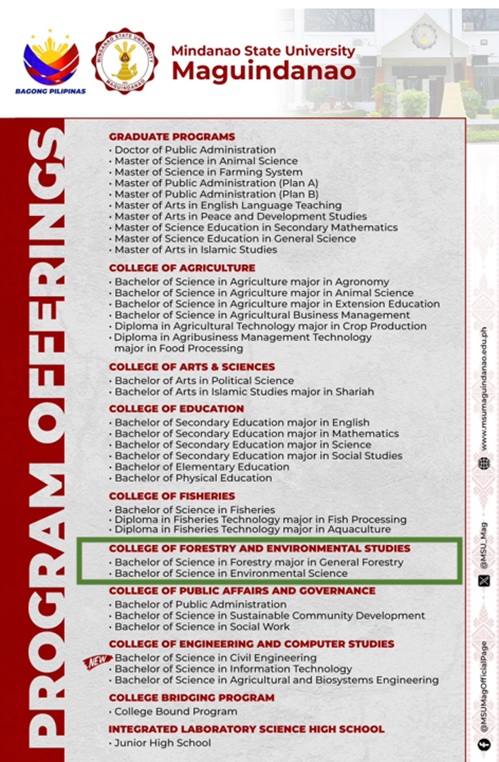
The University also offers full degrees in environmental sustainability, food security, and community development. The College of Forestry and Environmental Studies offers the BS Forestry, which produced 67 graduates in its Class of 2025, and the BS Environmental Science. Both address forest conservation, watershed protection, biodiversity, and climate change, and draw on field sites in the region such as the South Upi watershed. The College of Fisheries offers the BS Fisheries program, which produced 57 graduates in its Class of 2025, on sustainable fisheries and aquaculture for the coastal and inland waters of the Bangsamoro. The College of Agriculture offers the BS Agriculture with majors in Agronomy and Animal Science, which prepare students for sustainable crop and livestock production, and the College of Public Affairs and Governance offers the BS Sustainable Community Development, which prepares graduates for community-based development work. At the graduate level, the Master of Science in Animal Science extends the University’s agriculture program, and the Master of Arts in Peace and Development Studies extends its peace education. The prospectus of each program, listing its courses, is publicly available on the University website at https://msumaguindanao.edu.ph/colleges.
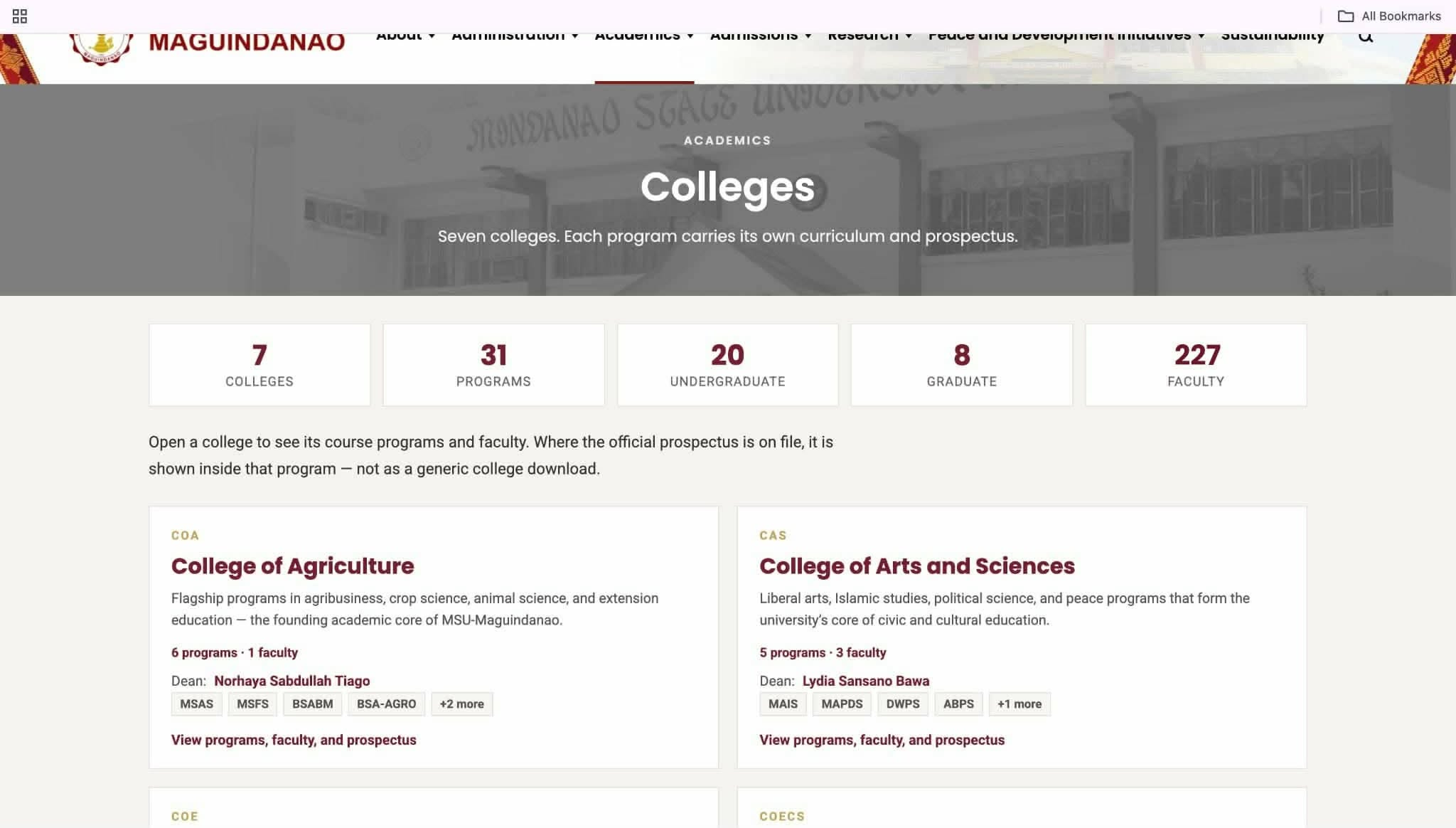
The University’s Colleges page lists its seven colleges and 31 degree programs, including its programs in agriculture, forestry, and fisheries.
Sustainability in the Flagship Curricula
BS Forestry
The prospectuses show how sustainability runs through these programs from the first year to the last. The BS Forestry (General Forestry) curriculum builds from Forest Ecology and Forest Wildlife and Biodiversity Conservation in the second year to Tropical Forestry and Climate Change, Watershed Management, and Protected Area Management in the third, and to Integrated Forest Resource Management and Agroforestry and Sustainable Upland Development in the fourth. Students also take Social Forestry and Community-Based Natural Resources Management, Forest Governance and Policy, and Forest Resource Economics, choose from electives such as Restoration of Degraded Ecosystems, Environmental Impact Assessment, Disaster Risk Reduction and Management, and Integrated Coastal Resources Management, and complete a six-unit Field Practicum.
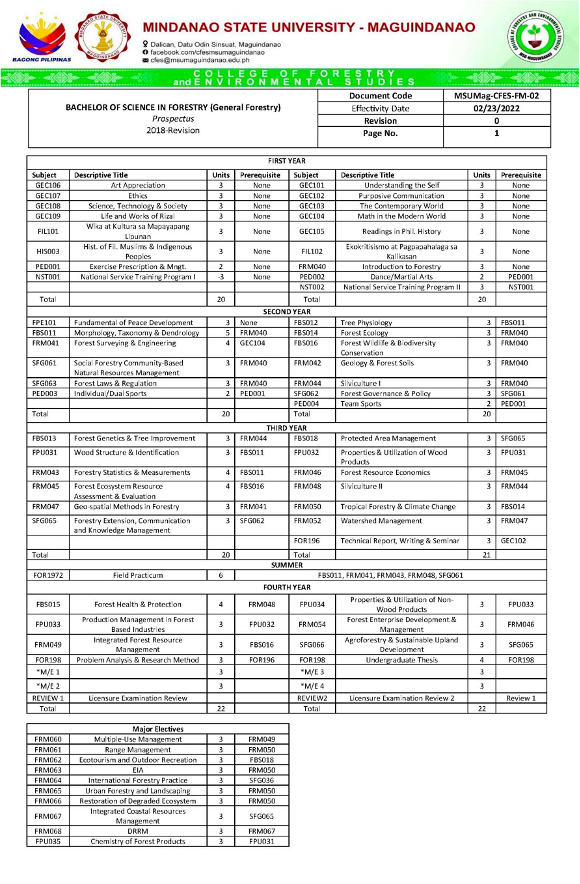
Excerpt from the Curriculum of Bachelor of Science in Forestry Major in General Forestry
BS Fisheries
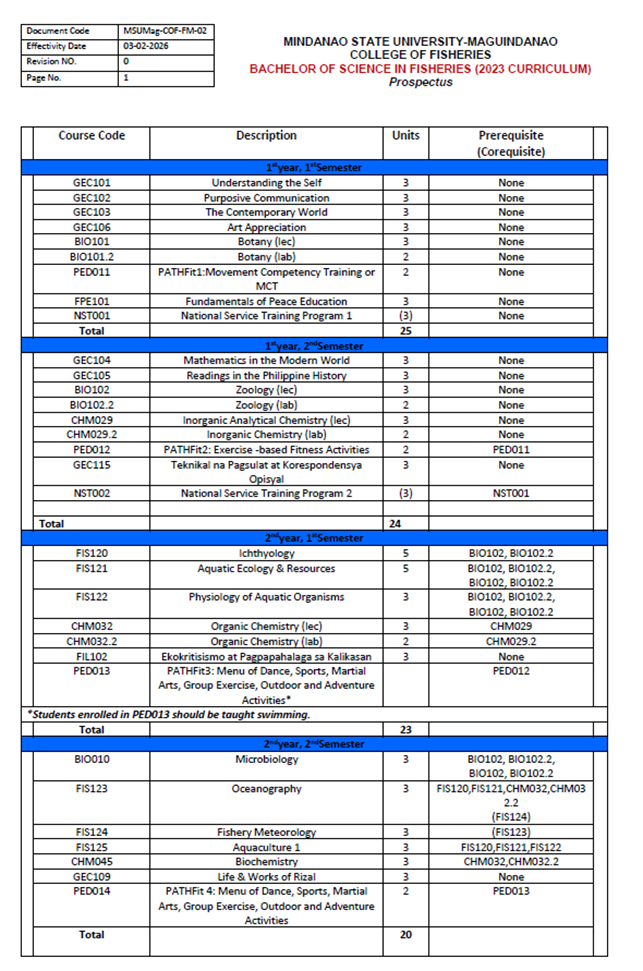
The 180-unit BS Fisheries curriculum follows the same path. It moves from Aquatic Ecology and Resources and two courses in Aquaculture to Fish Health Management, Capture Fisheries, and Fisheries Laws, Policies, and Institutions, and ends with Fisheries Management, Coastal Resource Management, Fishery Product Safety and Quality, Fisheries Entrepreneurship, and Fisheries Extension. Electives include Fish Stock Assessment and GIS and Remote Sensing for Fisheries, and every student completes 320 hours of on-the-job training.
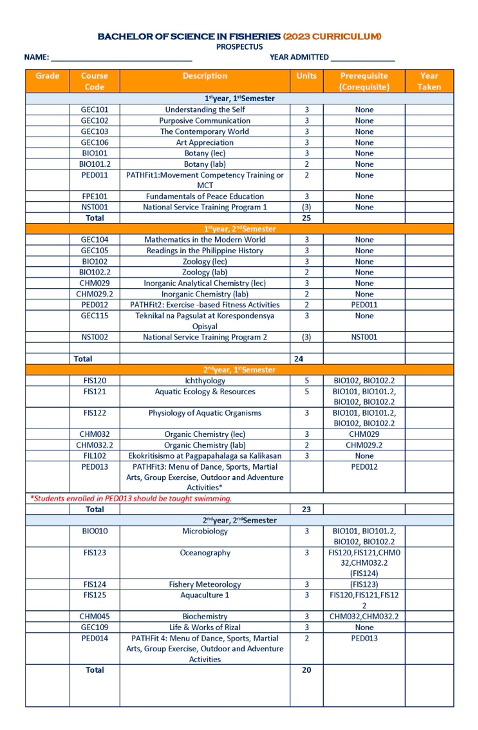
Excerpt from the Curriculum of Bachelor of Science in Fisheries
BS Agriculture, Major in Agronomy
Agriculture follows the same pattern. The 176-unit BS Agriculture major in Agronomy, for example, builds from Principles of Soil Science, Principles of Crop Protection, and Soil Fertility, Conservation and Management in the first year to Introduction to Organic Agriculture and Natural Resource and Environmental Management in the second, and to Introduction to Water Management and Irrigation, Introduction to Agricultural Policy and Development, Precision Agriculture, Postharvest Handling and Seed Technology, Introduction to Farming Systems, and Halal Practices for Agricultural Crops in the third and fourth. Students complete a 240-hour on-campus practicum and a 240-hour off-campus on-the-job training, and those who finish the first two years earn a Certificate of Agricultural Science that they can use for immediate employment. All three curricula also carry general courses that bring the University’s peace and sustainability commitment into every program: Fundamentals of Peace Education (FPE 101); Ekokritisismo at Pagpapahalaga sa Kalikasan (FIL 102), a Filipino course on ecocriticism and the value of nature; and the History of Muslim Filipinos and Indigenous Peoples of Mindanao, Sulu, and Palawan (HIS 003).
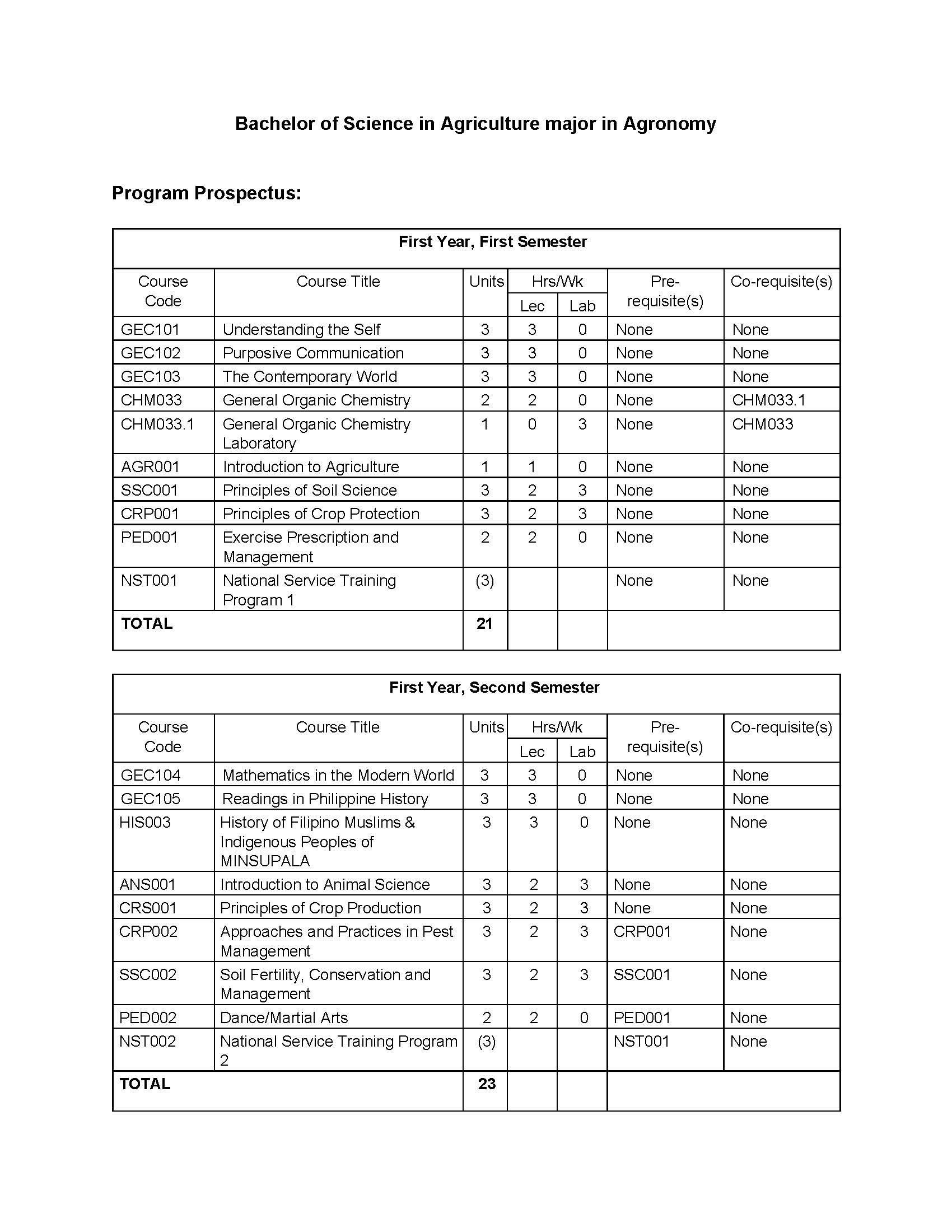
Excerpt from the Curriculum of Bachelor of Science in Agriculture major in Agronomy
Keeping the Programs Current
The University also keeps these programs current. On May 6 and 7, 2025, it hosted the 2nd Meeting on Curriculum Revisions and New Programs of the MSU System Curriculum Committee at its Institute of Management. Led by MSU Vice President for Academic Affairs Dr. Alma E. Berowa, faculty experts from MSU–Marawi, MSU–IIT, MSU–Sulu, MSU–LNAC, and MSU–Maguindanao reviewed revisions to programs in Animal Science, Farming Systems, Sustainable Community Development, and Environmental Planning, with attention to accreditation requirements and industry developments. Chancellor Limbona urged the committee to align the programs with the goals of 2030, particularly the employability of graduates.
Diploma in Women, Peace and Security Courses Taken as Electives in Graduate Programs
Developed with the Philippine Center for Islam and Democracy (PCID), the DWPS answers a need in the Bangsamoro, where women remain underrepresented in governance. When the Bangsamoro Transition Authority was formed, women held only 13 of its 80 seats, a gap documented by the University’s own researchers. The program trains government personnel, civil society practitioners, and community leaders in women’s participation in peacebuilding, conflict prevention, inclusive governance, gender-responsive policy, and mediation. Its curriculum draws on community knowledge, including the guidance of community elders, and students produce policy papers and program designs for their own organizations and communities. Its first 31 graduates completed the program on October 15, 2025, at the end of its first year of implementation.
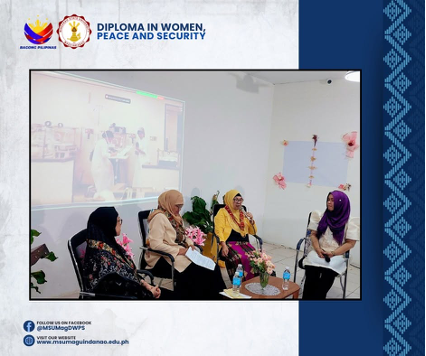
The program’s lectures and forums connect this training to the lived experience of the region. On March 8, 2025, during Women’s Month, the first cohort opened its second-semester DWPS Lecture Series with Atty. Cecilia Jimenez-Damary, Senior Professorial Lecturer at De La Salle University, former Government Representative to the Transitional Justice and Reconciliation Commission for the Bangsamoro, and former UN Special Rapporteur on the Human Rights of Internally Displaced Persons. She explained the four pillars of transitional justice (truth-seeking, accountability, reparations, and guarantees of non-recurrence) and called for a victim-centered approach that does not leave out Bangsamoro women affected by conflict. On October 13, 2025, the first cohort hosted HERStory of Courage, an on-site and online forum at the Simeon Datumanong Hall of the Institute of Management, where Director General Ruby Andong of the Ministry of Basic, Higher and Technical Education, Ms. Maimona Yu Hashim of The Moropreneur Inc., and Dr. Maimona Saglayan Lidasan, known as the first lady doctor of Parang, shared their stories of peacebuilding, humanitarian service, and women’s leadership in the Bangsamoro.
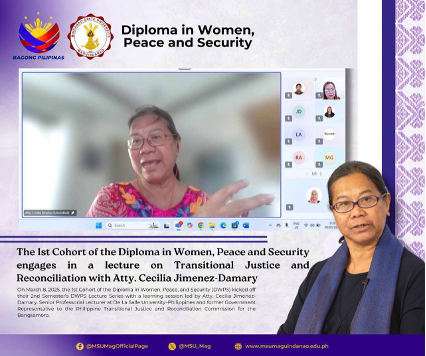
Atty. Cecilia Jimenez-Damary leads the first DWPS cohort through the pillars of transitional justice in an online lecture, March 8, 2025.
Bangsamoro women leaders share their stories of struggle and resilience at the HERStory of Courage forum hosted by the first DWPS cohort, October 13, 2025.
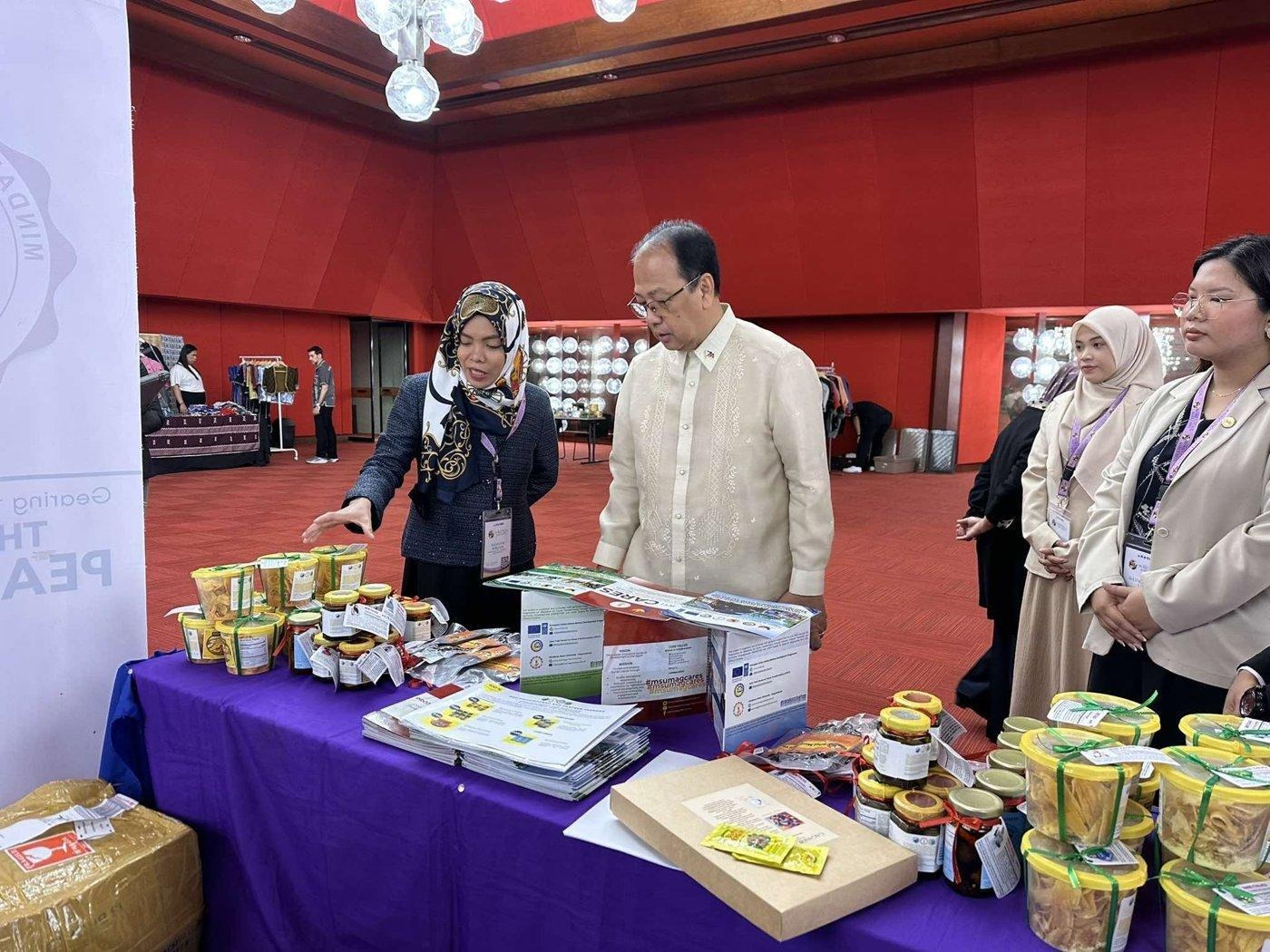
DWPS faculty present the program’s learning materials to participants at the 2025 Philippine Conference on Women, Peace and Security.
Fundamentals of Peace Education (FPE 101)
FPE 101, offered through the Institute for Peace and Development in Mindanao, teaches peace, non-violence, and respect for cultural diversity, combining classroom study with community-based learning. On May 31, 2025, 37 students visited Camp Iranun in Barira, where they met survivors of the All-Out War in Bombaran, toured the historical residence of Ustadz Salamat Hashim, and then reflected on their own role in building peace in a structured debriefing.
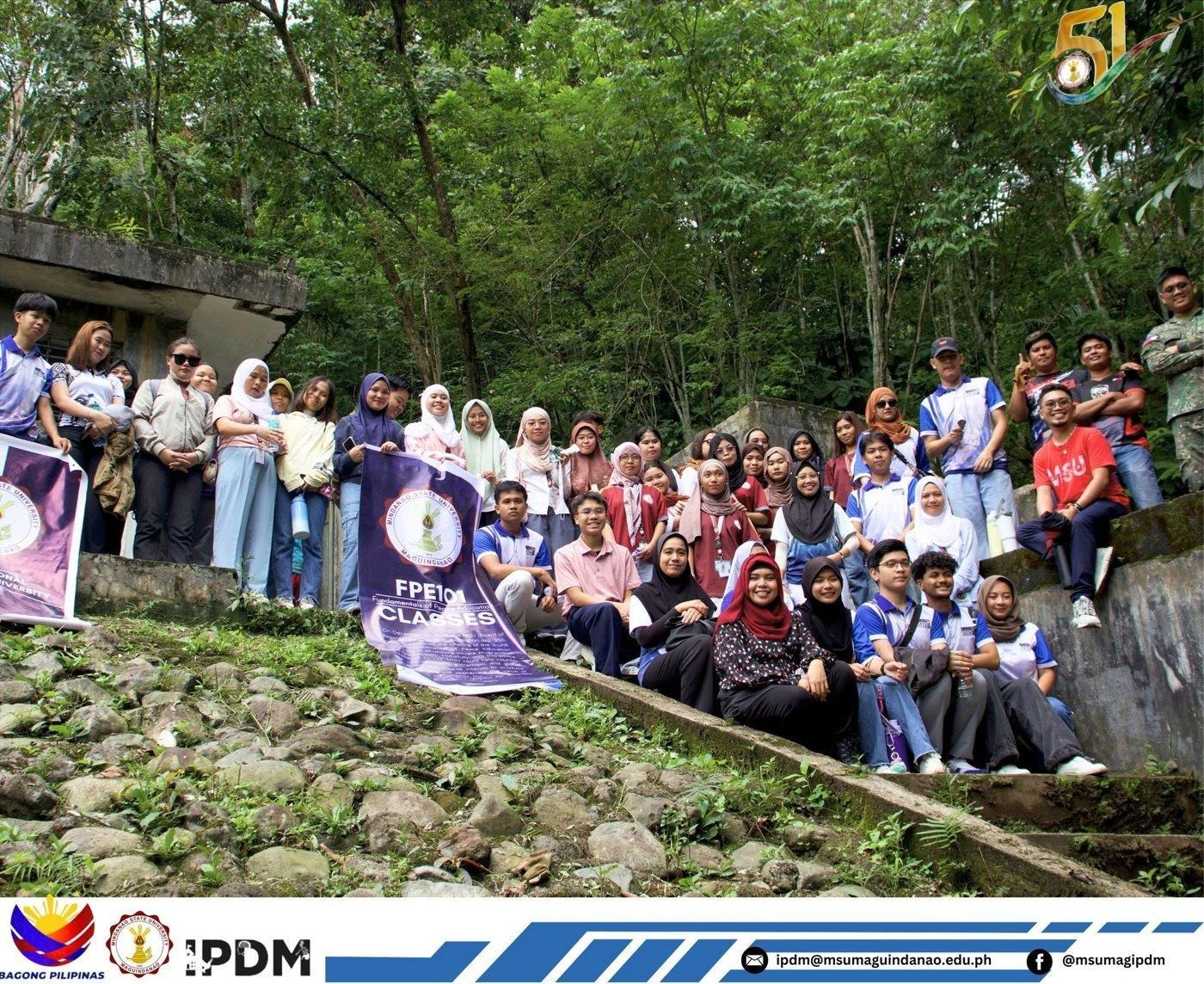
FPE 101 students and Institute for Peace and Development in Mindanao staff join partners from the Bangsamoro Youth Commission and the 1st Marine Brigade at Camp Iranun, May 31, 2025
Graduates for Sustainable Development
Across all its undergraduate and graduate programs, the University produced 917 graduates in Academic Year 2024–2025, among them graduates of these programs prepared to work for peace, gender equality, and the sustainable use of forests and waters in the Bangsamoro. The University will keep reviewing these programs with the MSU System Curriculum Committee so that they stay responsive to the needs of the Bangsamoro and to sustainable development.