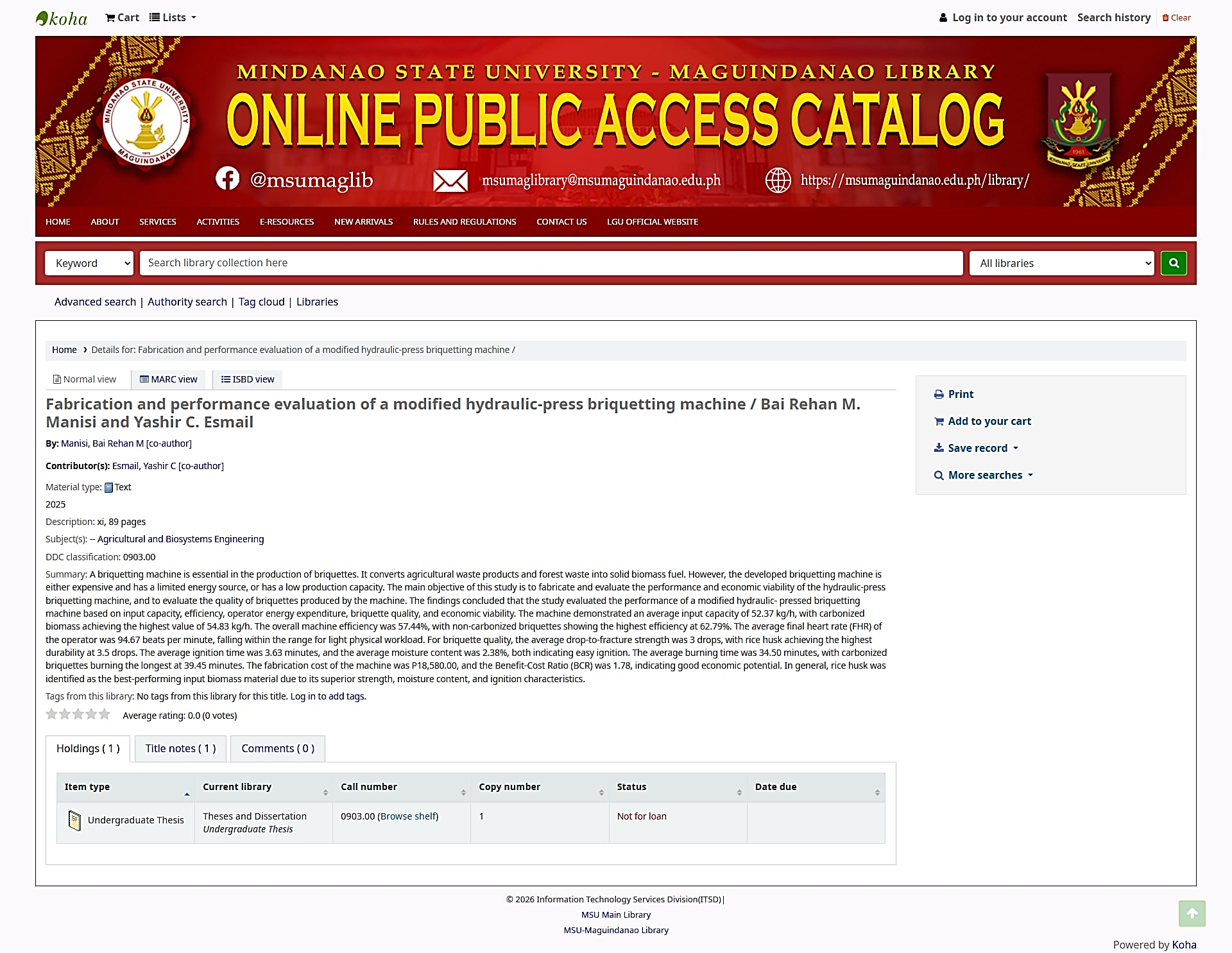
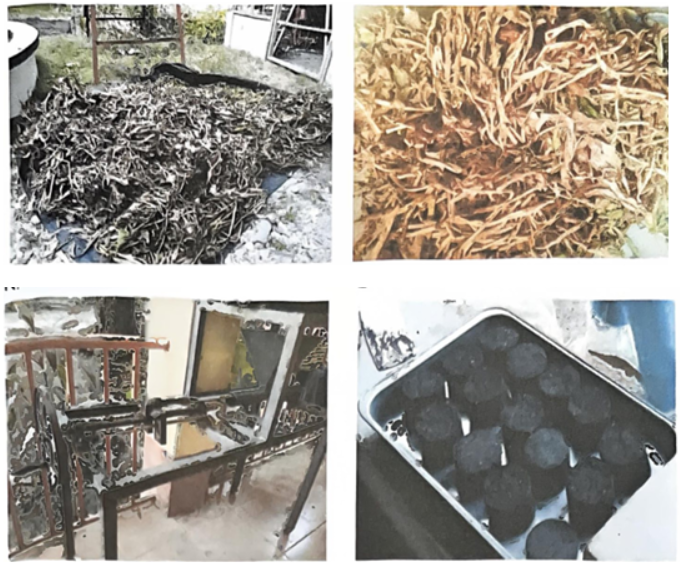
Angelica F. Dumaguite from Mindanao State University–Maguindanao examined the dual challenge of clearing invasive aquatic weeds and curbing dependence on wood charcoal by converting problematic water hyacinths into renewable solid fuel. Gathering plants from local waterways near the Pulangi River, the research investigated how different biomass-to-binder formulations affect the quality and burning efficiency of alternative charcoal briquettes.
Biomass Charcoal
The study evaluated the physical, combustion, and thermophysical properties of briquettes produced using corn starch and cassava starch binders across multiple mix ratios. Utilizing a manually operated briquetting machine developed on campus, the work demonstrated a practical engineering approach to resource recovery. Results showed that binder selection significantly influenced structural durability, with specific ratios delivering optimal moisture content, ignition speed, and steady combustion performance.
This research directly advances the substantial increase in the share of renewable energy in the global energy mix. By turning waterway weeds into a viable energy source, this initiative provides communities with a sustainable alternative to conventional wood charcoal.
Reference
Dumaguite, A. F. (2024). Production and characterization of biomass charcoal briquettes from water hyacinth (Eichhornia crassipes) using different binders at various ratios [Unpublished undergraduate thesis]. Mindanao State University–Maguindanao.