Dr. Peter Jan D. de Vera, the lead researcher from Mindanao State University–Maguindanao, alongside collaborators from Notre Dame University, investigated the key drivers behind community-led environmental practices across 15 riverside barangays in Cotabato City. The study was funded by the Ministry of Science and Technology (MOST-BARMM) which evaluated how residents living along the Matampay, Tamontaka, Esteros, and Rio Grande de Mindanao Rivers view waste management and river conservation before these waterways empty into Ilana Bay.
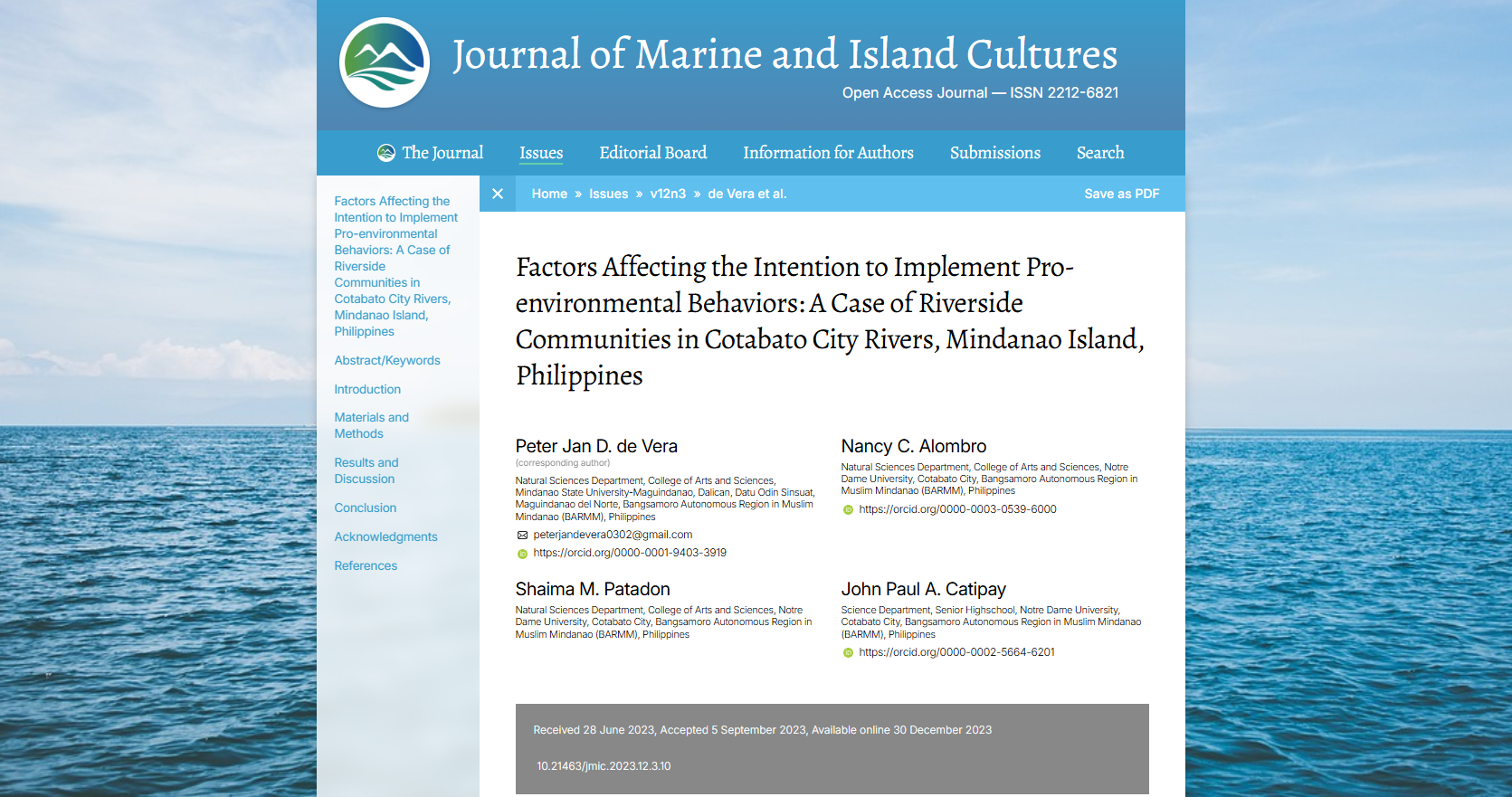
Journal Publication
Applying the Theory of Planned Behavior and analyzing 387 validated household surveys through Structural Equation Modeling, the researchers mapped out direct links between social mindsets and action. Moreover, the study was published in the Journal of Marine and Island Cultures. The findings reveal that community expectations (subjective norms) and personal mindsets (attitudes) strongly shape a resident's willingness to adopt eco-friendly habits. The study also highlighted notable gender differences in how residents perceive their own control over environmental choices.
This research directly supports the elimination of land-based water pollution) and protection of water-related ecosystems.
By identifying what actually motivates riverbank communities to care for their local waterways, the team provides local barangay leaders and BARMM policymakers with clear evidence to build better waste management drives. Rather than relying on top-down mandates, these insights help local leaders design community-driven cleanup initiatives that truly resonate with the people living along the riverbanks.