Dr. Ramjie Y. Odin from Mindanao State University–Maguindanao joined an international research team led by Auburn University to tackle one of modern aquaculture's trickiest dilemmas: keeping genetically modified fish from breeding with wild populations if they ever escape. Supported by the U.S. Department of Agriculture, the scientists tested a biological containment strategy on channel catfish (Ictalurus punctatus) by overexpressing the glutamic acid decarboxylase (GAD) gene to temporarily shut down natural reproduction.
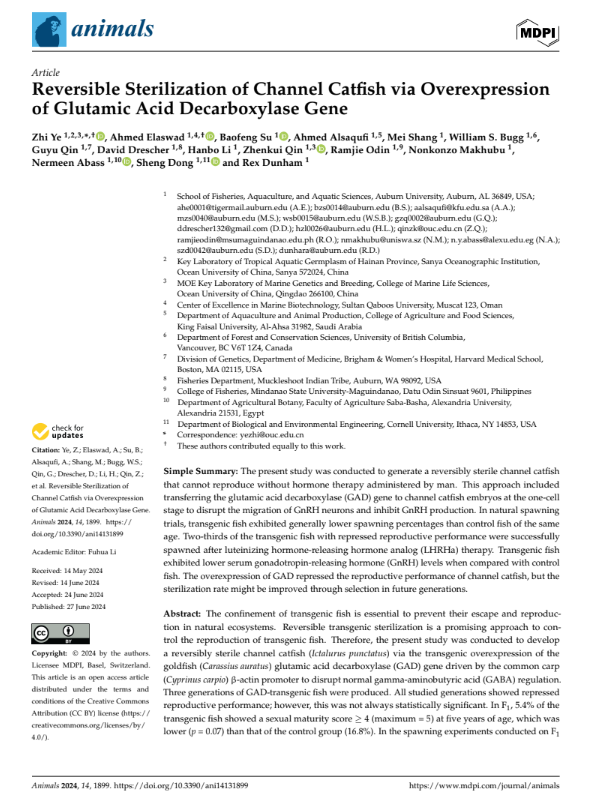
Over three generations, the team introduced a goldfish GAD gene construct into catfish embryos using electroporation to suppress essential reproductive hormones. Published in the journal Animals, the results showed a noticeable drop in natural breeding, with only 27.8% of the modified catfish spawned on their own compared to 75% of the untreated control fish. When researchers administered targeted hormone injections, several suppressed fish successfully spawned, which proves that fertility can indeed be turned back on when needed.
This milestone directly advances SDG 14: Life Below Water by laying the groundwork for safer and more controlled aquatic biotechnology. While the method still needs fine-tuning before commercial use, it gives scientists and fish farmers a realistic path toward protecting wild aquatic ecosystems without giving up on sustainable fish farming innovations.