Articles
Learning Exchanges Connect Camp Farmers with Peers, Experts and Buyers
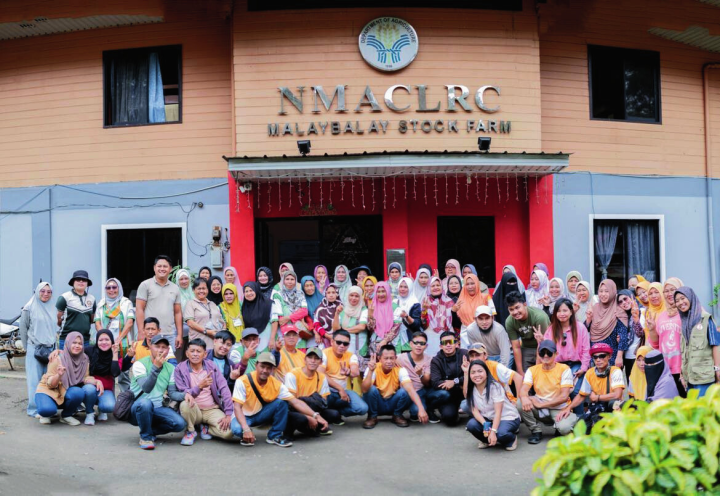
Farmers and food producers from Camps Abubakar, Badre and Omar connected with fellow growers, specialists and buyers in 2025 through learning visits, community dialogues and trade fair participation facilitated by MSU–Maguindanao. These activities provided opportunities to exchange practical knowledge, observe production technologies, discuss farming challenges and present food products to prospective buyers.The University organized community dialogues and facilitated farm visits, technology scouting and market exposure activities. The project’s learning activities were provided free of charge to partner-farmers, with funding from the Office of the Presidential Adviser on Peace, Reconciliation, and Unity (OPAPRU) under the MILF Camps Transformation Plan.These events form part of an ongoing initiative supporting climate-smart crop, fish and livestock production and community enterprise development. Since July 2024, the initiative has reached 305 partner-farmers in Maguindanao del Norte and Maguindanao del Sur, including women’s cooperative members, former combatants and their families.Learning from fellow producersIn January 2025, members of the Calagan Women’s Marketing Cooperative and the G.K. Village Togaig Farmers’ Marketing Cooperative from Camp Abubakar joined a three-day learning visit to Binahon Agroforestry Farm, Umanika Eco-cultural Farm, and the Department of Agriculture’s Northern Mindanao Agricultural Crops and Livestock Research Complex in Bukidnon. The visits exposed participants to working production systems and provided opportunities to learn from host producers and technical personnel.In April 2025, partner-farmers from Camps Badre and Omar participated in technology scouting at Esperanza Care Farm in Sultan Kudarat, Organikian Urban Farm in Koronadal City, and Saxonylyn Scientific Fishfarming and Zippora’s Dairy Goat Farm in General Santos City. Participants observed poultry production, hydroponics, aquaculture and dairy goat raising, exploring practices relevant to their community enterprises.Members of the Calagan Women's Marketing Cooperative and the G.K. Village Togaig Farmers' Marketing Cooperative from Camp Abubakar visit the Department of Agriculture's Northern Mindanao Agricultural Crops and Livestock Research Complex (NMACLRC) Malaybalay Stock Farm in Bukidnon, January 2025.Sharing experiences through community dialoguesThe College of Public Affairs and Governance facilitated Kamustahan sessions where cooperative members and project personnel discussed progress, difficulties and next steps. Activities in 2025 included sessions with Camp Omar participants beginning in February and a gathering at Banwag Hall in Parang on April 25.Cooperative members also shared their experiences during the University’s Women’s Month culmination program in March 2025. Turnover and culmination activities in the camps in June 2025 brought members and stakeholders together to showcase project outputs and exchange experiences.Connecting food producers with buyersOn March 1, 2025, the University facilitated cooperative members’ participation in the MAFARamadhan Trade Fair Plus at the Bangsamoro Government Center, ORG Compound, Cotabato City. The event gave women food producers an opportunity to showcase their products, interact directly with prospective buyers and explore market opportunities for their community enterprises.The University also facilitated cooperative members’ participation in the 10th Philippine Halal Trade and Tourism Expo, held June 18–20, 2025, at the SMX Convention Center in Davao City. Participants presented their food products, connected with prospective buyers and explored ideas for value-added food production.Through these learning exchanges and market exposure activities, the University provided local farmers and food producers with opportunities to learn from peers, consult specialists and build connections beyond their own production sites.Cooperative members attend the 10th Philippine Halal Trade and Tourism Expo 2025 in Davao City, where products of partner camp cooperatives were showcased to buyers and trade partners.
October 23, 2025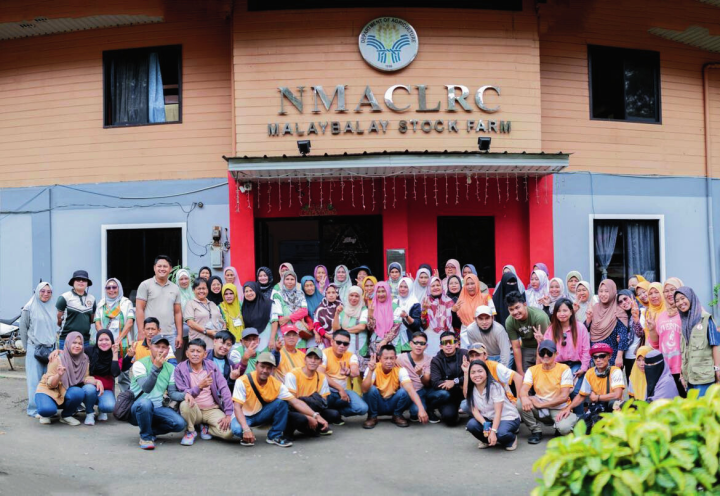
Farm Visits and Trade Fairs Open New Paths to Markets for Bangsamoro Farmers
Camp farmers in three former MILF camps have been learning as much from one another as from experts. Through dialogue sessions, farm-to-farm learning visits, and trade fairs, Mindanao State University–Maguindanao (MSU–Maguindanao) brings farmers and food producers from Camp Abubakar, Camp Badre, and Camp Omar together with fellow growers, specialists, and buyers. These gatherings are part of the University's Agricultural Livelihood Support Project for the MILF Camps Transformation Plan and involve cooperatives such as the Calagan Women's Marketing Cooperative and the G.K. Village Togaig Farmers' Marketing Cooperative.Regular Kamustahan sessions facilitated by the University bring cooperative members and project staff together to talk through progress, problems, and next steps, including sessions in Camp Omar in February 2025 and at Banwag Hall in Parang on April 25, 2025. Learning visits took farmers beyond their own fields: Camp Abubakar members spent three days in January 2025 at Binahon Agroforestry Farm, Umanika Eco-cultural Farm, and DA-NMACLRC in Bukidnon, while Camp Badre and Camp Omar members went on technology scouting in April 2025 at Esperanza Care Farm in Sultan Kudarat, Organikian Urban Farm in Koronadal City, and Saxonylyn Scientific Fishfarming and Zippora's Dairy Goat Farm in General Santos City, observing poultry, hydroponics, aquaculture, and dairy goat production.Members of the Calagan Women's Marketing Cooperative and the G.K. Village Togaig Farmers' Marketing Cooperative from Camp Abubakar visit the Department of Agriculture's Northern Mindanao Agricultural Crops and Livestock Research Complex (NMACLRC) Malaybalay Stock Farm in Bukidnon, January 2025.Partner-farmers from Camp Abubakar take a closer look at crops during the January 2025 learning visit to model farms in Bukidnon.Knowledge has also flowed the other way, as camp farmers walked the European Union Ambassador and Malaysian facilitators through their vegetable and fish farms. In March 2025, cooperative members shared their stories of struggle and success at the Women's Month culmination program on the University campus, and in June 2025, turnover and culmination programs in the camps gathered members and stakeholders to showcase each component's outputs. At the MAFAR Ramadhan Trade Fair+ and the 10th Philippine Halal Trade and Tourism Expo in Davao City, the women's cooperative met buyers face to face, giving small-scale food producers in the camps a direct route to markets and fresh ideas for value-added products.Looking ahead, the University will keep holding Kamustahan sessions and learning exchanges as the project moves into its next phases, while linking the cooperatives with more buyers and market outlets. Guided by a five-year roadmap that runs to 2030, these gatherings aim to grow the camp cooperatives into self-reliant enterprises whose experience other farming communities can learn from and replicate.
October 23, 2025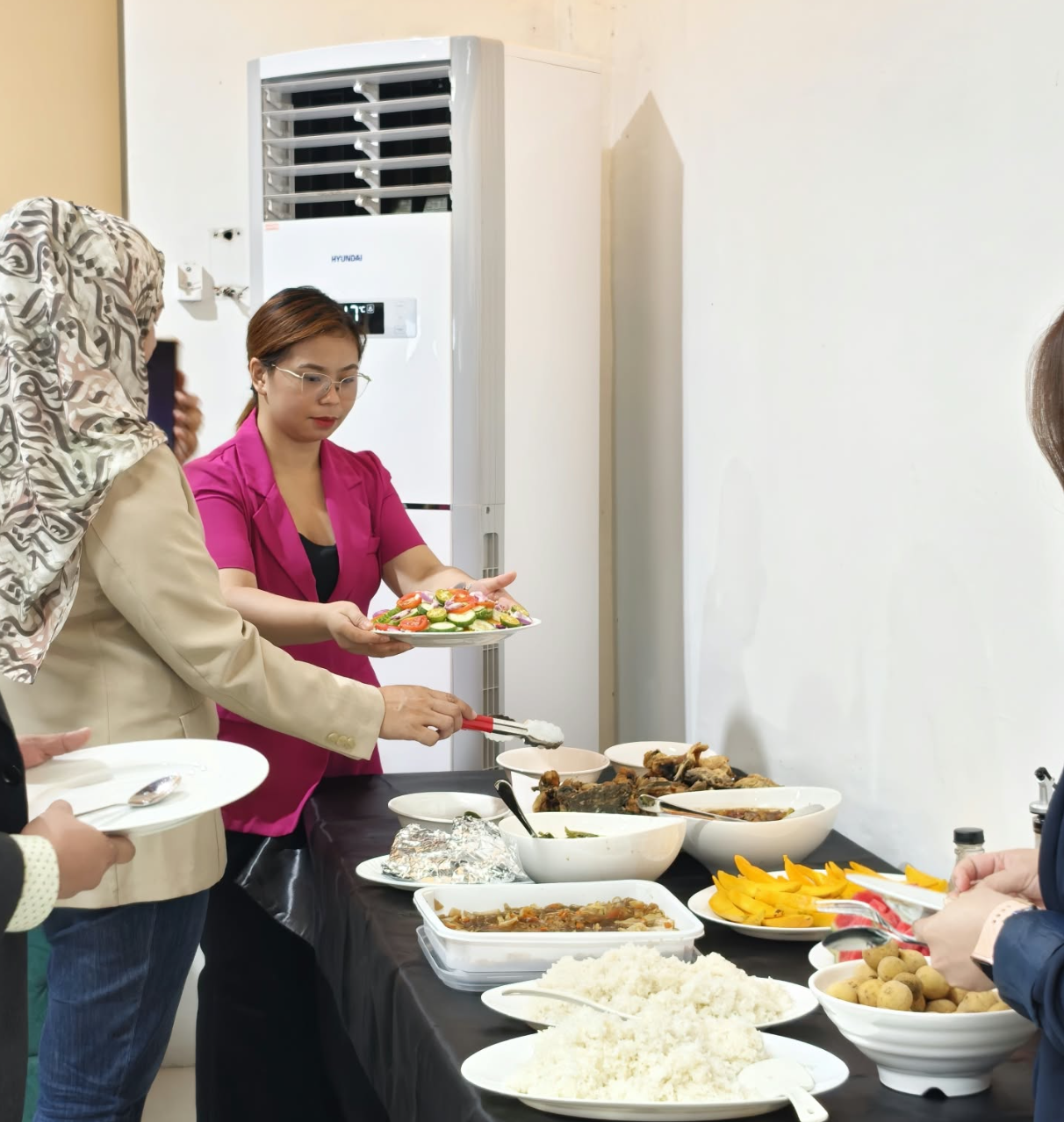
Free Meals at University Events and Office Pantries Support a Hunger-Free Workplace
Mindanao State University–Maguindanao (MSU–Maguindanao) considers the food security of its employees an essential part of its commitment to the welfare of the University community. Its Sustainability Policy directs the University to ensure that "food security and the overall well-being of academics, staff, and students are upheld on the campus" (Article VII, Section 7), a commitment that covers teaching and non-teaching personnel alike.In keeping with this commitment, the University provides free food to its employees during official meetings, seminars, and other University-related events. Faculty and staff who take part in these activities are served food at no cost, ensuring that personnel remain nourished and productive throughout their official engagements, including those that extend through mealtimes.Employees help themselves to a free meal of rice, fish, vegetables, and fresh fruit served during Office meetings.Beyond these activities, offices across the University maintain pantries that give employees access to food during the workday. These pantries allow faculty and staff to have something to eat without leaving the campus, supporting their well-being as they carry out their daily responsibilities.Faculty and staff gather as bananas, mangoes, boiled corn, and other dishes are laid out for free in the College of Education faculty lounge, giving employees ready access to food during the workday.These measures are complemented by affordable meals in the campus canteens, which keep nourishing food within reach of employees on ordinary workdays. Together, free food during institutional activities, office pantries, and low-cost canteen meals help prevent hunger among University personnel.Moving forward, the University aims to sustain the provision of free food during official activities and the upkeep of office pantries as part of its broader effort to promote employee well-being, so that no member of its workforce goes hungry while serving the University community.
October 23, 2025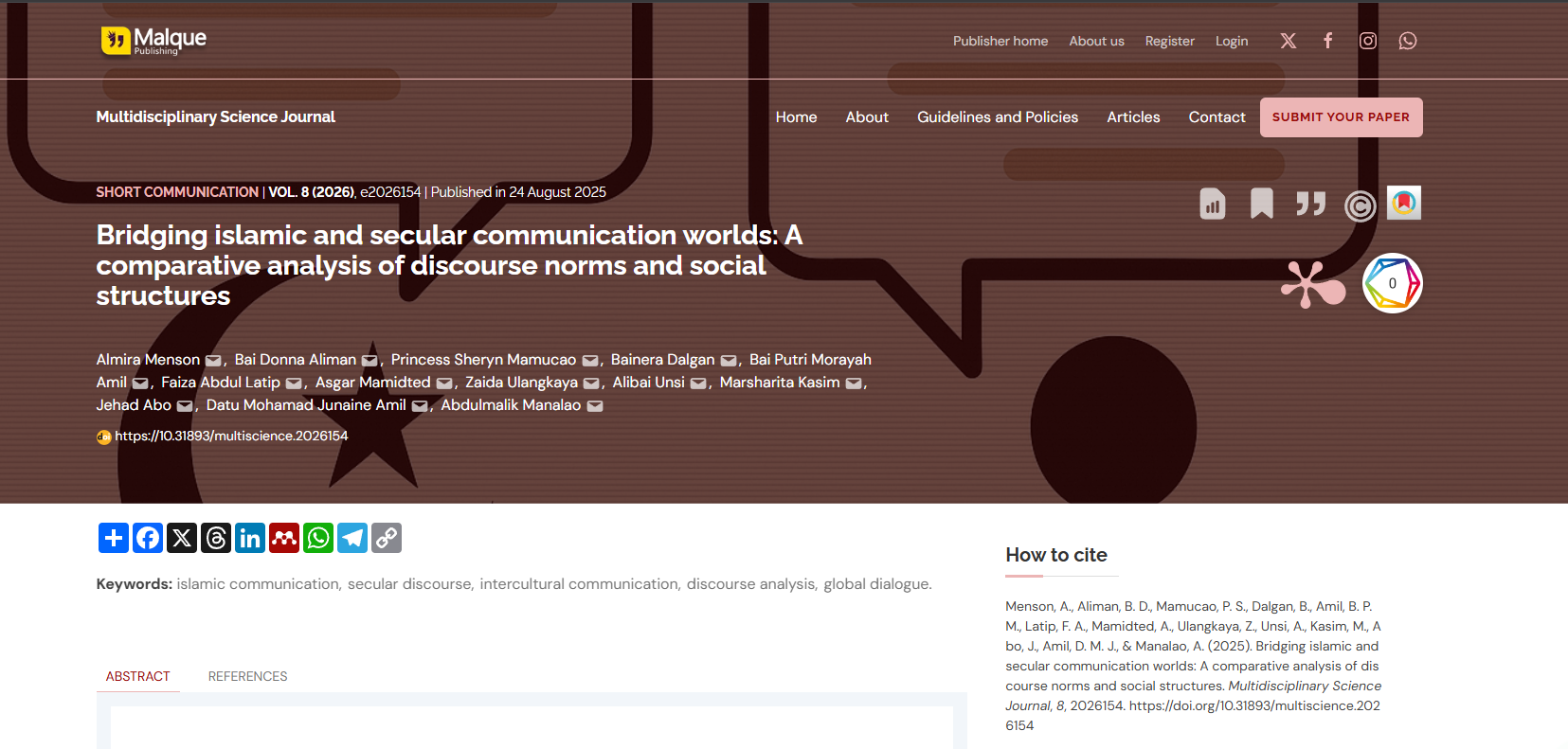
Bridging Islamic and Secular Communication Worlds: A Comparative Analysis of Discourse Norms and Social Structures
A team of 13 researchers from Mindanao State University–Maguindanao, led by Almira Menson, published a comparative study of communication norms in Islamic and secular settings in the Multidisciplinary Science Journal on August 24, 2025.Published ArticleDrawing on Intercultural Communication Theory, Discourse Analysis, and Hofstede’s Cultural Dimensions Theory, the team analyzed religious sermons, political speeches, and academic discussions, and interviewed 30 participants from diverse cultural and educational backgrounds.Islamic communication in the contexts studied emphasizes indirectness, collectivism, and respect for authority, while secular communication favors directness, individualism, and egalitarianism. These differences shape teaching, workplace interaction, and diplomacy, and the researchers propose strategies for culturally responsive communication in education and institutional policymaking.By building the intercultural understanding on which international cooperation depends, the study supports global partnerships for sustainable development, education that promotes appreciation of cultural diversity, and a culture of peace and dialogue. The researchers credit the academic partnerships fostered by the University’s International Affairs Office for inspiring the study’s cross-cultural focus.
October 23, 2025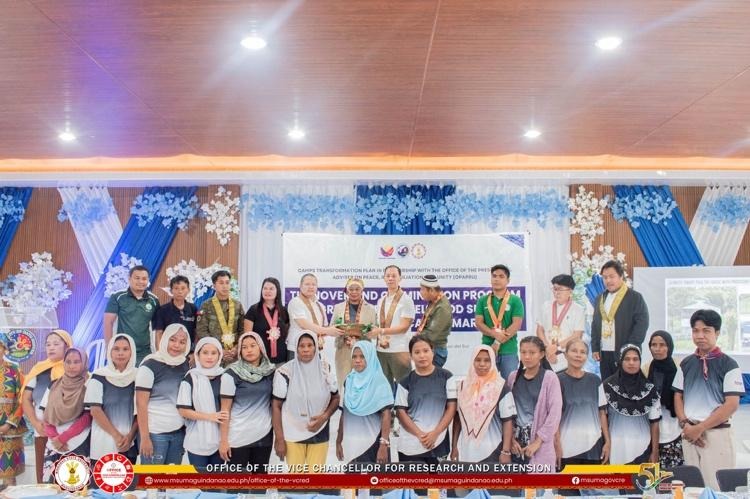
MSU-Maguindanao, OPAPRU Support Agricultural Livelihood Projects in Three MILF Camps
Mindanao State University–Maguindanao in partnership with and funded by the Office of the Presidential Adviser on Peace, Reconciliation and Unity (OPAPRU), has supported agricultural livelihood projects in Camp Omar and Camp Badre and provided a kitchen facility in Camp Abubakar under the MILF Camps Transformation Plan.Culmination and turnover of Agricultural Livelihood Support Projects for Camp Omar on June 17, 2025.The initiatives are part of the Normalization Track of the Comprehensive Agreement on the Bangsamoro (CAB), providing livelihood assistance and facilities to local cooperatives in communities covered by the camp transformation program.In Camp Omar, the Agricultural Livelihood Support Projects were turned over on June 17, 2025, at the Datu Hoffer Municipal Training Center. The assistance covered vegetable production, goat production, poultry production, and fish farming production for four beneficiary organizations: Aljasuws Agri-Business Association Cooperative, Talibadok Kauyagan Marketing Cooperative, Mujahidin a Nagapas Agri-Producer Cooperative, and Limpongo Women’s Organization.On July 16, 2025, agricultural livelihood support projects for Camp Badre were presented and turned over to the partner-farmers and beneficiaries, including the Sif-Ku Producers Cooperative, the Sigay Kutawato RTW Women’s Marketing Cooperative, the Matado Agrarian Reform Cooperative, and the Sibutuan Agricultural Cooperative.MSU–Maguindanao, partner representatives, and community stakeholders during a 2025 Camp Transformation turnover of kitchen facility at Camp Abubakar on June 18, 2025. Meanwhile, a kitchen facility was formally handed over to its beneficiaries, the Calagan Women’s Marketing Cooperative and the Gawad Kalinga Village Togaig Farmer’s Marketing Cooperative, in Camp Abubakar, Barira, Maguindanao del Norte, on June 18, 2026.The agricultural livelihood projects in Camp Omar and Camp Badre align with Sustainable Development Goal 12, which aims to ensure sustainable consumption and production patterns. By supporting vegetable, goat, poultry, and fish production among local cooperatives, the initiatives lay the groundwork for promoting sustainable agricultural practices. The turnover activities brought together representatives from OPAPRU, the Office of the Special Assistant to the President; local government units; the military; MSU-Maguindanao; project teams; and beneficiary cooperatives.Through these initiatives, MSU-Maguindanao and OPAPRU support agricultural livelihood activities and community facilities in areas covered by the peace process. The projects demonstrate the university’s engagement with local cooperatives through livelihood assistance and partnerships under the MILF Camps Transformation Plan.
October 22, 2025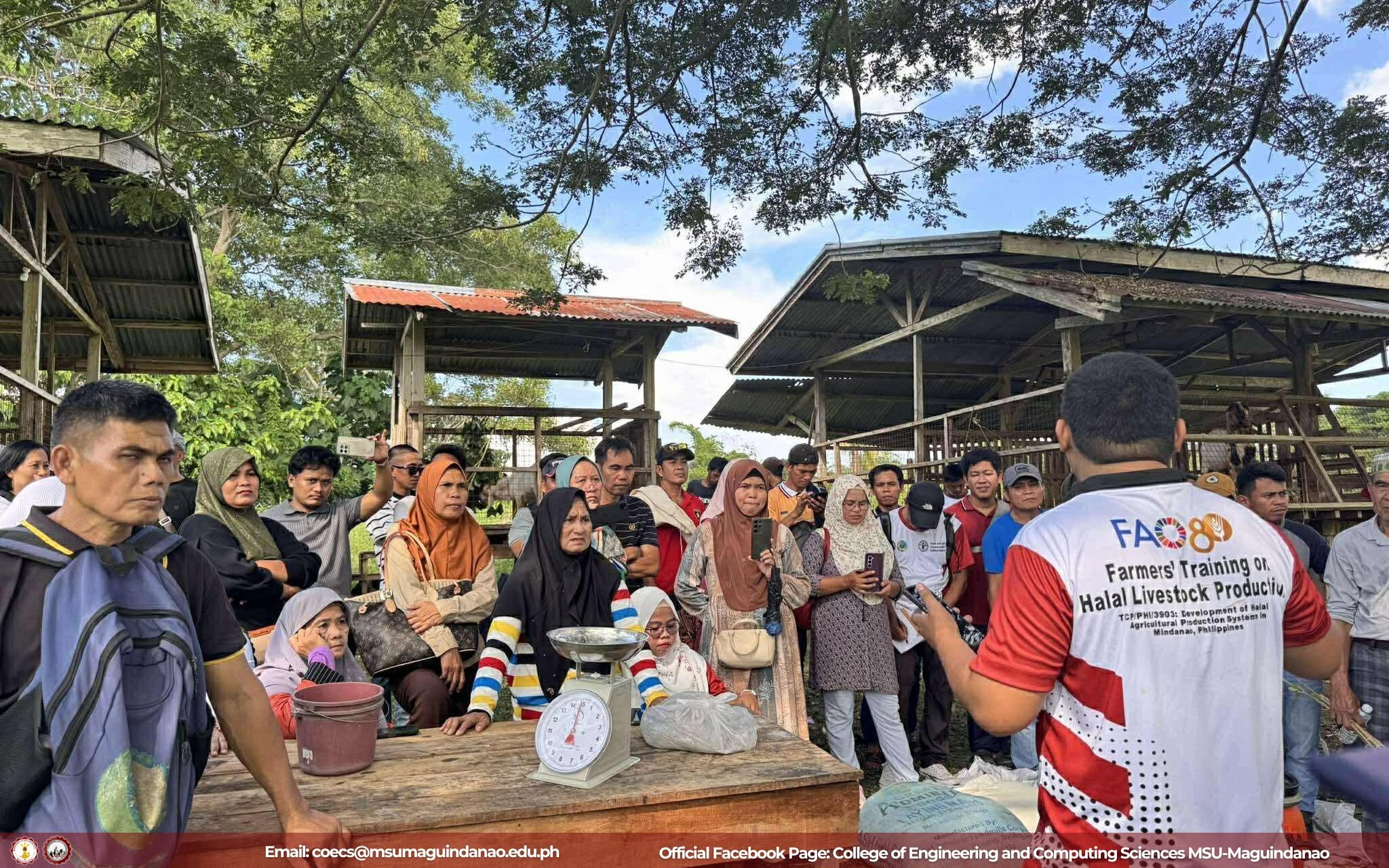
MSU-Maguindanao, FAO, and MAFAR Train Farmers in Halal Livestock Production in Dalican
DALICAN, Datu Odin Sinsuat, Maguindanao del Norte - Mindanao State University-Maguindanao (MSU-Maguindanao) opened a five-day Farmers' Training on Halal Livestock Production on October 2, 2025, jointly implemented by its College of Agriculture and College of Engineering and Computing Sciences, in partnership with the Food and Agriculture Organization of the United Nations (FAO) and the Ministry of Agriculture, Fisheries, and Agrarian Reform (MAFAR).Lecture session With FarmersThe training, held under the TCP/PHI/3903 Project on the Development of Halal Agricultural Production Systems in Mindanao, Phase II, combined lectures and hands-on practice in Halal herd management, biosecurity, feed formulation, and disease prevention, culminating in a Shariah-compliant slaughtering demonstration led by MSU-Maguindanao faculty and MAFAR agricultural specialists.Meat parts cutting demonstrationHealthier herds and safer, Halal-compliant meat production are the training's core aim, contributing to efforts to end hunger and ensure access to safe, nutritious, and sufficient food, while helping farmers in Bangsamoro communities increase their productivity and compete in Mindanao's expanding Halal market.The training reinforces MSU-Maguindanao's continuing role as a bridge between farmers, government agencies, and international development partners, with FAO and MAFAR support expected to sustain further rounds of training and certification for Halal producers across the region.
October 22, 2025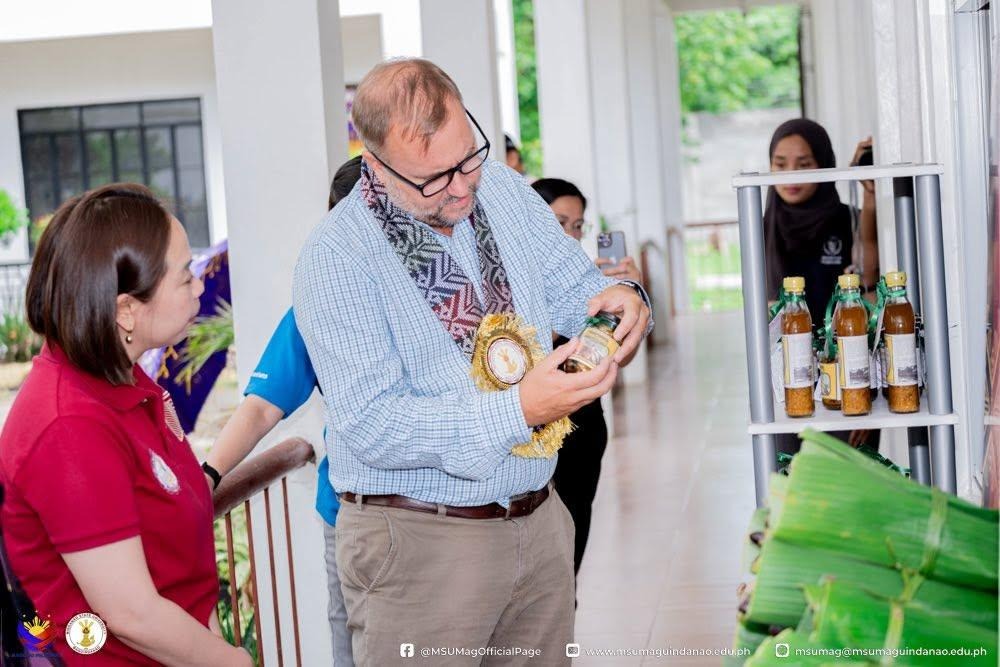
MSU-Maguindanao and WFP Partner for Food Security and Climate-Resilient Communities in BARMM
Mindanao State University-Maguindanao (MSU-Maguindanao), led by Chancellor Bai Hejira Nefertiti M. Limbona, has signed a Memorandum of Agreement with the United Nations World Food Programme (WFP), represented by Representative and Country Director Regis Chapman. The signing took place at the Institute of Management. The partnership aims to advance food security, nutrition, and climate resilience in the Bangsamoro Autonomous Region in Muslim Mindanao (BARMM), particularly for smallholder farmers, cooperatives, and vulnerable and underserved communities.Chancellor Limbona emphasized the University’s role in generating and sharing scientific data, developing solutions to food and nutrition insecurity, and supporting the BARMM government’s initiatives. Country Director Chapman highlighted the value of combining WFP’s global expertise with MSU-Maguindanao’s local knowledge to address hunger and promote climate-resilient communities.WFP Representative and Country Director Regis Chapman views products produced by partner-farmers under the MILF Camps Transformation ProgramUnder the 2025-2027 cooperation work plan, the partnership strengthens farming communit adaptive capacity through climate-smart agriculture training, watershed management, and post-harvest loss reduction. These efforts help communities withstand climate-related hazards and protect their food and livelihoods, contributing to the resilience and adaptation goals of SDG 13.The development of Local Climate Change Adaptation Plans (LCCAPs) in priority barangays integrates climate measures into local planning, while MSU-Maguindanao’s generation and sharing of scientific data supports the BARMM government’s climate-related decision-making. The partnership also builds the capacity of smallholder farmers and cooperatives and integrates food security and nutrition resources into the University’s curriculum, thereby enhancing awareness and institutional capacity on climate action.MSU-Maguindanao will mobilize experts in food systems, climate adaptation, and gender-responsive programming to support WFP projects, while WFP will provide technical resources and facilitate exchange visits to promote best practices. The initiatives prioritize vulnerable and underserved communities most exposed to climate-related challenges, through culturally sensitive tools for cooperatives and gender-responsive programming that ensure marginalized groups are included in climate action. This builds on the 2024 Community-Based Participatory Planning workshops in Maguindanao del Sur and Maguindanao del Norte, which identified livelihood challenges and environmental stressors in local communities.Through this partnership, MSU-Maguindanao and WFP aim to strengthen local capacities and support climate adaptation, sustainable livelihoods, and food security in BARMM.WFP Cotabato Sub-Office Head Lyca Sarenas, WFP team members, and MSU-Maguindanao graduate program coordinators, project staff, directors, faculty, and other personnel attended the MOA signing.
October 22, 2025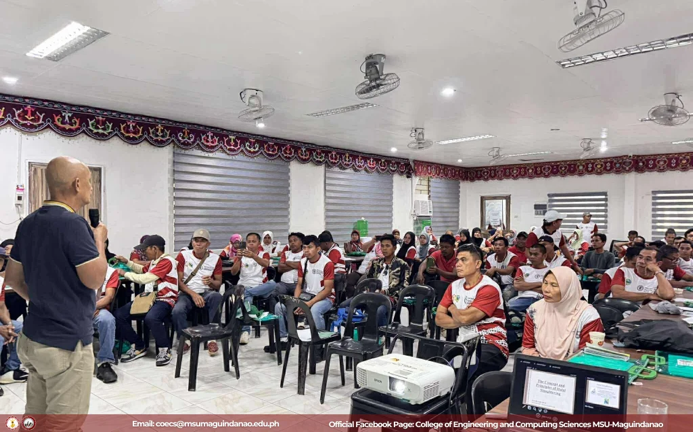
MSU–Maguindanao Implements Halal Livestock Farmer Field School and Sustainable Production Training for Goats and Cattle
Mindanao State University–Maguindanao conducted the Halal Livestock Farmer Field School and Sustainable Halal Livestock Production Capacity-Building Program for Goat and Cattle to promote sustainable and Halal-compliant livestock production in the Bangsamoro Autonomous Region in Muslim Mindanao (BARMM).The program was carried out through the College of Agriculture and the College of Engineering and Computing Sciences, in collaboration with the Food and Agriculture Organization of the United Nations (FAO) and the Ministry of Agriculture, Fisheries, and Agrarian Reform (MAFAR), under efforts to develop Halal agricultural production systems in Mindanao. The October training formed part of Project TCP/PHI/3903, Development of Halal Agricultural Production Systems in Mindanao, Phase II.On July 28, the University held the orientation in its Audio-Visual Room, followed by a field exposure at its livestock facilities. It gathered 100 farmers and agricultural technicians from Maguindanao del Norte and Maguindanao del Sur for sessions on Halal principles, animal welfare, biosecurity, and sustainable livestock management. The five-day training expanded learning through lectures, demonstrations, and hands-on activities covering herd management, nutrition and feeding, reproductive management, disease prevention, silage production, feed formulation using locally available ingredients, salt-lick production, and Halal slaughtering of cattle and goats.The primary beneficiaries were livestock farmers and agricultural technicians, while livestock-producing households, rural communities, and agricultural extension personnel may benefit from the subsequent application and dissemination of the knowledge acquired.The program contributes to Sustainable Development Goal 12 (SDG 12): Responsible Consumption and Production by promoting the sustainable management and efficient use of agricultural resources and providing farmers and agricultural technicians with relevant information and awareness of sustainable production practices.Moving forward, MSU–Maguindanao aims to continue farmer training, extension services, and partnerships to encourage the adoption of sustainable and Halal-compliant livestock practices in BARMM. Monitoring will be needed to determine the program's longer-term effects on resource use, farming practices, productivity, and income.
October 22, 2025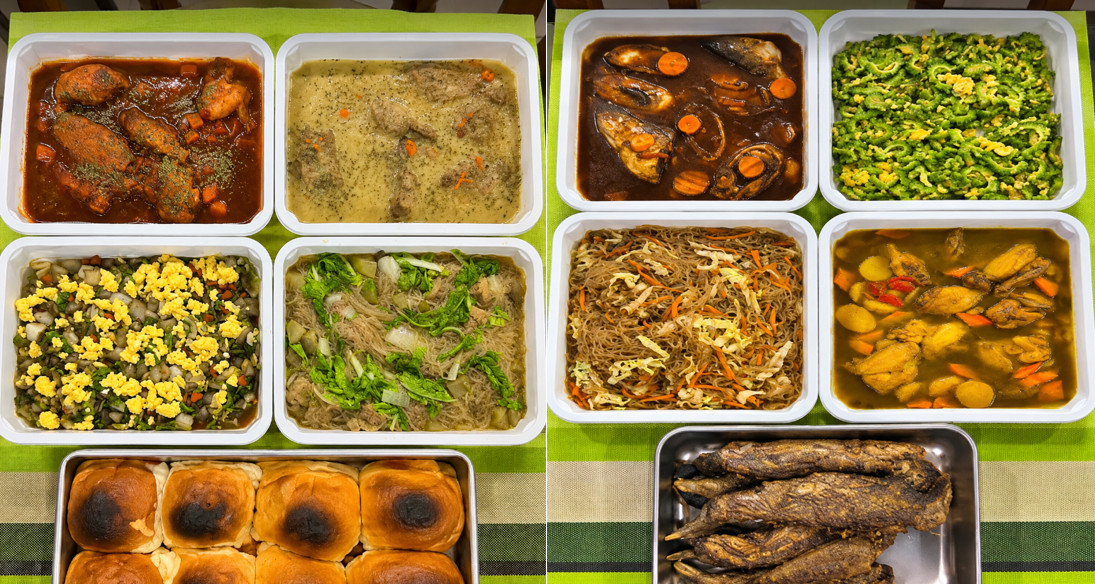
Campus Canteens Bring More Locally Grown Vegetable Dishes to the Table
Canteen stalls at Mindanao State University–Maguindanao (MSU–Maguindanao) serve vegetable dishes every day alongside meat and fish meals, so anyone on campus who prefers plant-based food always has something to choose. All food sold on campus is halal, in keeping with a campus community that is predominantly Muslim. The University's Sustainability Policy calls for campus food options "that have minimal impact on the environment" and directs the University to "promote the consumption of local and sustainably harvested food" (Article VII, Section 7).Vegetarian dishes on the daily menu include pinakbet, ginataang gulay, chop suey, sautéed eggplant, string beans, okra, and squash, stewed vegetables, and fresh salads. Chicken adobo, beef steak, fish dishes, and egg meals, along with native snacks such as banana cue and cassava balls, complete the selection.Vegetable dishes such as ampalaya with egg and sotanghon with pechay are served alongside chicken and fish viands at a campus canteen.Surrounded by farming communities, the campus sits close to the rice, vegetables, root crops, and legumes that fill these dishes. Concessionaires buy much of their produce from local growers in nearby barangays such as Makir and Dados and from the Dalican Public Market, where farmers from surrounding communities sell their harvest. Many of these vegetables are grown without synthetic pesticides or chemical fertilizers, so the dishes served on campus are both fresh and safe to eat. Plant-based meals made from these crops carry a smaller environmental footprint than meat-heavy ones, and keeping them affordable makes the sustainable choice an easy one for students on tight budgets.Moving forward, the University aims to work with its canteen concessionaires on clearly labeling vegetarian dishes at every stall and on linking them with farmer cooperatives assisted by the University, so that more of the produce served on campus comes straight from local growers.Article VII, Section 7 of the MSU–Maguindanao Sustainability Policy, which calls for campus food options with minimal impact on the environment and promotes the consumption of local and sustainably harvested food.
October 22, 2025