Articles
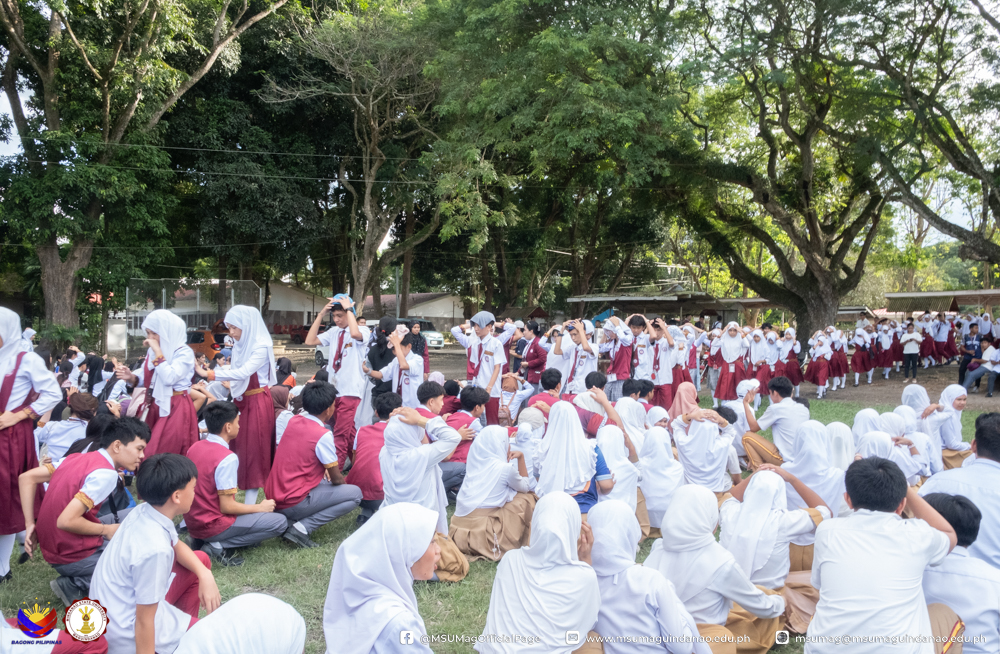
MSU–Maguindanao Conducts Earthquake Drill to Strengthen Campus Safety and Disaster Preparedness
The Mindanao State University–Maguindanao (MSU–Maguindanao) conducted an Earthquake Preparedness and Response Drill at the University field in partnership with the Bureau of Fire Protection–Datu Odin Sinsuat (BFP-DOS) and the Office of Civil Defense–Bangsamoro Autonomous Region in Muslim Mindanao (OCD-BARMM).The activity was conducted in line with National Disaster Risk Reduction and Management Council Memorandum No. 027, series of 2025, which called for participation in the Third Quarter Nationwide Simultaneous Earthquake Drill. Led by the University’s Disaster Risk Reduction and Management Office (DRRMO), the exercise began with an orientation on evacuation procedures and safety protocols before proceeding to the emergency simulation.Faculty members, staff, and students from the Integrated Laboratory Science High School, College of Public Affairs and Governance, College of Arts and Sciences, and other university offices and facilities participated in the drill. The activity aimed to strengthen awareness, reinforce proper emergency responses, and assess the effectiveness of campus evacuation procedures.Chancellor Bai Hejira Nefertiti M. Limbona emphasized that the safety of students and employees remains a priority of the University. Through regular drills and coordination with emergency response agencies, MSU–Maguindanao seeks to build a campus community that is informed, disciplined, and prepared to respond to earthquakes and other emergencies.The initiative supports the broader objectives of Sustainable Development Goal 11 (SDG 11): Sustainable Cities and Communities, particularly Target 11.5, which focuses on reducing deaths, the number of people affected, and economic losses caused by disasters, and Target 11.b, which promotes integrated policies and plans for disaster risk reduction and resilience.Students, faculty, staff, patients, and other campus stakeholders benefit from improved emergency awareness and clearer evacuation procedures. In the long term, consistent preparedness activities can help reduce risks, minimize injuries, and strengthen the University’s capacity to protect lives during emergencies.Through its continued collaboration with disaster management and emergency response agencies, MSU–Maguindanao reinforces its commitment to creating a safer, more resilient, and disaster-ready learning environment for the university community.
October 22, 2025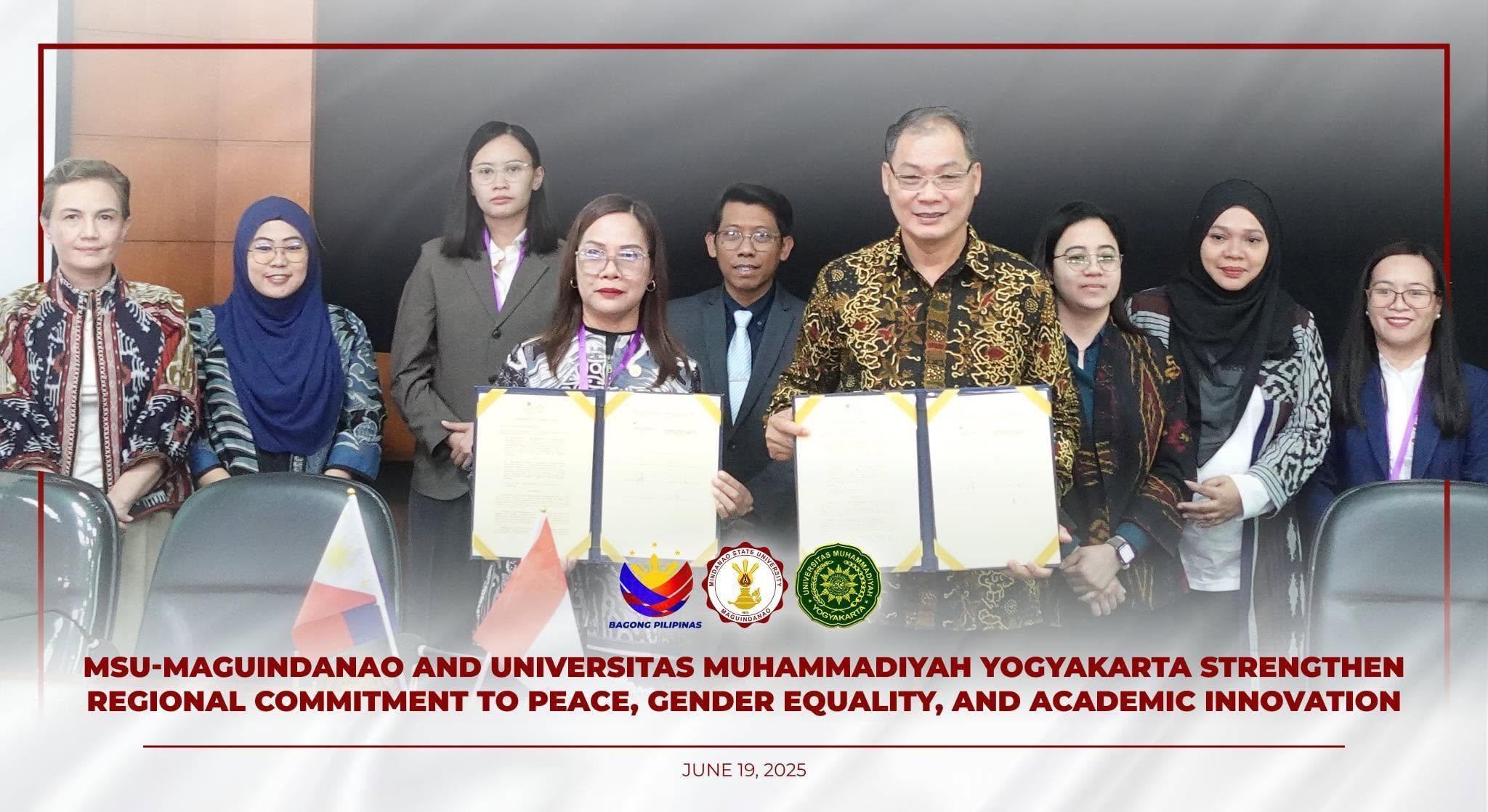
MSU–Maguindanao and Universitas Muhammadiyah Yogyakarta formalize partnership to advance women’s leadership and gender-responsive peacebuilding
YOGYAKARTA, Indonesia — Mindanao State University–Maguindanao (MSU–Maguindanao) and Universitas Muhammadiyah Yogyakarta (UMY) signed a Memorandum of Understanding (MOU) on June 19, 2025, during MSU–Maguindanao’s learning exchange in Indonesia. The partnership strengthens regional academic cooperation related to women’s leadership, gender equality, peacebuilding, and the Women, Peace, and Security (WPS) agenda.Representing MSU–Maguindanao and Chancellor Bai Hejira Limbona, Vice Chancellor for Planning and Development Dr. Arceli B. Naraga emphasized the University’s continuing commitment to the WPS agenda and the role of the Diploma in Women, Peace, and Security (DWPS) in connecting academic knowledge with community action. The partnership was supported by the United Nations Development Programme (UNDP) Philippines and the UK Government through the British Embassy Manila, with the Philippine Center for Islam and Democracy (PCID) continuing as an institutional partner.MSU–Maguindanao and Universitas Muhammadiyah Yogyakarta representatives display the signed MOU during the partnership ceremony in Yogyakarta, Indonesia, on June 19, 2025.The MOU builds on MSU–Maguindanao’s existing work in women’s leadership and gender-responsive peacebuilding. By establishing a formal link with UMY, the University creates an institutional basis for continued knowledge exchange and potential joint academic initiatives on peacebuilding, Islamic ethics, interfaith dialogue, and gender-responsive approaches. The partnership also connects MSU–Maguindanao’s WPS work with wider Southeast Asian perspectives and experiences.The partnership complements the DWPS, whose first cohort comprised 36 women leaders. The program provides an academic platform for women leaders to develop knowledge and capacities related to peace and security and connect formal learning with community and institutional action. The MOU may broaden opportunities for these participants and future cohorts to engage with regional perspectives and collaborative activities. University representatives participate in the formal program accompanying the MOU signing.The activity contributes to Sustainable Development Goals by strengthening institutional support for women’s leadership, participation, and capacity development in peace and security processes. The partnership supports an academic environment where gender equality and women’s participation can be explored and connected to community action. Its documented achievement is the formalization of the institutional partnership; future exchanges and joint initiatives remain potential outcomes rather than completed activities.Through the MOU, MSU–Maguindanao and UMY have established a basis for continued regional cooperation that may support women’s leadership and gender-responsive peacebuilding. Follow-up activities and documentation will be important for showing how the partnership translates into practical opportunities for women leaders, faculty, students, and WPS practitioners.
October 21, 2025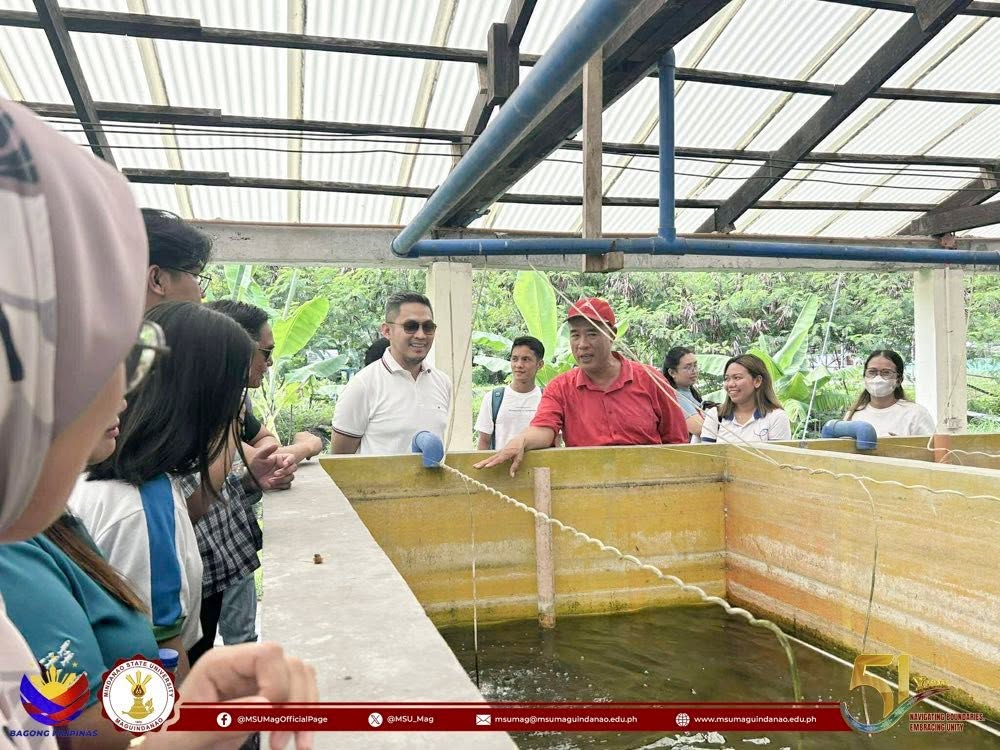
MSU-Maguindanao Leads National Collaborative Research Program to Advance Sustainable Tilapia Aquaculture
Mindanao State University–Maguindanao (MSU–Maguindanao), through its College of Fisheries, leads the National Tilapia R&D Program: Program B – Productivity Enhancement of SPIN Tilapia Culture Systems, a national research initiative supported by the Department of Science and Technology–Philippine Council for Agriculture, Aquatic and Natural Resources Research and Development (DOST-PCAARRD). The program's inception meeting was held on June 19, 2025, at Capiz State University, bringing together partner institutions to coordinate research activities aimed at improving saline-tolerant tilapia production, promoting sustainable aquaculture, and supporting food security.Dr. Ramjie Y. Odin, Dean of the College of Fisheries, MSU–Maguindanao, and Overall Program Leader and Project 1 Leader, conducts a field visit to the project area together with representatives of the Department of Science and Technology–Philippine Council for Agriculture, Aquatic and Natural Resources Research and Development (DOST-PCAARRD)The program focuses on Saline-tolerant Population of Improved Nilotica (SPIN). By improving the culture systems of this saline-tolerant strain, the initiative seeks to expand sustainable fish production opportunities while promoting the responsible management of aquatic resources.The program is led by Dr. Ramjie Y. Odin, Dean of the MSU–Maguindanao College of Fisheries, who serves as the overall Program Leader and Project 1 Leader. Partner institutions include Capiz State University, Northern Iloilo State University, Zamboanga State College of Marine Sciences and Technology, and the University of the Philippines. Through five interconnected research projects, the collaboration focuses on improving hatchery and grow-out systems, feeding strategies, microbial-based nursery production, acclimation and transport methods, and locally developed probiotics.The initiative advances research on aquaculture technologies and practices that support sustainable aquatic resource management and seek to minimize potential environmental impacts on aquatic ecosystems. By improving SPIN tilapia culture systems, production efficiency, and resource utilization, the program aims to promote responsible aquaculture practices, sustainable fish production, and livelihood opportunities for communities dependent on tilapia farming. The inception meeting established a coordinated framework for research implementation, methodology alignment, and project monitoring among participating institutions.MSU–Maguindanao remains committed to advancing research and collaborative innovation in sustainable aquaculture technologies and practices that help the fisheries and aquaculture industries minimize or prevent damage to aquatic ecosystems, conserve aquatic biodiversity, and promote the responsible utilization of aquatic resources for future generations.
October 20, 2025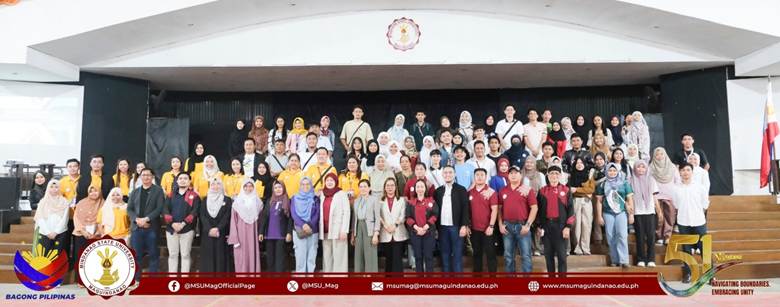
Strengthening Partnerships with Local Communities for the Protection and Sustainable Management of Shared Aquatic Ecosystems
Healthy rivers, lakes, wetlands, mangroves, and watersheds are essential to biodiversity, food security, and the livelihoods of communities. Their protection requires cooperation among academic institutions, government agencies, local government units (LGUs), and the people who depend on these resources. Through research collaborations, environmental monitoring, community consultations, and habitat conservation activities, the University works with local partners to promote the responsible management of shared aquatic and watershed ecosystems across the region.MinSuPala-IRDC: Bringing Research Institutions and Communities Together for Aquatic Ecosystem ManagementThrough the Mindanao-Sulu-Palawan Regional Research, Development, and Innovation Consortium (MinSuPala-IRDC), the University works with partner state universities and colleges, government agencies, LGUs, and community stakeholders to address environmental and resource-management concerns. On February 27, 2025, it hosted a stakeholders’ consultation that brought together researchers from four state universities and colleges, representatives of government agencies, local stakeholders, and fisherfolk associations. The discussions covered research findings concerning Ligawasan Marsh, Lake Buluan, the Rio Grande de Mindanao, and Lake Lanao, particularly on water quality, inland capture fisheries, watershed conditions, and socioeconomic factors affecting these ecosystems.The consultation provided an opportunity for researchers and stakeholders to discuss the implications of research findings and identify areas where scientific information could support local environmental planning and resource management. Participating institutions and agencies included representatives from MAFAR-BARMM, the Bangsamoro Planning and Development Authority, DOST-PCAARRD, and provincial environmental offices, among others. The discussions emphasized the importance of research-based recommendations in protecting aquatic habitats, conserving biodiversity, preventing pollution, and promoting sustainable inland fisheries.Researchers, government representatives, LGU officials, and community stakeholders participate in the MinSuPala-IRDC stakeholders’ consultation on research findings and environmental concerns affecting major inland water bodies in Mindanao.Partnership with Local Government Units for Indigenous Fish and Crop ConservationCollaboration with LGUs is also central to the second phase of the MinSuPala-IRDC initiative, titled “Establishment and Preservation of Indigenous Fish and Crop Products.” Supported by a ₱5-million (US$86,948.81) allocation from the Department of Budget and Management (DBM), the project seeks to identify and support the conservation and sustainable use of indigenous fish and crop resources.From July 23 to 25, 2025, project representatives conducted coordination meetings with LGUs in Cotabato City and the municipalities of Kabuntalan, Talitay, Datu Piang, and Northern Kabuntalan. These meetings helped establish coordination with local government partners and provided an opportunity to discuss community participation in the project.The team also conducted a Prioritization Tool Survey involving LGU representatives, community leaders, farmers, and fisherfolk. The activity gathered local perspectives on indigenous fish and crop species, biodiversity concerns, and conservation priorities. By involving communities and local institutions in identifying important resources and concerns, the initiative aims to ensure that research and development activities respond to local conditions and support the sustainable use of biological resources.Project representatives meet with LGU officials and community stakeholders during the July 2025 coordination activities and Prioritization Tool Survey for the MinSuPala-IRDC project on indigenous fish and crop products.Collaboration with MENRE-EMS for River Monitoring and ProtectionPartnerships with environmental agencies and local governments also support the monitoring and protection of rivers. On June 30, 2025, the College of Forestry and Environmental Science worked with the Ministry of Environment, Natural Resources and Energy–Environmental Management Services (MENRE-EMS) in launching the Brar River Pilot Water Sampling Program and continuing water-quality monitoring activities in the Simuay River.The activity included an orientation on standardized water-sampling procedures and waterbody classification for faculty members, students, and LGU personnel. The discussions provided participants with guidance on the proper conduct of water sampling and the assessment of river conditions, consistent with the principles and requirements of Republic Act No. 9275, or the Philippine Clean Water Act of 2004. The involvement of local government personnel and community stakeholders helps strengthen coordination and awareness of the importance of maintaining river water quality.This collaboration builds on the University's participation in the Adopt-an-Estero program, established in 2022. Under this partnership, MENRE-EMS conducts regular water sampling at three established monitoring stations along the Simuay River, with the University serving as an institutional partner. These activities provide a continuing basis for cooperation in environmental monitoring and river protection.MSU-Maguindanao faculty members, MENRE-EMS personnel, and local stakeholders participate in an orientation and knowledge-sharing session on Brar River waterbody classification and the pilot water-sampling activity in 2025.Partnership with Indigenous Teduray Communities and Local Stakeholders for Watershed ProtectionThe protection of aquatic ecosystems also requires attention to the watersheds and surrounding landscapes that influence the condition of rivers and other inland water bodies. In 2025, the University supported the development of the South Upi Forest Watershed Enhanced Protection and Management Plan for 2025–2030, funded by the Ministry of Science and Technology–BARMM (MOST-BARMM).The initiative covers approximately 1,894 hectares across five barangays—Romangaob, Looy, Bongo, Kigan, and Pandan—in the Municipality of South Upi, Maguindanao del Sur. The planning process involved consultations with LGUs, Indigenous Teduray communities, farmers, and other local stakeholders. Baseline data gathering, GIS mapping, biodiversity and habitat profiling, and field observations were undertaken to help establish the basis for watershed planning.The proposed management framework identifies priority directions for watershed protection, including sustainable land use, agroforestry, assisted natural regeneration, native species planting, habitat conservation, and community-based environmental protection. By involving Indigenous communities and local institutions in the planning process, the initiative recognizes the importance of local knowledge and participation in managing forest and watershed resources. Protecting these areas also supports the long-term condition of connected rivers and aquatic habitats.MSU–Maguindanao and MOST–BARMM research team members, together with local stakeholders, during the field assessment and consultation for the South Upi Forest Watershed Enhanced Protection and Management Plan.Collaboration with Partner Universities and Communities for Mangrove Habitat RestorationCooperation among academic institutions and local stakeholders was further demonstrated through a mangrove-planting activity at the Baluan Mangrove Sanctuary on November 28, 2025. The activity was conducted with partner state universities and colleges under MinSuPala-IRDC as part of the environmental action component of the 1st Mindanao Forum on Waters and Natural Resources, held from November 26 to 28, 2025, in General Santos City.A total of 107 mangrove seedlings were planted during the activity. The initiative provided a practical opportunity for participating institutions and partners to take part in mangrove habitat conservation and promote awareness of the importance of coastal and aquatic ecosystems. It also complemented the forum's broader discussions on water resources, watershed resilience, inland fisheries, aquatic biodiversity, sustainable livelihoods, and environmental governance.Representatives of partner universities and participating stakeholders plant 107 mangrove seedlings at the Baluan Mangrove Sanctuary on November 28, 2025, as part of the environmental action activity of the 1st Mindanao Forum on Waters and Natural Resources.Sustaining Partnerships for Shared Ecosystem ProtectionThese collaborations demonstrate the importance of working with local communities, LGUs, government agencies, Indigenous groups, and partner academic institutions in addressing shared environmental concerns. From river monitoring and watershed planning to biodiversity prioritization and mangrove planting, the activities provide opportunities to combine research, local knowledge, and community participation in environmental management.
October 20, 2025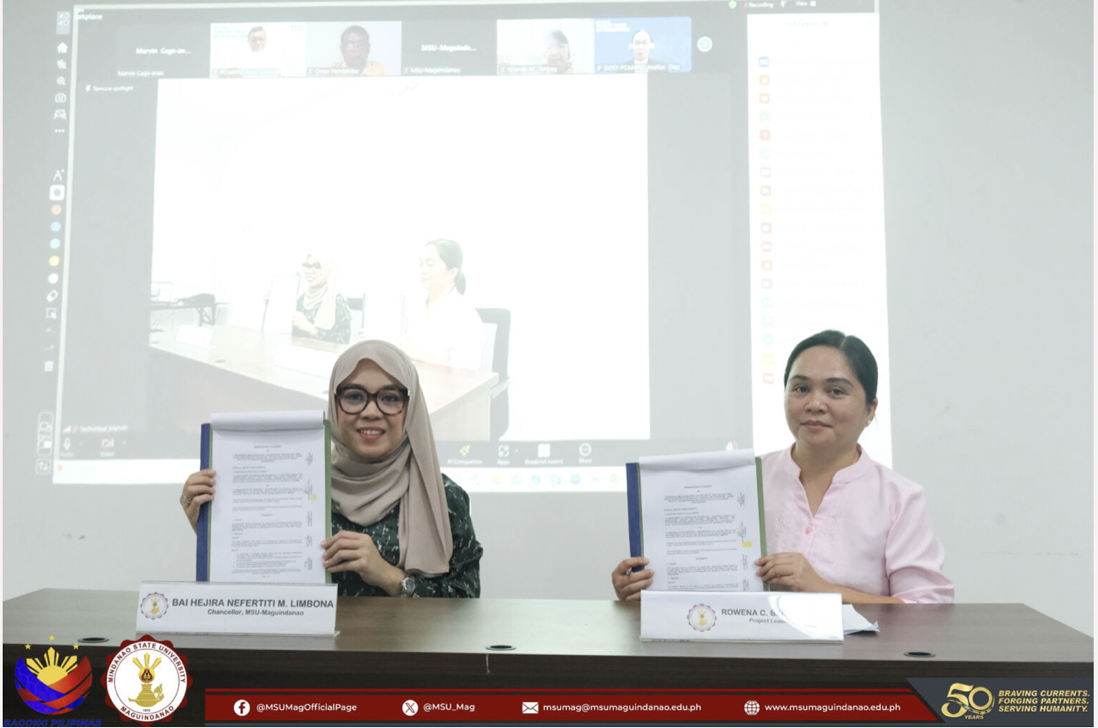
MSU-Maguindanao, DOST-PCAARRD Seal ₱5-Million Agreement for Climate-Resilient Agroforestry Project in Datu Blah Sinsuat
TAMONTAKA, Maguindanao del Norte — Mindanao State University-Maguindanao (MSU-Maguindanao) formalized a partnership with the Technology Transfer and Promotion Division (TTPD) of the Department of Science and Technology–Philippine Council for Agriculture, Aquatic and Natural Resources Research and Development (DOST-PCAARRD) through a virtual Memorandum of Agreement (MOA) signing held at Simeon Datumanong Hall, Institute of Management, Tamontaka, Maguindanao del Norte.MSU-Maguindanao Chancellor Bai Hejira Nefertiti M. Limbona and CFES Dean Dr. Rowena C. Benavides during the virtual MOA signingThe agreement formally launched “Enhancing Climate Resilience through Native and Fruit Tree-Based Agroforestry Technology: A Science and Technology-Based Initiative for Emergencies and Hazards,” a two-year-and-six-month project running until December 2026 in Datu Blah Sinsuat, Maguindanao, backed by ₱5 million in funding from DOST-PCAARRD.Led by Dr. Rowena C. Benavides, Dean of the College of Forestry and Environmental Studies (CFES), the project aims to rehabilitate 10 hectares of degraded land, establish two community nurseries, and produce native and fruit tree seedlings to advance climate-resilient agroforestry. This initiative is expected to provide farmers, land owners, and vulnerable communities in DBS access to additional food source. Through the establishment of productive agroforestry systems, the project contributes to efforts to end hunger and ensure access to sufficient, safe, and nutritious food throughout the year, while strengthening communities’ capacity to adapt to climate-related challenges.The initiative further reflects the University’s broader commitment to advancing food security and sustainable livelihoods among communities in the Bangsamoro. It reinforces MSU-Maguindanao’s continuing role as a research, innovation, and community development partner in the Bangsamoro Autonomous Region in Muslim Mindanao (BARMM), particularly in supporting vulnerable communities through climate-resilient and sustainable agricultural practices.
October 19, 2025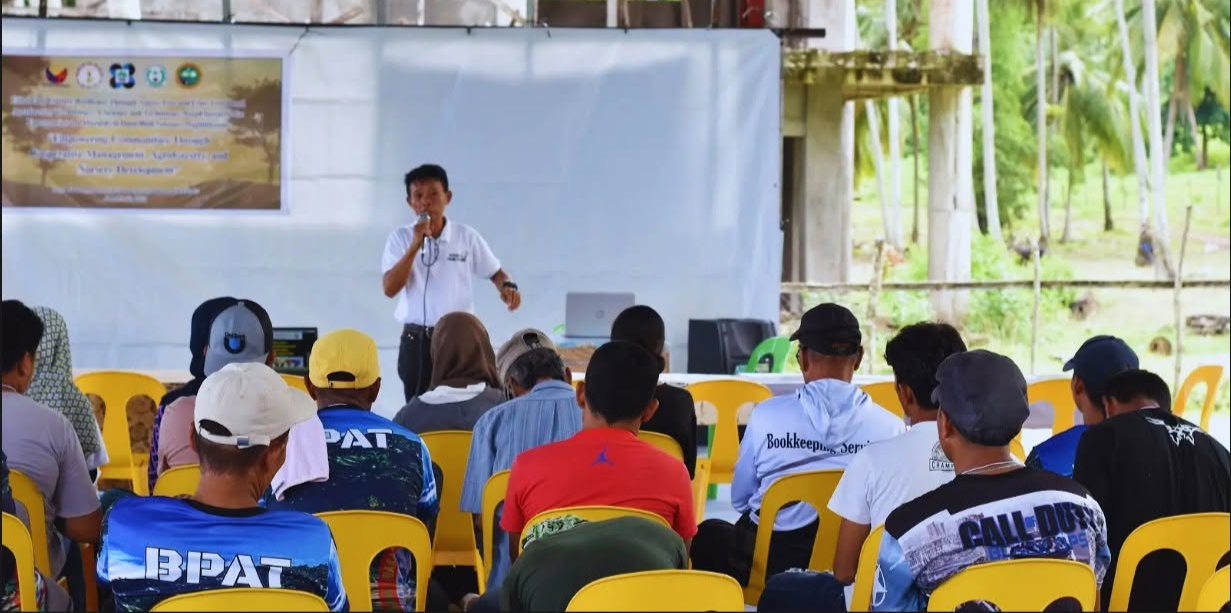
Collaboration with Local Communities to Maintain Shared Land Ecosystems
Mindanao State University–Maguindanao (MSU–Maguindanao) actively collaborates with local communities, government agencies, and academic institutions to promote the conservation, rehabilitation, and sustainable management of shared land ecosystems. Through community-based agroforestry initiatives, capacity-building activities, and technical partnerships, the University supports efforts to restore degraded landscapes, enhance biodiversity, and strengthen local participation in sustainable land management practices.One of the University's major initiatives is the Native and Fruit Tree-Based Agroforestry Project in Barangay Nalkan, Datu Blah Sinsuat, Maguindanao del Norte, implemented by the College of Forestry and Environmental Studies (CFES) with funding support from the Department of Science and Technology–Philippine Council for Agriculture, Aquatic and Natural Resources Research and Development (DOST-PCAARRD). Officially launched in March 2025 and continuing in 2026, the project involves collaboration with Barangay Nalkan officials, local government representatives, and community stakeholders. It aims to rehabilitate degraded land through the establishment of agroforestry systems integrating native and fruit-bearing trees. The initiative emphasizes community participation in land rehabilitation planning, sustainable resource management, and the development of livelihood opportunities compatible with ecosystem conservation. Its planned activities also include community nursery development and farmer capacity building to support the long-term sustainability of restored landscapes.To strengthen the technical implementation of this initiative, MSU–Maguindanao partnered with the University of the Philippines Los Baños–Institute of Agroforestry (UPLB-IAF) in conducting the Agroforestry Land Capability Assessment and Mapping Scheme (ALCAMS) Training on Agroforestry Establishment and Development on February 25–27, 2025. The training included a field assessment in Barangay Nalkan on February 26, where participants examined land slope, vegetation characteristics, and site conditions to determine appropriate agroforestry interventions. The field activity was coordinated with local barangay leadership, demonstrating the integration of scientific land assessment and community-based ecosystem rehabilitation planning. This collaboration helped strengthen the technical foundation for sustainable land use and agroforestry development within the project area.Further demonstrating its direct engagement with local communities, the University conducted a Community Seminar-Workshop on Agroforestry and Nursery Development on June 16–17, 2025, in Datu Blah Sinsuat, Maguindanao del Norte. Organized through the CFES agroforestry project, the activity engaged community beneficiaries in discussions and practical learning on agroforestry establishment, nursery development, cooperative management, and organic fertilizer production. These activities were designed to strengthen local knowledge and skills in sustainable land management, promote environmentally responsible agricultural practices, and encourage community involvement in ecosystem rehabilitation.Collectively, these initiatives demonstrate MSU–Maguindanao's sustained institutional commitment to working with local communities in maintaining and restoring shared terrestrial ecosystems. By combining community partnerships, scientific expertise, environmental education, and participatory capacity building, the University contributes to the rehabilitation of degraded land, the promotion of sustainable agroforestry practices, and the development of local capacity for long-term ecosystem stewardship.
October 18, 2025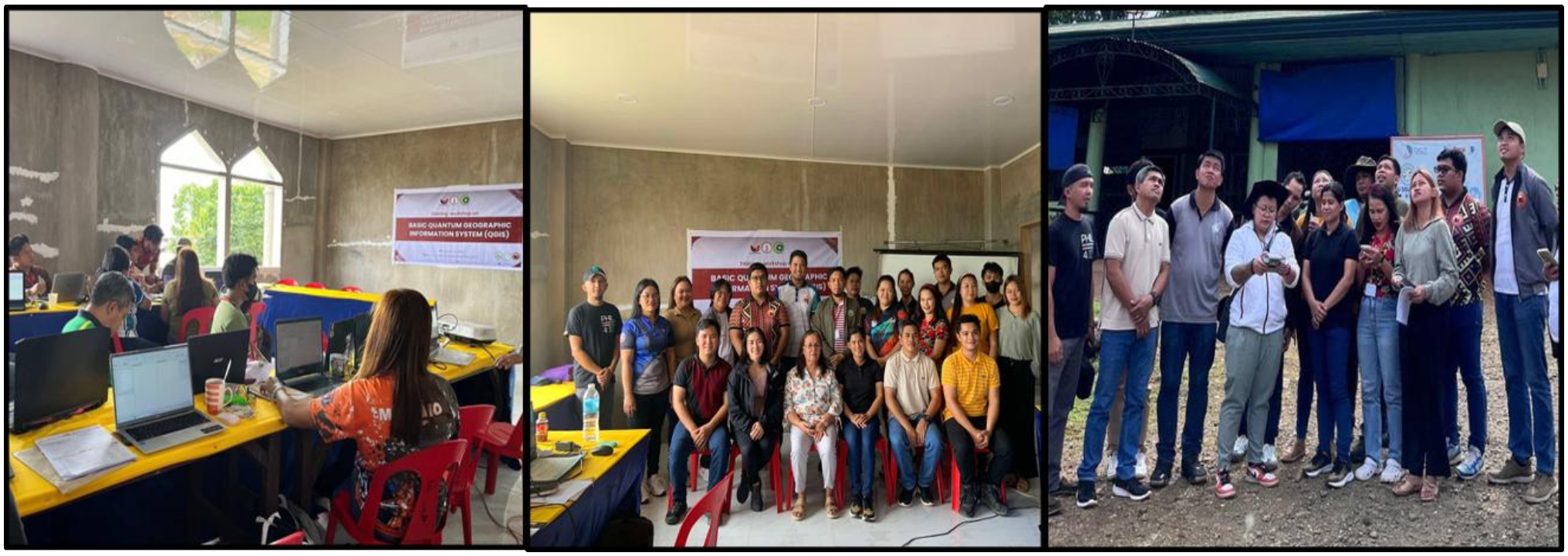
Community Trainings on Agroforestry and Sustainable Land Management for Agriculture in South Upi
Through its research and extension initiatives, with funding support from the Ministry of Science and Technology (MOST-BARMM), MSU-Maguindanao provides community-based educational programmes and technical trainings on agroforestry, land assessment, and watershed management. These initiatives equip local residents, government personnel, and environmental stakeholders with practical knowledge and skills in sustainable agricultural land use, soil conservation, watershed protection, and the integration of livelihood activities with environmental management.As part of these initiatives, the University conducted an Advanced Quantum Geographic Information System (QGIS) Application Training from February 5–7, 2025, at the Balay Silangan Reformation Center in Upi, Maguindanao del Norte. The activity gathered 23 participants from the local government units of South Upi and North Upi and the Ministry of Environment, Natural Resources, and Energy (MENRE-BARMM). The training covered land-use and land-cover classification, water quality mapping, terrain analysis, and landslide risk assessment. Through practical exercises, participants developed skills in using geospatial information to support environmental monitoring and informed land-use planning.Photos taken during the Training-Workshop on Using QGIS Software for Basic and Intermediate Mapping held in Upi, Maguindanao del Norte on February 5-7, 2025Another major activity was the Training on Agroforestry Establishment and Development: Leveraging Agroforestry Land Capability Assessment and Mapping Scheme (ALCAMS) for Effective Land Assessment and Livelihood Planning, held on June 9, 2025, at the Municipal Gymnasium in Barangay Romongaob, South Upi, Maguindanao del Sur. Thirty residents of South Upi participated in the training. The sessions covered Agroforestry 101 and Sloping Agricultural Land Technology, emphasizing appropriate land-use practices, contour farming, and soil conservation. Participants also engaged in practical exercises on land capability assessment, considering slope, soil type, and land classification, as well as soil testing to determine fertility and pH levels. A demonstration on wine-making using locally available fruits was also conducted to introduce a potential alternative livelihood activity.Training-workshop on Agroforestry Technologies, Soil Testing, ALCAMS, and WinemakingThe University's educational initiatives also included a Workshop on the Formulation of the South Upi Forest Watershed for Enhanced Protection and Management Plan, conducted on July 29, 2025, at the South Upi Municipal Hall. The workshop brought together 16 representatives from municipal offices and barangays. Assistant Prof. Peter Jan D. de Vera, Research Director, presented research findings on land-use patterns, slope stability, water and soil quality, and the socioeconomic conditions of communities within the watershed. Participants identified priority environmental concerns, discussed appropriate interventions, and proposed strategies for forest and watershed protection. Their inputs contributed to the development of a management plan responsive to local environmental conditions and community needs.MSU-Maguindanao team with participants of the Workshop on the formulation of the South Upi Forest Watershed Management Plan held on July 29, 2025These educational and community engagement activities were informed by the University's assessment of the South Upi Forest Watershed. The biological assessment recorded 22 tree species belonging to 12 families in the remaining forested areas. Among the documented species were five classified as Near Threatened, three as Vulnerable, three as Endangered, and one as Critically Endangered. The findings highlight the importance of protecting native tree populations and maintaining forest habitats through appropriate land management and conservation practices.The research also identified concerns involving illegal logging, land conversion, and climate change, emphasizing the need for coordinated conservation efforts. Recommended interventions included community-based agroforestry programmes, reforestation, the establishment of watershed conservation zones, and the development of barangay model farms that integrate sustainable land management, biodiversity conservation, and livelihood activities.The knowledge and practical skills developed through these activities provide local communities with approaches to managing agricultural lands while maintaining ecological integrity. Through agroforestry, contour farming, soil conservation, and appropriate land-use planning, participants gain practical guidance on improving land productivity, minimizing soil degradation, and integrating biodiversity conservation into agricultural practices. These approaches also offer opportunities to develop sustainable agricultural livelihoods while maintaining the environmental quality of surrounding landscapes.Through these research and extension activities, MSU-Maguindanao demonstrates its continuing commitment to providing educational programmes and technical outreach to local communities and government partners on sustainable agricultural land management. By combining scientific research, practical training, and community participation, the University helps strengthen local capacities to manage agricultural resources responsibly, conserve watersheds, protect native vegetation, and promote sustainable land-based livelihoods.
October 13, 2025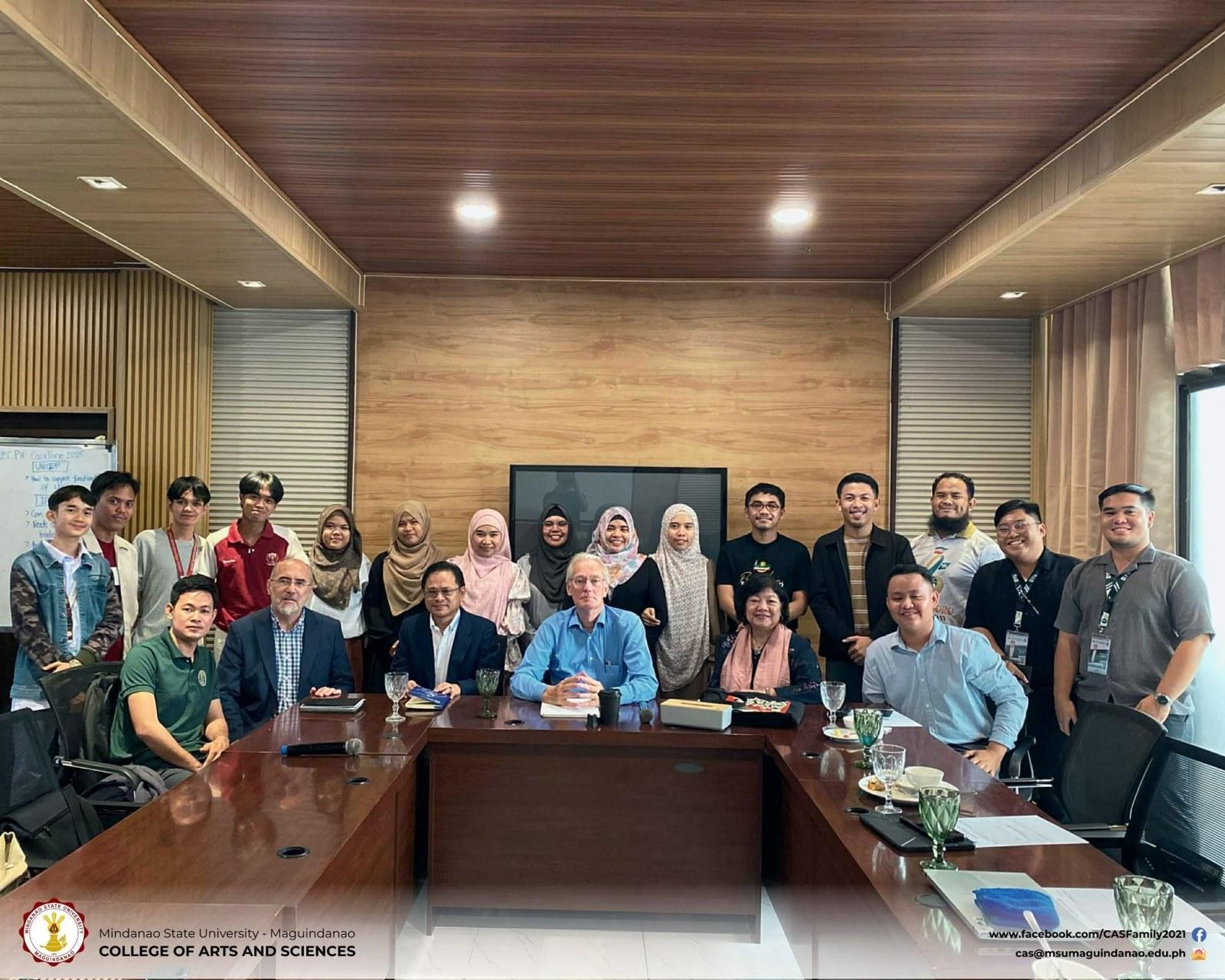
Mindanao State University–Maguindanao Student Leaders Bring Youth Perspectives to the Third-Party Monitoring Team’s 55th Monitoring Mission on the Bangsamoro Peace Process
Student leaders of Mindanao State University–Maguindanao, from the College of Arts and Sciences Student Association (CASSA) and the Political Science Society, represented the University at the 55th Monitoring Mission of the Third-Party Monitoring Team (TPMT) on September 25, 2025, at Casa Torre, Cotabato City. The TPMT is the independent body that reviews and reports on the implementation of the agreements signed between the Government of the Philippines and the Moro Islamic Liberation Front, including the Comprehensive Agreement on the Bangsamoro.MSU–Maguindanao student leaders with participants and members of the Third-Party Monitoring Team at the 55th Monitoring Mission, Casa Torre, Cotabato City, September 25, 2025.For this mission, the TPMT worked with the Bangsamoro Youth Commission (BYC) to convene a multi-sectoral dialogue on how young people see the peace process, governance in BARMM, and the coming Bangsamoro parliamentary elections. The dialogue brought together representatives of civil society and non-governmental organizations, religious institutions, women’s groups, settler youth communities, the Sangguniang Kabataan, and the academe. Two student leaders represented MSU–Maguindanao: Norjannah M. Campiao, Governor of the College of Arts and Sciences Student Association (CASSA), and Alyajier M. Midtimbang, Mayor of the Political Science Society.The MSU–Maguindanao delegates contributed views drawn from their studies in political science and from their experience as student leaders, including their concerns about youth participation in governance and the conduct of the parliamentary elections. Their input became part of the youth perspectives gathered by the TPMT for its monitoring of the peace process.By giving Bangsamoro students a voice in the independent review of the peace agreements, the University helps ensure that decision-making on the peace process is inclusive, participatory, and representative of young people. The engagement also strengthens the University’s working ties with the TPMT and the BYC, two institutions central to sustaining peace in the region.MSU–Maguindanao will continue to open avenues for its students to engage with peace and governance institutions in BARMM, so that the region’s young people take an active part in shaping its future.
October 13, 2025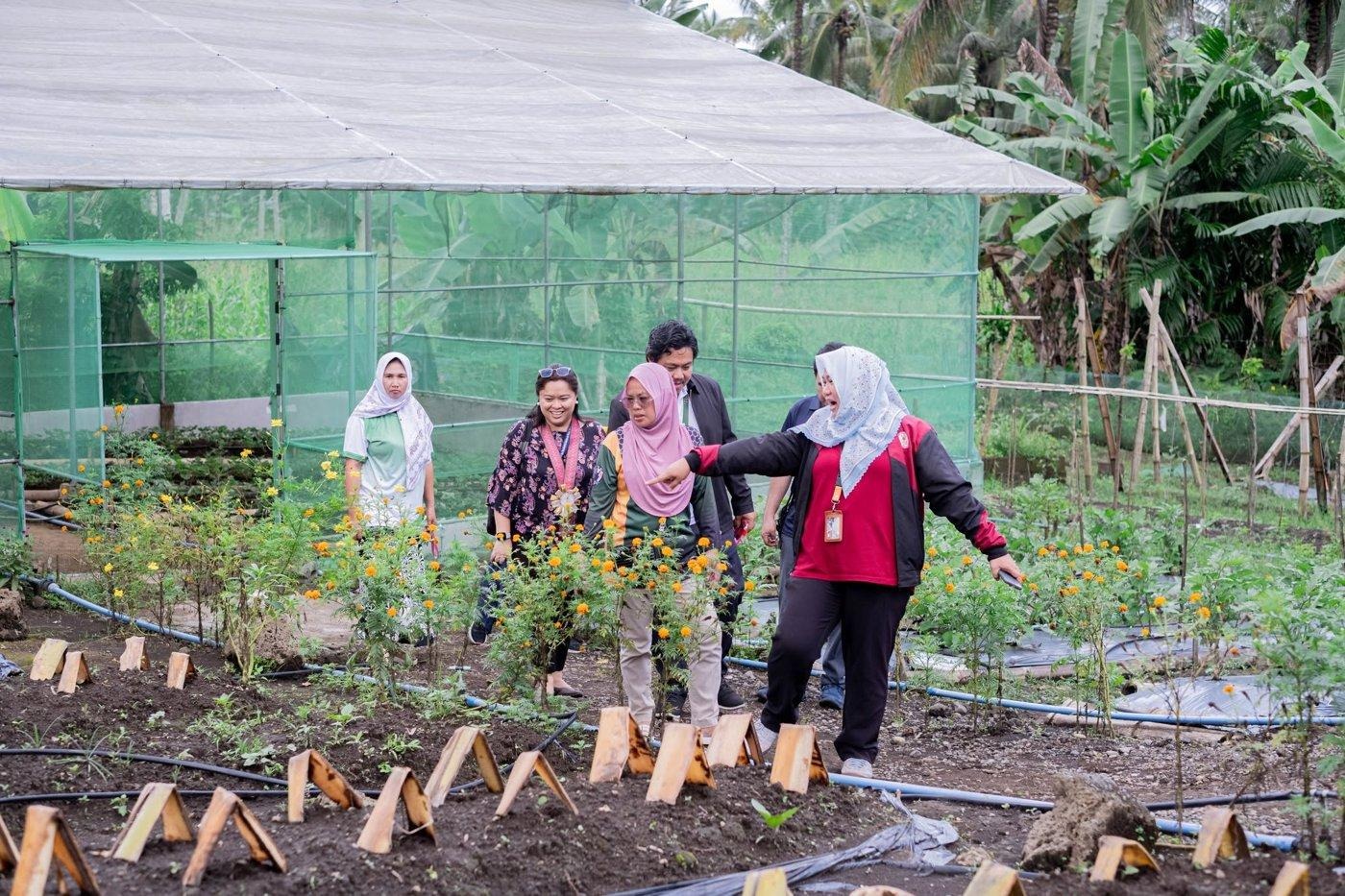
MSU–Maguindanao and OPAPRU turn over livelihood projects to ten cooperatives and women’s groups in Camps Omar, Abubakar, and Badre
Mindanao State University–Maguindanao (MSU–Maguindanao), in partnership with the Office of the Presidential Adviser on Peace, Reconciliation and Unity (OPAPRU), turned over agricultural livelihood projects and a community kitchen facility to ten cooperatives and community organizations in three MILF camps in June and July 2025. The projects were implemented under the Agricultural Livelihood Support Projects of the MILF Camps Transformation Plan, part of the Normalization Track of the Comprehensive Agreement on the Bangsamoro.On June 17, 2025, the University turned over vegetable, goat, poultry, and fish farming projects in Camp Omar to the Aljasuws Agri-Business Association Cooperative, the Talibadok Kauyagan Marketing Cooperative, the Mujahidin a Nagapas Agri-Producers Cooperative, and the Limpongo Women’s Organization. On June 18, it turned over a newly built kitchen facility in Camp Abubakar, Barira, to the Calagan Women’s Marketing Cooperative and the Gawad Kalinga Village Togaig Farmer’s Marketing Cooperative for food processing and enterprise.MSU–Maguindanao and project stakeholders inspect the vegetable production area in Camp Omar, turned over on June 17, 2025In Camp Badre, MSU–Maguindanao trained and equipped four cooperatives, the Sif-Ku Producers Cooperative, the Sigay Kutawaton RTW Women’s Marketing Cooperative, the Matado Agrarian Reform Cooperative, and the Sibutuan Agricultural Cooperative, in organic, climate-smart vegetable production, with the turnover held on June 13, 2025, at the University’s Datu Odin Sinsuat Gymnasium. Members now earn income from their produce. Hadja Farisah M. Abas, president of the Sigay Kutawaton cooperative, said the earnings now help cover their daily expenses and their children’s school allowance.Hadja Farisah M. Abas, president of the Sigay Kutawaton RTW Women’s Marketing Cooperative, describes the income members now earn from climate-smart vegetable production in Camp BadreWorking alongside OPAPRU, the Joint Task Forces on Camps Transformation, local government units, the Philippine Marine Corps, the 601st Brigade, and the cooperatives themselves, MSU–Maguindanao promotes effective public and civil society partnerships in support of the Bangsamoro peace process. The projects raise the productivity and incomes of small-scale food producers, particularly women, with three of the ten beneficiary groups being women’s organizations, and give former combatants and their communities a viable path to civilian livelihoods.Representatives of MSU–Maguindanao, OPAPRU, the Philippine Marine Corps, and beneficiary cooperatives at the turnover of the kitchen facility in Camp Abubakar on June 18, 2025Chancellor Dr. Bai Hejira Nefertiti M. Limbona affirmed that the University will continue to monitor the projects and remain a partner of the government and the MILF community for genuine and lasting development.
October 12, 2025