Articles
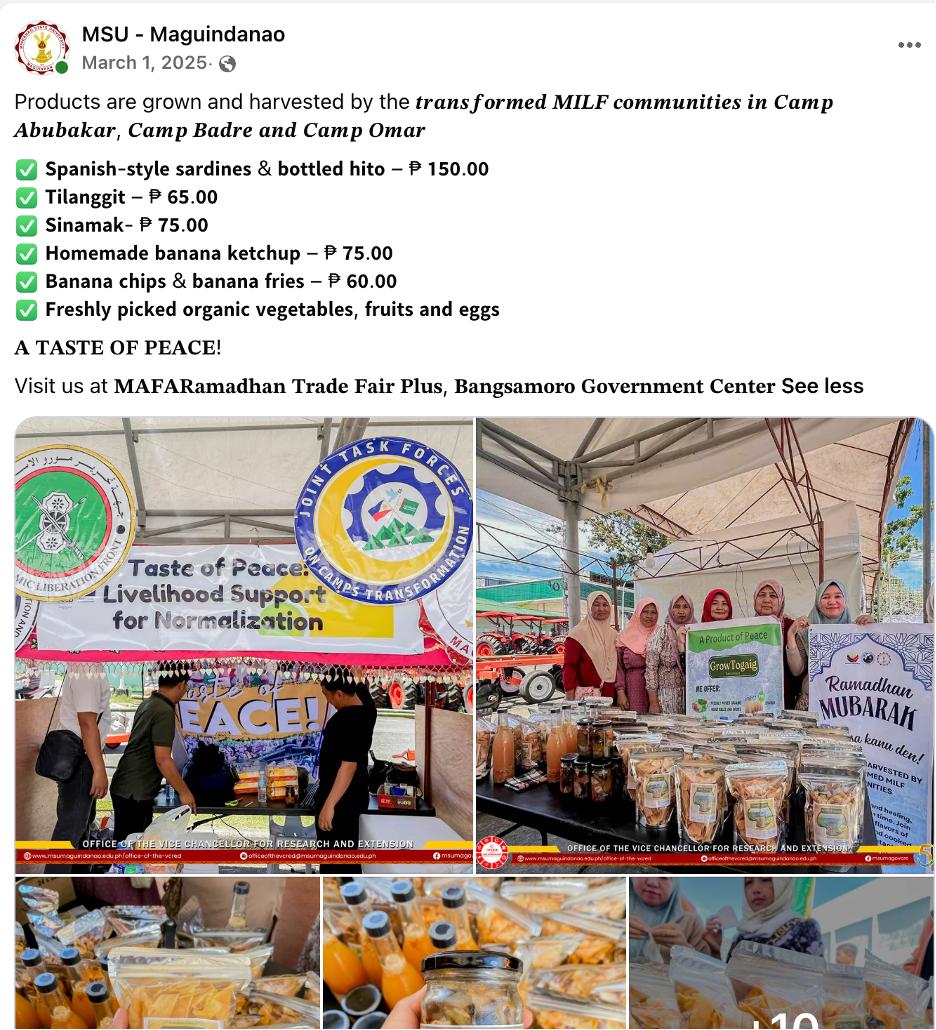
Taste of Peace Sales Connect Buyers with Vegetables and Eggs Grown in Former MILF Camps
"Support local, eat local, and empower communities." With that call, Mindanao State University–Maguindanao (MSU–Maguindanao), through its Office of the Vice Chancellor for Research, Innovation, and Sustainable Engagements (OVCRISE), brought vegetables, eggs, and processed foods grown by partner cooperatives in Camp Abubakar, Camp Badre, and Camp Omar straight to buyers in 2025. The Taste of Peace sales, held with the Office of the Presidential Adviser on Peace, Reconciliation, and Unity (OPAPRU) and the Calagan Women's Marketing Cooperative, are part of the Agricultural Livelihood Support Project for the MILF Camps Transformation Plan.MSU-Maguindanao promotes locally grown and processed food products from the transformed communities of Camps Abubakar, Badre, and Omar at the MAFAR Ramadhan Trade Fair Plus, Bangsamoro Government Center.From March 1, 2025, the University ran a Taste of Peace booth at the MAFARamadhan Trade Fair Plus at the Bangsamoro Government Center in Cotabato City. Cooperative members sold freshly picked organic vegetables, fruits, and eggs alongside halal-processed foods made from their own harvests: Spanish-style sardines and bottled hito at ₱150, tilanggit at ₱65, sinamak and homemade banana ketchup at ₱75, and banana chips and banana fries at ₱60. By March 3, the Camp Badre communities had added more products in eco-friendly packaging.Fresh eggplant, corn, tomatoes, and other vegetables grown in the camps are sold beside bottled products at the Taste of Peace booth, March 2025.The University also took orders for the camps' produce. Buyers reserved fresh eggs at ₱270 per tray and heritage chicks at ₱100 each from Camp Badre, and picked them up on June 16, 2025, during the Turnover and Culmination Program of the Agricultural Livelihood Support Projects at the Datu Odin Sinsuat Gymnasium of MSU–Maguindanao. University offices also bought these products for meetings, events, or tokens).These sales put into practice the University's Sustainability Policy, which directs it to "support local and sustainable businesses whenever possible" (Article VII, Section 4) and to "promote the consumption of local and sustainably harvested food" (Article VII, Section 7). Every purchase goes directly to small-scale producers who grow their crops with climate-smart, chemical-free methods, giving them steady access to markets without middlemen.Building on these sales, the University aims to make Taste of Peace products a regular feature of campus events and to give camp cooperatives first consideration when sourcing food for its official activities.
November 5, 2025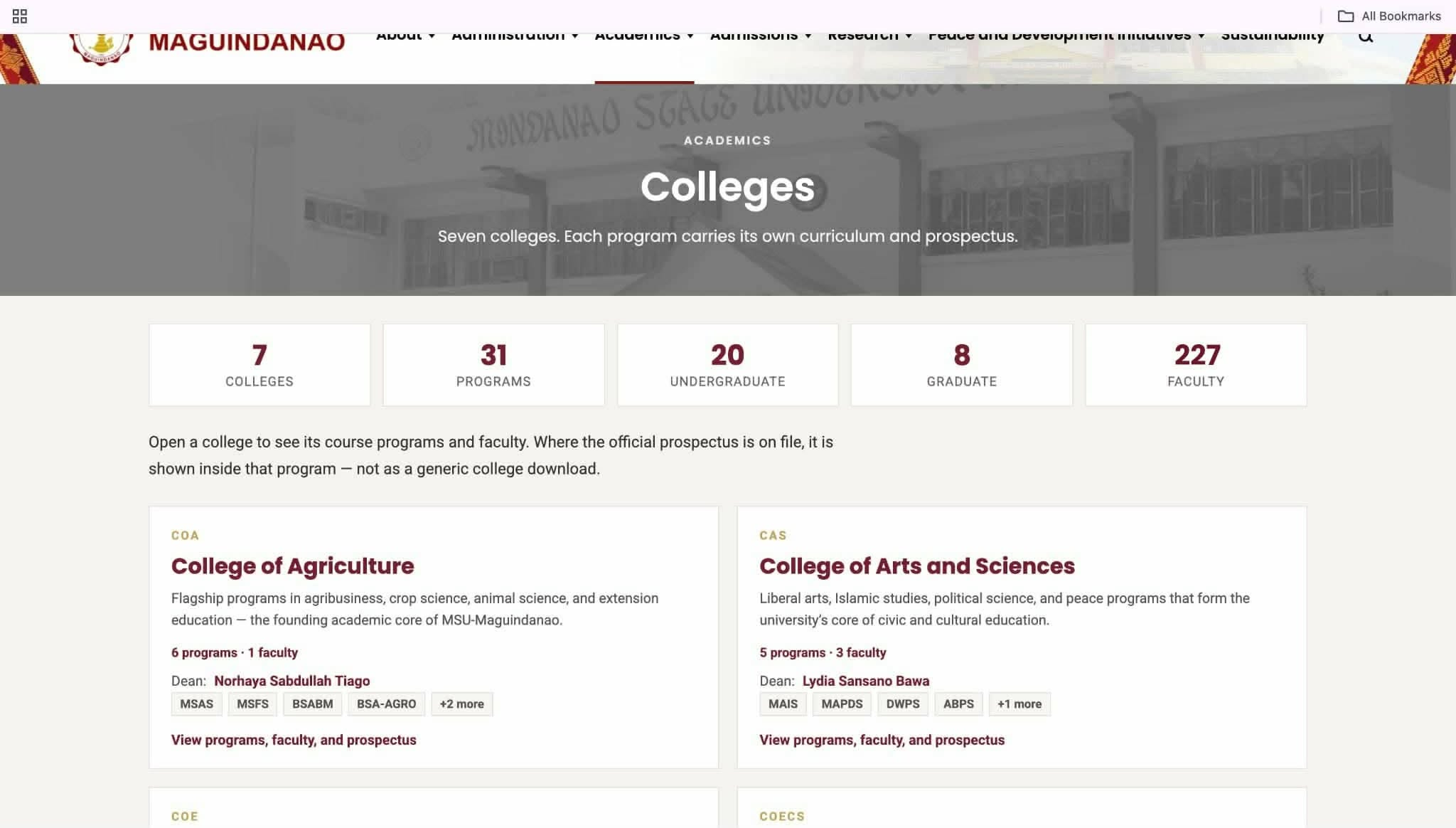
Dedicated Degrees and Courses Teach MSU–Maguindanao Students to Care for the Land, the Waters, and Lasting Peace
Thirty-one graduates in the first cohort of the Diploma in Women, Peace and Security (DWPS) show one of the dedicated degrees and courses through which Mindanao State University–Maguindanao addresses sustainability, alongside Fundamentals of Peace Education (FPE 101), its degree programs in agriculture, forestry, environmental science, fisheries, and sustainable community development, and graduate programs such as the Master of Science in Animal Science and the Master of Arts in Peace and Development Studies.Full Degree ProgramsThe University also offers full degrees in environmental sustainability, food security, and community development. The College of Forestry and Environmental Studies offers the BS Forestry, which produced 67 graduates in its Class of 2025, and the BS Environmental Science. Both address forest conservation, watershed protection, biodiversity, and climate change, and draw on field sites in the region such as the South Upi watershed. The College of Fisheries offers the BS Fisheries program, which produced 57 graduates in its Class of 2025, on sustainable fisheries and aquaculture for the coastal and inland waters of the Bangsamoro. The College of Agriculture offers the BS Agriculture with majors in Agronomy and Animal Science, which prepare students for sustainable crop and livestock production, and the College of Public Affairs and Governance offers the BS Sustainable Community Development, which prepares graduates for community-based development work. At the graduate level, the Master of Science in Animal Science extends the University’s agriculture program, and the Master of Arts in Peace and Development Studies extends its peace education. The prospectus of each program, listing its courses, is publicly available on the University website at https://msumaguindanao.edu.ph/colleges.The University’s Colleges page lists its seven colleges and 31 degree programs, including its programs in agriculture, forestry, and fisheries.Sustainability in the Flagship CurriculaBS ForestryThe prospectuses show how sustainability runs through these programs from the first year to the last. The BS Forestry (General Forestry) curriculum builds from Forest Ecology and Forest Wildlife and Biodiversity Conservation in the second year to Tropical Forestry and Climate Change, Watershed Management, and Protected Area Management in the third, and to Integrated Forest Resource Management and Agroforestry and Sustainable Upland Development in the fourth. Students also take Social Forestry and Community-Based Natural Resources Management, Forest Governance and Policy, and Forest Resource Economics, choose from electives such as Restoration of Degraded Ecosystems, Environmental Impact Assessment, Disaster Risk Reduction and Management, and Integrated Coastal Resources Management, and complete a six-unit Field Practicum.Excerpt from the Curriculum of Bachelor of Science in Forestry Major in General ForestryBS FisheriesThe 180-unit BS Fisheries curriculum follows the same path. It moves from Aquatic Ecology and Resources and two courses in Aquaculture to Fish Health Management, Capture Fisheries, and Fisheries Laws, Policies, and Institutions, and ends with Fisheries Management, Coastal Resource Management, Fishery Product Safety and Quality, Fisheries Entrepreneurship, and Fisheries Extension. Electives include Fish Stock Assessment and GIS and Remote Sensing for Fisheries, and every student completes 320 hours of on-the-job training.Excerpt from the Curriculum of Bachelor of Science in FisheriesBS Agriculture, Major in AgronomyAgriculture follows the same pattern. The 176-unit BS Agriculture major in Agronomy, for example, builds from Principles of Soil Science, Principles of Crop Protection, and Soil Fertility, Conservation and Management in the first year to Introduction to Organic Agriculture and Natural Resource and Environmental Management in the second, and to Introduction to Water Management and Irrigation, Introduction to Agricultural Policy and Development, Precision Agriculture, Postharvest Handling and Seed Technology, Introduction to Farming Systems, and Halal Practices for Agricultural Crops in the third and fourth. Students complete a 240-hour on-campus practicum and a 240-hour off-campus on-the-job training, and those who finish the first two years earn a Certificate of Agricultural Science that they can use for immediate employment. All three curricula also carry general courses that bring the University’s peace and sustainability commitment into every program: Fundamentals of Peace Education (FPE 101); Ekokritisismo at Pagpapahalaga sa Kalikasan (FIL 102), a Filipino course on ecocriticism and the value of nature; and the History of Muslim Filipinos and Indigenous Peoples of Mindanao, Sulu, and Palawan (HIS 003).Excerpt from the Curriculum of Bachelor of Science in Agriculture major in AgronomyKeeping the Programs CurrentThe University also keeps these programs current. On May 6 and 7, 2025, it hosted the 2nd Meeting on Curriculum Revisions and New Programs of the MSU System Curriculum Committee at its Institute of Management. Led by MSU Vice President for Academic Affairs Dr. Alma E. Berowa, faculty experts from MSU–Marawi, MSU–IIT, MSU–Sulu, MSU–LNAC, and MSU–Maguindanao reviewed revisions to programs in Animal Science, Farming Systems, Sustainable Community Development, and Environmental Planning, with attention to accreditation requirements and industry developments. Chancellor Limbona urged the committee to align the programs with the goals of 2030, particularly the employability of graduates.Diploma in Women, Peace and Security Courses Taken as Electives in Graduate ProgramsDeveloped with the Philippine Center for Islam and Democracy (PCID), the DWPS answers a need in the Bangsamoro, where women remain underrepresented in governance. When the Bangsamoro Transition Authority was formed, women held only 13 of its 80 seats, a gap documented by the University’s own researchers. The program trains government personnel, civil society practitioners, and community leaders in women’s participation in peacebuilding, conflict prevention, inclusive governance, gender-responsive policy, and mediation. Its curriculum draws on community knowledge, including the guidance of community elders, and students produce policy papers and program designs for their own organizations and communities. Its first 31 graduates completed the program on October 15, 2025, at the end of its first year of implementation.The program’s lectures and forums connect this training to the lived experience of the region. On March 8, 2025, during Women’s Month, the first cohort opened its second-semester DWPS Lecture Series with Atty. Cecilia Jimenez-Damary, Senior Professorial Lecturer at De La Salle University, former Government Representative to the Transitional Justice and Reconciliation Commission for the Bangsamoro, and former UN Special Rapporteur on the Human Rights of Internally Displaced Persons. She explained the four pillars of transitional justice (truth-seeking, accountability, reparations, and guarantees of non-recurrence) and called for a victim-centered approach that does not leave out Bangsamoro women affected by conflict. On October 13, 2025, the first cohort hosted HERStory of Courage, an on-site and online forum at the Simeon Datumanong Hall of the Institute of Management, where Director General Ruby Andong of the Ministry of Basic, Higher and Technical Education, Ms. Maimona Yu Hashim of The Moropreneur Inc., and Dr. Maimona Saglayan Lidasan, known as the first lady doctor of Parang, shared their stories of peacebuilding, humanitarian service, and women’s leadership in the Bangsamoro.Atty. Cecilia Jimenez-Damary leads the first DWPS cohort through the pillars of transitional justice in an online lecture, March 8, 2025.Bangsamoro women leaders share their stories of struggle and resilience at the HERStory of Courage forum hosted by the first DWPS cohort, October 13, 2025.DWPS faculty present the program’s learning materials to participants at the 2025 Philippine Conference on Women, Peace and Security.Fundamentals of Peace Education (FPE 101)FPE 101, offered through the Institute for Peace and Development in Mindanao, teaches peace, non-violence, and respect for cultural diversity, combining classroom study with community-based learning. On May 31, 2025, 37 students visited Camp Iranun in Barira, where they met survivors of the All-Out War in Bombaran, toured the historical residence of Ustadz Salamat Hashim, and then reflected on their own role in building peace in a structured debriefing.FPE 101 students and Institute for Peace and Development in Mindanao staff join partners from the Bangsamoro Youth Commission and the 1st Marine Brigade at Camp Iranun, May 31, 2025Graduates for Sustainable DevelopmentAcross all its undergraduate and graduate programs, the University produced 917 graduates in Academic Year 2024–2025, among them graduates of these programs prepared to work for peace, gender equality, and the sustainable use of forests and waters in the Bangsamoro. The University will keep reviewing these programs with the MSU System Curriculum Committee so that they stay responsive to the needs of the Bangsamoro and to sustainable development.
November 5, 2025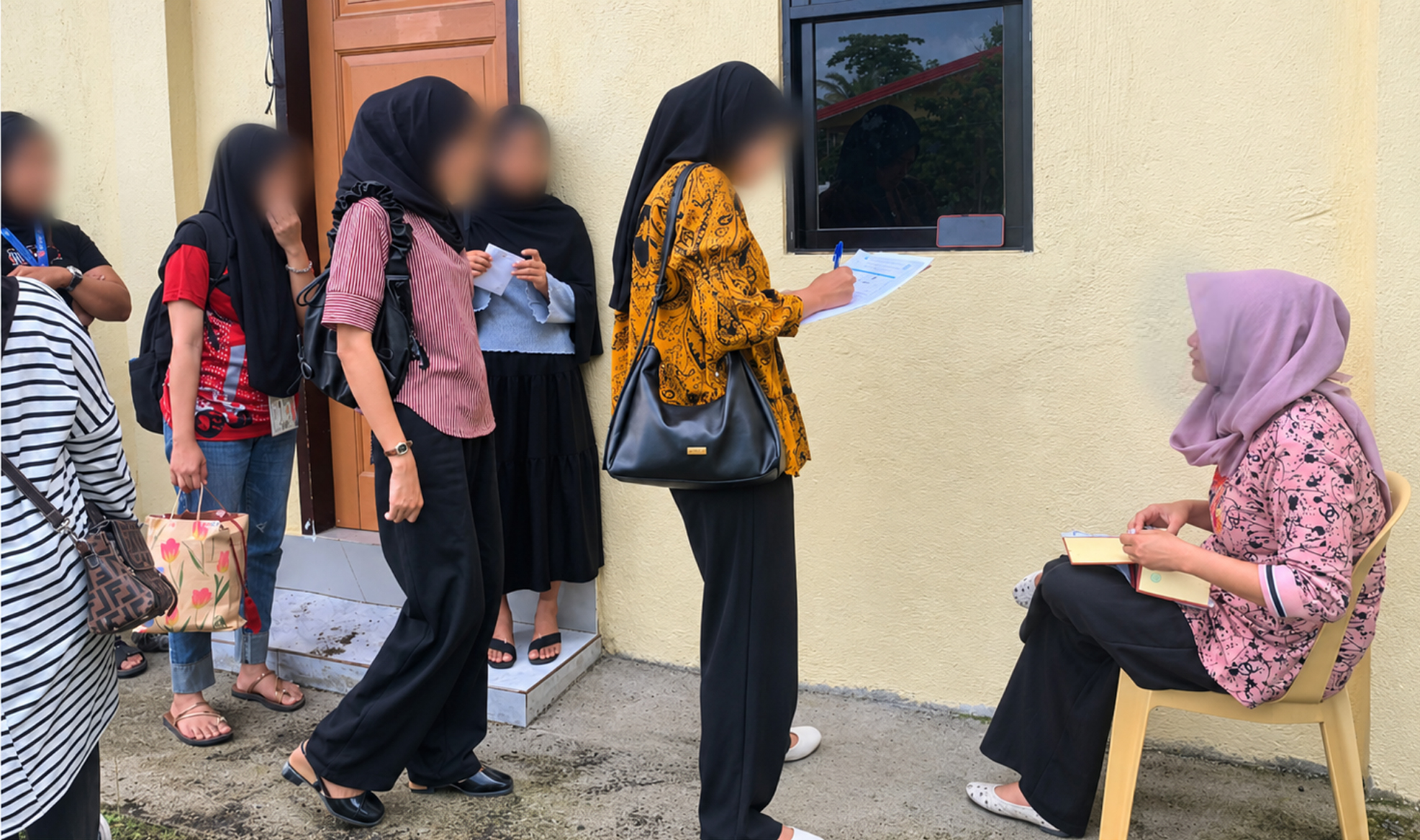
MSU–Maguindanao Facilitates Financial Assistance for Undergraduate Research Through Bangsamoro Parliament Support
Eighteen fourth-year students of Mindanao State University–Maguindanao (MSU–Maguindanao) received financial assistance from Bangsamoro Autonomous Region in Muslim Mindanao (BARMM) Member of Parliament Tomanda Antok, a former faculty member of the University, to support their undergraduate research activities for Academic Year 2025–2026.Students lining forThe assistance prioritized qualified students from the College of Agriculture, with ten beneficiaries, while two students each from the College of Fisheries, College of Forestry and Environmental Studies, College of Engineering and Computing Sciences, and College of Public Affairs and Governance also received support. The University facilitated the initiative by providing a list of qualified student beneficiaries, enabling the allocation of financial assistance to support their research-related academic expenses.The initiative reflects the importance of cooperation between higher education institutions and government representatives in addressing financial barriers to education. By supporting students in completing their undergraduate research, the assistance contributes to equitable access to quality tertiary education, inclusive learning opportunities, research capacity development, and reduced educational inequalities.MSU–Maguindanao remains committed to facilitating similar opportunities through continued engagement with government officials and other stakeholders, ensuring that financial constraints do not hinder students from pursuing academic excellence, research, and innovation.
November 5, 2025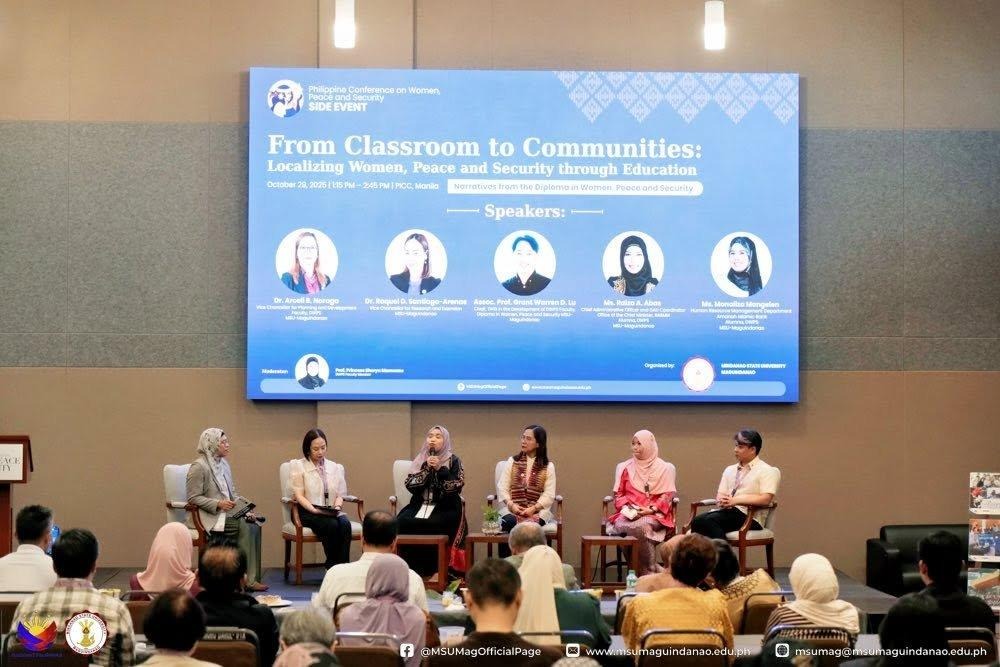
Mindanao State University–Maguindanao Convenes Side Event on Localizing Women, Peace and Security through Education at the 2025 Philippine Conference on WPS
Mindanao State University–Maguindanao convened a side event, "From Classroom to Community: Localizing Women, Peace and Security through Education," on October 29, 2025, at Summit Hall 2 of the Philippine International Convention Center in Pasay City. The side event was one of 20 held during the 2025 Philippine Conference on Women, Peace and Security (WPS), and it presented the University's Diploma in Women, Peace and Security (DWPS) as a model for bringing the WPS agenda into higher education in the Bangsamoro.University officials and faculty from planning, research and extension, and the DWPS Technical Working Group presented how WPS principles are built into the University's instruction, research, and extension. They explained that the DWPS curriculum draws on community knowledge, including guidance from community elders, so learning stays rooted in the Bangsamoro context, and that students and working professionals in the program produce policy papers and program designs addressing women's empowerment in their own organizations and communities.Speakers during the side event "From Classroom to Community: Localizing Women, Peace and Security through Education," Summit Hall 2, PICC, October 29, 2025.The University also presented its extension work providing climate-smart agriculture and economic empowerment opportunities to mothers and wives in MILF camps. The session closed with the launch of the DWPS learning book "Dialogue Beyond Borders: Reimagining Women, Peace, and Security through the Yogyakarta-Bangsamoro Experience," which documents the exchange of lessons between peace advocates from the Bangsamoro and Yogyakarta, Indonesia. Representatives from government, civil society, the financial sector, BARMM institutions, and DWPS alumni took part in the discussion.Launch of the DWPS learning book "Dialogue Beyond Borders: Reimagining Women, Peace, and Security through the Yogyakarta-Bangsamoro Experience," October 29, 2025.The side event placed a Bangsamoro model of WPS education before a national audience and produced a new learning resource for the program. By building the knowledge and capacity needed to remove the barriers that keep women, especially those in conflict-affected communities, from taking part in governance, peacebuilding, and economic life, the University empowers and promotes their social, economic, and political inclusion, ensures equal opportunity, and supports women’s full and effective participation and equal opportunities for leadership in public life, while advancing peaceful and inclusive societies.Speakers, University officials, and guests after the side event at Summit Hall 2, PICC.Building on the side event, the University aims to scale up the DWPS and expand its community extension work for women in MILF camps, making Mindanao State University–Maguindanao a regional hub for Women, Peace and Security education.
November 3, 2025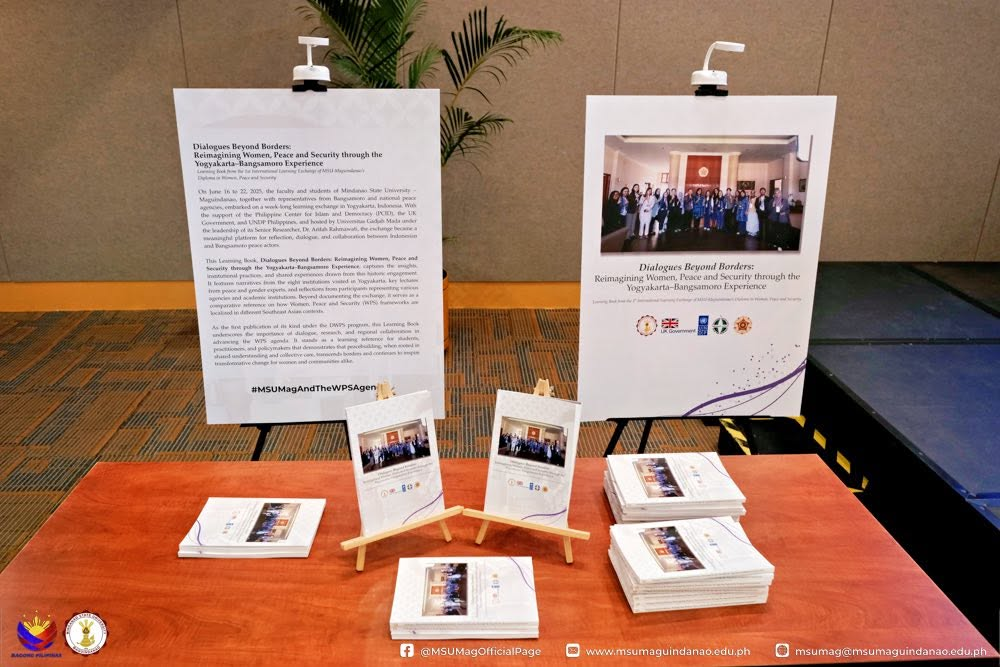
Research, Educational Resources, and Volunteer Work Advance Through 2025 Partnerships with PCID, ACERT, and LENTE
An educational framework for the Erumanen Menuvu Tribe, a peace curriculum and learning book, and voter education in 20 barangays came out of the 2025 work of Mindanao State University–Maguindanao with three non-government organizations, through research programmes, the development of educational resources, and volunteering. Its partners were the Philippine Center for Islam and Democracy (PCID), the Asian Center of Education, Research and Tutelage for Innovation, Inc. (ACERT), and the Legal Network for Truthful Elections (LENTE).Research ProgrammesIndigenous learners in many communities are taught with materials that do not reflect their language, customs, or way of life. Since May 2025, MSU–Maguindanao, ACERT, and MSU–Tawi-Tawi College of Technology and Oceanography have been developing an Indigenous Peoples Education Framework for the Erumanen Menuvu Tribe, under a Memorandum of Agreement signed on January 24, 2025. The ₱1,451,000 ($24,584 USD) project, funded by MSU–TCTO and ACERT, studies how the tribe’s knowledge and practices can be built into the education of its children, and will produce a terminal report and a manuscript for publication by February 2026.Development of Educational ResourcesPCID is a non-government organization that works for democracy, peace, and good governance in Muslim communities in the Philippines. It is the University’s key institutional partner in rolling out the Diploma in Women, Peace and Security (DWPS), which trains government personnel, civil society workers, and community leaders in women’s participation in peacebuilding. Together, the University and PCID developed and delivered the program’s curriculum and materials, which produced 31 graduates in its first cohort. The program’s learning book, “Dialogue Beyond Borders: Reimagining Women, Peace, and Security through the Yogyakarta-Bangsamoro Experience,” launched on October 29, 2025, at the Philippine Conference on Women, Peace and Security, documents the lessons that Bangsamoro and Indonesian peace advocates shared during the June 2025 learning exchange in Yogyakarta.The DWPS learning book, “Dialogue Beyond Borders: Reimagining Women, Peace, and Security through the Yogyakarta-Bangsamoro Experience,” was launched on October 29, 2025, at the Philippine Conference on Women, Peace and Security.Student Volunteering ProgrammesThe University volunteers with LENTE, a civil society network for clean and informed elections, under a Memorandum of Agreement on election monitoring that covers the 2025 Midterm Elections and succeeding elections. LENTE trains, equips, and supervises the volunteers, while the University coordinates their participation and ensures they stay nonpartisan. On September 27, 2025, ahead of the first Bangsamoro parliamentary elections, 15 Political Science faculty volunteered as Voter Education Champions with LENTE, the Commission on Elections, the United Nations Development Programme, and two BARMM ministries, explaining the new parliamentary system and voting procedures in 20 barangays of Datu Salibo, Datu Anggal Midtimbang, and Datu Odin Sinsuat. Thirteen BA Political Science students served as the secretariat of these sessions as an activity of their department.Asst. Prof. Ralph Darren Santillan, an MSU–Maguindanao Voter Education Champion in partnership with LENTE, leads residents through voting procedures in a barangay session, September 27, 2025.What the Partnerships Have ProducedThrough these partnerships, an education framework for an Indigenous community is being written with its partners, professionals across the Bangsamoro are learning from a jointly developed peace curriculum, and residents of 20 barangays received voter education, organized by Political Science faculty and their students, before the first parliamentary elections. The University aims to continue these partnerships, completing the education framework with the Indigenous community and its partners, bringing the peace curriculum to new learners, and preparing more student volunteers for voter education in future elections.
November 2, 2025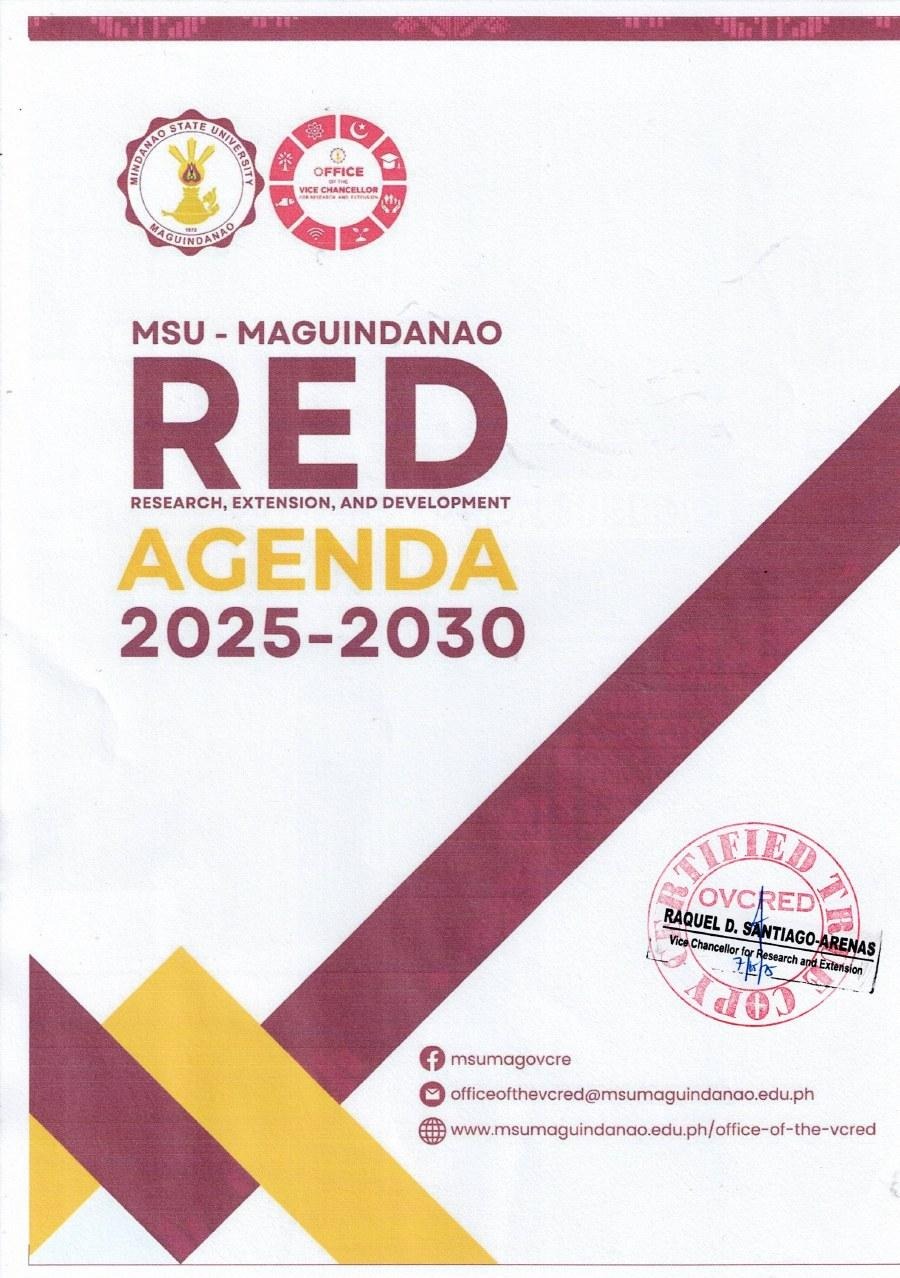
Mindanao State University–Maguindanao Sets Research Priorities on Peace, Governance, and Human Security in Its RED Agenda 2025–2030
Mindanao State University–Maguindanao adopted its Harmonized Research, Extension, and Development (RED) Agenda for 2025–2030, approved by the MSU Board of Regents through Resolution No. 245, s. 2025, at its 271st meeting on June 10, 2025. The agenda sets the priorities that guide the University’s research and extension for six years. Its stated objective is to generate new knowledge, sharpen the focus on priority research, extension, and development areas, harness emerging technologies, and apply evidence-based strategies that address the needs of communities and promote equitable regional development.Cover of the MSU–Maguindanao RED Agenda 2025–2030, issued by the Office of the Vice Chancellor for Research and ExtensionThe agenda covers eight research disciplines, 64 research agenda, and 362 research priorities: Agricultural Innovation and Sustainability; Aquatic Research, Resources, and Livelihoods; the Green Agenda; Governance for Inclusive Nation Building; Health Systems and Services; Inclusive Education for Sustainable Futures; Industry, Energy, and Emerging Technologies; and Women, Peace and Security, Indigenous, and Halal Studies. Each priority is mapped to the United Nations 2030 Agenda for Sustainable Development and to the national 8-Point Socioeconomic Agenda.Excerpt from the minutes of the 271st meeting of the MSU Board of Regents, June 10, 2025, approving the Harmonized RED Agenda through Resolution No. 245, s. 2025.Two of the eight disciplines direct research toward peace, justice, and strong institutions. Governance for Inclusive Nation Building, with 7 research agenda and 36 priorities, covers human security, the delivery of social services in BARMM, policy research, and the role of women and youth in governance, including youth political engagement in the BARMM parliamentary process, the participation of women and youth in barangay governance and local development planning, and the role of women and youth in implementing the Bangsamoro Organic Law. Women, Peace and Security, Indigenous, and Halal Studies, with 7 research agenda and 60 priorities, covers community-based peacebuilding, the effectiveness of existing peacebuilding initiatives, conflict resolution drawing on Islamic traditions and Indigenous mechanisms, BARMM security, ancestral domain conflicts, and women’s roles as peacebuilders. Across all disciplines, 32 research priorities are aligned with peace, justice, and strong institutions.The agenda was developed through consultation. The seven colleges identified their research and extension priorities during the Core Values Revisit and RED Agenda Revision workshop in Kitaotao, Bukidnon, August 8–10, 2024, attended by the Chancellor, Vice Chancellors, deans, directors, heads of offices, and student representatives. The draft was presented to parents, alumni, students, and representatives of the Ministry of Public Works, the Ministry of Health, the Integrated Provincial Health Office of Maguindanao, and the Rural Health Unit of Datu Odin Sinsuat at the Stakeholders’ Consultation Meeting on February 28, 2025, and refined by the Research and Extension Committee on May 8, 2025, before its submission to the Board of Regents.The Office of the Vice Chancellor for Research and Extension and the Research and Extension Committee coordinate implementation, and research and extension proposals are expected to align with the agenda’s priorities. By committing the University’s research to human security, inclusive governance, and peacebuilding, and by setting these priorities through consultation with communities and government agencies, the agenda supports evidence-based policy for effective, accountable, and inclusive institutions and contributes to reducing violence and sustaining peace in the Bangsamoro.Mindanao State University–Maguindanao will use the agenda to guide research and extension funding through 2030, report on the projects carried out under it, and review its priorities as the needs of the region change.
October 31, 2025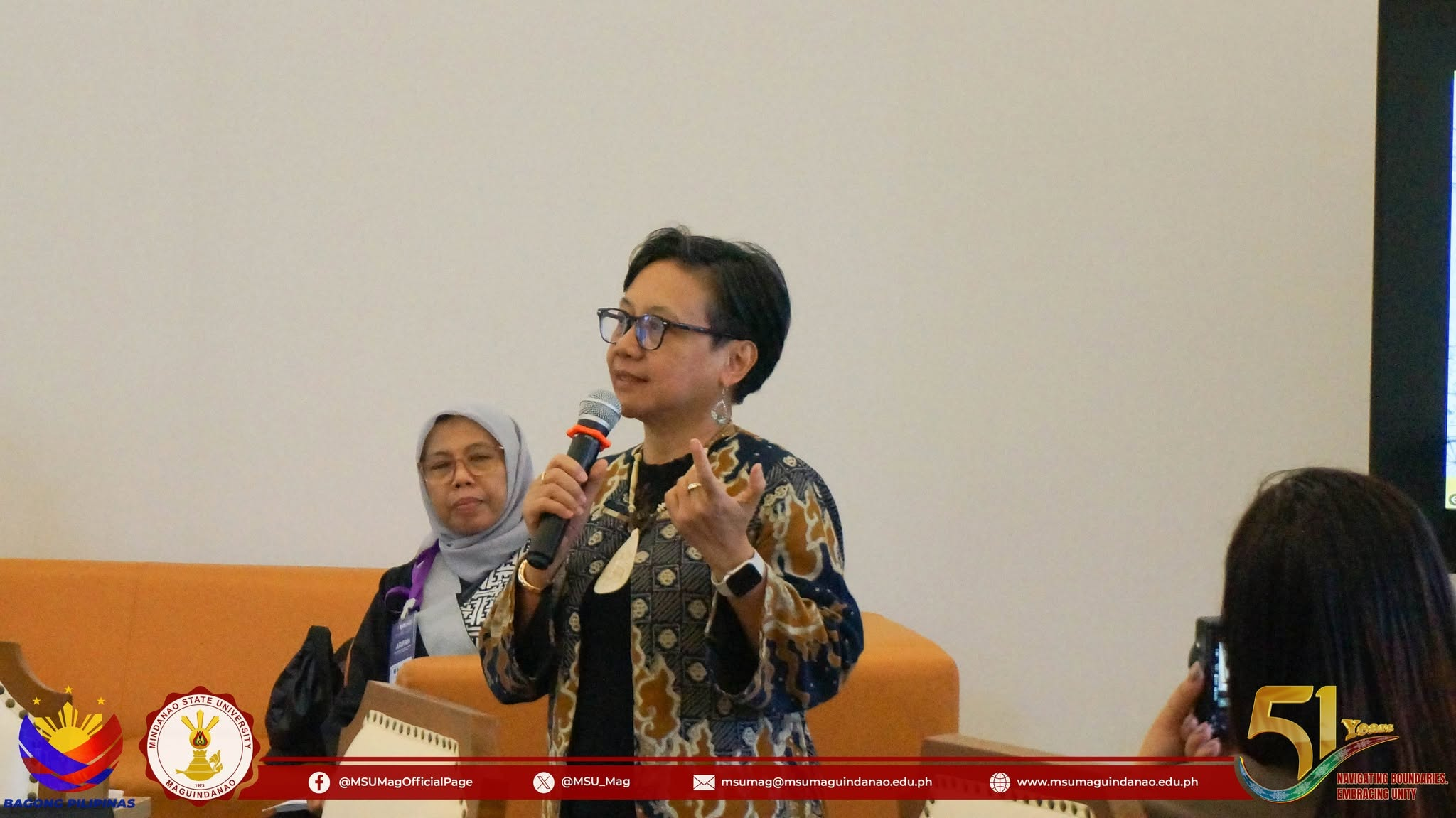
What Aceh Can Teach the Bangsamoro: A Yogyakarta Exchange and an EU-Funded Initiative Reshape How the University Teaches Peace and Gender Equality
Lessons from the Aceh peace process and from Indonesian campus programs against sexual violence and for gender mainstreaming now shape the Diploma in Women, Peace and Security (DWPS), after Mindanao State University–Maguindanao reviewed comparative approaches with three Indonesian universities in June 2025 and turned them into international best practice on peace and gender equality.Learning Exchange in YogyakartaThe DWPS trains government personnel, civil society workers, and community leaders in women’s participation in peacebuilding. Indonesia and the Bangsamoro share a recent history of peace negotiations in Muslim-majority regions, which makes Indonesia a useful comparison. From June 18 to 20, 2025, a delegation of 15 DWPS faculty and students, led by Vice Chancellor for Planning and Development Dr. Arceli B. Naraga on behalf of Chancellor Bai Hejira Nefertiti M. Limbona, held a learning exchange in Yogyakarta with the support of UNDP Philippines and the UK Government through the British Embassy Manila. The delegation also included the Philippine Center for Islam and Democracy (PCID), the University’s partner in rolling out the DWPS, the OPAPRU Center of Excellence on Women, Peace and Security, the Bangsamoro Women Commission, the Ministry of Public Order and Safety, and the Development Academy of the Bangsamoro.At Universitas Gadjah Mada (UGM), four Indonesian experts compared their country’s experience with the Bangsamoro’s. Prof. Hamid Awaluddin, former Minister of Law and Human Rights and chief negotiator of the Aceh peace process, spoke on lessons from Aceh. Dr. Sri Wiyanti Eddyono, Director of UGM’s Center for Law, Gender, and Society, discussed the gendered dimensions of violent extremism. Prof. Dr. Yayi Suryo Prabandari presented UGM’s Sexual Violence Prevention and Handling Task Force and its open online course on sexual violence. Dr. Arifah Rahmawati, Indonesia’s representative to the ASEAN Women for Peace Registry, explained Indonesia’s National Action Plan on Women, Peace and Security.Dr. Arifah Rahmawati, Indonesia’s representative to the ASEAN Women for Peace Registry (AWPR), compares peace process approaches with MSU–Maguindanao DWPS faculty and students at Universitas Gadjah Mada, June 18, 2025UGM panelists compare institutional responses to sexual and gender-based violence with the MSU–Maguindanao delegation.The exchange produced three formal partnerships. On June 18, Dr. Naraga and UGM Vice Rector for Education and Teaching Prof. Dr. Wening Udasmoro, representing Rector Prof. Dr. Ova Emilia, signed a three-year Memorandum of Understanding for joint work on women, peace and security and gender-responsive peacebuilding. On June 19, the University signed a second three-year Memorandum of Understanding with Universitas Muhammadiyah Yogyakarta (UMY) on peacebuilding, gender equality, inclusive education, and academic innovation. On June 20, at Universitas Ahmad Dahlan (UAD), faculty and students from UAD and Aisyiyah institutions shared their work on gender mainstreaming in higher education, community-based research and digital platforms for gender empowerment, and the role of male allies, and Dr. Naraga and UAD Vice Rector for Academic Affairs Prof. Ir. Sunardi, Ph.D., signed a third Memorandum of Understanding, witnessed by representatives of the British Embassy Manila, OPAPRU, UNDP Philippines, and the Bangsamoro Government.MSU–Maguindanao and Universitas Gadjah Mada representatives sign a partnership on women, peace and security, June 18, 2025.MSU–Maguindanao and Universitas Muhammadiyah Yogyakarta formalize cooperation on peace, gender equality, and academic innovation, June 19, 2025.From Comparison to Best PracticeThe DWPS team then turned the comparison into best practice. It documented the lessons in the learning book “Dialogue Beyond Borders: Reimagining Women, Peace, and Security through the Yogyakarta-Bangsamoro Experience,” launched on October 29, 2025, at the 2025 Philippine Conference on Women, Peace and Security in Pasay City. The book is now used in six DWPS courses and in three courses of the Master of Arts in Peace and Development Studies. The DWPS itself produced 31 graduates in its first cohort.The DWPS team launches the learning book “Dialogue Beyond Borders,” which turns the Yogyakarta-Bangsamoro comparison into teaching material, October 29, 2025.EU-Funded Initiative on Women, Peace and Security in Higher EducationThe comparison builds on a wider effort to bring international commitments on women, peace and security into higher education. On April 14, 2025, at the CHED Auditorium in Quezon City, Chancellor Limbona joined European Union Ambassador to the Philippines H.E. Massimo Santoro, CHED Chairperson Dr. J. Prospero E. De Vera III, and PCID President Amina Rasul-Bernardo at the launch of “Institutionalizing the Women, Peace and Security Agenda in Mindanao through Higher Education,” a two-year initiative grounded in United Nations Security Council Resolution 1325 on Women, Peace and Security and funded by the European Union and implemented by PCID, Mindanao State University, the UP Center for Women’s Studies Foundation, and the Department of Women and Development Studies of the University of the Philippines Diliman. The initiative strengthens the academic framework of the DWPS, builds the capacity of its faculty, and extends its reach through community training. In her remarks, the Chancellor described how the program builds conflict resolution skills among women leaders drawn from government, grassroots organizations, and civil society.The European Union, CHED, PCID, and MSU officials launch the EU-funded initiative to institutionalize the Women, Peace and Security agenda through higher education in Mindanao, CHED Auditorium, Quezon City, April 14, 2025.The DWPS now teaches tested Indonesian approaches to women’s participation and sexual violence prevention to the professionals it trains in the Bangsamoro, and the three agreements and the EU-funded initiative give the University a standing framework for joint research and exchange. Under its agreements with UGM, UMY, and UAD, the University aims to pursue joint research and exchange on women, peace and security, while the EU-funded initiative continues to support DWPS faculty development and community training during its two-year run.Lessons Now in the ClassroomThe DWPS now teaches tested Indonesian approaches to women’s participation and sexual violence prevention to the professionals it trains in the Bangsamoro, and the three agreements and the EU-funded initiative give the University a standing framework for joint research and exchange. Under its agreements with UGM, UMY, and UAD, the University aims to pursue joint research and exchange on women, peace and security, while the EU-funded initiative continues to support DWPS faculty development and community training during its two-year run.
October 30, 2025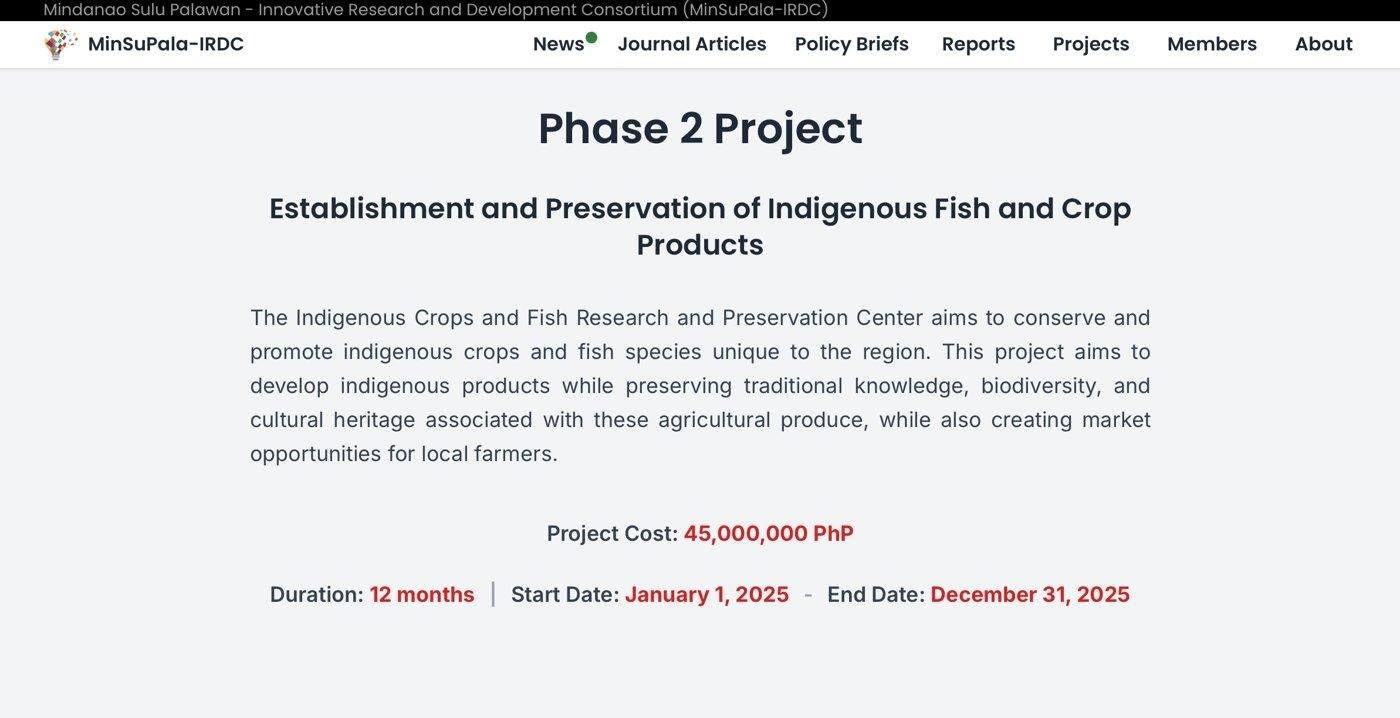
MSU–Maguindanao-led MinSuPala–IRDC presents research findings and policy recommendations to five Central Mindanao LGUs
Mindanao State University–Maguindanao (MSU–Maguindanao), as lead institution of the Mindanao–Sulu–Palawan Innovative Research and Development Consortium (MinSuPala–IRDC), presented research findings and policy recommendations to the local government units (LGUs) of Cotabato City, Kabuntalan, Northern Kabuntalan, Talitay, and Datu Piang in October 2025. The consultations were part of the consortium’s Phase 2 project, “Establishment and Preservation of Indigenous Fish and Crop Products,” backed by ₱45 million from the Department of Budget and Management (DBM).MinSuPala–IRDC unites 14 member institutions, including state universities and colleges from Sulu, Tawi-Tawi, and Basilan, with MSU–Maguindanao as its institutional base. In July 2025, the University’s team convened coordination meetings with the five LGUs and surveyed community leaders, farmers, and fisherfolk to identify the indigenous crops and fish species most worth conserving and developing.MinSuPala–IRDC Phase 2 Project: Establishment and Preservation of Indigenous Fish and Crop Products, implemented from January to December 2025 with ₱45 million in DBM funding.In October 2025, the team presented its 2024 assessments of water quality, inland fisheries, and watersheds, together with policy recommendations, to each LGU. Local officials, barangay representatives, and community stakeholders validated the findings. They agreed on shared priorities: gabi (taro) and okra as priority crops, and haluan, native katipa, and popoyu as priority indigenous fish.By bringing a national government agency, state universities, local governments, and communities into one dialogue, the initiative promotes effective public and civil society partnerships and strengthens policy coherence for sustainable development. It equips the five LGUs with reliable, locally generated data to guide their development planning, while helping maintain the genetic diversity of indigenous crops and the traditional knowledge associated with them.The consortium advances to Phase 3 in 2026 to develop and commercialize products from the priority crops and fish, turning the communities’ choices into new sources of livelihood.MinSuPala–IRDC Phase 3 Project: Product Development and Commercialization of Indigenous Crop and Fish Products, January to December 2026.
October 23, 2025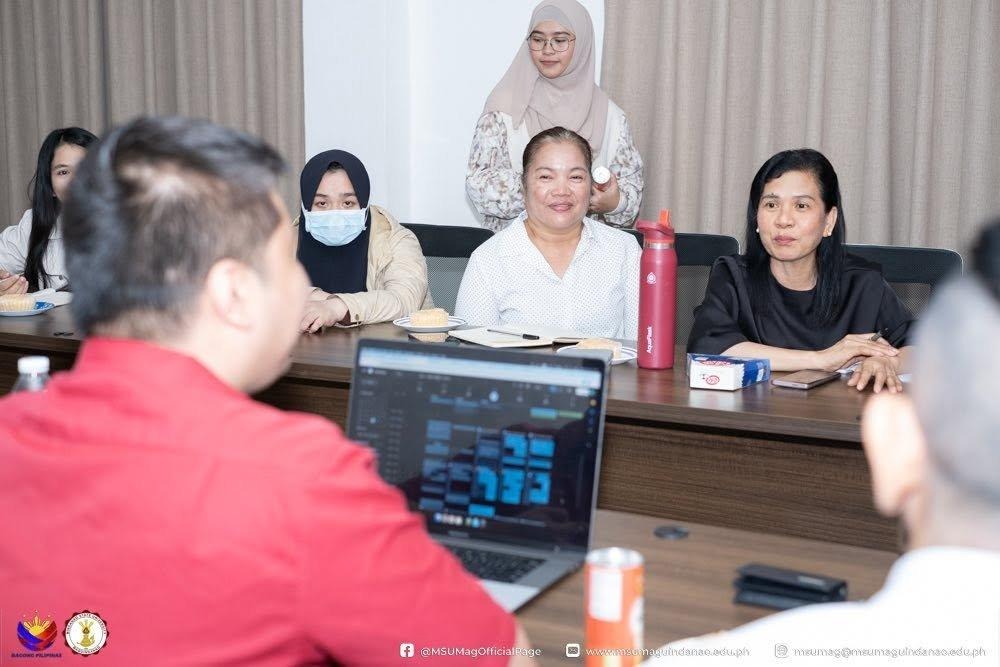
MSU–Maguindanao, JICA, and Zuitt explore industry-aligned engineering and computing education for BARMM
Mindanao State University–Maguindanao (MSU–Maguindanao) convened a consultative meeting with the Japan International Cooperation Agency (JICA) and Zuitt Learning Institute, Inc. on October 30, 2025, to define areas of collaboration under the Industry Development through Engineering Education in BARMM initiative. The Vice Chancellor for Academic Affairs and the program chairs of the College of Engineering and Computing Sciences (COECS) represented the University. MSU–Maguindanao, JICA, and Zuitt Learning Institute representatives discuss industry-aligned engineering and computing education on October 30, 2025.The three partners identified laboratory instruction as the first area for collaboration. JICA contributed an international development cooperation perspective, while Zuitt shared industry insight on the technical competencies technology employers expect, so that CECS laboratory courses can integrate industry-based applied lessons and technical training.MSU–Maguindanao representatives and partner stakeholders during the consultative meeting for the Industry Development through Engineering Education in BARMM initiativeBy bringing an international development agency and a private technology education provider into dialogue with the University, the initiative draws on international support for targeted capacity-building and promotes public-private partnerships that share knowledge and expertise. It aims to increase the number of young people in the Bangsamoro with the technical skills needed for employment and decent work.MSU–Maguindanao aims to translate the consultation into curriculum enhancement, technical training, and laboratory activities that make industry collaboration a lasting part of engineering and computing education at the University.
October 23, 2025