SDG16
Mindanao State University–Maguindanao Hosts the Inaugural PPSA President’s Lecture Forum and Signs Partnership with the Philippine Political Science Association
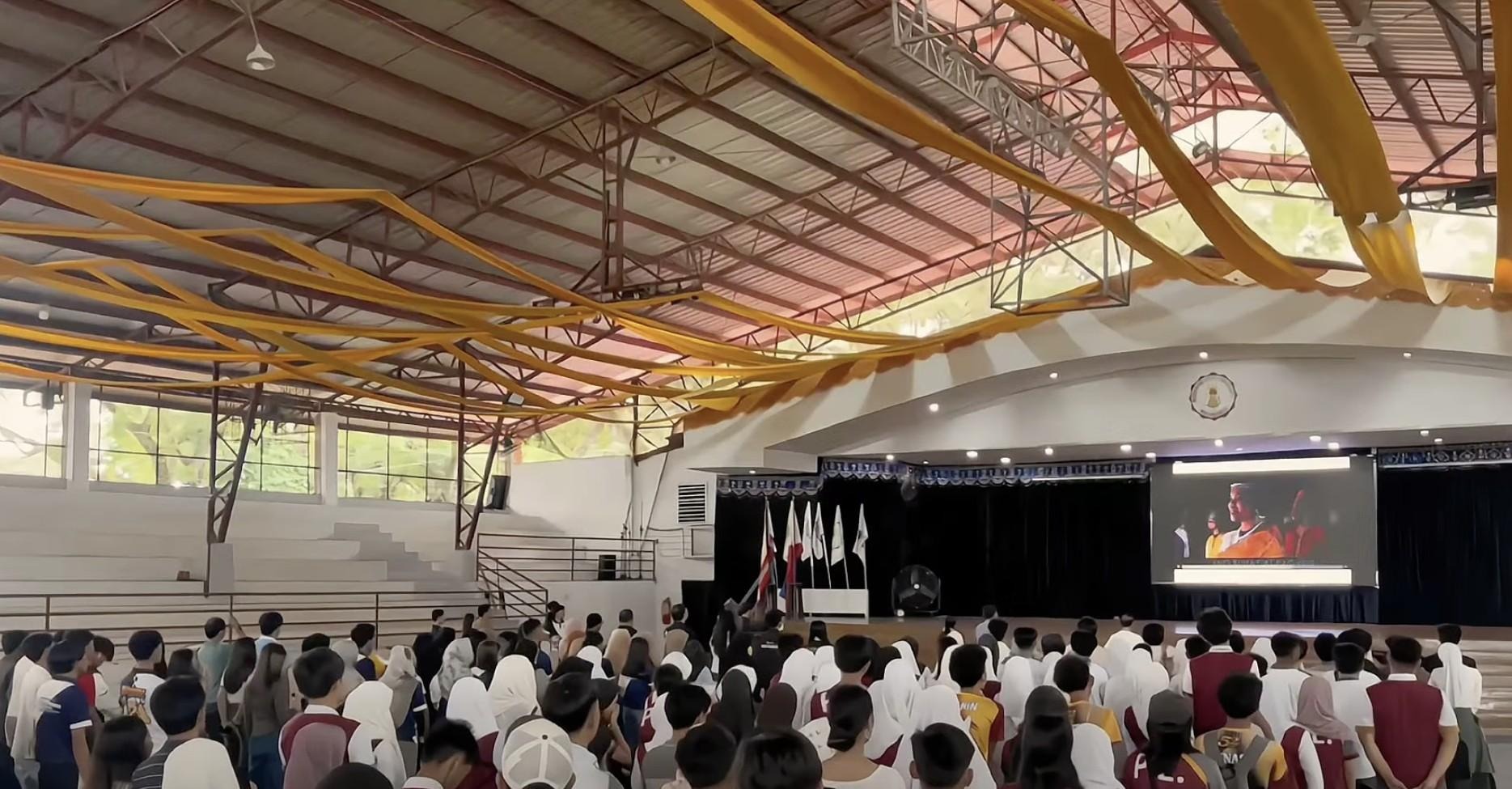
Mindanao State University–Maguindanao, through the BA Political Science Program of the College of Arts and Sciences, hosted the 1st PPSA President’s Lecture Forum on November 14, 2025. The forum was the inaugural installment of the Mindanao Caravan of the Philippine Political Science Association (PPSA), a nationwide initiative to strengthen academic collaboration and discourse in the political science community in Mindanao and across the country, and MSU–Maguindanao was the first institution in the Philippines to host it. Guided by the theme “From a firm commitment to advancing democracy in the Philippines,” the forum brought together scholars, leaders, and students to examine governance, democratic consolidation, and the future of political leadership.Students, faculty, and Grade 12 learners from partner schools at the opening of the forum, Datu Odin Sinsuat GymnasiumThe forum responded to persistent challenges to strong and accountable institutions in the country and in the Bangsamoro, including political dynasties, patronage politics, and corruption. It aimed to help students analyze these problems critically and understand what responsible political participation and ethical leadership require.The keynote lecture, “Delving into the Intricacies of Philippine Politics and Governance,” was delivered by Prof. Dennis C. Coronacion, PhD, PPSA President from 2021 to 2023 and Chairperson of the Department of Political Science of the University of Santo Tomas. He examined the key challenges confronting Philippine democracy, particularly political dynasties, patronage politics, and persistent corruption, and stressed that these interlocking problems must be addressed to strengthen the country’s democratic institutions and political culture. Three PPSA presidents attended the forum: current President Dr. Reynold D. Agnes of Far Eastern University, and former Presidents Dr. Coronacion and Dr. Jan Robert R. Go of the University of the Philippines Diliman. In his inspirational message, Dr. Agnes reminded the students that “to achieve clean politics, clean people should directly engage in politics,” and urged political science students who uphold integrity, honesty, and ethical leadership to become leaders who can raise the standards of Philippine governance.Chancellor Bai Hejira Nefertiti M. Limbona, PhD, affirmed that the University, particularly through its BA Political Science program, will continue to equip future leaders with the competence, character, and commitment needed to advance democratic governance and peacebuilding in Mindanao and the country. The University and the PPSA then signed a Memorandum of Understanding that formalizes a long-term partnership in academic excellence, research, faculty development, and student engagement in political science.Ceremonial signing of the Memorandum of Understanding between Mindanao State University–Maguindanao, represented by Chancellor Bai Hejira Nefertiti M. Limbona, PhD, and the Philippine Political Science Association, represented by PPSA President Dr. Reynold D. Agnes, with University officials and guest scholars.Faculty members and students of the Political Science Department of Ateneo de Davao University took part in the forum, as did Grade 12 students from the MSU–Maguindanao Integrated Laboratory High School, Talayan National High School, Guindulungan National High School, and Datu Mantato National High School, who were invited to give them early exposure to political science as a pathway to public service. Faculty and students of the BA Political Science Program served as the working committee.By opening a forum where students, scholars, and the national association of political scientists could discuss corruption, patronage, and political dynasties openly and critically, the University supports efforts to substantially reduce corruption and to develop effective, accountable, and transparent institutions. Forming young people, including senior high school students from neighboring towns, in integrity-driven leadership also promotes responsive, inclusive, and participatory decision-making in the Bangsamoro and the country.Under the new Memorandum of Understanding, MSU–Maguindanao and the PPSA will pursue joint lectures, research, and faculty development, and the University will continue to form political science scholars and future public servants grounded in democratic values and ethical leadership.
December 18, 2026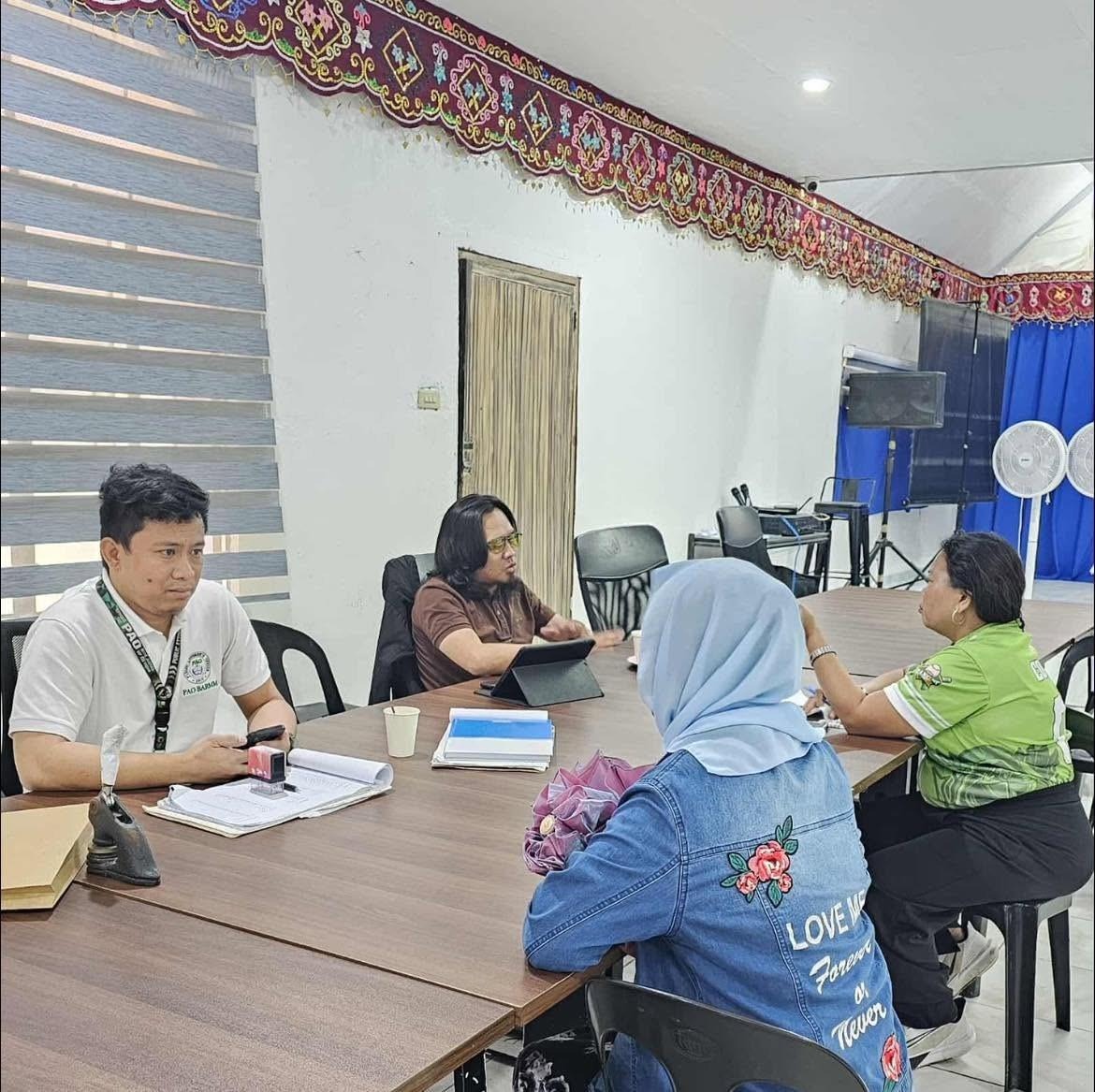
Mindanao State University–Maguindanao College of Law Provides Free Legal Consultation and Notarization Services to University Personnel
The College of Law of Mindanao State University–Maguindanao provided free legal consultation and notarization services to faculty, administrative personnel, and other University constituents on October 7, 2025, at Training Center Hall A. The activity aimed to improve access to legal assistance, raise awareness of legal rights and remedies, and reduce the cost and difficulty that often keep people from seeking legal help for everyday concerns.A lawyer consults with a client during the free legal consultatioA total of nine (9) faculty members of the College of Law, together with partner lawyers from the Integrated Bar of the Philippines (IBP) Cotabato Chapter, met clients one-on-one throughout the day. They gave advice on personal and work-related legal concerns, explained clients’ rights, obligations, and the remedies available to them, and notarized documents at no cost. The service was organized so that legal help would be accessible and responsive to the varied needs of the University community, from faculty and administrative staff to other constituents who rarely have the time or means to consult a lawyer. By offering free legal advice and services, the College of Law promotes equal access to justice and helps University constituents understand and assert their rights under the law. The activity turns the College’s academic and professional expertise into a direct public service and strengthens a culture of respect for the rule of law within the University community.The College of Law will hold free legal consultations regularly and extend them to communities beyond the campus through its Kasaligan Law Clinic.
November 16, 2026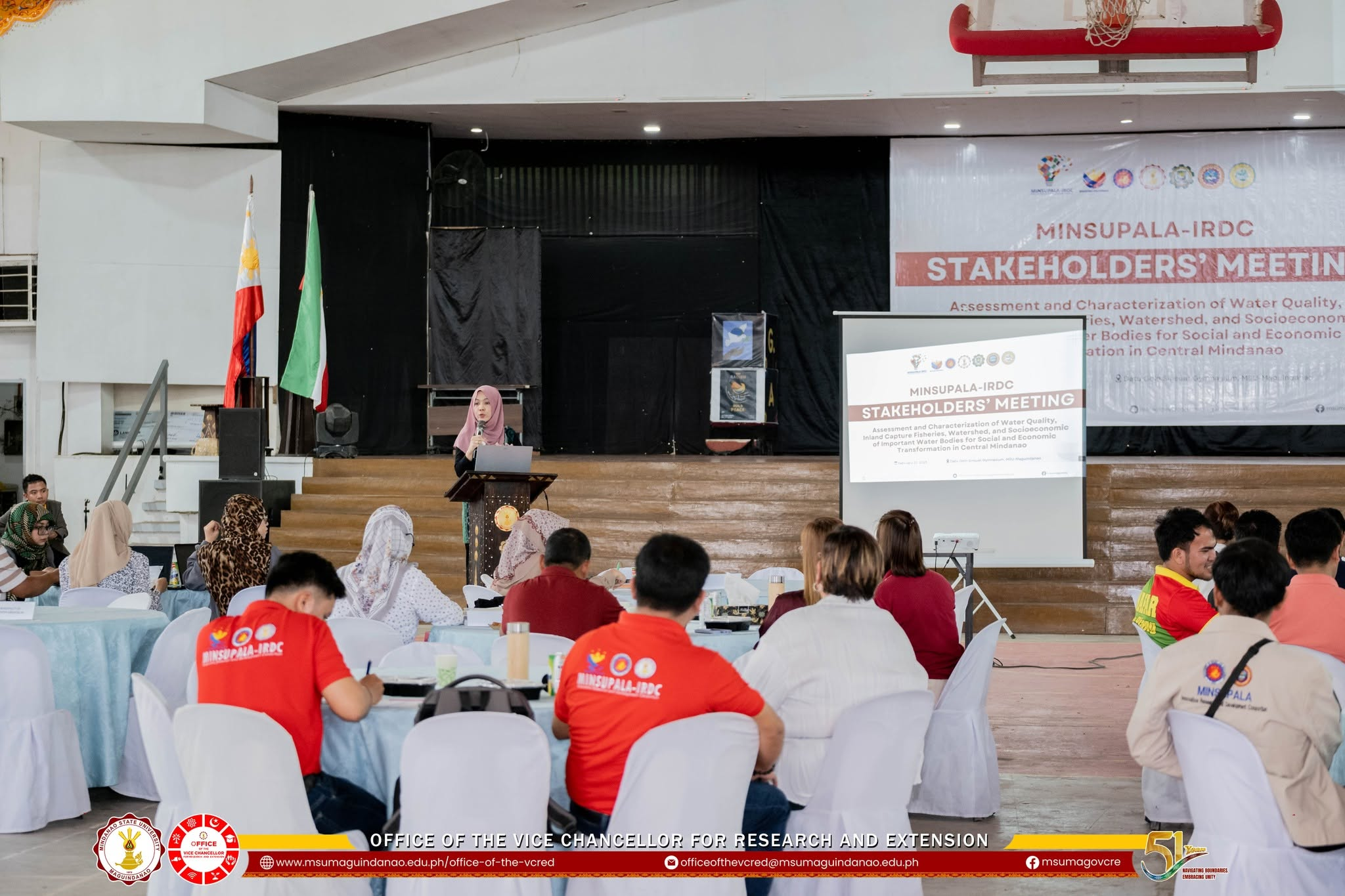
University Research Shapes Policy on Water, Peace Education, and Camp Livelihoods
Data on the water, fisheries, and livelihoods of 930 residents around Ligawasan Marsh became five policy recommendations that local governments validated in October 2025, as Mindanao State University–Maguindanao gave national and Bangsamoro government direct input into policy development on sustainable development, from identifying problems to monitoring interventions. Its research and extension teams helped the Department of Budget and Management (DBM), the Office of the Presidential Adviser on Peace, Reconciliation and Unity (OPAPRU), BARMM ministries, and local governments identify problems and challenges, develop policies and strategies, and monitor and report on interventions.Identifying Problems and ChallengesThe largest of these efforts runs through the Mindanao–Sulu–Palawan Innovative Research and Development Consortium (MinSuPala–IRDC), a network funded by the Department of Budget and Management (DBM) and led by MSU–Maguindanao. Local governments around the major water bodies of Central Mindanao had little local data on the condition of their rivers, marshes, and fisheries. In the consortium’s first phase, the University’s ₱5,000,000 (about US$87,300) component assessed water quality, inland capture fisheries, watershed conditions, and the livelihoods of 930 residents around Ligawasan Marsh, working with the Ministry of Environment, Natural Resources and Energy (MENRE), the Ministry of Agriculture, Fisheries and Agrarian Reform (MAFAR), and the local governments of Cotabato City, Kabuntalan, Northern Kabuntalan, Talitay, and Datu Piang, and produced five policy recommendations. The University then led Phase 2, “Establishment and Preservation of Indigenous Fish and Crop Products,” carried out by nine member institutions from January to December 2025. DBM funds each phase of the consortium’s work at ₱45,000,000 (about US$786,000), of which the University’s Phase 2 component received ₱10,000,000 (about US$174,700).The network itself has grown to reach more of the region. On November 13, 2023, at the Department of Budget and Management Region XI office in Davao City, MSU–Maguindanao and the existing members signed a Memorandum of Agreement admitting state universities and colleges in Sulu, Basilan, and Tawi-Tawi, extending the consortium’s research on the region’s waters and resources to the island provinces. The consortium now has 14 member state universities and colleges.The consortium first tested its findings with the agencies that would use them. On February 27, 2025, MSU–Maguindanao hosted the MinSuPala–IRDC Stakeholders’ Consultation, where research teams from MSU–Maguindanao, the University of Southern Mindanao–Kidapawan City Campus, Cotabato State University, and Adiong Memorial State College presented their assessments of water quality, fisheries, watershed conditions, and socio-economic conditions in Ligawasan Marsh, Lake Buluan, the Rio Grande de Mindanao, and Lake Lanao. Representatives of the Ministry of Agriculture, Fisheries and Agrarian Reform–BARMM, the Bangsamoro Planning and Development Authority, the Department of Science and Technology–PCAARRD, the Provincial Environment, Natural Resources and Energy Office of Maguindanao, environmental organizations, fisherfolk associations, and the local governments of Datu Piang, Talitay, Northern Kabuntalan, Cotabato City, Mangudadatu, and Sultan Kudarat discussed the findings, aligned them with local conservation and resource management plans, and helped shape the policy recommendations for conserving and managing these water bodies.Chancellor Limbona delivers her message to government agencies, local governments, and fisherfolk associations at the Stakeholders’ Consultation, Datu Odin Sinsuat Gymnasium, February 27, 2025.The University’s Phase 2 team is set out in Special Order No. 234, s. 2025, issued by Chancellor Bai Hejira Nefertiti M. Limbona on September 23, 2025. Dr. Raquel D. Santiago-Arenas serves as Project Coordinator over four projects: Nutritional Analysis, led by Asst. Prof. Always A. Germo; Market Potential and Value Chain Analysis, led by Asst. Prof. Irene S. Aquino; Agronomic Practices Assessment, led by Mr. Dominic B. Masecambo; and Establishment of Demo Farm and Knowledge Materials, led by Mr. John Louie C. Natan. Dr. Joel C. Arenas, Dr. Ramjie Y. Odin, and Engr. Bai Aljannah S. Macalandong served as a consultant.Developing Policies and StrategiesIn July 2025, the Phase 2 team led by Asst. Prof. Irene S. Aquino held coordination meetings with the five local governments and conducted key informant interviews with fisherfolk, farmers, and cooperatives to identify the native crops and fish most worth conserving. In October 2025, a team led by Mr. John Louie C. Natan, Study Leader of Inland Capture Fisheries, with technical support from Ms. Rhea Mae C. Talaron, presented the Phase 1 results and policy recommendations to each local government and its barangays. Cotabato City, under Mayor Mohammad Ali Matabalao, was represented by Agriculture Technologist Ms. Priyanka B. Saji-Sabpeten; Kabuntalan, under Mayor Datu Sharif Diocolano, by Municipal Administrator Mr. Efrel Oric Midtimbang; Datu Piang, under Mayor Victor Samama, by Executive Assistant Ms. Sherriejean S. Ampatuan; Talitay, under Mayor Sidik Amiril, by MAFAR Municipal Officer Mr. Dasib Mendato; and Northern Kabuntalan, under Mayor Datu Umbra Diocolano, by Administrator Mr. Allan Cando. Local officials, barangay representatives, and community members validated the findings and chose gabi (taro) and okra as priority crops, and haluan, native katipa, and popoyu as priority indigenous fish; each local government affirmed its readiness to work with the consortium on Phase 2.The MinSuPala–IRDC project page documents the DBM-funded work that MSU–Maguindanao leads with five Central Mindanao local governments, 2025The same steps, from identifying a problem to recommending a policy, guided a second project in the uplands. Funded by the Ministry of Science and Technology–BARMM with ₱1,199,418 (about US$20,950), it ran from June 2024 to July 2025 with MENRE and the LGU of Upi. The College of Forestry and Environmental Studies characterized the South Upi Forest Watershed and assessed its vulnerability to landslides, providing MENRE and the municipality with a watershed vulnerability map and policy recommendations for managing the area.Policy input also runs through national development agencies. On July 30, 2025, Chancellor Limbona, who chairs the consortium, and DBM Region XII Director Akmad J. Usman, its Executive Director, paid a courtesy visit to Secretary Leo Magno of the Mindanao Development Authority (MinDA) and held an exploratory meeting with Executive Director Janet M. Lopoz on working together on a Mindanao Forum on Waters and Natural Resources. MinDA Director III Olie B. Dagala of the Investment Promotions and Public Affairs Office and Chief Public Relations Officer Dr. Adrian Tamayo attended, with Vice Chancellor Raquel D. Santiago-Arenas and Ms. Aljannah Macalandong of the University. The meeting led to the 1st Mindanao Forum on Waters and Natural Resources in General Santos City from November 26 to 28, 2025, where the consortium turned over its Phase 1 reports and published books to Director Usman and DBM XII, moving its research from outputs to policy application.Chancellor Limbona and DBM Region XII Director Akmad J. Usman meet MinDA Secretary Leo Magno and Executive Director Janet M. Lopoz, July 30, 2025The University also gave the national legislature direct input on peace education policy. On September 16, 2025, Chancellor Limbona, with DWPS Technical Working Group Chairperson Grant Warren Lu and DWPS faculty members Dr. Arceli B. Naraga and Ms. Aljannah Macalandong, submitted the University’s position paper to the House Committee on Higher and Technical Education at its 2nd regular meeting, which deliberated on House Resolution No. 160 commending the MSU Board of Regents and MSU–Maguindanao for pioneering the Diploma in Women, Peace and Security. The position paper presented the program as a model of peace-oriented higher education that other institutions could replicate. Committee Chairperson Rep. Jude Acidre thanked the University for its work in peace education, and Vice Chairperson Rep. Eulogio R. Rodriguez sponsored the resolution for adoption. The resolution remains pending in the House.Chancellor Limbona submits the University’s position paper on the Diploma in Women, Peace and Security to the House Committee on Higher and Technical Education, September 16, 2025.Strategies also depend on the officials who carry them out. On August 12, 2025, at the Institute of Management, Chancellor Limbona and Regis Chapman, Representative and Country Director of the United Nations World Food Programme (WFP), signed a Memorandum of Agreement for a 2025–2027 partnership under which the University contributes experts in food systems, climate adaptation, and gender-responsive programming to help priority barangays prepare Local Climate Change Adaptation Plans and to strengthen farmer cooperatives, while WFP provides technical resources and exchange visits. Under this partnership, in September 2025, University extension staff Sarah Jane Mokamad, Lahmudin Abdulhadi, and Jona Fabay trained 30 MAFAR municipal officers and agricultural extension workers in a WFP-funded Training of Trainers. Each participant drafted a six-month action plan to strengthen farmer cooperatives in their municipality.Chancellor Bai Hejira Nefertiti M. Limbona and WFP Country Director Regis Chapman sign the 2025–2027 partnership on food security and climate resilience, Institute of Management, August 12, 2025.Monitoring and Reporting on InterventionsThe Humanitarian and Development Assistance Program (HDAP) was set up in 2016 under the former Autonomous Region in Muslim Mindanao to bring health, education, social welfare, infrastructure, livelihood, and governance projects to war-affected towns, and its unfinished projects passed to the Bangsamoro Planning and Development Authority (BPDA) after the transition to BARMM. College of Public Affairs and Governance faculty Tahir K. Salipada, Sajid P. Abdula, and Datuali Paguital Abdula evaluated the program with Khairon A. Sura of the BPDA. They surveyed 100 beneficiaries, 50 each in Mamasapano and Datu Saudi Ampatuan. They found that the program had an extensive impact on social services, economic services, and peace and governance, but that delivery was delayed by local peace and order conditions (Edelweiss Applied Science and Technology, Vol. 9, No. 6, 2025).For OPAPRU’s camp transformation program, part of the Normalization Track of the Comprehensive Agreement on the Bangsamoro, the University implemented ₱32.36 million (about US$565,200) in livelihood projects in Camps Badre, Omar, and Abubakar. In 2024, beneficiaries first completed a Values Transformation Training funded by the Bangsamoro Development Agency before their technical training. On June 18, 2025, with OPAPRU, the University turned over the Camp Abubakar projects, including a newly constructed kitchen facility for the Calagan Women’s Marketing Cooperative and the Gawad Kalinga Village Togaig Farmer’s Marketing Cooperative, supporting women-led enterprise and the reintegration of decommissioned combatants. Officials of the Office of the Special Assistant to the President, OPAPRU, and the Philippine Marine Corps, together with the municipal government of Barira and the Camp Abubakar MILF camp coordinators, witnessed the turnover. The community kitchens built in the other camps were completed in 2025 and are scheduled for turnover. After the training, the University holds Kamustahan sessions, follow-up check-ins with the cooperatives, as its mechanism for monitoring the projects, and it reports on them with OPAPRU and the Joint Task Forces on Camps Transformation. The newly turned over kitchen facility in Camp Abubakar, Barira, Maguindanao del Norte, on June 18, 2025.From Recommendations to Policy, and What Comes NextAs a result, five local governments now hold validated priorities for conserving their indigenous crops and fish, MENRE has a hazard map for the South Upi watershed, the regional planning authority has field evidence on why its assistance was delayed, and the House Committee on Higher and Technical Education has the University’s position on peace-oriented higher education. The consortium carries this work into Phase 3 in 2026, which will develop and market products from the priority crops and fish. Through its 2025–2027 partnership with WFP, the University will also continue to help priority barangays prepare local climate change adaptation plans, and its Kamustahan sessions will keep track of the camp livelihood projects so that they stay productive for the cooperatives that run them.
December 20, 2025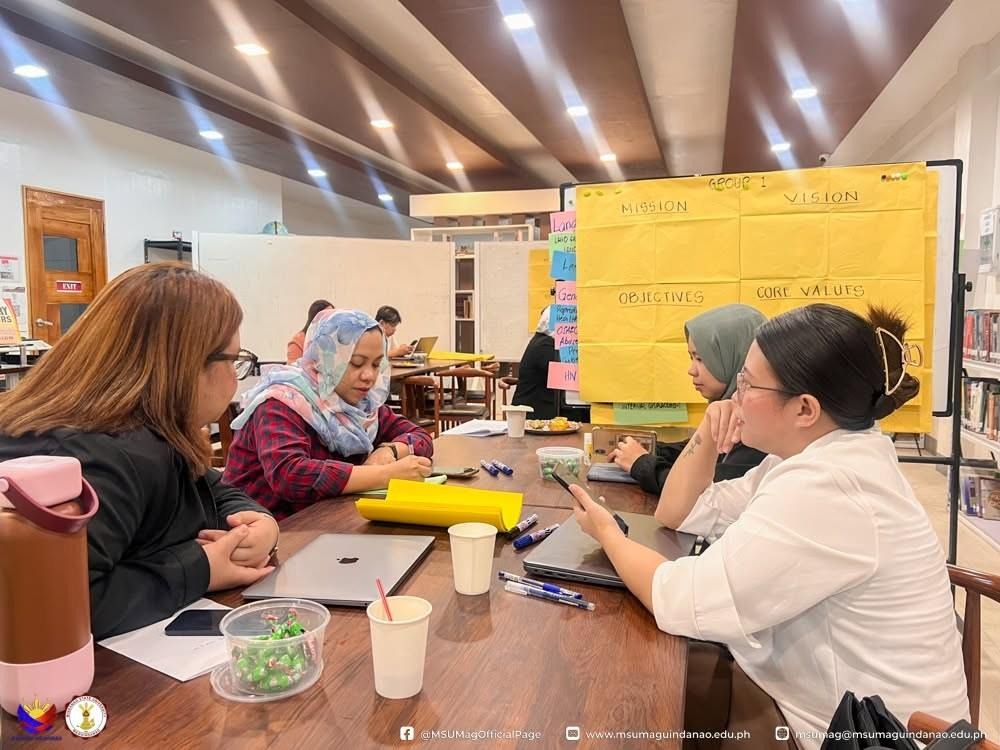
Mindanao State University–Maguindanao College of Law Charts the Direction of Its Kasaligan Law Clinic to Bring Legal Aid to Underserved Communities
The College of Law of Mindanao State University–Maguindanao, through its Clinical Legal Education Program (CLEP), held a strategic planning workshop for its Kasaligan Law Clinic on November 14 and 15, 2025. The workshop set the clinic’s directions, service priorities, partnerships, and measurable targets as the College prepares to deliver legal education, assistance, and community-based legal services in the Bangsamoro.Strategic planning session for the Kasaligan Law Clinic, November 2025.The clinic responds to a persistent gap in the region: many residents, particularly in poor, rural, and conflict-affected communities, cannot afford a lawyer or do not know where to bring their legal concerns. Under the Clinical Legal Education Program, law students who have completed the required coursework may provide legal assistance under the supervision of practicing lawyers, giving communities access to legal help while giving students practical training.The two-day planning was guided by facilitators Assoc. Prof. Grant Warren Lu, Ms. Honey Grace Magsayo, and Mr. Yusseph Untong. On the first day, participants mapped the most pressing legal and social issues affecting Maguindanao and nearby cities, so that the clinic would be built around real community needs. They also studied the work of the Sambatan Law Clinic as a reference model and began framing the clinic’s vision, mission, objectives, and name. On the second day, they finalized the vision, mission, and objectives, agreed on common ground, and named the clinic after pitching and refining the proposed concepts. They then mapped the roles and responsibilities of those who will run it, reviewed its organizational structure, and drafted its first six-month action plan.The strategic planning was attended by University and College of Law officials: MSU–Maguindanao Chancellor Dr. Bai Hejira Nefertiti M. Limbona; Vice Chancellor for Planning and Development Dr. Arceli Naraga; Director of the Human Resource Management Office Dir. Genuine M. Uko-Malim; Assistant Dean for the Clinical Legal Education Program Atty. Joanah Alinog-Disocor; Assistant Dean of the MSU College of Law–Maguindanao Extension Atty. Lorevera Krishna A. Alcober; and Law Student Government Adviser Atty. Rojean C. Romanes. Ms. Naila Muti, Secretary of the MSU College of Law–Main Campus, and Ms. Alnaira Amer, an officer of the Sambatan Law Clinic, also took part, together with faculty and staff of the College of Law–Maguindanao Extension, partner agencies, and selected law students.By building a permanent clinic through which supervised law students and lawyers serve people who cannot afford legal help, the University promotes the rule of law and equal access to justice for all. The clinic also prepares future lawyers for public service in the Bangsamoro, strengthening the justice institutions of the region.The College of Law will open the Kasaligan Law Clinic to communities in BARMM and report regularly on the clients it serves and the cases it handles.
December 3, 2025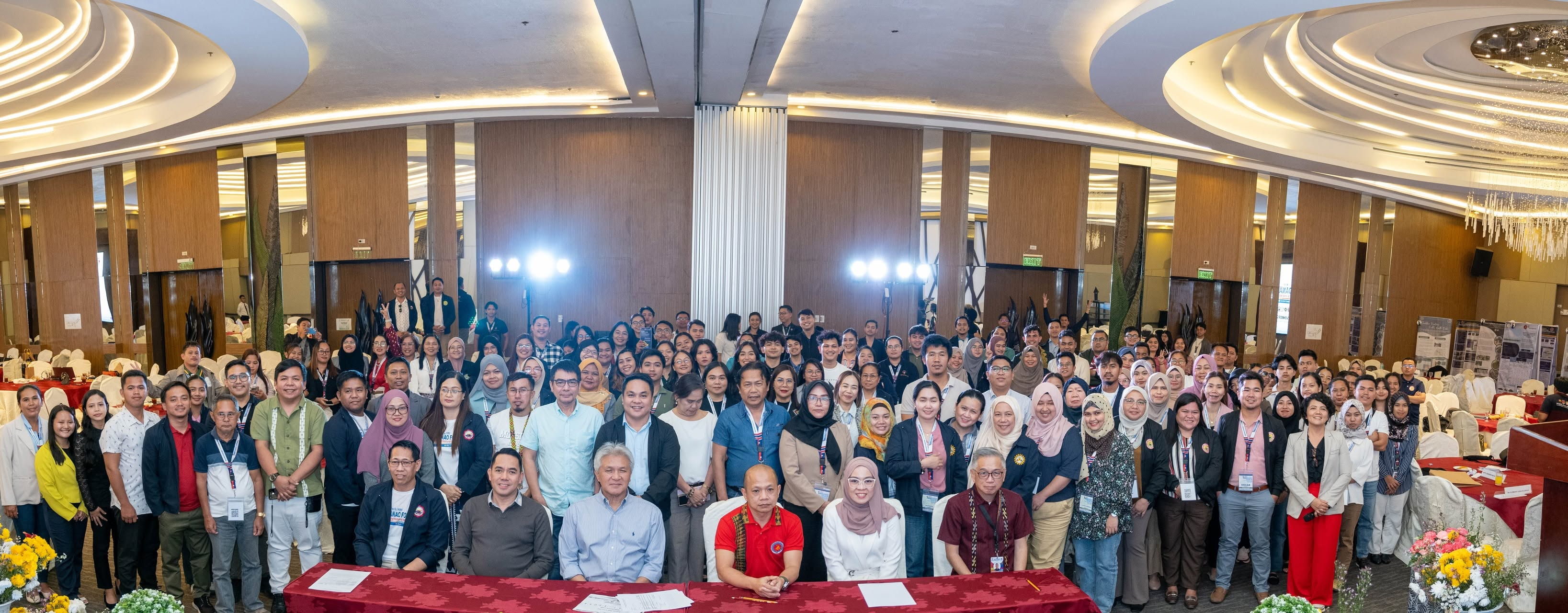
Cross-Sectoral Dialogues on Mindanao’s Waters and Women, Peace and Security Initiated and Joined with Government, NGOs, and Industry
Over 190 researchers, policymakers, and community leaders met at the 1st Mindanao Forum on Waters and Natural Resources, the largest of the conferences, forums, and workshops on sustainable development with government, non-government organizations, and industry that Mindanao State University–Maguindanao initiated or joined between January and November 2025. Together, these dialogues covered water governance, biodiversity, peace and security, elections and governance, education, and institutional planning.1st Mindanao Forum on Waters and Natural ResourcesThe University convened the forum at the Greenleaf Hotel in General Santos City from November 26 to 28, 2025. The University leads the Mindanao-Sulu-Palawan Innovative Research and Development Consortium (MinSuPala-IRDC), a network of state universities funded by the Department of Budget and Management to study Mindanao’s inland waters. Decisions about the region’s lakes, rivers, and marshes have often been made without reliable local data, and the forum was organized to put research findings in front of the officials who manage these resources. Held with the Mindanao Development Authority (MinDA) and the National Research Council of the Philippines under the theme “Empowering Mindanao through M.I.N.A.: Mobilized Collaboration, Integrated Knowledge, Nurtured Innovation, and Amplified Local Wisdom,” it brought these groups together with faculty experts, local government officials, and development partners.Chancellor Bai Hejira Nefertiti M. Limbona, as Consortium Lead, opened the forum by setting its purpose: to move from gathering data to producing policy solutions for Mindanao’s water basins. MinDA Executive Director Undersecretary Dr. Janet M. Lopoz delivered the keynote, and plenary speakers included Dr. Gisela P. Concepcion of the University of the Philippines Diliman, Dr. Rex Victor O. Cruz of the University of the Philippines Los Baños, and Cardinal Orlando B. Quevedo, OMI, of the Mindanao River Basin Management Council. Industry partners Shimadzu Philippines Corporation and Guill-Bern Corporation presented technology and laboratory innovations. Researchers presented findings on Lake Lanao, Ligawasan Marsh, Lake Buluan, Lake Sebu, the Rio Grande de Mindanao, and the Pulangi River, and the MSU–Maguindanao team presented five studies on Ligawasan Marsh and the Sifaran Watershed. Policy workshops then asked government and community participants to turn the findings into local conservation strategies; the Innovate for Mindanao Hackathon invited young people to design technology-based solutions; and the consortium turned over its Phase 1 reports to DBM Region XII Director Akmad J. Usman, CPA, CESO III. Delegates closed the program by planting 107 mangrove seedlings at the Baluan Mangrove Sanctuary.Participants for the 1st Mindanao Forum on Waters and Natural Resources, General Santos City, November 26-28, 2025.An MSU–Maguindanao poster shares water quality findings from Ligawasan Marsh with policymakers and fellow researchers.The forum built on a year of workshops with the people who manage these waters. On February 27, 2025, the University hosted the MinSuPala–IRDC Stakeholders’ Consultation, where four state universities and colleges presented findings on Ligawasan Marsh, Lake Buluan, the Rio Grande de Mindanao, and Lake Lanao to MAFAR–BARMM, the Bangsamoro Planning and Development Authority, DOST–PCAARRD, the provincial environment office, environmental organizations, fisherfolk associations, and six local governments, who helped turn them into policy recommendations. On July 30, 2025, the Chancellor and DBM Region XII Director Akmad J. Usman planned the forum with MinDA Secretary Leo Magno and Executive Director Janet M. Lopoz, and in October 2025 the University’s team held validation workshops with the local governments of Cotabato City, Kabuntalan, Northern Kabuntalan, Talitay, and Datu Piang.4th Biennial Conference on Tropical BiodiversityThe University also co-hosted an international scientific conference. On July 23, 2025, it joined the Faculty of Forestry of Hasanuddin University in Indonesia, Tomsk Polytechnic University in Russia, Universiti Teknologi MARA in Malaysia, and the University of North Sumatra as co-host of the 4th Biennial Conference on Tropical Biodiversity, held in Makassar and online under the theme “Mainstreaming Multidisciplinary Approaches to Biodiversity Studies for Sustainable Development.” Ten University faculty researchers presented 13 studies on biodiversity, forest management, watershed protection, carbon stocks, and climate change adaptation to researchers and practitioners from Indonesia, Russia, Malaysia, Germany, and the Philippines.MSU–Maguindanao faculty present their studies at the 4th Biennial Conference on Tropical Biodiversity, co-hosted with Hasanuddin University, July 23, 2025.Women, Peace and Security Dialogue at the Philippine ConferenceOn October 29, 2025, the University convened “From Classroom to Community: Localizing Women, Peace and Security through Education,” one of 20 side events of the 2025 Philippine Conference on Women, Peace and Security at Summit Hall 2 of the Philippine International Convention Center in Pasay City. University officials and faculty from planning, research and extension, and the Diploma in Women, Peace and Security (DWPS) Technical Working Group explained how the national Women, Peace and Security agenda is built into the University’s instruction, research, and extension, and how the DWPS curriculum draws on community knowledge, including the guidance of community elders. They also presented the University’s extension work with about 161 women in Camps Abubakar, Badre, and Omar. The session closed with the launch of the DWPS learning book “Dialogue Beyond Borders.” Its 18 participants came from government, civil society, the financial sector, BARMM institutions, and the DWPS alumni community. A University delegation led by Chancellor Limbona took part in the full conference from October 28 to 30, where the Chancellor shared the program’s materials with Solicitor General Darlene Berberabe.University officials and DWPS faculty lead a dialogue with government, civil society, and academic participants on Women, Peace and Security education, Summit Hall 2, PICC, October 29, 2025.Stakeholders’ ConsultationCloser to campus, more than 200 participants from local governments, civil society organizations, health and public works agencies, parents, and alumni joined the annual Stakeholders’ Consultation of the Office of the Vice Chancellor for Planning and Development on February 28, 2025, at the DOS Gymnasium, reviewing the University’s proposed 2026 programs and its draft Research, Extension, and Development Agenda 2025–2030.Students raise their questions with a resource person during the Stakeholders’ Consultation, February 28, 2025.Local government, health agencies, civil society, parents, and alumni review the University’s 2026 plans at the Stakeholders’ Consultation, February 28, 2025.Forums on Elections and GovernanceThe University also convened forums on elections and governance. On January 31, 2025, the Institute for Peace and Development in Mindanao and the Supreme Student Council, with the Bangsamoro Youth Commission (BYC), held the Voters’ Empowerment Forum for the Youth at the DOS Gymnasium for about 1,300 students. BYC Commissioner Nasserudin D. Dunding, COMELEC Election Officer III Bai Maceda L. Abo, Gerardo T. Concepcion III of the Speakers’ Bureau on the Bangsamoro Electoral Code, and Mr. Saiful Islam Gayak spoke on youth voting, the Bangsamoro Electoral Code of 2023 and the Bangsamoro Parliamentary Districts Act of 2024, election offenses, and a religious perspective on elections, and students practiced voting on an Automated Counting Machine. On November 14, 2025, the BA Political Science Program hosted the 1st PPSA President’s Lecture Forum with the Philippine Political Science Association, the professional association of the country’s political scientists, where Prof. Dennis C. Coronacion spoke on political dynasties, patronage, and corruption before students, faculty of Ateneo de Davao University, and Grade 12 learners from four public schools, and the two institutions signed a Memorandum of Understanding.COMELEC Election Officer III Bai Maceda L. Abo demonstrates the Automated Counting Machine to students at the Voters’ Empowerment Forum for the Youth, January 31, 2025.Chancellor Bai Hejira Nefertiti M. Limbona and PPSA President Dr. Reynold D. Agnes sign the partnership agreement after the forum.Dialogues with Government, International Agencies, and NGOsThe University also joined dialogues convened by others. On September 25, 2025, two student leaders joined the Third-Party Monitoring Team’s multi-sectoral youth dialogue on the implementation of the peace agreements between the Government of the Philippines and the Moro Islamic Liberation Front, in Cotabato City. On October 30, 2025, Vice Chancellor for Academic Affairs Dr. Marissa N. Parcon and the program chairs of the College of Engineering and Computing Sciences met the Japan International Cooperation Agency (JICA) and Zuitt Learning Institute under the Industry Development through Engineering Education in BARMM initiative to explore how industry-based training could be brought into the University’s laboratory courses. On October 6, 2025, Chancellor Limbona met Islamic Relief Philippines, a humanitarian non-government organization, to explore joint research, psychosocial assessments in flood-affected areas, livelihood and Halal food system training, and capacity-building for its beneficiaries, and the two agreed to hold a Training of Trainers for barangay officials and an internship for FPE 101 students.Students of MSU-Maguindanao sharing their insights on the implementation of the peace agreementsMSU–Maguindanao academic officials consult JICA and Zuitt Learning Institute on industry-aligned engineering education, October 30, 2025The University also brought an international non-government organization to campus. On October 11, 2025, the Division of Student Affairs and the Supreme Student Council, with Initiatives of Change, held the 3rd International Values Transformation Leadership Training at the University’s Training Center, where speakers from South Korea, Taiwan, India, and Lebanon discussed ethical leadership, values formation, and inner transformation with student leaders.Student Supreme Council members' discussions with the speakers during the 3rd International Values Transformation Leadership TrainingWhat the Dialogues AchievedThese dialogues produced concrete results. In October 2025, five local governments around Ligawasan Marsh validated the consortium’s findings and selected priority indigenous crops and fish for conservation. Stakeholder comments shaped the final research agenda, which the Board of Regents approved on June 10, 2025. The University, JICA, and Zuitt agreed on laboratory instruction as their first joint area of work. The consortium will carry the forum’s recommendations into its 2026 work, and the University plans to hold the forum regularly. The University will continue to convene and join such dialogues, using its annual Stakeholders’ Consultation and the consortium’s forums to bring the results of its research and planning back to the agencies, industries, and communities that use them.
November 29, 2025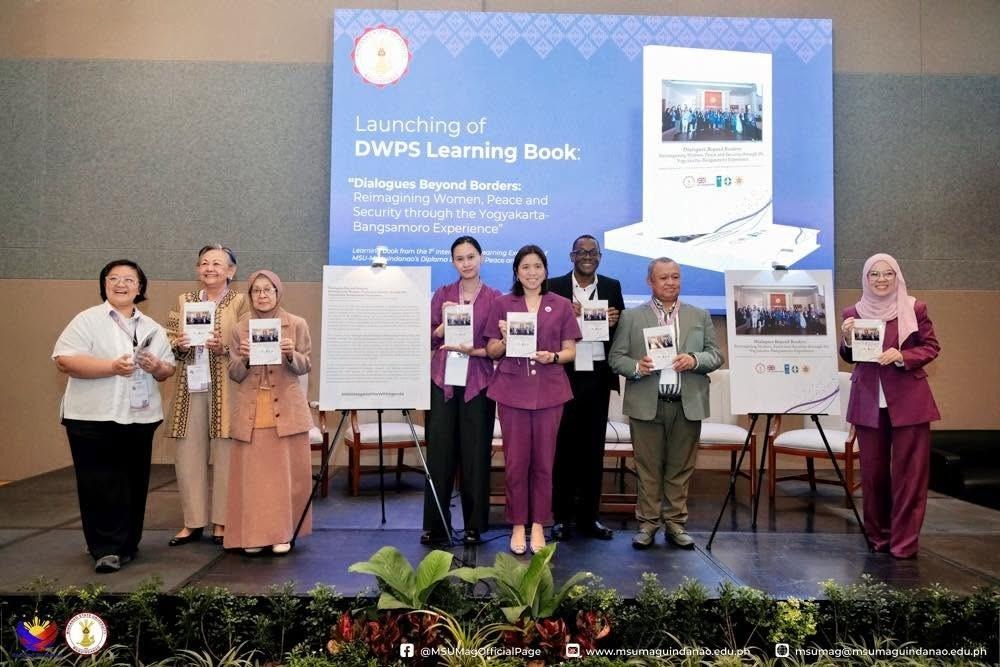
Mindanao State University–Maguindanao Convenes Side Event on Localizing Women, Peace and Security through Education at the 2025 Philippine Conference on WPS
Mindanao State University–Maguindanao convened the side event “From Classroom to Community: Localizing Women, Peace and Security through Education” on October 29, 2025, at Summit Hall 2 of the Philippine International Convention Center in Pasay City. One of 20 side events of the 2025 Philippine Conference on Women, Peace and Security (WPS), the session presented the University’s Diploma in Women, Peace and Security (DWPS) as a model for bringing the WPS agenda into higher education and into conflict-affected communities in the Bangsamoro. Launch of the DWPS learning book “Dialogue Beyond Borders,” October 29, 2025The side event addressed a continuing gap in the region: women in conflict-affected communities remain underrepresented in peacebuilding and decision-making, and national WPS commitments need institutions that can translate them into local practice. University officials and faculty of the DWPS Technical Working Group explained how WPS principles are built into the University’s instruction, research, and extension, how the curriculum draws on community knowledge and the guidance of elders, and how DWPS students, many of them working professionals, produce policy papers and program designs for their own organizations and communities.Speakers, University officials, and guests after the side event at Summit Hall 2, PICCThe University also presented its extension work in climate-smart agriculture and economic empowerment, which has reached about 161 women, mothers and wives in Camps Abubakar, Badre, and Omar, with funding from the United Nations Development Programme and the Office of the Presidential Adviser on Peace, Reconciliation and Unity. The session closed with the launch of the DWPS learning book “Dialogue Beyond Borders: Reimagining Women, Peace, and Security through the Yogyakarta-Bangsamoro Experience,” which documents lessons shared between peace advocates from the Bangsamoro and Yogyakarta, Indonesia. Representatives of government, civil society, the financial sector, BARMM institutions, and DWPS alumni took part in the discussion.By preparing women, public officials, and community leaders to apply the WPS framework, the program strengthens inclusive and representative decision-making in peace and governance and supports the prevention of violence in communities emerging from armed conflict. The side event also served as a neutral platform where government, civil society, and academic stakeholders discussed how to localize national peace commitments.The University aims to scale up the DWPS and its extension work for women in MILF camps, positioning Mindanao State University–Maguindanao as a regional hub for Women, Peace and Security education.
November 18, 2025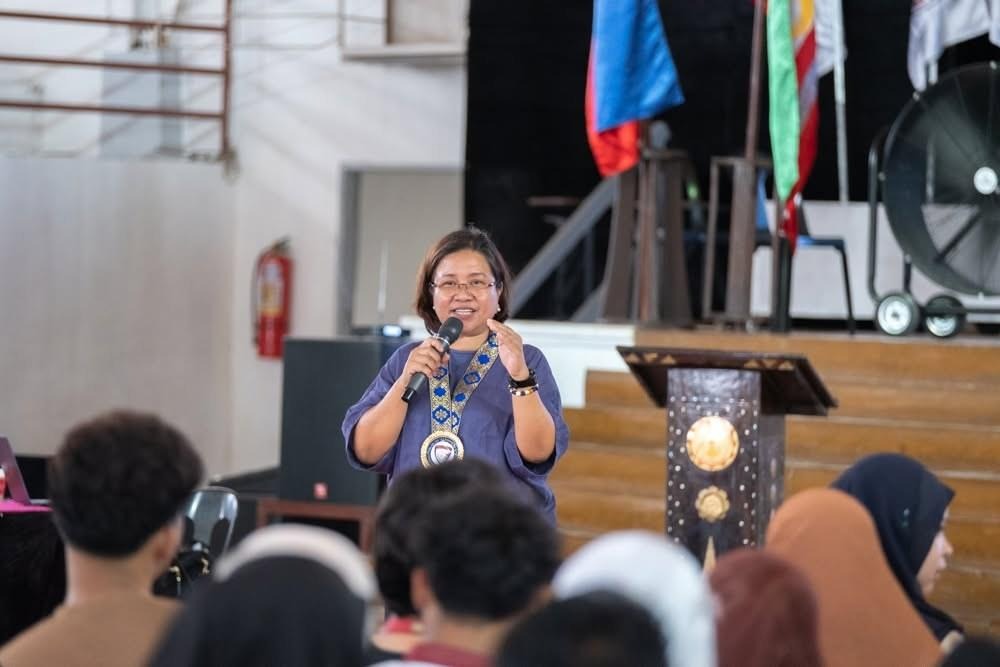
Mindanao State University–Maguindanao College of Law Prepares 200 Students for the First Bangsamoro Parliamentary Elections through a Voter’s Education Forum
Mindanao State University–Maguindanao, through the MSU College of Law–Maguindanao Extension, conducted a Voter’s Education Forum on the First Bangsamoro Parliamentary Elections on September 25, 2025, at the University Gymnasium. The forum responded to a pressing need in the region: the Bangsamoro Autonomous Region in Muslim Mindanao (BARMM) was preparing for its first-ever parliamentary elections, and many young people who would vote for the first time under the new parliamentary system had little formal grounding in how it works or what responsible voting requires.Atty. Ana Liza Mones of the Ministry of Social Services and Development speaks at the Voter’s Education Forum, September 25, 2025.The forum was organized by law students of JD-2 Block Palawan and JD-1 Block Sen. Rasul, together with students of the Master in Public Administration program. Atty. Ana Liza Mones, Chief of Staff of the Ministry of Social Services and Development, served as resource speaker. She discussed the importance of informed and responsible voting, the integrity of the electoral process, and the role of young voters in shaping the Bangsamoro government, as the Bangsamoro people prepared for their first-ever parliamentary elections.Students raise questions during the open discussion with the resource speakerAbout 200 students from various colleges participated in an open discussion on electoral integrity and the role of youth in shaping the future of the Bangsamoro. The activity also gave law and public administration students practical experience in organizing civic education for their peers.Students raise questions during the open discussion with the resource speaker.By opening a neutral, non-partisan space where students could learn about the electoral process and question a government official directly, the forum promotes responsive, inclusive, and participatory decision-making and helps build public trust in the new Bangsamoro institutions. It also draws on the University’s legal and public administration expertise to strengthen accountable governance in a region still consolidating peace.College students attend the Voter’s Education Forum at the University Gymnasium.The College of Law will continue to bring civic and legal education to students and communities, and to make its expertise available to the public as the Bangsamoro’s democratic institutions develop.
November 15, 2025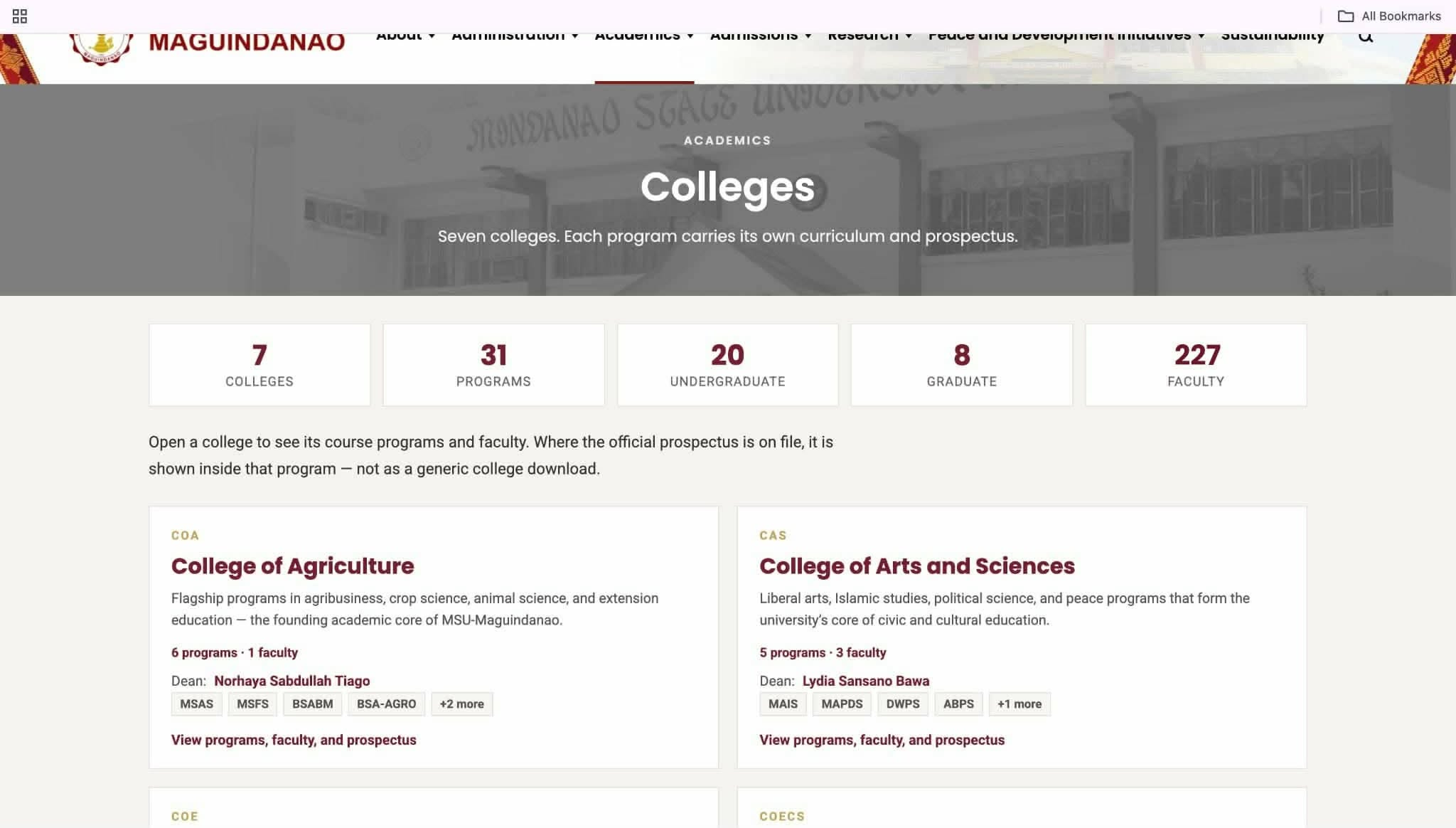
Dedicated Degrees and Courses Teach MSU–Maguindanao Students to Care for the Land, the Waters, and Lasting Peace
Thirty-one graduates in the first cohort of the Diploma in Women, Peace and Security (DWPS) show one of the dedicated degrees and courses through which Mindanao State University–Maguindanao addresses sustainability, alongside Fundamentals of Peace Education (FPE 101), its degree programs in agriculture, forestry, environmental science, fisheries, and sustainable community development, and graduate programs such as the Master of Science in Animal Science and the Master of Arts in Peace and Development Studies.Full Degree ProgramsThe University also offers full degrees in environmental sustainability, food security, and community development. The College of Forestry and Environmental Studies offers the BS Forestry, which produced 67 graduates in its Class of 2025, and the BS Environmental Science. Both address forest conservation, watershed protection, biodiversity, and climate change, and draw on field sites in the region such as the South Upi watershed. The College of Fisheries offers the BS Fisheries program, which produced 57 graduates in its Class of 2025, on sustainable fisheries and aquaculture for the coastal and inland waters of the Bangsamoro. The College of Agriculture offers the BS Agriculture with majors in Agronomy and Animal Science, which prepare students for sustainable crop and livestock production, and the College of Public Affairs and Governance offers the BS Sustainable Community Development, which prepares graduates for community-based development work. At the graduate level, the Master of Science in Animal Science extends the University’s agriculture program, and the Master of Arts in Peace and Development Studies extends its peace education. The prospectus of each program, listing its courses, is publicly available on the University website at https://msumaguindanao.edu.ph/colleges.The University’s Colleges page lists its seven colleges and 31 degree programs, including its programs in agriculture, forestry, and fisheries.Sustainability in the Flagship CurriculaBS ForestryThe prospectuses show how sustainability runs through these programs from the first year to the last. The BS Forestry (General Forestry) curriculum builds from Forest Ecology and Forest Wildlife and Biodiversity Conservation in the second year to Tropical Forestry and Climate Change, Watershed Management, and Protected Area Management in the third, and to Integrated Forest Resource Management and Agroforestry and Sustainable Upland Development in the fourth. Students also take Social Forestry and Community-Based Natural Resources Management, Forest Governance and Policy, and Forest Resource Economics, choose from electives such as Restoration of Degraded Ecosystems, Environmental Impact Assessment, Disaster Risk Reduction and Management, and Integrated Coastal Resources Management, and complete a six-unit Field Practicum.Excerpt from the Curriculum of Bachelor of Science in Forestry Major in General ForestryBS FisheriesThe 180-unit BS Fisheries curriculum follows the same path. It moves from Aquatic Ecology and Resources and two courses in Aquaculture to Fish Health Management, Capture Fisheries, and Fisheries Laws, Policies, and Institutions, and ends with Fisheries Management, Coastal Resource Management, Fishery Product Safety and Quality, Fisheries Entrepreneurship, and Fisheries Extension. Electives include Fish Stock Assessment and GIS and Remote Sensing for Fisheries, and every student completes 320 hours of on-the-job training.Excerpt from the Curriculum of Bachelor of Science in FisheriesBS Agriculture, Major in AgronomyAgriculture follows the same pattern. The 176-unit BS Agriculture major in Agronomy, for example, builds from Principles of Soil Science, Principles of Crop Protection, and Soil Fertility, Conservation and Management in the first year to Introduction to Organic Agriculture and Natural Resource and Environmental Management in the second, and to Introduction to Water Management and Irrigation, Introduction to Agricultural Policy and Development, Precision Agriculture, Postharvest Handling and Seed Technology, Introduction to Farming Systems, and Halal Practices for Agricultural Crops in the third and fourth. Students complete a 240-hour on-campus practicum and a 240-hour off-campus on-the-job training, and those who finish the first two years earn a Certificate of Agricultural Science that they can use for immediate employment. All three curricula also carry general courses that bring the University’s peace and sustainability commitment into every program: Fundamentals of Peace Education (FPE 101); Ekokritisismo at Pagpapahalaga sa Kalikasan (FIL 102), a Filipino course on ecocriticism and the value of nature; and the History of Muslim Filipinos and Indigenous Peoples of Mindanao, Sulu, and Palawan (HIS 003).Excerpt from the Curriculum of Bachelor of Science in Agriculture major in AgronomyKeeping the Programs CurrentThe University also keeps these programs current. On May 6 and 7, 2025, it hosted the 2nd Meeting on Curriculum Revisions and New Programs of the MSU System Curriculum Committee at its Institute of Management. Led by MSU Vice President for Academic Affairs Dr. Alma E. Berowa, faculty experts from MSU–Marawi, MSU–IIT, MSU–Sulu, MSU–LNAC, and MSU–Maguindanao reviewed revisions to programs in Animal Science, Farming Systems, Sustainable Community Development, and Environmental Planning, with attention to accreditation requirements and industry developments. Chancellor Limbona urged the committee to align the programs with the goals of 2030, particularly the employability of graduates.Diploma in Women, Peace and Security Courses Taken as Electives in Graduate ProgramsDeveloped with the Philippine Center for Islam and Democracy (PCID), the DWPS answers a need in the Bangsamoro, where women remain underrepresented in governance. When the Bangsamoro Transition Authority was formed, women held only 13 of its 80 seats, a gap documented by the University’s own researchers. The program trains government personnel, civil society practitioners, and community leaders in women’s participation in peacebuilding, conflict prevention, inclusive governance, gender-responsive policy, and mediation. Its curriculum draws on community knowledge, including the guidance of community elders, and students produce policy papers and program designs for their own organizations and communities. Its first 31 graduates completed the program on October 15, 2025, at the end of its first year of implementation.The program’s lectures and forums connect this training to the lived experience of the region. On March 8, 2025, during Women’s Month, the first cohort opened its second-semester DWPS Lecture Series with Atty. Cecilia Jimenez-Damary, Senior Professorial Lecturer at De La Salle University, former Government Representative to the Transitional Justice and Reconciliation Commission for the Bangsamoro, and former UN Special Rapporteur on the Human Rights of Internally Displaced Persons. She explained the four pillars of transitional justice (truth-seeking, accountability, reparations, and guarantees of non-recurrence) and called for a victim-centered approach that does not leave out Bangsamoro women affected by conflict. On October 13, 2025, the first cohort hosted HERStory of Courage, an on-site and online forum at the Simeon Datumanong Hall of the Institute of Management, where Director General Ruby Andong of the Ministry of Basic, Higher and Technical Education, Ms. Maimona Yu Hashim of The Moropreneur Inc., and Dr. Maimona Saglayan Lidasan, known as the first lady doctor of Parang, shared their stories of peacebuilding, humanitarian service, and women’s leadership in the Bangsamoro.Atty. Cecilia Jimenez-Damary leads the first DWPS cohort through the pillars of transitional justice in an online lecture, March 8, 2025.Bangsamoro women leaders share their stories of struggle and resilience at the HERStory of Courage forum hosted by the first DWPS cohort, October 13, 2025.DWPS faculty present the program’s learning materials to participants at the 2025 Philippine Conference on Women, Peace and Security.Fundamentals of Peace Education (FPE 101)FPE 101, offered through the Institute for Peace and Development in Mindanao, teaches peace, non-violence, and respect for cultural diversity, combining classroom study with community-based learning. On May 31, 2025, 37 students visited Camp Iranun in Barira, where they met survivors of the All-Out War in Bombaran, toured the historical residence of Ustadz Salamat Hashim, and then reflected on their own role in building peace in a structured debriefing.FPE 101 students and Institute for Peace and Development in Mindanao staff join partners from the Bangsamoro Youth Commission and the 1st Marine Brigade at Camp Iranun, May 31, 2025Graduates for Sustainable DevelopmentAcross all its undergraduate and graduate programs, the University produced 917 graduates in Academic Year 2024–2025, among them graduates of these programs prepared to work for peace, gender equality, and the sustainable use of forests and waters in the Bangsamoro. The University will keep reviewing these programs with the MSU System Curriculum Committee so that they stay responsive to the needs of the Bangsamoro and to sustainable development.
November 5, 2025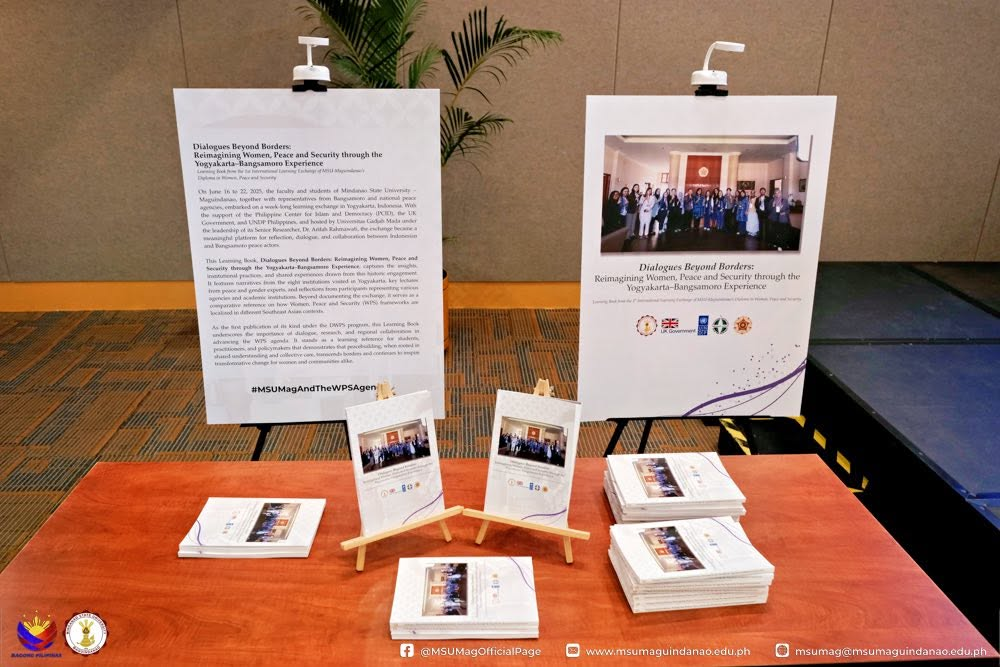
Research, Educational Resources, and Volunteer Work Advance Through 2025 Partnerships with PCID, ACERT, and LENTE
An educational framework for the Erumanen Menuvu Tribe, a peace curriculum and learning book, and voter education in 20 barangays came out of the 2025 work of Mindanao State University–Maguindanao with three non-government organizations, through research programmes, the development of educational resources, and volunteering. Its partners were the Philippine Center for Islam and Democracy (PCID), the Asian Center of Education, Research and Tutelage for Innovation, Inc. (ACERT), and the Legal Network for Truthful Elections (LENTE).Research ProgrammesIndigenous learners in many communities are taught with materials that do not reflect their language, customs, or way of life. Since May 2025, MSU–Maguindanao, ACERT, and MSU–Tawi-Tawi College of Technology and Oceanography have been developing an Indigenous Peoples Education Framework for the Erumanen Menuvu Tribe, under a Memorandum of Agreement signed on January 24, 2025. The ₱1,451,000 ($24,584 USD) project, funded by MSU–TCTO and ACERT, studies how the tribe’s knowledge and practices can be built into the education of its children, and will produce a terminal report and a manuscript for publication by February 2026.Development of Educational ResourcesPCID is a non-government organization that works for democracy, peace, and good governance in Muslim communities in the Philippines. It is the University’s key institutional partner in rolling out the Diploma in Women, Peace and Security (DWPS), which trains government personnel, civil society workers, and community leaders in women’s participation in peacebuilding. Together, the University and PCID developed and delivered the program’s curriculum and materials, which produced 31 graduates in its first cohort. The program’s learning book, “Dialogue Beyond Borders: Reimagining Women, Peace, and Security through the Yogyakarta-Bangsamoro Experience,” launched on October 29, 2025, at the Philippine Conference on Women, Peace and Security, documents the lessons that Bangsamoro and Indonesian peace advocates shared during the June 2025 learning exchange in Yogyakarta.The DWPS learning book, “Dialogue Beyond Borders: Reimagining Women, Peace, and Security through the Yogyakarta-Bangsamoro Experience,” was launched on October 29, 2025, at the Philippine Conference on Women, Peace and Security.Student Volunteering ProgrammesThe University volunteers with LENTE, a civil society network for clean and informed elections, under a Memorandum of Agreement on election monitoring that covers the 2025 Midterm Elections and succeeding elections. LENTE trains, equips, and supervises the volunteers, while the University coordinates their participation and ensures they stay nonpartisan. On September 27, 2025, ahead of the first Bangsamoro parliamentary elections, 15 Political Science faculty volunteered as Voter Education Champions with LENTE, the Commission on Elections, the United Nations Development Programme, and two BARMM ministries, explaining the new parliamentary system and voting procedures in 20 barangays of Datu Salibo, Datu Anggal Midtimbang, and Datu Odin Sinsuat. Thirteen BA Political Science students served as the secretariat of these sessions as an activity of their department.Asst. Prof. Ralph Darren Santillan, an MSU–Maguindanao Voter Education Champion in partnership with LENTE, leads residents through voting procedures in a barangay session, September 27, 2025.What the Partnerships Have ProducedThrough these partnerships, an education framework for an Indigenous community is being written with its partners, professionals across the Bangsamoro are learning from a jointly developed peace curriculum, and residents of 20 barangays received voter education, organized by Political Science faculty and their students, before the first parliamentary elections. The University aims to continue these partnerships, completing the education framework with the Indigenous community and its partners, bringing the peace curriculum to new learners, and preparing more student volunteers for voter education in future elections.
November 2, 2025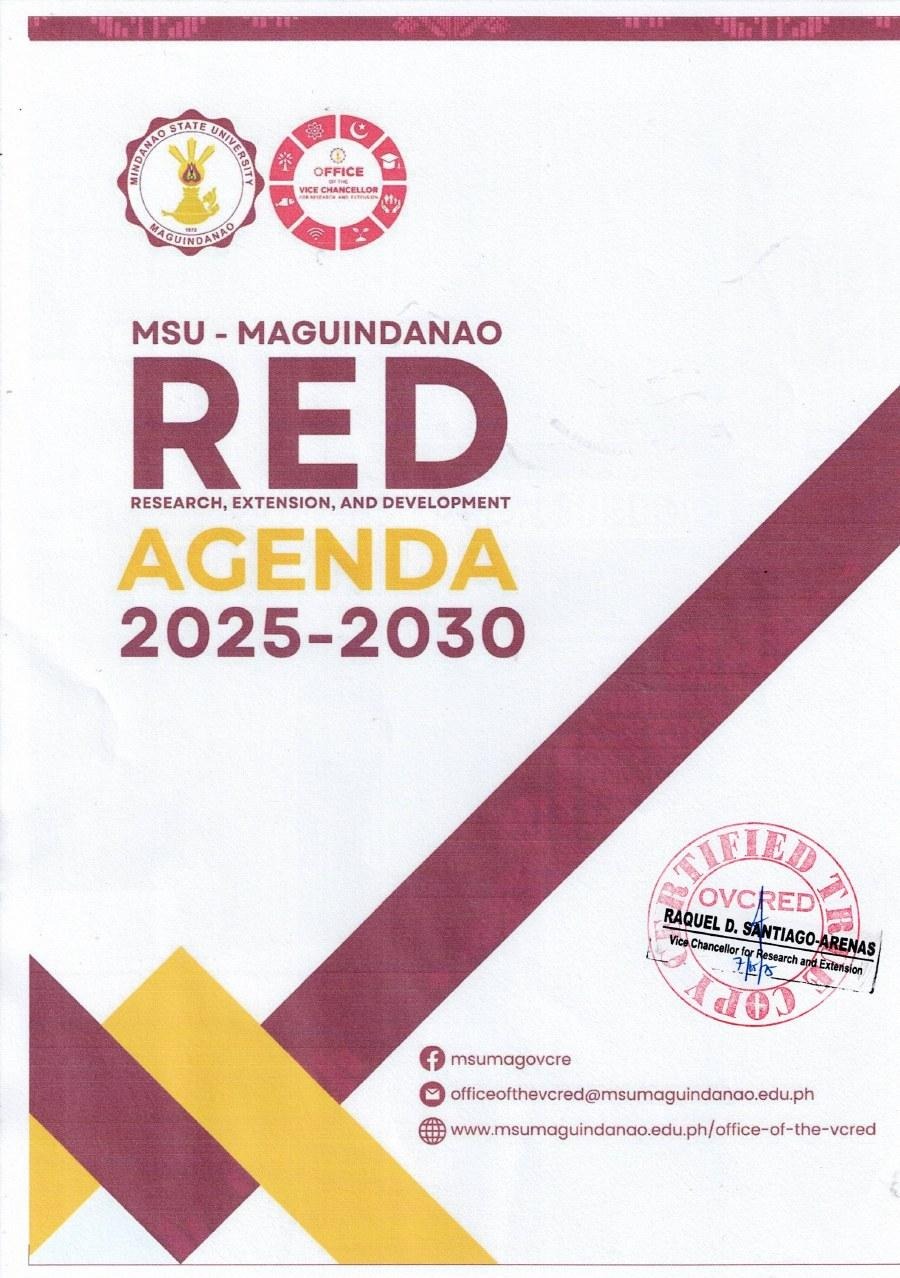
Mindanao State University–Maguindanao Sets Research Priorities on Peace, Governance, and Human Security in Its RED Agenda 2025–2030
Mindanao State University–Maguindanao adopted its Harmonized Research, Extension, and Development (RED) Agenda for 2025–2030, approved by the MSU Board of Regents through Resolution No. 245, s. 2025, at its 271st meeting on June 10, 2025. The agenda sets the priorities that guide the University’s research and extension for six years. Its stated objective is to generate new knowledge, sharpen the focus on priority research, extension, and development areas, harness emerging technologies, and apply evidence-based strategies that address the needs of communities and promote equitable regional development.Cover of the MSU–Maguindanao RED Agenda 2025–2030, issued by the Office of the Vice Chancellor for Research and ExtensionThe agenda covers eight research disciplines, 64 research agenda, and 362 research priorities: Agricultural Innovation and Sustainability; Aquatic Research, Resources, and Livelihoods; the Green Agenda; Governance for Inclusive Nation Building; Health Systems and Services; Inclusive Education for Sustainable Futures; Industry, Energy, and Emerging Technologies; and Women, Peace and Security, Indigenous, and Halal Studies. Each priority is mapped to the United Nations 2030 Agenda for Sustainable Development and to the national 8-Point Socioeconomic Agenda.Excerpt from the minutes of the 271st meeting of the MSU Board of Regents, June 10, 2025, approving the Harmonized RED Agenda through Resolution No. 245, s. 2025.Two of the eight disciplines direct research toward peace, justice, and strong institutions. Governance for Inclusive Nation Building, with 7 research agenda and 36 priorities, covers human security, the delivery of social services in BARMM, policy research, and the role of women and youth in governance, including youth political engagement in the BARMM parliamentary process, the participation of women and youth in barangay governance and local development planning, and the role of women and youth in implementing the Bangsamoro Organic Law. Women, Peace and Security, Indigenous, and Halal Studies, with 7 research agenda and 60 priorities, covers community-based peacebuilding, the effectiveness of existing peacebuilding initiatives, conflict resolution drawing on Islamic traditions and Indigenous mechanisms, BARMM security, ancestral domain conflicts, and women’s roles as peacebuilders. Across all disciplines, 32 research priorities are aligned with peace, justice, and strong institutions.The agenda was developed through consultation. The seven colleges identified their research and extension priorities during the Core Values Revisit and RED Agenda Revision workshop in Kitaotao, Bukidnon, August 8–10, 2024, attended by the Chancellor, Vice Chancellors, deans, directors, heads of offices, and student representatives. The draft was presented to parents, alumni, students, and representatives of the Ministry of Public Works, the Ministry of Health, the Integrated Provincial Health Office of Maguindanao, and the Rural Health Unit of Datu Odin Sinsuat at the Stakeholders’ Consultation Meeting on February 28, 2025, and refined by the Research and Extension Committee on May 8, 2025, before its submission to the Board of Regents.The Office of the Vice Chancellor for Research and Extension and the Research and Extension Committee coordinate implementation, and research and extension proposals are expected to align with the agenda’s priorities. By committing the University’s research to human security, inclusive governance, and peacebuilding, and by setting these priorities through consultation with communities and government agencies, the agenda supports evidence-based policy for effective, accountable, and inclusive institutions and contributes to reducing violence and sustaining peace in the Bangsamoro.Mindanao State University–Maguindanao will use the agenda to guide research and extension funding through 2030, report on the projects carried out under it, and review its priorities as the needs of the region change.
October 31, 2025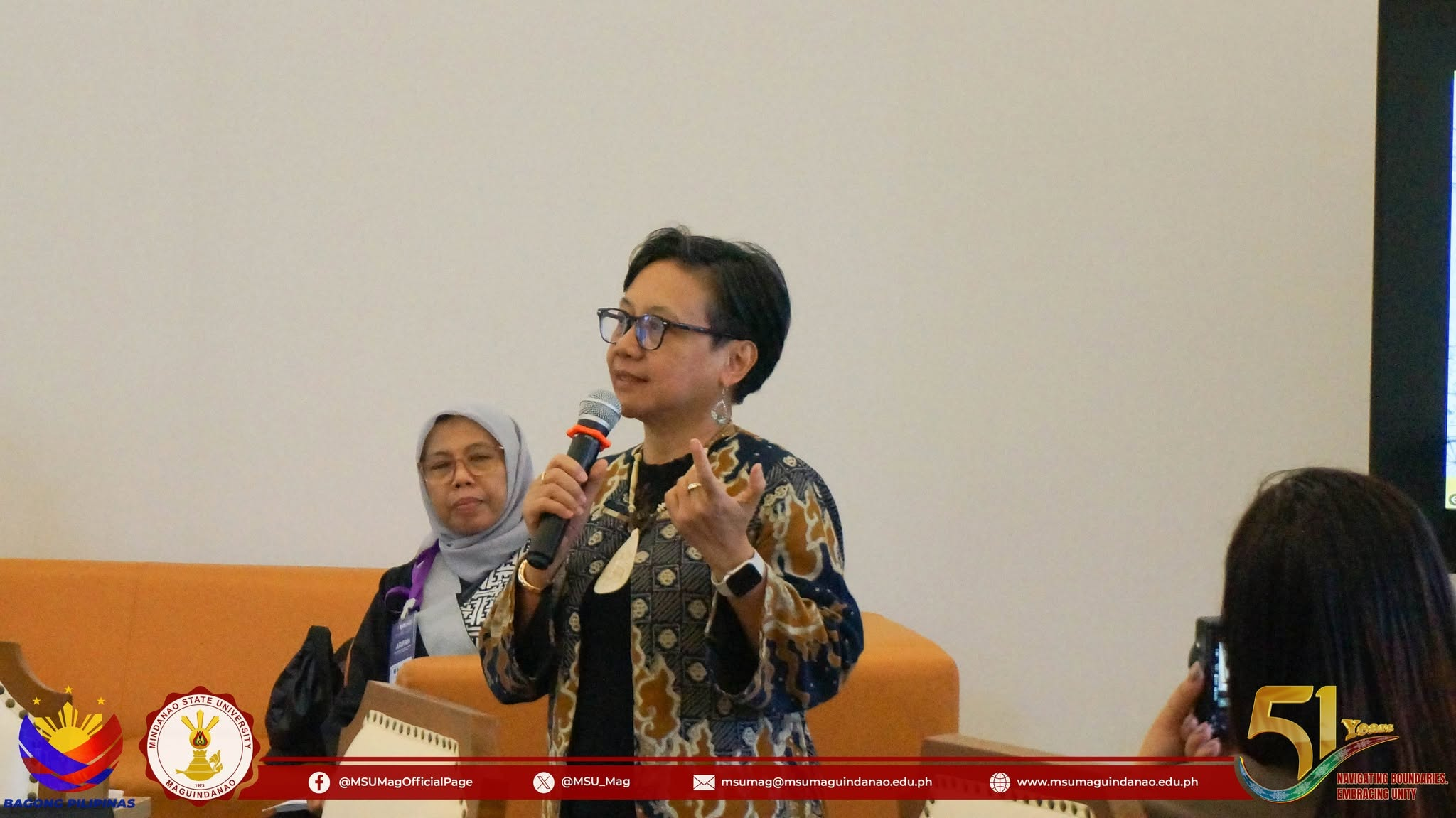
What Aceh Can Teach the Bangsamoro: A Yogyakarta Exchange and an EU-Funded Initiative Reshape How the University Teaches Peace and Gender Equality
Lessons from the Aceh peace process and from Indonesian campus programs against sexual violence and for gender mainstreaming now shape the Diploma in Women, Peace and Security (DWPS), after Mindanao State University–Maguindanao reviewed comparative approaches with three Indonesian universities in June 2025 and turned them into international best practice on peace and gender equality.Learning Exchange in YogyakartaThe DWPS trains government personnel, civil society workers, and community leaders in women’s participation in peacebuilding. Indonesia and the Bangsamoro share a recent history of peace negotiations in Muslim-majority regions, which makes Indonesia a useful comparison. From June 18 to 20, 2025, a delegation of 15 DWPS faculty and students, led by Vice Chancellor for Planning and Development Dr. Arceli B. Naraga on behalf of Chancellor Bai Hejira Nefertiti M. Limbona, held a learning exchange in Yogyakarta with the support of UNDP Philippines and the UK Government through the British Embassy Manila. The delegation also included the Philippine Center for Islam and Democracy (PCID), the University’s partner in rolling out the DWPS, the OPAPRU Center of Excellence on Women, Peace and Security, the Bangsamoro Women Commission, the Ministry of Public Order and Safety, and the Development Academy of the Bangsamoro.At Universitas Gadjah Mada (UGM), four Indonesian experts compared their country’s experience with the Bangsamoro’s. Prof. Hamid Awaluddin, former Minister of Law and Human Rights and chief negotiator of the Aceh peace process, spoke on lessons from Aceh. Dr. Sri Wiyanti Eddyono, Director of UGM’s Center for Law, Gender, and Society, discussed the gendered dimensions of violent extremism. Prof. Dr. Yayi Suryo Prabandari presented UGM’s Sexual Violence Prevention and Handling Task Force and its open online course on sexual violence. Dr. Arifah Rahmawati, Indonesia’s representative to the ASEAN Women for Peace Registry, explained Indonesia’s National Action Plan on Women, Peace and Security.Dr. Arifah Rahmawati, Indonesia’s representative to the ASEAN Women for Peace Registry (AWPR), compares peace process approaches with MSU–Maguindanao DWPS faculty and students at Universitas Gadjah Mada, June 18, 2025UGM panelists compare institutional responses to sexual and gender-based violence with the MSU–Maguindanao delegation.The exchange produced three formal partnerships. On June 18, Dr. Naraga and UGM Vice Rector for Education and Teaching Prof. Dr. Wening Udasmoro, representing Rector Prof. Dr. Ova Emilia, signed a three-year Memorandum of Understanding for joint work on women, peace and security and gender-responsive peacebuilding. On June 19, the University signed a second three-year Memorandum of Understanding with Universitas Muhammadiyah Yogyakarta (UMY) on peacebuilding, gender equality, inclusive education, and academic innovation. On June 20, at Universitas Ahmad Dahlan (UAD), faculty and students from UAD and Aisyiyah institutions shared their work on gender mainstreaming in higher education, community-based research and digital platforms for gender empowerment, and the role of male allies, and Dr. Naraga and UAD Vice Rector for Academic Affairs Prof. Ir. Sunardi, Ph.D., signed a third Memorandum of Understanding, witnessed by representatives of the British Embassy Manila, OPAPRU, UNDP Philippines, and the Bangsamoro Government.MSU–Maguindanao and Universitas Gadjah Mada representatives sign a partnership on women, peace and security, June 18, 2025.MSU–Maguindanao and Universitas Muhammadiyah Yogyakarta formalize cooperation on peace, gender equality, and academic innovation, June 19, 2025.From Comparison to Best PracticeThe DWPS team then turned the comparison into best practice. It documented the lessons in the learning book “Dialogue Beyond Borders: Reimagining Women, Peace, and Security through the Yogyakarta-Bangsamoro Experience,” launched on October 29, 2025, at the 2025 Philippine Conference on Women, Peace and Security in Pasay City. The book is now used in six DWPS courses and in three courses of the Master of Arts in Peace and Development Studies. The DWPS itself produced 31 graduates in its first cohort.The DWPS team launches the learning book “Dialogue Beyond Borders,” which turns the Yogyakarta-Bangsamoro comparison into teaching material, October 29, 2025.EU-Funded Initiative on Women, Peace and Security in Higher EducationThe comparison builds on a wider effort to bring international commitments on women, peace and security into higher education. On April 14, 2025, at the CHED Auditorium in Quezon City, Chancellor Limbona joined European Union Ambassador to the Philippines H.E. Massimo Santoro, CHED Chairperson Dr. J. Prospero E. De Vera III, and PCID President Amina Rasul-Bernardo at the launch of “Institutionalizing the Women, Peace and Security Agenda in Mindanao through Higher Education,” a two-year initiative grounded in United Nations Security Council Resolution 1325 on Women, Peace and Security and funded by the European Union and implemented by PCID, Mindanao State University, the UP Center for Women’s Studies Foundation, and the Department of Women and Development Studies of the University of the Philippines Diliman. The initiative strengthens the academic framework of the DWPS, builds the capacity of its faculty, and extends its reach through community training. In her remarks, the Chancellor described how the program builds conflict resolution skills among women leaders drawn from government, grassroots organizations, and civil society.The European Union, CHED, PCID, and MSU officials launch the EU-funded initiative to institutionalize the Women, Peace and Security agenda through higher education in Mindanao, CHED Auditorium, Quezon City, April 14, 2025.The DWPS now teaches tested Indonesian approaches to women’s participation and sexual violence prevention to the professionals it trains in the Bangsamoro, and the three agreements and the EU-funded initiative give the University a standing framework for joint research and exchange. Under its agreements with UGM, UMY, and UAD, the University aims to pursue joint research and exchange on women, peace and security, while the EU-funded initiative continues to support DWPS faculty development and community training during its two-year run.Lessons Now in the ClassroomThe DWPS now teaches tested Indonesian approaches to women’s participation and sexual violence prevention to the professionals it trains in the Bangsamoro, and the three agreements and the EU-funded initiative give the University a standing framework for joint research and exchange. Under its agreements with UGM, UMY, and UAD, the University aims to pursue joint research and exchange on women, peace and security, while the EU-funded initiative continues to support DWPS faculty development and community training during its two-year run.
October 30, 2025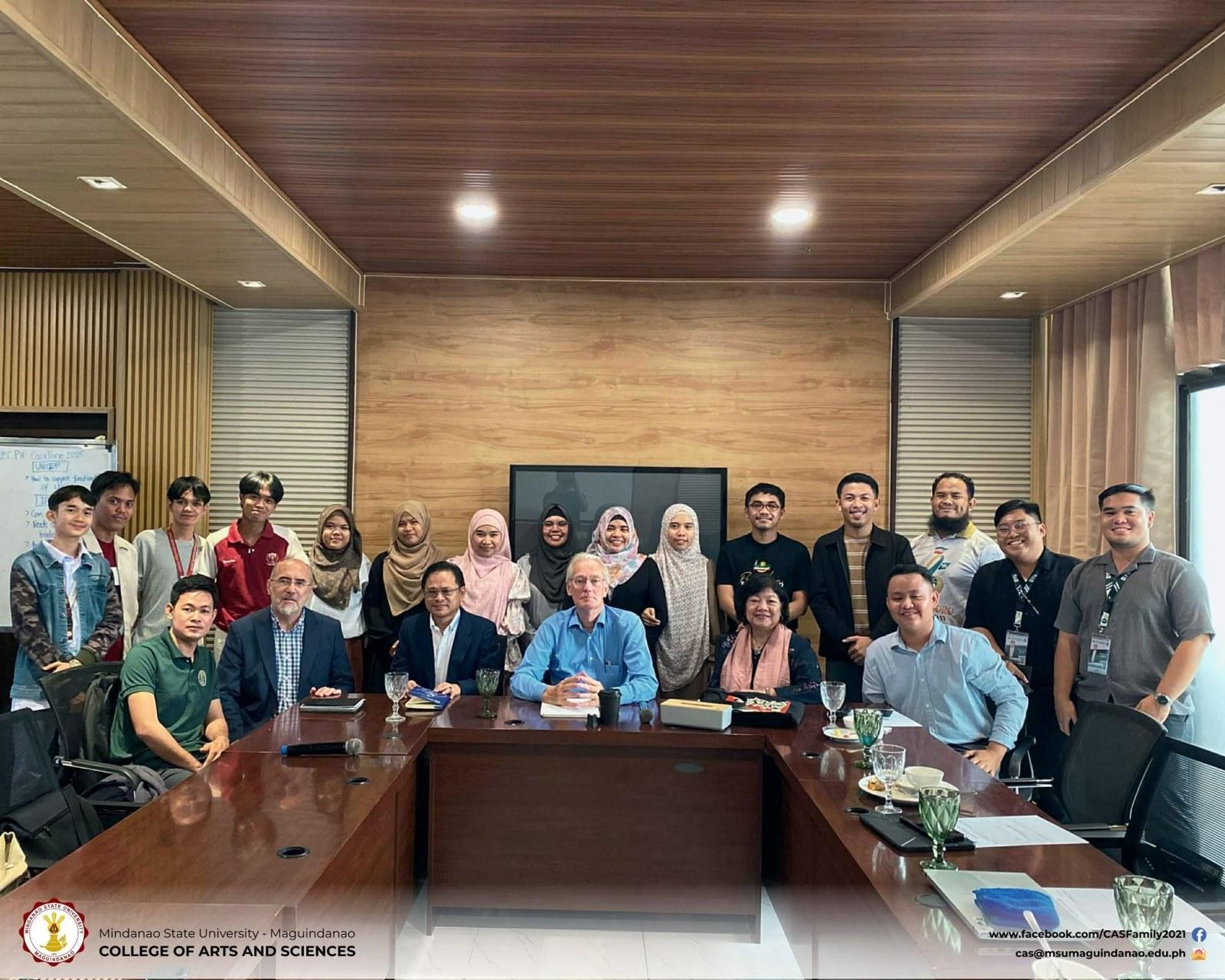
Mindanao State University–Maguindanao Student Leaders Bring Youth Perspectives to the Third-Party Monitoring Team’s 55th Monitoring Mission on the Bangsamoro Peace Process
Student leaders of Mindanao State University–Maguindanao, from the College of Arts and Sciences Student Association (CASSA) and the Political Science Society, represented the University at the 55th Monitoring Mission of the Third-Party Monitoring Team (TPMT) on September 25, 2025, at Casa Torre, Cotabato City. The TPMT is the independent body that reviews and reports on the implementation of the agreements signed between the Government of the Philippines and the Moro Islamic Liberation Front, including the Comprehensive Agreement on the Bangsamoro.MSU–Maguindanao student leaders with participants and members of the Third-Party Monitoring Team at the 55th Monitoring Mission, Casa Torre, Cotabato City, September 25, 2025.For this mission, the TPMT worked with the Bangsamoro Youth Commission (BYC) to convene a multi-sectoral dialogue on how young people see the peace process, governance in BARMM, and the coming Bangsamoro parliamentary elections. The dialogue brought together representatives of civil society and non-governmental organizations, religious institutions, women’s groups, settler youth communities, the Sangguniang Kabataan, and the academe. Two student leaders represented MSU–Maguindanao: Norjannah M. Campiao, Governor of the College of Arts and Sciences Student Association (CASSA), and Alyajier M. Midtimbang, Mayor of the Political Science Society.The MSU–Maguindanao delegates contributed views drawn from their studies in political science and from their experience as student leaders, including their concerns about youth participation in governance and the conduct of the parliamentary elections. Their input became part of the youth perspectives gathered by the TPMT for its monitoring of the peace process.By giving Bangsamoro students a voice in the independent review of the peace agreements, the University helps ensure that decision-making on the peace process is inclusive, participatory, and representative of young people. The engagement also strengthens the University’s working ties with the TPMT and the BYC, two institutions central to sustaining peace in the region.MSU–Maguindanao will continue to open avenues for its students to engage with peace and governance institutions in BARMM, so that the region’s young people take an active part in shaping its future.
October 13, 2025