Articles
MSU–Maguindanao Harnesses Solar Energy to Power Sustainable Community Livelihoods in Camp Badre
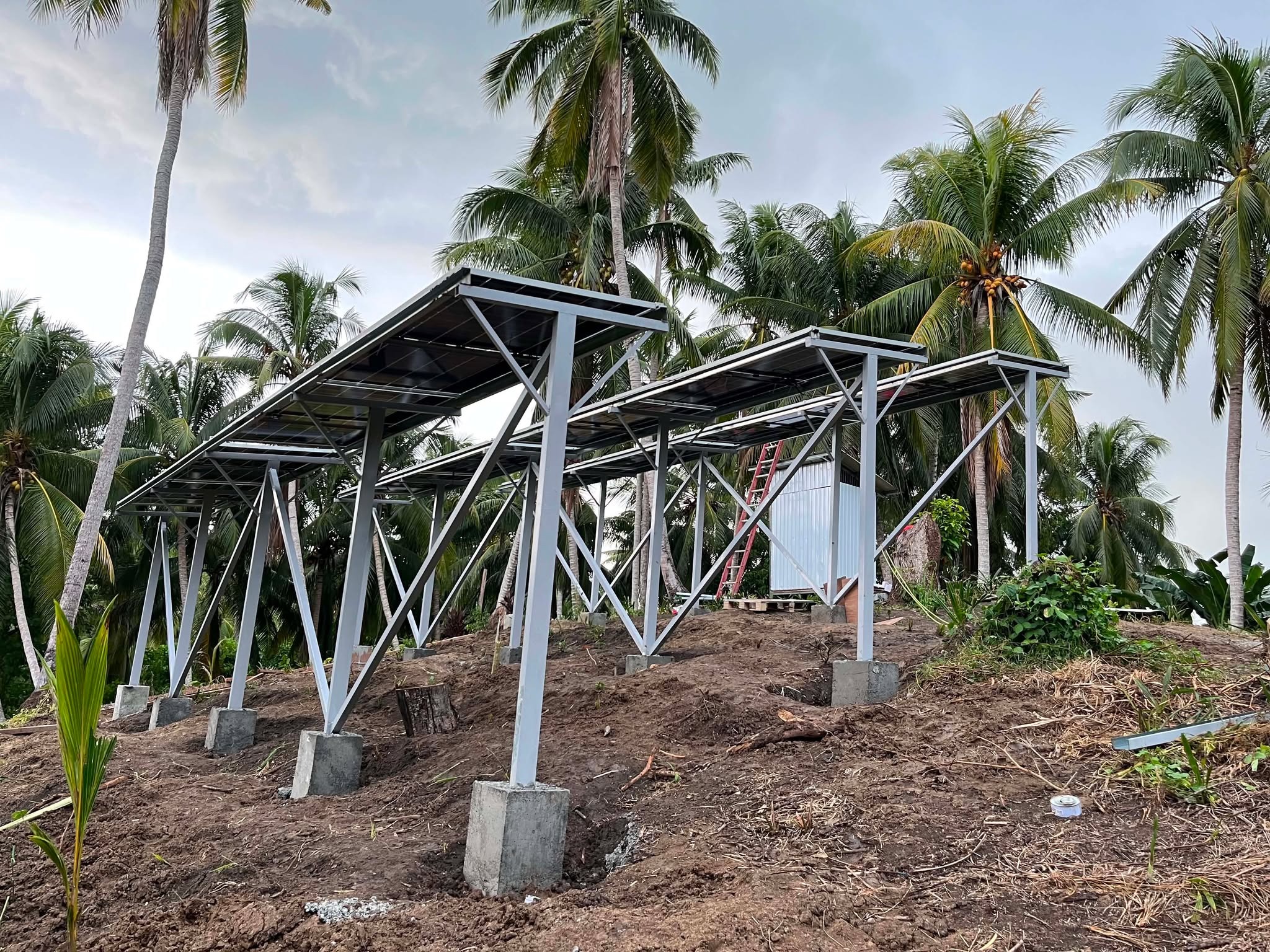
The Mindanao State University–Maguindanao implemented the Development of Science and Technology-Based and Climate-Smart Mixed Farming System in Camp Badre from July 2024 to August 2025 in partnership with OPAPRU, JTFCT, and the LGU of Datu Odin Sinsuat. The program reached 695 beneficiaries in Barangays Sibuto, Bugawas, Sifaran, and Kinebeka. The project established a fully solar-powered food processing facility and introduced a solar-powered egg incubator for poultry production. These technologies demonstrate how renewable energy can support food processing and agricultural activities while reducing dependence on conventional electricity. The project aimed to improve food security, strengthen livelihoods, and help communities adapt to climate change through an integrated farming system. It introduced vegetable production, fish farming, poultry and goat raising, and food processing. Moreover, organized women's groups participated in livelihood activities, food processing, and community development. The project provided opportunities to develop skills, diversify income sources, and strengthen women's participation in local economic activities.Construction of the solar-powered facility to support sustainable food processing and climate-smart farming in Camp Badre. Remarkably, the project contributes to SDG 7 (Affordable and Clean Energy) by using solar power for food processing and poultry production. Through partnerships with government agencies and local communities, MSU–Maguindanao applied its research, technology, and extension expertise to address community needs. The initiative also provided opportunities for faculty, researchers, and students to gain practical experience in sustainable agriculture and community development.Solar-powered incubator for egg hatching in Camp Badre. Overall, the project demonstrates MSU–Maguindanao's commitment to sustainable development by combining climate-smart agriculture, renewable energy, livelihood development, and community partnerships to support inclusive growth and resilience in the Bangsamoro region.
December 20, 2025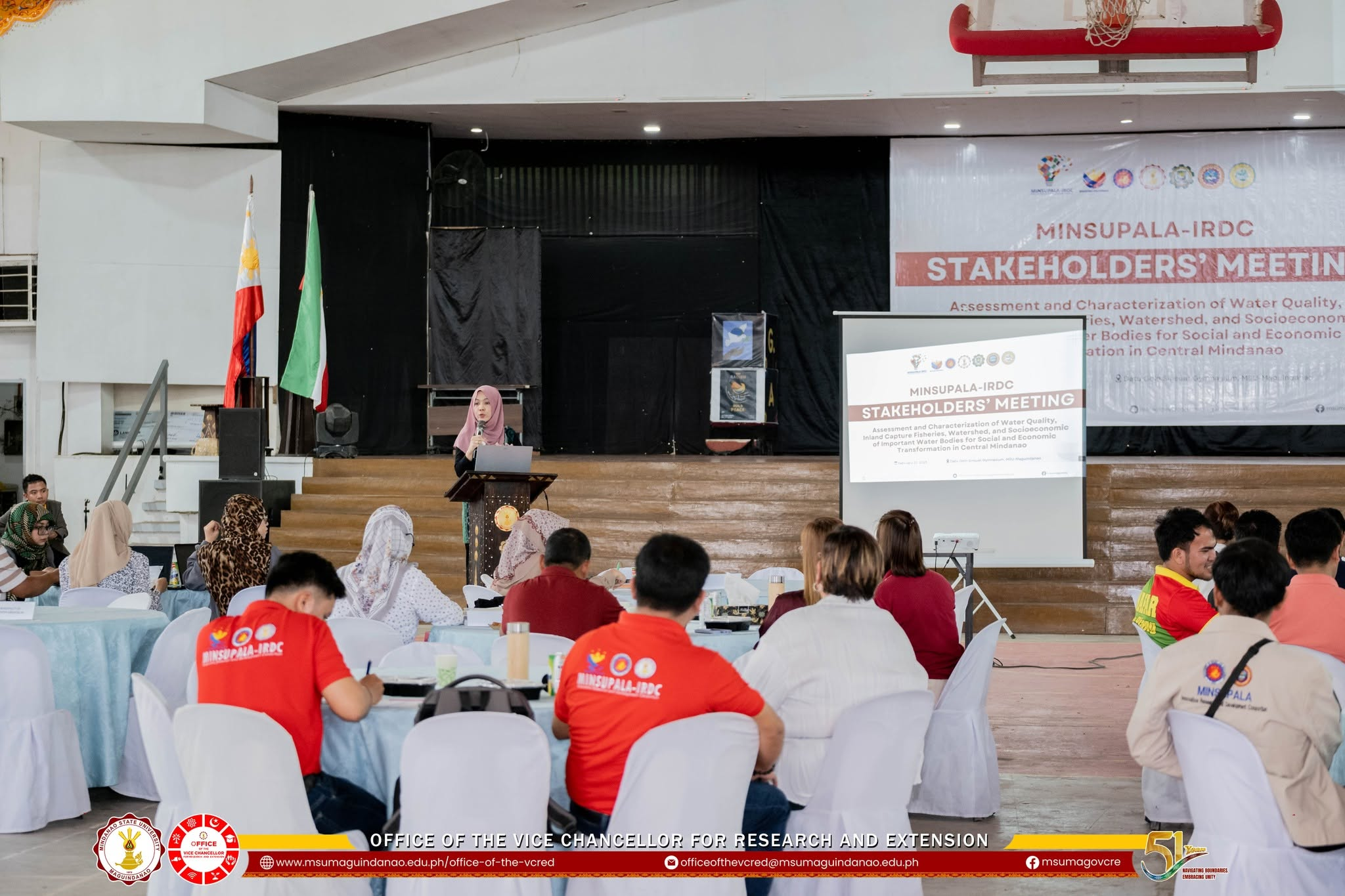
University Research Shapes Policy on Water, Peace Education, and Camp Livelihoods
Data on the water, fisheries, and livelihoods of 930 residents around Ligawasan Marsh became five policy recommendations that local governments validated in October 2025, as Mindanao State University–Maguindanao gave national and Bangsamoro government direct input into policy development on sustainable development, from identifying problems to monitoring interventions. Its research and extension teams helped the Department of Budget and Management (DBM), the Office of the Presidential Adviser on Peace, Reconciliation and Unity (OPAPRU), BARMM ministries, and local governments identify problems and challenges, develop policies and strategies, and monitor and report on interventions.Identifying Problems and ChallengesThe largest of these efforts runs through the Mindanao–Sulu–Palawan Innovative Research and Development Consortium (MinSuPala–IRDC), a network funded by the Department of Budget and Management (DBM) and led by MSU–Maguindanao. Local governments around the major water bodies of Central Mindanao had little local data on the condition of their rivers, marshes, and fisheries. In the consortium’s first phase, the University’s ₱5,000,000 (about US$87,300) component assessed water quality, inland capture fisheries, watershed conditions, and the livelihoods of 930 residents around Ligawasan Marsh, working with the Ministry of Environment, Natural Resources and Energy (MENRE), the Ministry of Agriculture, Fisheries and Agrarian Reform (MAFAR), and the local governments of Cotabato City, Kabuntalan, Northern Kabuntalan, Talitay, and Datu Piang, and produced five policy recommendations. The University then led Phase 2, “Establishment and Preservation of Indigenous Fish and Crop Products,” carried out by nine member institutions from January to December 2025. DBM funds each phase of the consortium’s work at ₱45,000,000 (about US$786,000), of which the University’s Phase 2 component received ₱10,000,000 (about US$174,700).The network itself has grown to reach more of the region. On November 13, 2023, at the Department of Budget and Management Region XI office in Davao City, MSU–Maguindanao and the existing members signed a Memorandum of Agreement admitting state universities and colleges in Sulu, Basilan, and Tawi-Tawi, extending the consortium’s research on the region’s waters and resources to the island provinces. The consortium now has 14 member state universities and colleges.The consortium first tested its findings with the agencies that would use them. On February 27, 2025, MSU–Maguindanao hosted the MinSuPala–IRDC Stakeholders’ Consultation, where research teams from MSU–Maguindanao, the University of Southern Mindanao–Kidapawan City Campus, Cotabato State University, and Adiong Memorial State College presented their assessments of water quality, fisheries, watershed conditions, and socio-economic conditions in Ligawasan Marsh, Lake Buluan, the Rio Grande de Mindanao, and Lake Lanao. Representatives of the Ministry of Agriculture, Fisheries and Agrarian Reform–BARMM, the Bangsamoro Planning and Development Authority, the Department of Science and Technology–PCAARRD, the Provincial Environment, Natural Resources and Energy Office of Maguindanao, environmental organizations, fisherfolk associations, and the local governments of Datu Piang, Talitay, Northern Kabuntalan, Cotabato City, Mangudadatu, and Sultan Kudarat discussed the findings, aligned them with local conservation and resource management plans, and helped shape the policy recommendations for conserving and managing these water bodies.Chancellor Limbona delivers her message to government agencies, local governments, and fisherfolk associations at the Stakeholders’ Consultation, Datu Odin Sinsuat Gymnasium, February 27, 2025.The University’s Phase 2 team is set out in Special Order No. 234, s. 2025, issued by Chancellor Bai Hejira Nefertiti M. Limbona on September 23, 2025. Dr. Raquel D. Santiago-Arenas serves as Project Coordinator over four projects: Nutritional Analysis, led by Asst. Prof. Always A. Germo; Market Potential and Value Chain Analysis, led by Asst. Prof. Irene S. Aquino; Agronomic Practices Assessment, led by Mr. Dominic B. Masecambo; and Establishment of Demo Farm and Knowledge Materials, led by Mr. John Louie C. Natan. Dr. Joel C. Arenas, Dr. Ramjie Y. Odin, and Engr. Bai Aljannah S. Macalandong served as a consultant.Developing Policies and StrategiesIn July 2025, the Phase 2 team led by Asst. Prof. Irene S. Aquino held coordination meetings with the five local governments and conducted key informant interviews with fisherfolk, farmers, and cooperatives to identify the native crops and fish most worth conserving. In October 2025, a team led by Mr. John Louie C. Natan, Study Leader of Inland Capture Fisheries, with technical support from Ms. Rhea Mae C. Talaron, presented the Phase 1 results and policy recommendations to each local government and its barangays. Cotabato City, under Mayor Mohammad Ali Matabalao, was represented by Agriculture Technologist Ms. Priyanka B. Saji-Sabpeten; Kabuntalan, under Mayor Datu Sharif Diocolano, by Municipal Administrator Mr. Efrel Oric Midtimbang; Datu Piang, under Mayor Victor Samama, by Executive Assistant Ms. Sherriejean S. Ampatuan; Talitay, under Mayor Sidik Amiril, by MAFAR Municipal Officer Mr. Dasib Mendato; and Northern Kabuntalan, under Mayor Datu Umbra Diocolano, by Administrator Mr. Allan Cando. Local officials, barangay representatives, and community members validated the findings and chose gabi (taro) and okra as priority crops, and haluan, native katipa, and popoyu as priority indigenous fish; each local government affirmed its readiness to work with the consortium on Phase 2.The MinSuPala–IRDC project page documents the DBM-funded work that MSU–Maguindanao leads with five Central Mindanao local governments, 2025The same steps, from identifying a problem to recommending a policy, guided a second project in the uplands. Funded by the Ministry of Science and Technology–BARMM with ₱1,199,418 (about US$20,950), it ran from June 2024 to July 2025 with MENRE and the LGU of Upi. The College of Forestry and Environmental Studies characterized the South Upi Forest Watershed and assessed its vulnerability to landslides, providing MENRE and the municipality with a watershed vulnerability map and policy recommendations for managing the area.Policy input also runs through national development agencies. On July 30, 2025, Chancellor Limbona, who chairs the consortium, and DBM Region XII Director Akmad J. Usman, its Executive Director, paid a courtesy visit to Secretary Leo Magno of the Mindanao Development Authority (MinDA) and held an exploratory meeting with Executive Director Janet M. Lopoz on working together on a Mindanao Forum on Waters and Natural Resources. MinDA Director III Olie B. Dagala of the Investment Promotions and Public Affairs Office and Chief Public Relations Officer Dr. Adrian Tamayo attended, with Vice Chancellor Raquel D. Santiago-Arenas and Ms. Aljannah Macalandong of the University. The meeting led to the 1st Mindanao Forum on Waters and Natural Resources in General Santos City from November 26 to 28, 2025, where the consortium turned over its Phase 1 reports and published books to Director Usman and DBM XII, moving its research from outputs to policy application.Chancellor Limbona and DBM Region XII Director Akmad J. Usman meet MinDA Secretary Leo Magno and Executive Director Janet M. Lopoz, July 30, 2025The University also gave the national legislature direct input on peace education policy. On September 16, 2025, Chancellor Limbona, with DWPS Technical Working Group Chairperson Grant Warren Lu and DWPS faculty members Dr. Arceli B. Naraga and Ms. Aljannah Macalandong, submitted the University’s position paper to the House Committee on Higher and Technical Education at its 2nd regular meeting, which deliberated on House Resolution No. 160 commending the MSU Board of Regents and MSU–Maguindanao for pioneering the Diploma in Women, Peace and Security. The position paper presented the program as a model of peace-oriented higher education that other institutions could replicate. Committee Chairperson Rep. Jude Acidre thanked the University for its work in peace education, and Vice Chairperson Rep. Eulogio R. Rodriguez sponsored the resolution for adoption. The resolution remains pending in the House.Chancellor Limbona submits the University’s position paper on the Diploma in Women, Peace and Security to the House Committee on Higher and Technical Education, September 16, 2025.Strategies also depend on the officials who carry them out. On August 12, 2025, at the Institute of Management, Chancellor Limbona and Regis Chapman, Representative and Country Director of the United Nations World Food Programme (WFP), signed a Memorandum of Agreement for a 2025–2027 partnership under which the University contributes experts in food systems, climate adaptation, and gender-responsive programming to help priority barangays prepare Local Climate Change Adaptation Plans and to strengthen farmer cooperatives, while WFP provides technical resources and exchange visits. Under this partnership, in September 2025, University extension staff Sarah Jane Mokamad, Lahmudin Abdulhadi, and Jona Fabay trained 30 MAFAR municipal officers and agricultural extension workers in a WFP-funded Training of Trainers. Each participant drafted a six-month action plan to strengthen farmer cooperatives in their municipality.Chancellor Bai Hejira Nefertiti M. Limbona and WFP Country Director Regis Chapman sign the 2025–2027 partnership on food security and climate resilience, Institute of Management, August 12, 2025.Monitoring and Reporting on InterventionsThe Humanitarian and Development Assistance Program (HDAP) was set up in 2016 under the former Autonomous Region in Muslim Mindanao to bring health, education, social welfare, infrastructure, livelihood, and governance projects to war-affected towns, and its unfinished projects passed to the Bangsamoro Planning and Development Authority (BPDA) after the transition to BARMM. College of Public Affairs and Governance faculty Tahir K. Salipada, Sajid P. Abdula, and Datuali Paguital Abdula evaluated the program with Khairon A. Sura of the BPDA. They surveyed 100 beneficiaries, 50 each in Mamasapano and Datu Saudi Ampatuan. They found that the program had an extensive impact on social services, economic services, and peace and governance, but that delivery was delayed by local peace and order conditions (Edelweiss Applied Science and Technology, Vol. 9, No. 6, 2025).For OPAPRU’s camp transformation program, part of the Normalization Track of the Comprehensive Agreement on the Bangsamoro, the University implemented ₱32.36 million (about US$565,200) in livelihood projects in Camps Badre, Omar, and Abubakar. In 2024, beneficiaries first completed a Values Transformation Training funded by the Bangsamoro Development Agency before their technical training. On June 18, 2025, with OPAPRU, the University turned over the Camp Abubakar projects, including a newly constructed kitchen facility for the Calagan Women’s Marketing Cooperative and the Gawad Kalinga Village Togaig Farmer’s Marketing Cooperative, supporting women-led enterprise and the reintegration of decommissioned combatants. Officials of the Office of the Special Assistant to the President, OPAPRU, and the Philippine Marine Corps, together with the municipal government of Barira and the Camp Abubakar MILF camp coordinators, witnessed the turnover. The community kitchens built in the other camps were completed in 2025 and are scheduled for turnover. After the training, the University holds Kamustahan sessions, follow-up check-ins with the cooperatives, as its mechanism for monitoring the projects, and it reports on them with OPAPRU and the Joint Task Forces on Camps Transformation. The newly turned over kitchen facility in Camp Abubakar, Barira, Maguindanao del Norte, on June 18, 2025.From Recommendations to Policy, and What Comes NextAs a result, five local governments now hold validated priorities for conserving their indigenous crops and fish, MENRE has a hazard map for the South Upi watershed, the regional planning authority has field evidence on why its assistance was delayed, and the House Committee on Higher and Technical Education has the University’s position on peace-oriented higher education. The consortium carries this work into Phase 3 in 2026, which will develop and market products from the priority crops and fish. Through its 2025–2027 partnership with WFP, the University will also continue to help priority barangays prepare local climate change adaptation plans, and its Kamustahan sessions will keep track of the camp livelihood projects so that they stay productive for the cooperatives that run them.
December 20, 2025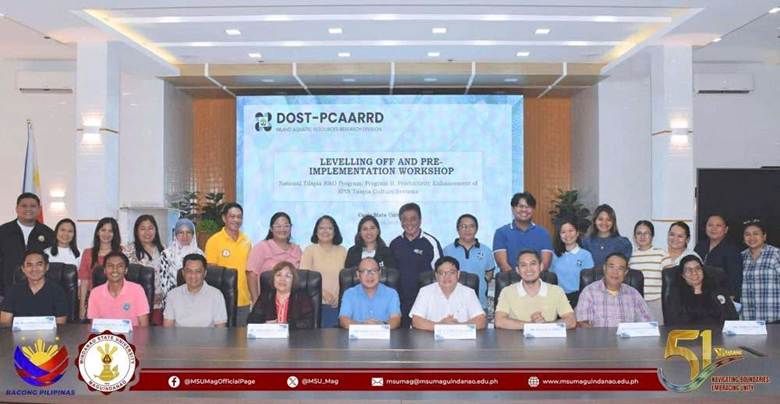
Strengthening Community Education and Outreach on Sustainable Fisheries, Aquaculture, and Responsible Tourism Through Academic Programs and Community Partnerships
Academic Programs for Developing Fisheries Professionals and PractitionersSustainable fisheries, aquaculture, and responsible tourism play important roles in protecting aquatic ecosystems, supporting food security, and creating livelihood opportunities for local communities. Mindanao State University–Maguindanao (MSU–Maguindanao) contributes to these objectives through its academic programs, research initiatives, extension activities, and partnerships with government agencies, research institutions, and community organizations. Through these initiatives, the University promotes scientific knowledge, technical skills, and responsible resource-use practices that support sustainable fisheries production, aquaculture development, aquatic biodiversity conservation, and community livelihood improvement.The University's academic offerings provide a foundation for developing professionals and technical personnel in fisheries and aquaculture. These include the Bachelor of Science in Fisheries, the Diploma in Fisheries Technology major in Aquaculture, and the Diploma in Fisheries Technology major in Fish Processing. Their curricula cover relevant areas such as capture fisheries, sustainable aquaculture, hatchery management, fish nutrition, fish health management, fisheries management, fish processing, and post-harvest technology. Through classroom instruction, laboratory activities, practical exercises, and industry exposure, students develop the scientific knowledge and technical competencies needed for responsible fisheries operations, sustainable aquaculture production, and the efficient utilization of aquatic resources.Research and Technology Development for Sustainable AquacultureBeyond formal academic instruction, the University extends fisheries and aquaculture education to local communities through research collaborations and livelihood development initiatives. One of its research contributions in 2025 was its participation in the National Tilapia Research and Development Program: Program B – Productivity Enhancement of SPIN Tilapia Culture Systems, funded by the Department of Science and Technology–Philippine Council for Agriculture, Aquatic and Natural Resources Research and Development (DOST–PCAARRD). Led by Dr. Ramjie Y. Odin, the initiative involved collaboration with Capiz State University, Northern Iloilo State University, Zamboanga State College of Marine Sciences and Technology, and the University of the Philippines. The research focused on improving saline-tolerant tilapia culture systems to support aquaculture productivity, production efficiency, and sustainability. The project contributes scientific information that can support improved aquaculture practices and the transfer of appropriate technologies to the fisheries sector.MSU–Maguindanao leads a collaborative national research program, supported by DOST-PCAARRD, to enhance salinity-tolerant tilapia culture systems through research, innovation, and institutional partnershipsCommunity-Based Training and Livelihood DevelopmentThe University's community outreach was further demonstrated through its partnership with the Office of the Presidential Adviser on Peace, Reconciliation and Unity (OPAPRU). From 2023 to 2025, MSU–Maguindanao implemented agricultural livelihood initiatives in Camps Abubakar, Badre, and Omar, involving former Moro Islamic Liberation Front (MILF) combatants, their families, farmers, and community organizations. These initiatives provided technical lectures, hands-on demonstrations, and practical training in fish farming, tilapia and catfish production, aquaculture management, integrated farming, and enterprise development. Participants gained practical knowledge and skills that can be applied to household food production, community-based aquaculture, and livelihood development.These activities also provide opportunities for government practitioners, local government personnel, fisheries technicians, agricultural extension workers, and other community-based development workers to learn about and apply improved fisheries and aquaculture practices.Partner farmers participate in a hands-on demonstration on proper fish feeding practices and fish tank management, gaining practical knowledge on feeding techniques and basic aquaculture production.Training on Agri-Aqua Production and Enterprise DevelopmentFrom 2024 to 2025, the University also implemented the Enhancement of Agri-Aqua Value Production and Value Chain of Economically Important Commodities in Camp Abubakar, with funding of ₱12,000,000 (USD 215,000.00). The project provided training in agricultural and aquaculture production, product processing, packaging, and marketing. It aimed to improve community production capacities, increase the value of locally produced commodities, and strengthen livelihood and enterprise opportunities.During the same period, the University implemented the Development of Science and Technology-Based Climate-Smart Mixed Farming System for Crop, Fish, and Livestock Production in Camps Omar and Badre, with ₱10,182,314.00 (USD 173, 000.00) allocated to each project location. Through technical training, demonstrations, and integrated production activities, participants learned climate-smart approaches to fish farming, crop cultivation, and livestock production. These interventions promoted diversified food production, efficient resource utilization, and more resilient agricultural livelihoods.Community participants also received practical instruction in aquaculture operations, farm management, product handling, storage, processing, packaging, branding, and enterprise development. These activities helped beneficiaries strengthen their capacity to produce and market agricultural and fisheries products for local consumption and potential participation in trade fairs, exhibitions, and other market opportunities. By combining technical instruction with livelihood and enterprise development, the University helps translate fisheries and aquaculture knowledge into practical economic opportunities for participating communities.The University's community-based training and extension activities provide practical learning opportunities for farmers, fisherfolk, government practitioners, and local development personnel. Where supported by the project arrangements, these training activities are provided free of charge to beneficiaries.Knowledge Sharing and Professional Development in Sustainable FisheriesAt the national level, the University contributed to knowledge-sharing activities on sustainable fisheries. On April 24, 2025, it participated in the TBTI Philippines 2025 April Webinar Series, which brought together researchers, faculty members, students, and fisheries practitioners to discuss small-scale fisheries, seaweed development, and sustainable aquatic resource management. Dr. Ramjie Y. Odin presented the study entitled “Fishing through Conflict: Unveiling the Socio-Economic Pulse of Ligawasan Marsh's Small-Scale Fisheries.” The presentation highlighted the socioeconomic conditions and challenges experienced by fishing communities in Ligawasan Marsh and provided an opportunity to share research findings relevant to small-scale fisheries management.Dr. Ramjie Y. Odin, Dean of the College of Fisheries, MSU–Maguindanao, presents a research discussion on the socio-economic conditions, livelihoods, and challenges of small-scale fishing communities in Ligawasan Marsh, highlighting the relationship between fisheries and local conflict.Furthermore, MSU–Maguindanao participated in the Second Philippine Small-Scale Fisheries National Symposium, held on October 21–23, 2025, at the MSU Main Campus in Marawi City. With more than 300 participants, the symposium provided a national platform for fisherfolk, researchers, fisheries managers, local government representatives, policymakers, and development partners to discuss sustainable fisheries management. Topics included inland and marine fisheries, fisheries governance, climate resilience, technological innovations, and the socioeconomic conditions of small-scale fishing communities. The University's participation strengthened opportunities for research dissemination, professional exchange, and engagement with stakeholders involved in fisheries development and management.MSU–Maguindanao joins the national advocacy for sustainable small-scale fisheries, reaffirming its commitment to responsible fisheries management, the protection of aquatic resources, and the promotion of sustainable livelihoods among local fishing communitiesResearch and Conservation Supporting Responsible TourismThe University's research and conservation activities also provide relevant scientific foundations for responsible nature-based tourism. Studies on the conservation value of the Philippine duck and community support for mangrove conservation in Katunggan Coastal Ecopark highlight the importance of protecting wetland and coastal habitats, promoting environmental awareness, and encouraging community participation in conservation. These research contributions are relevant to the development of responsible tourism approaches in natural environments, where the protection of biodiversity and ecosystem integrity is essential. Maintaining healthy wetlands, mangroves, and other aquatic habitats helps preserve the natural resources that may support educational visits, nature appreciation, and community-based tourism opportunities. MSU–Maguindanao participates in the 1st Mindanao Forum on Waters and Natural Resources, highlighting its commitment to environmental conservation and sustainable resource management through a mangrove-growing activity that promotes coastal rehabilitation and the protection of aquatic ecosystems.Institutional Contribution to Community Education and OutreachThrough its academic programs, collaborative research, technical training, community livelihood projects, and participation in national fisheries knowledge-sharing activities, MSU–Maguindanao extends fisheries and aquaculture education to students, former MILF combatants, farming households, local organizations, and fisheries stakeholders. Its educational and outreach activities also benefit government practitioners, local government personnel, fisheries managers, agricultural extension workers, and other professionals involved in fisheries and aquaculture development. These initiatives strengthen practical skills, promote sustainable aquaculture production, support fisheries-related livelihoods, and encourage responsible utilization of aquatic resources. By connecting scientific knowledge with community needs and institutional partnerships, the University contributes to sustainable fisheries and aquaculture development while providing a foundation for responsible tourism and aquatic ecosystem conservation.
December 20, 2025MSU–Maguindanao Delivers Community Outreach and Livelihood Education to Conflict-Affected Communities in BARMM
In 2025, Mindanao State University–Maguindanao (MSU–Maguindanao) demonstrated its commitment to providing dedicated outreach and educational activities for the wider community, including local residents, displaced and conflict-affected populations, former combatants, farmers, and women's organizations, through its agricultural livelihood and camp transformation initiatives. Under the program “Sowing Hope, Reaping Peace: MSU–Maguindanao Agricultural Livelihood and Camp Transformation Program in Camps Omar, Abubakar, and Badre,” the University extended its academic expertise, technical knowledge, and community development services beyond the campus to support livelihood recovery, food security, economic reintegration, and sustainable peace in the Bangsamoro Autonomous Region in Muslim Mindanao (BARMM).Implemented in partnership with the Office of the Presidential Adviser on Peace, Reconciliation and Unity (OPAPRU), MILF Camps Transformation mechanisms, local government units, and community cooperatives, the initiative formed part of the Agricultural Livelihood Support Projects under the MILF Camps Transformation Plan and the Normalization Track of the Comprehensive Agreement on the Bangsamoro. Through community engagement, technical extension support, stakeholder consultations, knowledge sharing, and livelihood interventions, MSU–Maguindanao helped participating communities gain access to productive resources and practical opportunities for sustainable economic participation.On June 17, 2025, MSU–Maguindanao and OPAPRU conducted the turnover of agricultural livelihood projects for Camp Omar at the Datu Hoffer Municipal Training Center. The initiatives supported four community organizations through diversified livelihood activities involving vegetable production, goat raising, poultry production, and fish farming. These interventions connected agricultural knowledge and university extension services with community-based food production, livelihood diversification, and cooperative development, creating opportunities for local residents to strengthen household food security and economic self-reliance.On June 18, 2025, the University and OPAPRU formally turned over a kitchen facility in Camp Abubakar, Barira, Maguindanao del Norte, benefiting the Calagan Women's Marketing Cooperative and Gawad Kalinga Village Togaig Farmer's Marketing Cooperative. The facility provided productive infrastructure for cooperative-led food enterprises and community livelihoods, particularly supporting women's economic participation. The intervention also contributed to the socioeconomic reintegration of decommissioned combatants by creating opportunities for civilian livelihood development within communities transitioning from armed conflict.The University continued its community outreach through the turnover of agricultural livelihood support projects for Camp Badre on July 16, 2025, at the Datu Odin Sinsuat Gymnasium, MSU–Maguindanao. The initiative benefited four agricultural and marketing cooperatives, supporting organized farming communities through productive livelihood resources and agricultural development opportunities. Across the three camps, 10 community organizations and cooperatives directly benefited from the University's extension interventions, including women's organizations and farmer-led enterprises.These dedicated community outreach activities demonstrate how MSU–Maguindanao connects higher education with lifelong learning opportunities, practical skills development, poverty reduction, food security, sustainable agriculture, women's economic empowerment, productive employment, social inclusion, and community resilience. By supporting vulnerable and conflict-affected populations, the University contributes to reducing inequalities and promoting peaceful and inclusive societies. Its collaboration with government institutions, local communities, and cooperatives also reflects the importance of effective institutions, knowledge sharing, capacity-building, and multi-stakeholder partnerships in addressing sustainable development challenges.MSU–Maguindanao remains committed to expanding accessible, community-responsive outreach and educational opportunities for the wider community, strengthening technical knowledge transfer, and sustaining livelihood development initiatives that empower local residents and vulnerable populations. Through continued partnerships, participatory community engagement, and inclusive extension services, the University seeks to transform academic knowledge into lasting opportunities for self-reliance, equitable development, and sustainable peace throughout the Bangsamoro.
December 15, 2025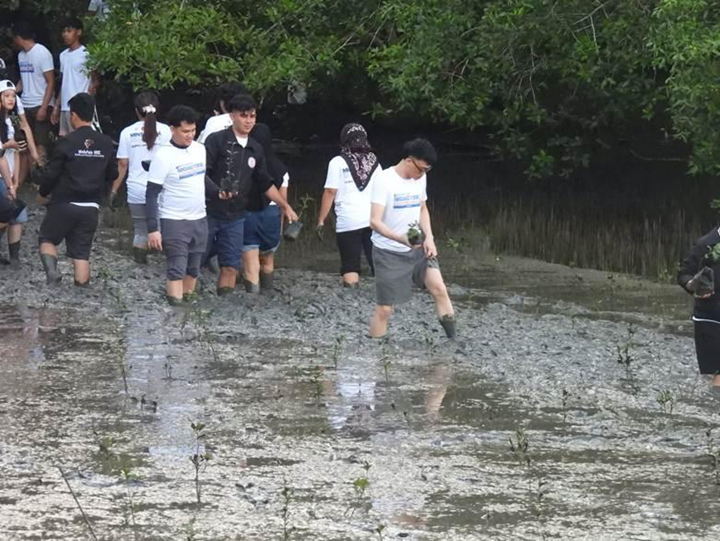
Restoring Mangroves and Preserving Indigenous Fish Species
Mangrove restoration at the Baluan Mangrove SanctuaryOn 28 November 2025, MSU–Maguindanao and partner state universities and colleges under MinSuPala-IRDC planted 107 mangrove seedlings at the Baluan Mangrove Sanctuary as the environmental action component of the 1st Mindanao Forum on Waters and Natural Resources. Mangroves protect coastlines, filter land-based pollution and provide nursery habitat for fish and other aquatic species, so restoring them maintains and extends a threatened coastal ecosystem.MSU-Maguindanao together with Partner universities and stakeholders plant 107 mangrove seedlings at the Baluan Mangrove Sanctuary, 28 November 2025.Preserving indigenous fish speciesInland waters in Maguindanao are home to native fish species valued for food, livelihood and culture. In 2025, the University launched the second phase of the MinSuPala-IRDC project “Establishment and Preservation of Indigenous Fish and Crop Products,” supported by a ₱5-million allocation from the Department of Budget and Management.On 23–25 July 2025, the project team met the Local Government Units of Cotabato City, Kabuntalan, Talitay, Datu Piang and Northern Kabuntalan, and ran a Prioritization Tool Survey in which community leaders, farmers and fisherfolk identified the indigenous species most important to preserve. Earlier key informant interviews had pointed to native fish such as haluan, native katipa and popoyu. The LGUs committed to partner with the project, which now moves to community-based conservation of the species identified.The MinSuPala-IRDC team with LGU partners during the July 2025 coordination meetings for the preservation of indigenous fish and crop species.
December 15, 2025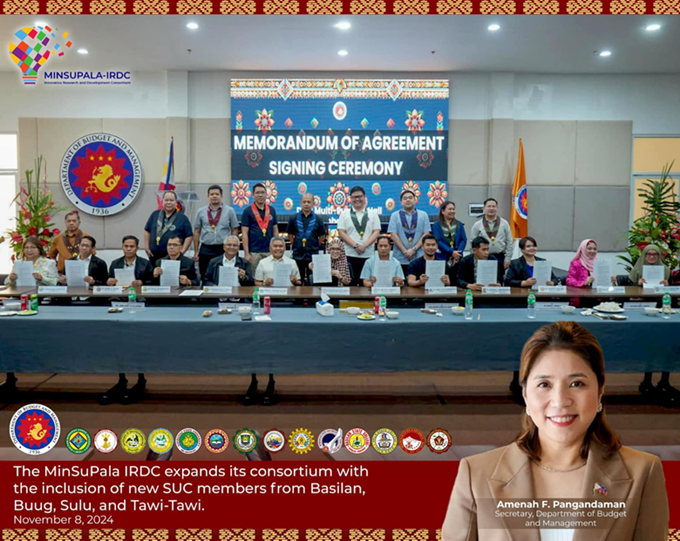
Working with Communities to Protect Shared Waters
Rivers, lakes and marshes are shared resources, and MSU–Maguindanao works with local communities, governments and partner institutions to manage them together.A regional consortium for shared watersMSU–Maguindanao leads MinSuPala-IRDC, which expanded in 2025 after a Memorandum of Agreement signed on 13 November 2024 at the Department of Budget and Management Region XI welcomed six more state universities and colleges from Basilan, Buug, Sulu and Tawi-Tawi.Through the consortium, the University hosted a stakeholder consultation on 27 February 2025 where researchers, MAFAR–BARMM, the Bangsamoro Planning and Development Authority, DOST–PCAARRD, provincial environmental offices, LGU officials and fisherfolk associations reviewed research on Ligawasan Marsh, Lake Buluan, the Rio Grande de Mindanao and Lake Lanao, and identified shared priorities for protecting habitats, preventing pollution and sustaining inland fisheries.Signing of the MinSuPala-IRDC expansion agreement at DBM Region XI, Davao City, 13 November 2024.Researchers, government representatives, LGU officials and community stakeholders at DOS Gymnasium, MSU-MaguindanaoRestoring mangroves with partner universitiesOn 28 November 2025, the University joined partner state universities and colleges and local stakeholders in planting 107 mangrove seedlings at the Baluan Mangrove Sanctuary, turning the discussions of the 1st Mindanao Forum on Waters and Natural Resources into shared action on the ground.MSU–Maguindanao and partners at the mangrove-growing activity of the 1st Mindanao Forum on Waters and Natural Resources, November 2025.
December 13, 2025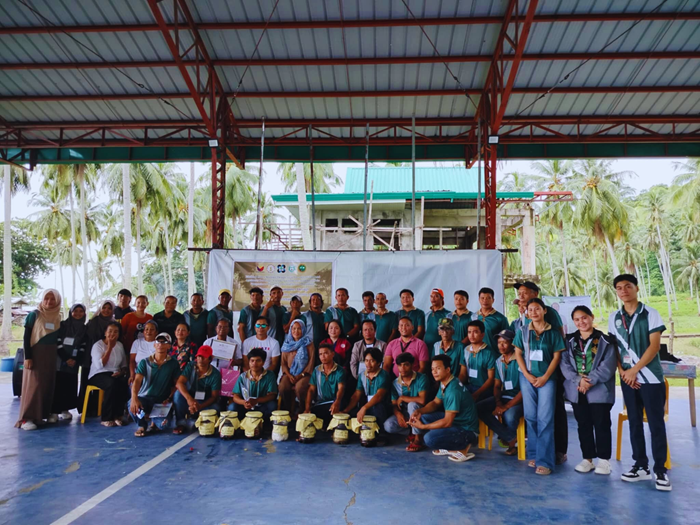
Educational Outreach Programs to Communities on Sustainable Agricultural Land Management
Through its research, extension, and capacity-building initiatives, Mindanao State University–Maguindanao provides communities, farmers, and other stakeholders with scientific knowledge, practical skills, and technologies for sustainable agricultural land management. These efforts included community-based agroforestry training and research dissemination activities that promoted sustainable farming, improved land productivity, and strengthened natural resource conservation.Capacity-Building and Community Outreach ProgrammesTrainers’ Training on Agroforestry Establishment and Development Leveraging the Agroforestry Land Capability Assessment and Mapping Scheme (ALCAMS) for Effective Land Assessment was conducted by the College of Forestry and Environmental Studies on February 25–27, 2025. This training is part of the project “Enhancing Climate Resilience through Native and Fruit Tree-Based Agroforestry Technology: A Science and Technology-Based Initiative for Emergencies and Hazards in Datu Blah Sinsuat, Maguindanao”, implemented in partnership with the University of the Philippines Los Baños–Institute of Agroforestry (UPLB–IAF) and funded by the Department of Science and Technology–Philippine Council for Agriculture, Aquatic and Natural Resources Research and Development (DOST–PCAARRD). The aimed to equip participants with the knowledge and technical skills needed to assess land capability and develop appropriate agroforestry systems.Through learning sessions, participants explored agroforestry concepts, principles, and system types in the Philippine context. They also learned soil and water conservation techniques and approaches for assessing soil erosion. These lessons were reinforced through field exercises in Barangay Nalkan, Datu Blah Sinsuat, Maguindanao del Norte, where participants examined existing land-use patterns, measured land slopes, assessed soil fertility using portable soil test kits, and constructed A-frames to identify contour lines. They subsequently applied the Agroforestry Land Capability Assessment and Mapping Scheme to classify land according to its capabilities and use site assessment data in preparing agroforestry farm development plans. The training concluded with group presentations of re-entry plans, allowing participants to identify how they could apply and share their acquired knowledge in their respective institutions and communities.Participants included forestry faculty members from MSU-Buug, MSU-Marawi, and MSU-Lanao del Norte Agricultural College, representatives from the Ministry of Environment, Natural Resources and Energy, University faculty members and CFES students. As future trainers and practitioners, they also gained practical competencies that they can share with farmers and local communities to support climate-resilient and sustainable agricultural land management.The University’s community outreach efforts were further extended through the Seminar-Workshop on Cooperative Management, Agroforestry, and Nursery Development held on June 16 – 17, 2025, in Datu Blah Sinsuat, Maguindanao del Norte. The University, through its College of Agriculture and College of Forestry and Environmental Studies, conducted the Seminar-Workshop on Empowering Communities Through Cooperative Management, Agroforestry, and Nursery Development on June 16–17, 2025, in Datu Blah Sinsuat, Maguindanao del Norte. The activity was also part of the DOST-PCAARRD-funded project on climate-resilient agroforestry, which promotes sustainable land-use practices to address soil degradation, declining farm productivity, and climate-related risks.Participants of the Seminar-Workshop on Empowering Communities Through Cooperative Management, Agroforestry, and Nursery Development on June 16–17, 2025, in Datu Blah Sinsuat, Maguindanao del Norte. The training aimed to equip participants with practical skills in agroforestry using native and fruit-bearing trees, cooperative management, nursery establishment, and organic fertilizer production. Sessions covered values transformation, cooperative development, agroforestry practices and ecosystem services, nursery management, and sustainable farming inputs. Faculty members, government practitioners, and private-sector experts facilitated the discussions. The seminar-workshop also included group workshops and the preparation of re-entry plans for applying the lessons to cooperative development, community nurseries, and agroforestry initiatives. This activity provided the University a platform to extend its agricultural and forestry expertise to strengthen community capacity for sustainable farming, climate-resilient livelihoods, and responsible natural resource management.Researchers and stakeholders during the MinSuPala IRDC Stakeholders' Consultation held at MSU-Maguindanao on February 27, 2025On February 27, 2025, Mindanao State University–Maguindanao hosted the Mindanao-Sulu-Palawan Innovative Research and Development Consortium Stakeholders’ Consultation. It aimed to facilitate scientific knowledge dissemination and develop policy recommendations for the conservation and sustainable management of these important ecosystems. Researchers from 4 state universities and colleges, including MSU–Maguindanao, presented their assessments of Ligawasan Marsh, Lake Buluan, the Rio Grande de Mindanao, and Lake Lanao. Their presentations covered water quality, fisheries, watershed conditions, and socioeconomic factors affecting these ecosystems.The consultation, participated in by representatives from the Ministry of Agriculture, Fisheries and Agrarian Reform, Bangsamoro Planning and Development Authority, DOST-PCAARRD, Provincial Environment, Natural Resources and Energy Office of Maguindanao, and participating LGUs from Datu Piang, Talitay, Northern Kabuntalan, Cotabato City, Mangudadatu, and Sultan Kudarat, provided a venue for stakeholders to examine the implications of the research findings for local environmental governance and resource management. To further extend the reach of research dissemination, printed copies of the MinSuPala-IRDC Report Series, containing the research results and policy recommendations, were turned over to stakeholders for their reference and use in local planning and decision-making.Another significant knowledge dissemination initiative was the 1st Mindanao Forum on Waters and Natural Resources, held on November 26–28, 2025, in General Santos City. Organized through the Mindanao Sulu Palawan–Innovative Research and Development Consortium (MinSuPala-IRDC), the forum gathered 200 participants representing 20 state universities and colleges, five line agencies, and stakeholders from four regions and nine cities and provinces. The event featured plenary sessions, scientific oral and poster presentations, policy pitches, and a Machine and Product Innovation Hackathon, providing platforms for sharing research findings, discussing environmental challenges, and promoting scientific learning on water resources and ecosystem sustainability.MSU-Maguindanao Chancellor Bai Hejira Nefertiti M. Limbona, together with Chancellor Shidik T. Abantas, leads the turnover of the Phase 1 Consolidated Report and published books to DBM Region XII Regional Director Akmad M. Usman and Regional Development Council Chairperson Emmylou Taliño-Mendoza, represented by Asst. Director Romel Patrick E. Tanghal.A significant highlight was the ceremonial turnover of the Phase 1 Consolidated Reports and published books led by MSU–Maguindanao Chancellor Bai Hejira Nefertiti M. Limbona to Department of Budget and Management (DBM) Region XII Regional Director Akmad M. Usman and Regional Development Council Chairperson Emmylou Taliño-Mendoza, represented by Assistant Regional Director Romel Patrick E. Tanghal of the Department of Economy, Planning, and Development (DEPDev) Regional Office XII. The turnover made the consortium's research outputs available to government institutions, extending the reach of scientific knowledge to regional development stakeholders. Through these complementary initiatives, MSU–Maguindanao demonstrates its commitment to extending educational opportunities and research-based knowledge beyond the University, helping local communities and stakeholders adopt informed and sustainable approaches to agricultural land use and natural resource management.
December 12, 2025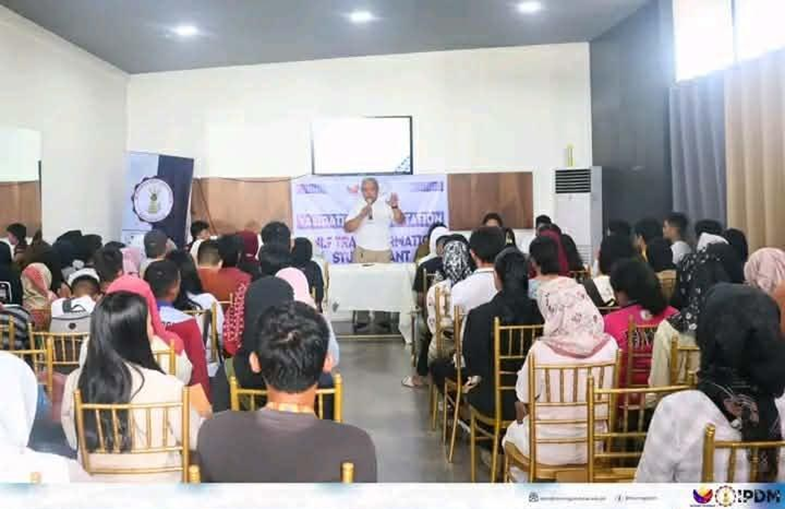
MSU-Maguindanao and OPAPRU Support Education and Peacebuilding through MNLF Transformation Study Grant
Mindanao State University–Maguindanao (MSU–Maguindanao), under the leadership of Chancellor Bai Hejira Nefertiti M. Limbona, PhD, implemented the MNLF Transformation Study Grant with Peace Formation Sessions during Academic Year 2024–2025 in partnership with the Office of the Presidential Adviser on Peace, Reconciliation and Unity (OPAPRU). Funded through the PAyapa at MAsaganang PamayaNAn (PAMANA) Program, the initiative provided educational assistance and peace formation to college students from conflict-affected communities in Maguindanao del Norte, Basilan, and Lanao del Sur.Grantees attending the MNLF Study Grant Orientation and ValidationThe program’s beneficiaries are 350 college students profiled or identified in connection with the MNLF Transformation Program, including profiled combatants, their next of kin, and designated individuals. The grantees will receive cash assistance amounting to P50,000.00 per academic year. In addition to financial support, the program also conducted a series of peace formation and "Kumustahan" sessions focused on leadership, peace, and conflict sensitivity. By helping students continue their education and develop skills in leadership, reconciliation, and nonviolent conflict resolution, the program promotes access to future employment, productive participation in the economy, and inclusive community development. It contributes to efforts to expand educational and economic opportunities for vulnerable youth while developing responsible citizens who can support peaceful and resilient communities.MSU–Maguindanao and OPAPRU will continue strengthening their partnership to sustain educational assistance, deepen peace formation initiatives, and empower more learners from conflict-affected communities to become productive professionals and advocates of lasting peace.
December 11, 2025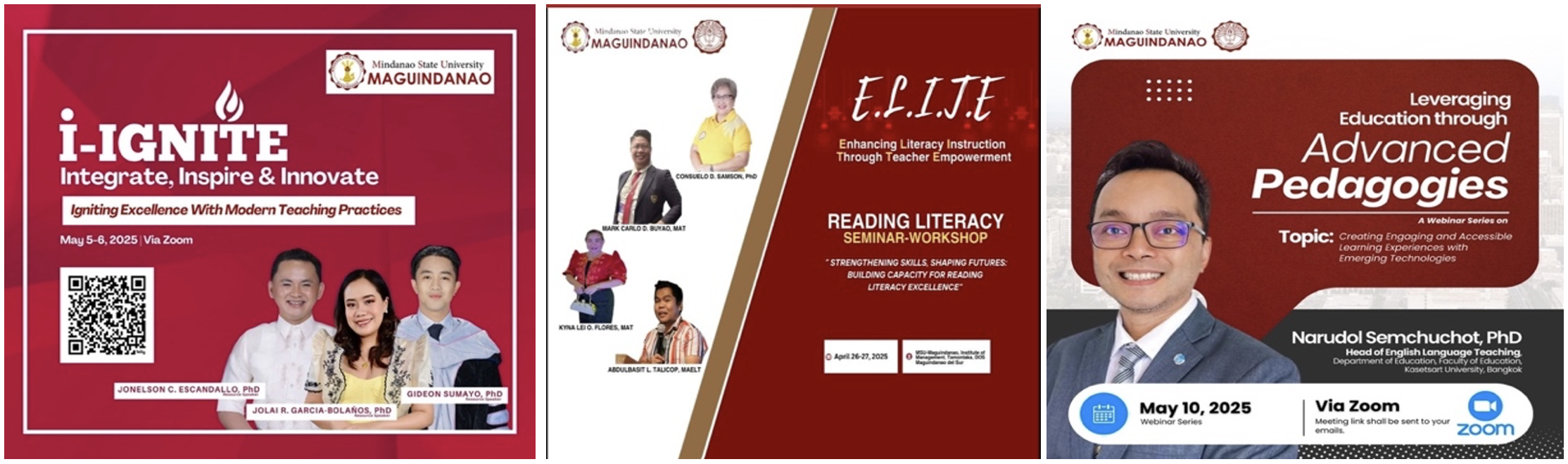
College of Education Provides Free Access to Educational Webinar Series
Positive feedback from participants reflects the value of the educational webinars hosted by the College of Education of Mindanao State University - Maguindanao. These activities provide free learning opportunities for Department of Education (DepEd) teachers, private school teachers, school administrators, college instructors, pre-service teachers, and other interested participants to learn from experts, exchange knowledge, and engage in educational discussions.One of these initiatives was the Principles and Practices in English Language Teaching webinar series, which comprised five educational sessions featuring eight resource speakers from universities, educational institutions, and government education agencies. The featured activities included ELITE (Enhancing Literacy Instruction Through Teacher Empowerment), held on April 26–27, 2025, with 75 participants; IGNITE (Integrate, Inspire & Innovate), conducted on May 5–6, 2025, with 87 participants; and LEAP (Leveraging Education through Advanced Pedagogies), held on May 10, 2025, with 75 participants. The sessions covered literacy instruction, curriculum development, innovative teaching methodologies, and advanced pedagogical practices, providing participants with professional knowledge and practical insights into current approaches to English Language Teaching.Public posting and the invited resource speakers who shared their expertise during MSU–Maguindanao’s English Language Teaching Webinar SeriesAnother public learning activity was the webinar entitled Beyond Borders: Understanding and Teaching World Englishes, hosted by the University's Doctor of Education major in English Language Teaching programme on September 27, 2025. The event featured Dr. Shirley N. Dita of De La Salle University, Manila, who discussed the use of English across different cultures and communities, practical approaches to teaching English in diverse classrooms, and the importance of language as a global instrument of communication. Conducted through Microsoft Teams, the webinar gathered 189 participants, including educators, students, and other interested individuals. It provided an opportunity to learn about contemporary perspectives on English Language Teaching and linguistic diversity in educational settings.Dr. Shirley N. Dita discusses World Englishes with participants during an MSU–Maguindanao webinarThe College also hosted the online webinar entitled Equations for Equity: Advancing Mathematics Education for/through Social Justice, organized by students of the Master of Science Education major in Secondary Mathematics programme on November 15, 2025. Featuring Dr. Bill Atweh of Curtin University, Australia, the webinar gathered 45 participants and explored the role of mathematics education in promoting equity, quality education, and social justice. Through publicly announced registration and online participation via Zoom, the activity welcomed mathematics educators and other interested individuals. It provided a platform for discussions on how mathematics teaching can contribute to inclusive and equitable educational practices.Mathematics educators and students participate in the webinar “Equations for Equity: Advancing Mathematics Education through Social Justice” via Zoom.Through these initiatives, the College of Education provides free educational webinars and expert-led discussions for educators, professionals, students, and other members of the community. These activities demonstrate the University's efforts to make academic knowledge and professional learning opportunities accessible to a wider range of education stakeholders.
December 11, 2025