SDG13
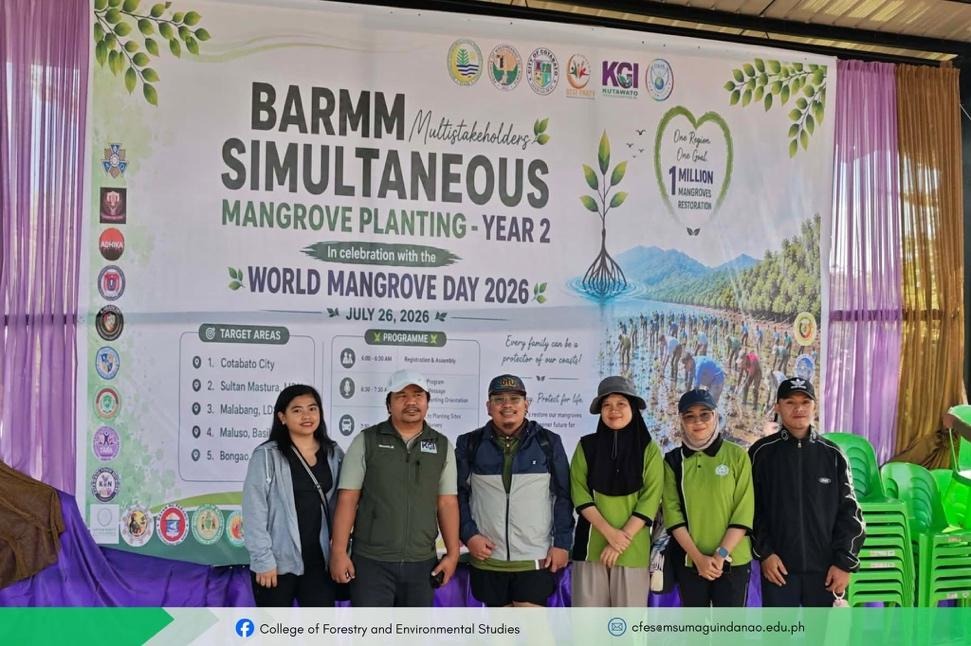
MSU-Maguindanao Joins BARMM-Wide Mangrove Planting for Climate Resilience
Mindanao State University-Maguindanao (MSUMag), through its College of Forestry and Environmental Studies (CFES), participated in the BARMM Multi-Stakeholders Simultaneous Mangrove Planting - Year Two on July 26, 2026, in celebration of World Mangrove Day. Implemented by Kutawato Greenland Initiatives, Inc. (KGI) with support from the Ministry of Environment, Natural Resources, and Energy (MENRE), the activity aimed to restore mangrove ecosystems and strengthen coastal resilience in a region where communities are exposed to climate-related hazards such as storm surges, flooding, and erosion. The planting was held simultaneously across five coastal sites in Cotabato City, Tawi-Tawi, Basilan, and Maguindanao del Norte, where 1,674 volunteers planted 13,785 mangrove propagules and seedlings. CFES participants planting mangroves, with the University’s prescribed watermark. Suggested caption: “MSU-Maguindanao CFES volunteers during the BARMM Multi-Stakeholders Simultaneous Mangrove Planting - Year Two.Participants came from government agencies, local government units, academic institutions, civil society organizations, youth groups, law-enforcement agencies, and community volunteers, showing a strong multi-sector partnership for regional conservation. The primary beneficiaries are the mangrove ecosystems and the coastal communities near the planting sites, which stand to gain from restored natural coastal protection, while the volunteers and partner institutions, including MSUMag, are secondary beneficiaries who contributed to collective environmental action. The initiative supports SDG 13: Climate Action by helping coastal communities build resilience against climate-related hazards. Its main contribution is environmental: mangroves act as natural coastal defenses, so restoring them is a form of ecosystem-based adaptation that also supports biodiversity and coastal ecosystem health. It also contributes socially by engaging students, youth, government, and community members in hands-on climate action and building a shared sense of responsibility for coastal protection. Continued monitoring and protection will be essential to ensure the survival and long-term benefits of the planted seedlings. Through its participation, MSU-Maguindanao strengthens its role in regional environmental partnerships and community-based climate action beyond the University campus.
August 8, 2026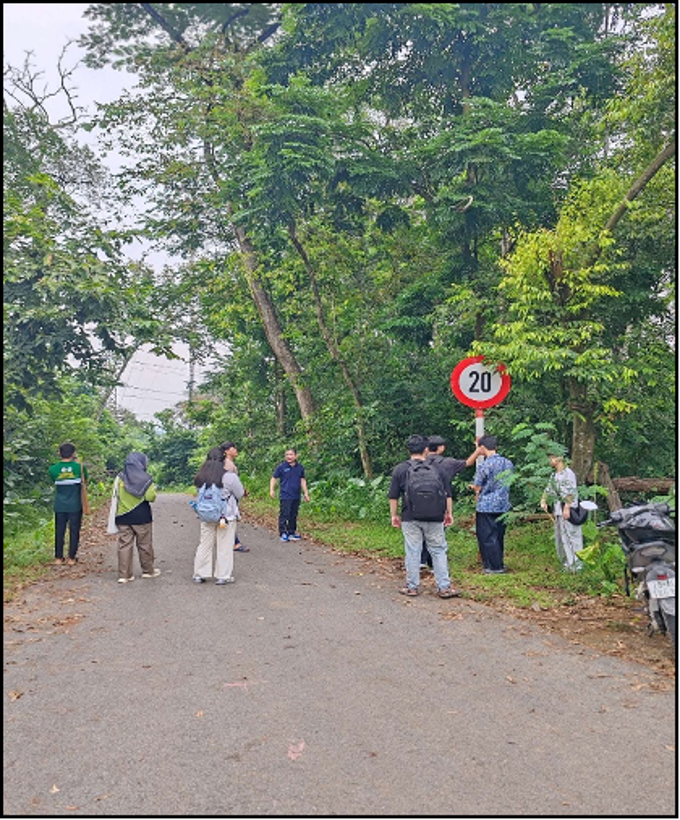
Collaboration with International Universities to Review Comparative Approaches and Develop Research-Based Best Practices for Sustainable Development
Five hundred Maguindanao residents surveyed with partners in Greece, 280 seaweed consumers interviewed with researchers in Türkiye and Malaysia, and biodiversity measurements shared at an international conference the University co-hosted show how Mindanao State University–Maguindanao participates in international collaboration on gathering and measuring data for sustainable development. Through joint research, international conferences, and exchange, its researchers collect field data in the Bangsamoro with international partners, measure it with shared methods, and make it available to the international scientific community.International Research CollaborationWith the Democritus University of Thrace in Greece, Peter Jan D. de Vera of MSU–Maguindanao measured how much the public values protecting the endangered long-tailed macaque, a primate that lives close to farms and settlements in Maguindanao. Conservation programs need to know whether residents will support protection, and how much they value it, before agencies can design and fund it. Working with Isshi Rayna Bel E. Paquingan and John Paul A. Catipay of Notre Dame University and Vasileios J. Kontsiotis and Vasilios Liordos of the Greek university, he surveyed 500 Maguindanao residents with approval from the MSU–Maguindanao Ethics Research Committee, asking how much each would be willing to pay every year to protect the species. The study, published in Environments (Vol. 12, Issue 12, Art. No. 467, 2025) with its dataset openly available, found an average willingness to pay of PHP 46.90 a year, or about PHP 10.5 million a year across the study area.A second collaboration, with researchers in Türkiye and Malaysia, gathered data on food and coastal livelihoods. Seaweed farming supports many families in Tawi-Tawi, but little had been recorded about how much seaweed local people eat and which species they use. Jonald C. Bornales of the College of Fisheries joined a 19-member team led by Albaris B. Tahiluddin that documented seaweed consumption in seven Tawi-Tawi municipalities: Bongao, Panglima Sugala, Simunul, Sitangkai, Sibutu, Tandubas, and South Ubian. Working under ethics approval OVCRE-ERC-004-2024-18 from the MSU–Maguindanao Research Ethics Committee, the team held 280 interviews and seven focus group discussions. It found that about 99 percent of respondents eat seaweed and identified 13 edible species (Phycology, Vol. 5, Issue 2, Art. No. 25, June 2025).The University also builds the skills to gather such data. Under a Memorandum of Understanding with the Vietnam National University of Forestry, the College of Forestry and Environmental Studies sent four BS Forestry students to Hanoi from August 11, 2025, when they were formally received by the university’s coordinators for international students, to October 5, 2025, for training in Natural Resources Ecology and Measurement and in Global Change Ecology: Impacts and Mitigation, learning field methods for ecological assessment that they can apply to forests in the Bangsamoro.BS Forestry students take part in a hands-on field activity during their exchange at the Vietnam National University of Forestry, Hanoi, August to October 2025.Co-hosting of Research ConferenceThe University also shares its measurements internationally. On July 23, 2025, it co-hosted the 4th Biennial Conference on Tropical Biodiversity with the Faculty of Forestry of Hasanuddin University in Indonesia, Tomsk Polytechnic University in Russia, Universiti Teknologi MARA in Malaysia, and the University of North Sumatra, held in Makassar and online. Ten University faculty researchers presented 13 studies, with field measurements of birds, epiphytes, tree species diversity, aboveground biomass and carbon stocks, the wood properties of native and fruit trees, and soil and water quality, along with assessments of land-use change, forest management for climate change, public attitudes toward conserving the Philippine brown deer, and residents’ willingness to pay for protecting two watersheds. The presenters were Sandra Samaon Akmad, Cindy Poclis, Kristine Joy Rendon, Adelene Lababo, Datulabi Untong Jr., Jayric Villareal, Mercedita Laurie, Peter Jan De Vera, Rolly James F. Cheng, and Rowena C. Benavides. One of these studies, a land use and land cover analysis of Datu Odin Sinsuat co-authored with researchers affiliated with Nanjing Forestry University in China, was published in IOP Conference Series: Earth and Environmental Science (Vol. 1553, 2025).MSU–Maguindanao faculty present biodiversity at the 4th Biennial Conference on Tropical Biodiversity, July 23, 2025.
December 29, 2025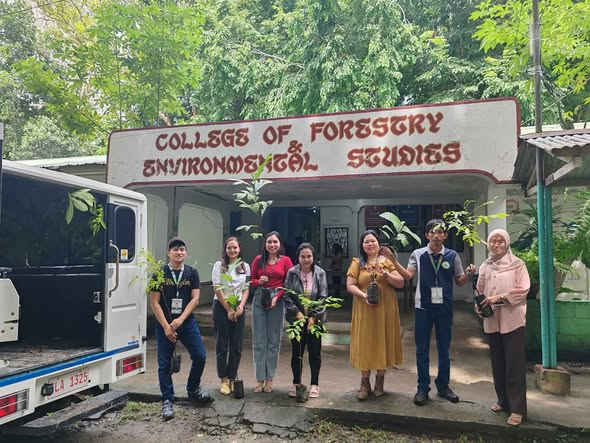
MSU-Maguindanao Donates 200 Seedlings to MENRE-BARMM for Reforestation Efforts
Mindanao State University–Maguindanao, through its College of Forestry and Environmental Studies (CFES), donated 200 quality seedlings to the Ministry of Environment, Natural Resources, and Energy of the Bangsamoro Autonomous Region in Muslim Mindanao (MENRE-BARMM) on June 5, 2025, in observance of Environment Day 2025.Faculty members of the College of Forestry and Environmental Studies of MSU–Maguindanao with seedlings prepared for the Environment Day 2025 donation to MENRE-BARMM, supporting regional reforestation and ecosystem restoration effortsThe initiative provided planting materials to support MENRE-BARMM’s reforestation efforts and regional environmental programs. Through this collaboration, MSU-Maguindanao supported local environmental initiatives to restore vegetation and promote environmental awareness. The activity also highlighted the role of academic institutions and government agencies in supporting environmental conservation efforts in the Bangsamoro region.The donation directly benefited MENRE-BARMM by providing 200 seedlings for its environmental initiatives. Through this activity, MSU-Maguindanao contributed to Sustainable Development Goal 13: Climate Action, which calls for urgent action to combat climate change and its impacts. By providing seedlings for reforestation efforts, the University supported an environmental initiative relevant to climate action. The activity also demonstrated collaboration between the University and MENRE-BARMM in pursuing shared environmental objectives.Moving forward, MSU-Maguindanao, through CFES, continues to support environmental initiatives and collaborative efforts that contribute to climate action and environmental sustainability in the Bangsamoro region.
December 22, 2025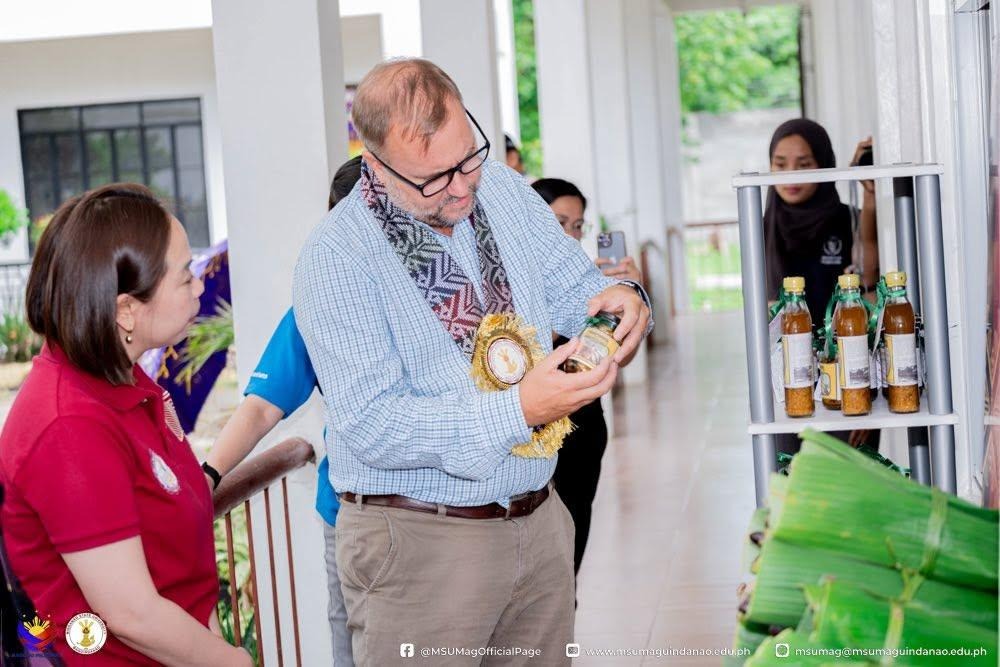
MSU-Maguindanao and WFP Partner for Food Security and Climate-Resilient Communities in BARMM
Mindanao State University-Maguindanao (MSU-Maguindanao), led by Chancellor Bai Hejira Nefertiti M. Limbona, has signed a Memorandum of Agreement with the United Nations World Food Programme (WFP), represented by Representative and Country Director Regis Chapman. The signing took place at the Institute of Management. The partnership aims to advance food security, nutrition, and climate resilience in the Bangsamoro Autonomous Region in Muslim Mindanao (BARMM), particularly for smallholder farmers, cooperatives, and vulnerable and underserved communities.Chancellor Limbona emphasized the University’s role in generating and sharing scientific data, developing solutions to food and nutrition insecurity, and supporting the BARMM government’s initiatives. Country Director Chapman highlighted the value of combining WFP’s global expertise with MSU-Maguindanao’s local knowledge to address hunger and promote climate-resilient communities.WFP Representative and Country Director Regis Chapman views products produced by partner-farmers under the MILF Camps Transformation ProgramUnder the 2025-2027 cooperation work plan, the partnership strengthens farming communit adaptive capacity through climate-smart agriculture training, watershed management, and post-harvest loss reduction. These efforts help communities withstand climate-related hazards and protect their food and livelihoods, contributing to the resilience and adaptation goals of SDG 13.The development of Local Climate Change Adaptation Plans (LCCAPs) in priority barangays integrates climate measures into local planning, while MSU-Maguindanao’s generation and sharing of scientific data supports the BARMM government’s climate-related decision-making. The partnership also builds the capacity of smallholder farmers and cooperatives and integrates food security and nutrition resources into the University’s curriculum, thereby enhancing awareness and institutional capacity on climate action.MSU-Maguindanao will mobilize experts in food systems, climate adaptation, and gender-responsive programming to support WFP projects, while WFP will provide technical resources and facilitate exchange visits to promote best practices. The initiatives prioritize vulnerable and underserved communities most exposed to climate-related challenges, through culturally sensitive tools for cooperatives and gender-responsive programming that ensure marginalized groups are included in climate action. This builds on the 2024 Community-Based Participatory Planning workshops in Maguindanao del Sur and Maguindanao del Norte, which identified livelihood challenges and environmental stressors in local communities.Through this partnership, MSU-Maguindanao and WFP aim to strengthen local capacities and support climate adaptation, sustainable livelihoods, and food security in BARMM.WFP Cotabato Sub-Office Head Lyca Sarenas, WFP team members, and MSU-Maguindanao graduate program coordinators, project staff, directors, faculty, and other personnel attended the MOA signing.
October 22, 2025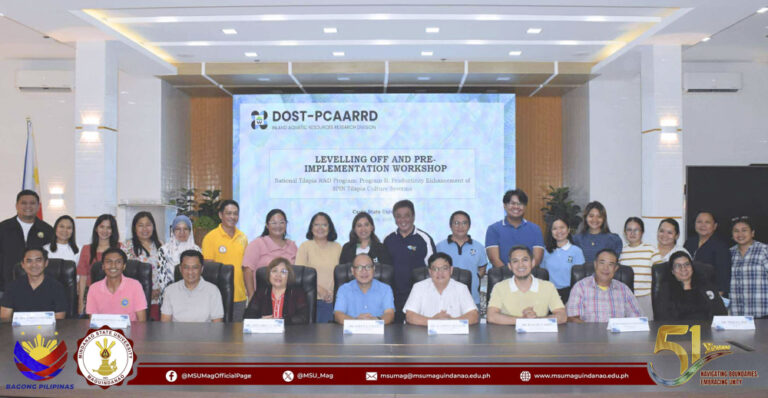
MSU-Maguindanao Leads National R&D Program on Saline-Tolerant Tilapia Production
Mindanao State University–Maguindanao, through Dr. Ramjie Y. Odin, Dean of the College of Fisheries, leads Program B of the DOST-PCAARRD National Tilapia R&D Program, Productivity Enhancement of SPIN Tilapia Culture Systems. The inception meeting was held on June 19, 2025, at Capiz State University to coordinate research activities aimed at improving saline-tolerant tilapia production, sustainability, and cost-efficiency.Dr. Ramjie Y. Odin, Dean of the College of Fisheries with other officials of state universities, leads Program B of the DOST-PCAARRD National Tilapia R&D Program, Productivity Enhancement of SPIN Tilapia Culture Systems The national initiative brings together MSU-Maguindanao, Capiz State University, Northern Iloilo State University, Zamboanga State College of Marine Sciences and Technology, and the University of the Philippines. Its five interconnected projects focus on improved hatchery and grow-out systems, feeding strategies, microbial-based nursery production, acclimation and transport, and local probiotics.The program directly involves researchers and participating academic institutions. Its research outputs may also benefit aquaculture practitioners and local food systems through improved production technologies and more cost-efficient saline-tolerant tilapia culture systems.The initiative is relevant to Sustainable Development Goal 13 (Climate Action) insofar as research on saline-tolerant tilapia may support adaptation to changing environmental conditions. Through collaborative research, coordinated methodologies, and improved project monitoring, the program strengthens national aquaculture research capacity and explores approaches to more sustainable production.
August 10, 2025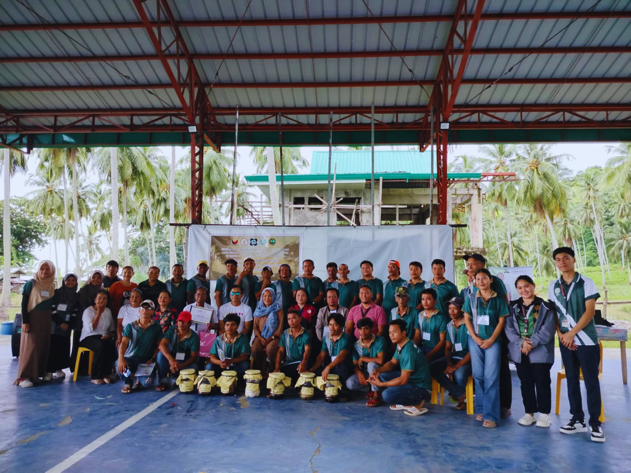
MSU-Maguindanao Equips Local Communities With Science-Based Strategies For Climate Action
The College of Forestry and Environmental Studies (CFES) of MSU-Maguindanao conducted a two-day seminar-workshop on Empowering Communities Through Cooperative Management, Agroforestry, and Nursery Development on June 16-17, 2025, in Datu Blah Sinsuat, Maguindanao del Norte. The activity is part of the DOST-PCAARRD-funded project “Enhancing Climate Resilience through Native Tree and Fruit Tree-Based Agroforestry Technology,” and it advances Sustainable Development Goal 13: Climate Action.Participants during the two-day seminar-workshop on Empowering Communities through Cooperative Management, Agroforestry, and Nursery Development in Datu Blah Sinsuat, Maguindanao del NorteThe training aimed to equip local communities with practical, science-based strategies to address climate-related challenges. These strategies covered sustainable land use, cooperative building, nursery development, and organic farming.The resource speakers guided the sessions. Prof. Musa Dicolano opened with a discussion on values transformation, laying the groundwork for lasting change in community attitudes and practices. Prof. Datuali Abdula followed with the principles of cooperative management, helping participants understand how collective action can sustain community-led initiatives. Prof. Omor Pendaliday then lectured on agroforestry practices, while Forester Nazrollah Pendaliday offered practical guidance on nursery development. Engr. Andres Mirar closed the technical sessions by demonstrating how to produce organic fertilizer using locally available materials, an approach that lowers farming costs and promotes environmentally sound agriculture.The seminar-workshop gathered the project’s community beneficiaries in Datu Blah Sinsuat, Maguindanao del Norte together with five students from CFES, creating a valuable exchange between local farmers and the next generation of forestry and environmental professionals. Through this initiative, knowledge and leadership come together to cultivate resilient, self-reliant communities ready to face both environmental and economic challenges.The activity's success also reflects the leadership of Chancellor Bai Hejira Neferititi M. Limbona, who continues to support environmental initiatives. Her commitment to climate change mitigation and ecological awareness is aligned with MSU-Maguindanao’s mission of responsive community engagement and empowerment. By linking research, education, and community engagement, the university shows that meaningful climate action begins at the local level, where people, trees, and cooperative effort grow together.
August 1, 2025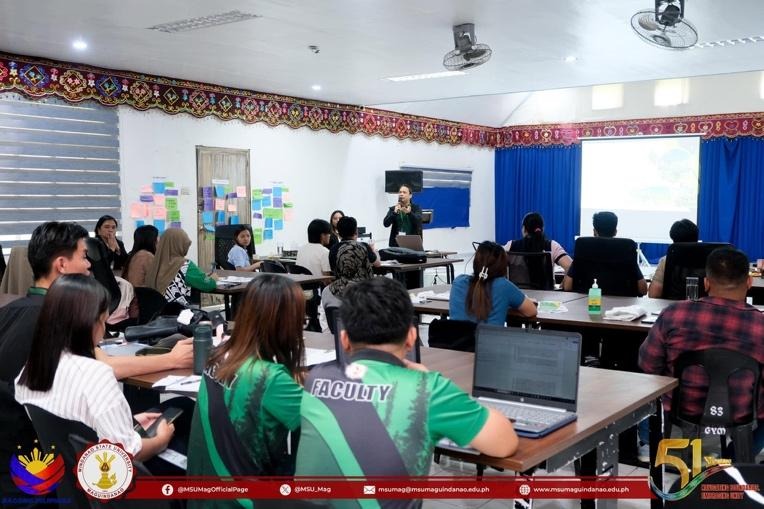
MSU-Maguindanao Launches DOST-PCAARRD-Funded Agroforestry Project to Take Urgent Climate Action in Datu Blah Sinsuat
Mindanao State University-Maguindanao, through its College of Forestry and Environmental Studies, has launched a ₱5-million research and extension project to combat climate change and its impacts on upland communities in Datu Blah Sinsuat, Maguindanao del Norte. Titled “Enhancing Climate Resilience Through Native and Fruit Tree-Based Agroforestry Technology: A Science and Technology-Based Initiative for Emergencies and Hazards in Datu Blah Sinsuat, Maguindanao,” the project is funded by the Department of Science and Technology-Philippine Council for Agriculture, Aquatic, and Natural Resources Research and Development (DOST-PCAARRD). It aims to enhance climate resilience and promote sustainable agriculture through agroforestry technology.Trainers’ Training on Agroforestry Establishment and Development at the Training Center Hall A, MSU-Maguindanao on February 25, 2025. Upland communities of Datu Blah Sinsuat are the primary beneficiaries, gaining climate-resilient land-use systems and livelihood support. Agroforestry practitioners and farmers will receive technical training, local government units gain a science-based approach to climate mitigation and hazard preparedness, and CFES faculty, researchers, and students benefit from applied research and extension opportunities.This activity supports SDG 13 to take urgent action to combat climate change and its impacts. The project contributes to this goal by taking urgent action on both fronts. As the Chancellor noted, its technology aids climate change prevention and mitigation, while native and fruit tree-based agroforestry helps upland communities withstand climate-related emergencies and hazards. Practitioner training, community participation in decision-making, and engagement with local government and the provincial environment office build the knowledge and local capacity needed to sustain climate action beyond the project period.MSU-Maguindanao will continue implementing the project with the community and its partners, and will report results, including trees planted, practitioners trained, and adaptation measures adopted, as monitoring data becomes available.
April 11, 2025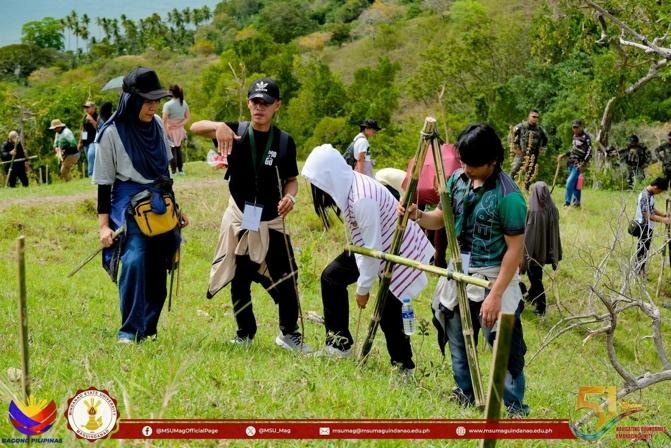
MSU–Maguindanao, UPLB Equip Trainers with ALCAMS Skills for Climate-Resilient Agroforestry
Mindanao State University-Maguindanao, in partnership with the University of the Philippines Los Baños-Institute of Agroforestry (UPLB-IAF), conducted a three-day Training of Trainers on Agroforestry Establishment and Development Using the Agroforestry Land Capability Assessment and Mapping Scheme (ALCAMS).Participants conducting a hands-on slope assessment using an A-frame in the upland field site, linking land capability evaluation with sustainable agroforestry planning.Funded by the Department of Science and Technology-Philippine Council for Agriculture, Aquatic and Natural Resources Research and Development (DOST-PCAARRD), the training is part of the project “Enhancing Climate Resilience through Native Tree and Fruit Tree-Based Agroforestry Technology: A Science and Technology-Based Initiative for Emergencies and Hazards in Datu Blah Sinsuat, Maguindanao.”Held at the MSU-Maguindanao Training Center and the project site in Brgy. Nalkan, Datu Blah Sinsuat, the training combined classroom discussions with field-based exercises. Participants learned agroforestry establishment, soil and water conservation, slope measurement, vegetation assessment, and soil analysis, then prepared land assessment maps and site-specific agroforestry plans.Participants and facilitators at the upland field site during the ALCAMS trainers’ training, documenting the interdisciplinary and field-based character of the activity.Developed by UPLB-IAF, ALCAMS evaluates slope, vegetation, and soil fertility to determine land suitability for agroforestry and guide appropriate conservation measures.Participants included selected students and faculty representatives from the College of Agriculture and the College of Engineering and Computing Studies of MSU-Maguindanao, who gained interdisciplinary exposure to agroforestry planning. Forestry faculty from MSU-Buug, MSU-Marawi, and MSU-Lanao del Norte Agricultural College, as well as a representative from the Ministry of Environment, Natural Resources and Energy (MENRE), also took part.The training-of-trainers approach extends technical knowledge through instruction, research, extension, and community engagement. It also supports the project’s broader goals of rehabilitating about 10 hectares of land, establishing two community nurseries, improving soil conditions, reducing erosion, and strengthening livelihood opportunities for upland communities.The ultimate beneficiaries are the farmers, landowners, and residents of Barangay Nalkan and Datu Blah Sinsuat. The training built the technical foundation for the interventions that follow, including promoting agroforestry technologies and training farmers and landowners. Community members therefore gain more than seedlings or planting activities: they benefit from agroforestry systems designed around site-specific data on slope, vegetation, soil fertility, species suitability, and conservation requirements.The activity supports Sustainable Development Goal (SDG) 13, which calls for urgent action to combat climate change and its impacts. By equipping university and government trainers with practical, science-based tools for land-use planning, it improves education and institutional capacity on climate change adaptation, strengthening community resilience to hazards such as erosion and land degradation.Through this partnership, MSU-Maguindanao applies science and technology to strengthen local capacity for sustainable land management in the Bangsamoro Autonomous Region in Muslim Mindanao (BARMM).
March 31, 2025