SDG14
MSU-Maguindanao and MinSuPala–IRDC Restore Coastal Ecosystems Through Hands-On Mangrove Planting Action
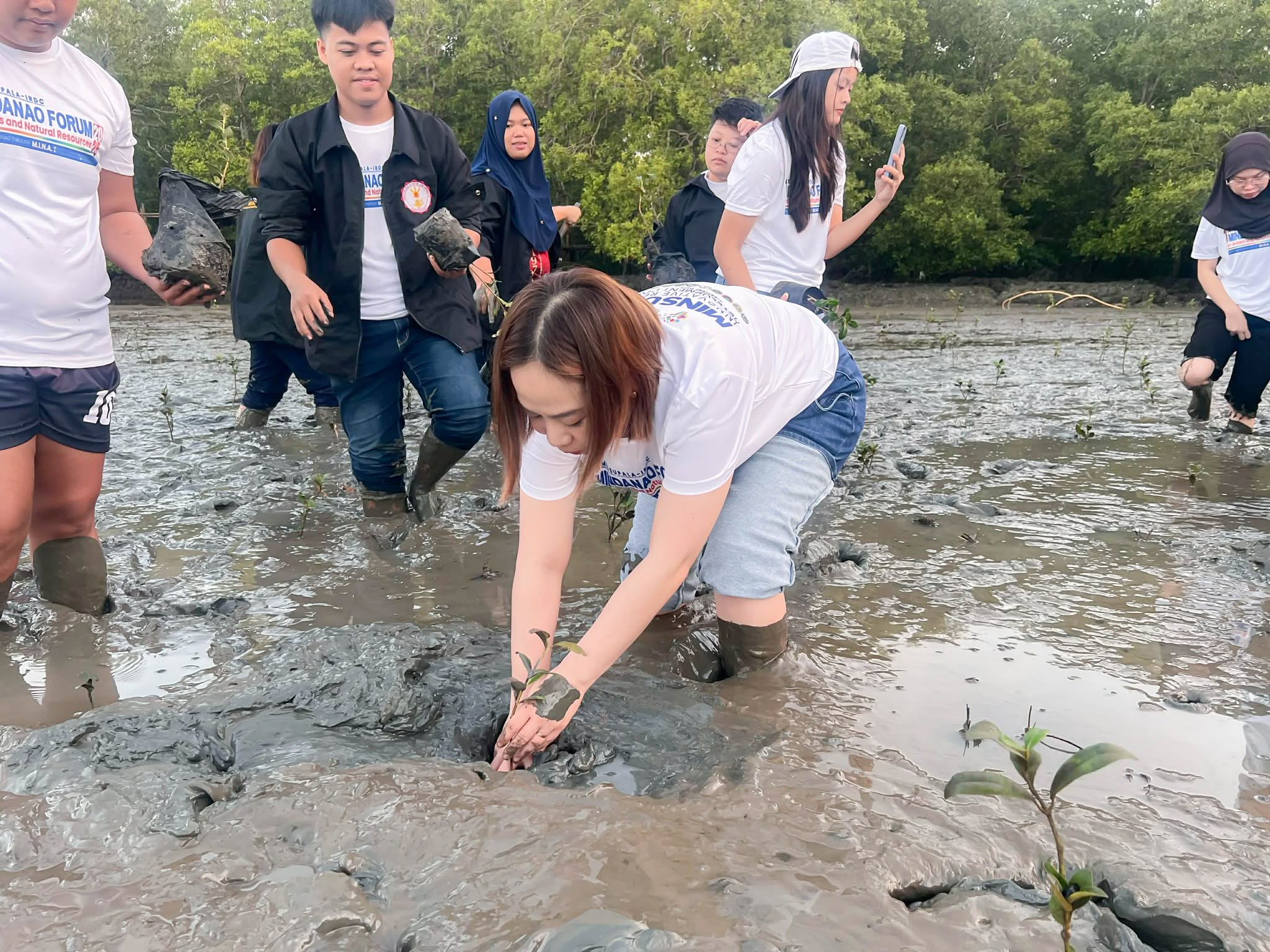
The Mindanao State University–Maguindanao and State Universities and Colleges (SUCs) under the Mindanao-Sulu-Palawan Innovative Research and Development Consortium (MinSuPala–IRDC) executed a field-based Mangrove Growing Activity at the Baluan Mangrove Sanctuary in General Santos City. Serving as the environmental action component of the 1st Mindanao Forum on Waters and Natural Resources, the activity brought together researchers, university leaders, innovators, and partner agencies to translate academic discussions into direct ecological restoration.Mangrove PlantingMinSuPala–IRDC Consortium Lead and MSU-Maguindanao Chancellor Bai Hejira Nefertiti M. Limbona spearheaded the multi-sectoral delegation directly into the field. Participants planted 107 mangrove seedlings, establishing a measurable physical output that reinforces coastal buffers, protects local shorelines, and restores vital nursery grounds for marine species.MSU-Maguindanao delegates preparing for tree plantingThis hands-on intervention advances protection and restoration of coastal ecosystems and targets conservation of water and natural resources.By bridging research dialogue with direct ecosystem stewardship, the consortium strengthens marine biodiversity and enhances the climate resilience of coastal communities across the region. Moving forward, MSU-Maguindanao actively converts scientific knowledge into immediate environmental impact.
December 1, 2025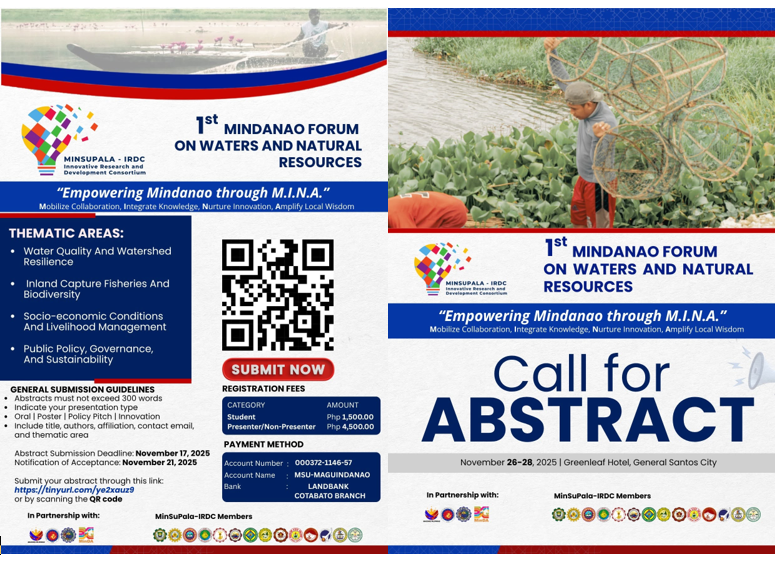
Promoting the Conservation and Sustainable Use of Inland and Marine Aquatic Resources through Research Forums and National Fisheries Engagements
Scientific research, policy discussions, and collaboration among academic institutions, government agencies, and communities play an important role in protecting aquatic ecosystems and ensuring the sustainable use of fisheries and water resources. Through its leadership of the Mindanao, Sulu, Palawan–Innovative Research and Development Consortium (MinSuPala-IRDC) and its participation in national fisheries initiatives, Mindanao State University–Maguindanao supported and helped organize events that promoted the conservation and sustainable management of lakes, rivers, marshlands, inland fisheries, and marine resources. These activities provided platforms for presenting scientific findings, discussing environmental and fisheries concerns, and developing collaborative approaches to aquatic resource management.1st Mindanao Forum on Waters and Natural ResourcesOne of these major initiatives was the 1st Mindanao Forum on Waters and Natural Resources, held on November 26–28, 2025, at Greenleaf Hotel, General Santos City. Through MinSuPala-IRDC, the University supported the three-day forum, which brought together representatives from nine state universities and colleges, government agencies, local government units, research institutions, and community stakeholders. Led by MSU–Maguindanao Chancellor Dr. Bai Hejira Nefertiti M. Limbona, as MinSuPala-IRDC Lead, the initiative was conducted in partnership with the Mindanao Development Authority (MinDA) and the National Research Council of the Philippines (NRCP).Building on the consortium's first phase of research, supported by the Department of Budget and Management (DBM), the forum featured scientific assessments and research findings on water quality, inland capture fisheries, watershed conditions, and community livelihoods across major Mindanao water bodies. These included Lake Lanao, Ligawasan Marsh, Lake Buluan, Lake Sebu, the Rio Grande de Mindanao, and the Pulangi River. The presentations provided participants with research-based information on the environmental conditions, fisheries resources, and socioeconomic concerns affecting these ecosystems.Promotional poster of the 1st Mindanao Forum on Waters and Natural Resources, organized by MinSuPala-IRDC, featuring the theme “Empowering Mindanao through M.I.N.A.” and its four thematic areas: water quality and watershed resilience, inland capture fisheries and biodiversity, socioeconomic conditions and livelihood management, and public policy, governance, and sustainability.Faculty members and researchers from MSU–Maguindanao presented assessment results and shared findings that could help guide local planning, resource management, and the development of appropriate conservation initiatives.MSU–Maguindanao faculty members present research findings on water quality, inland capture fisheries, watershed conditions, and community livelihoods across major Mindanao water bodies.Mr. John Louie C. Natan of MSU–Maguindanao presents research findings during the 1st Mindanao Forum on Waters and Natural Resources.Through research presentations, policy workshops, and innovation activities, the forum connected scientific findings with discussions on practical approaches to aquatic ecosystem conservation and sustainable resource management. Participants exchanged ideas on sustainable fisheries management, biodiversity protection, water quality improvement, watershed conservation, and ecosystem restoration. The discussions also emphasized responsible fishing practices, the sustainable utilization of aquatic resources, and the protection of habitats that support inland fish populations and other aquatic organisms.The forum further provided an opportunity to discuss the effects of human activities and environmental pressures on inland water ecosystems and the communities that depend on them. By bringing together researchers, government representatives, local institutions, and community stakeholders, the event encouraged the sharing of experiences and the identification of common priorities for protecting aquatic habitats and maintaining the ecological functions of lakes, rivers, and marshlands. The research findings and policy discussions also provided a basis for identifying possible interventions that support ecosystem resilience, food security, and sustainable community livelihoods.Second Philippine Small-Scale Fisheries National SymposiumAt the national level, the University also participated in organizing the Second Philippine Small-Scale Fisheries National Symposium (PSSFNS2), held on October 21–23, 2025, at the International Convention Center of the MSU Main Campus in Marawi City. Organized under the National Consortium for Small-Scale Fisheries Research and Development, also known as Too Big To Ignore (TBTI) Philippines, the symposium was hosted by the Mindanao State University System, with its constituent universities, including MSU–Maguindanao, participating in the organization of the event. With the theme “From Recognition to Action: Advancing Sustainable Small-Scale Fisheries in the Philippines,” the symposium served as a national platform for discussing research, policies, and practical initiatives that support the sustainability of small-scale fisheries.The three-day symposium gathered more than 300 participants, including fisherfolk, fisheries managers, researchers, policymakers, local government representatives, students, non-government organizations, and development partners. Through a keynote lecture, seven plenary sessions, and parallel discussions, participants explored eight thematic areas: inland and marine small-scale fisheries, fisheries management and governance, fisheries economics, sociocultural aspects of fisheries, climate change and resilience, gender, technology and innovation, and arts and small-scale fisheries.The discussions highlighted the importance of protecting aquatic and marine resources while sustaining the livelihoods of fishing communities. Participants examined concerns related to overfishing, illegal, unreported and unregulated fishing, destructive fishing practices, climate change, and the interactions between small-scale and commercial fisheries. The symposium also provided opportunities to share research findings, discuss fisheries policies, and identify approaches to strengthening fisheries governance, protecting fishing communities, and promoting responsible resource utilization. By bringing national fisheries stakeholders together, the event strengthened knowledge exchange and encouraged collective action toward more inclusive and sustainable fisheries management.Delegates, researchers, fisheries practitioners, and other stakeholders gather during the Second Philippine Small-Scale Fisheries National Symposium at the MSU Main Campus in Marawi City, October 21–23, 2025.Through the 1st Mindanao Forum on Waters and Natural Resources and the Second Philippine Small-Scale Fisheries National Symposium, MSU–Maguindanao demonstrated its support for institutional collaboration, scientific knowledge-sharing, and stakeholder participation in aquatic resource conservation. These engagements connected research with policy and community discussions, strengthened partnerships with academic institutions and government agencies, and promoted greater awareness of the importance of protecting freshwater and marine ecosystems. Together, these initiatives reflect the University's continuing contribution to the conservation of aquatic biodiversity, sustainable fisheries management, and the responsible use of inland and marine resources.
December 1, 2025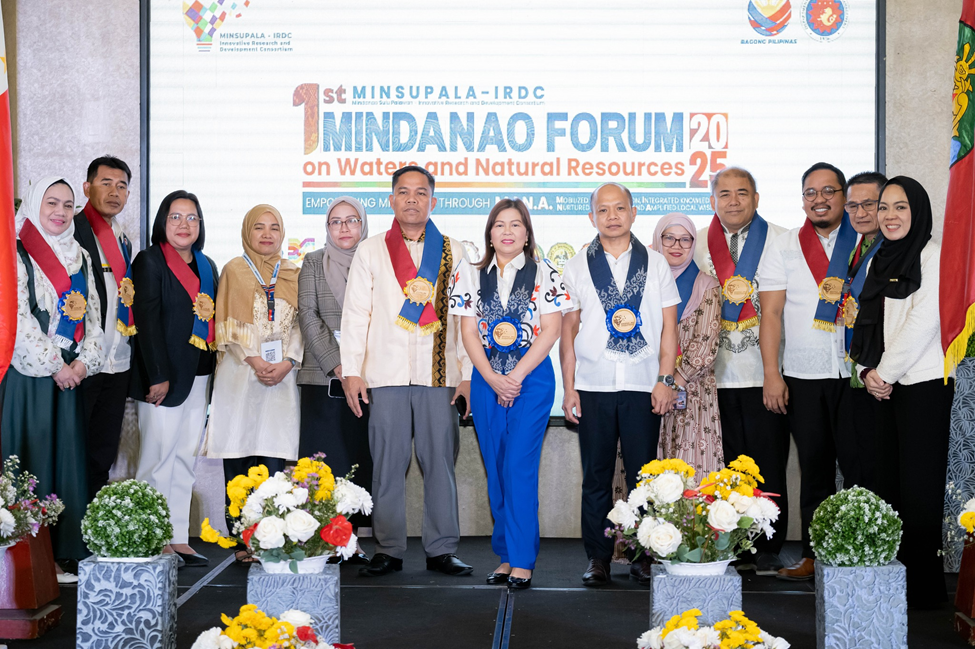
MSU-Maguindanao and MinSuPala–IRDC Lead Regional Forum to Drive Science-Based Governance of Waters and Natural Resources
The Mindanao State University–Maguindanao, as the lead institution of the Mindanao-Sulu-Palawan Innovative Research and Development Consortium (MinSuPala–IRDC), convened the landmark 1st Mindanao Forum on Waters and Natural Resources in General Santos City. Under the theme "Empowering Mindanao through M.I.N.A.—Mobilized Collaboration, Integrated Knowledge, Nurtured Innovation, and Amplified Local Wisdom," the forum assembled over 170 researchers, faculty experts, policymakers, and development partners from 14 state universities and colleges across the region.MinSuPala IRDC leaders and guests convened during the 1st Mindanao Forum on Waters and Natural ResourcesMSU-Maguindanao Chancellor Bai Hejira Nefertiti M. Limbona, serving as MinSuPala–IRDC Consortium Lead, spearheaded the event by presenting the strategic rationale that highlights the shift from basic data gathering toward policy-driven solutions for Mindanao's water basins. A major milestone featured the ceremonial turnover of Phase 1 consolidated research reports and published books to Department of Budget and Management (DBM) Region XII Director Akmad J. Usman, CPA, CESO III. The forum also showcased student-led solutions through an Innovation Hackathon alongside keynote addresses from Mindanao Development Authority (MinDA) Executive Director Undersecretary Dr. Janet M. Lopoz and top environmental scholars.This landmark regional platform aims to increase scientific knowledge and develop research capacity by empowering Mindanao through innovation. It also advances sustainable management and protection of water and natural resources.By translating Phase 1 empirical findings into concrete policy materials and directly engaging key decision-makers, such as the Mindanao River Basin Management Council and regional government agencies, the consortium accelerates evidence-informed water resource governance across Mindanao, Sulu, and Palawan. This reinforces the institution’s leadership in transforming academic research into actionable policy and regional environmental stewardship.
December 1, 2025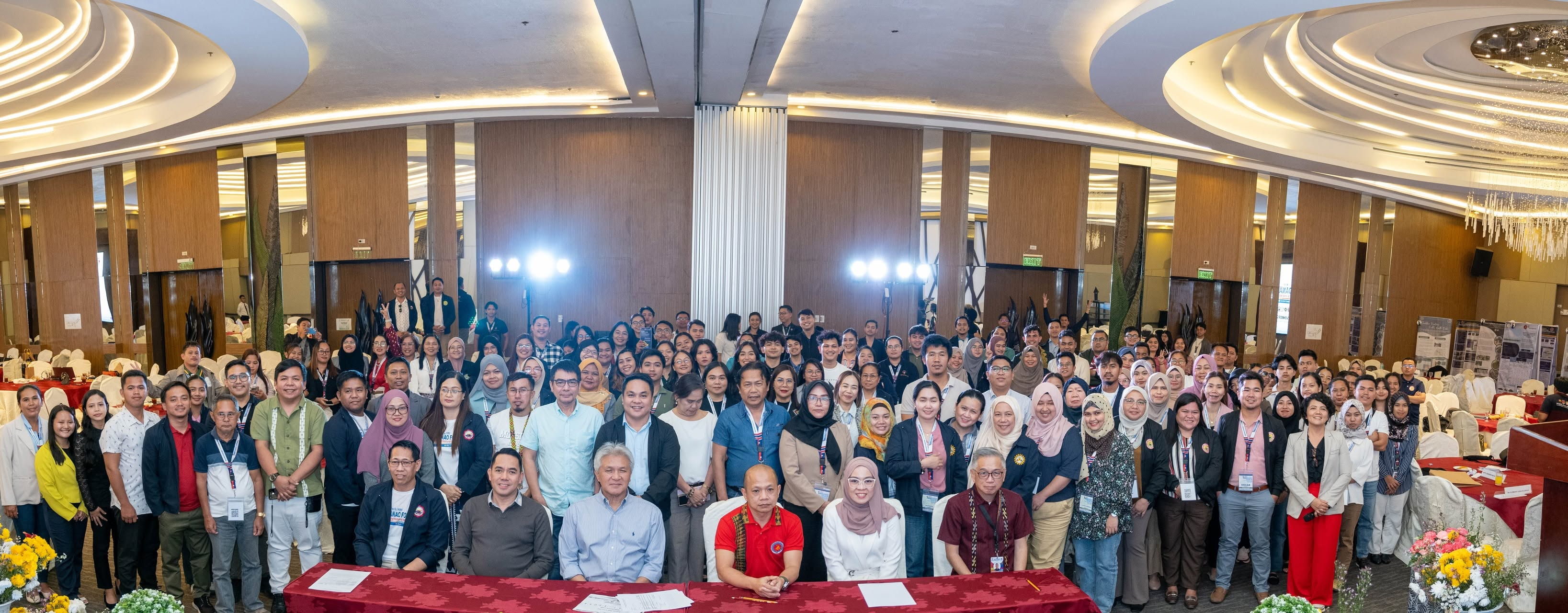
Cross-Sectoral Dialogues on Mindanao’s Waters and Women, Peace and Security Initiated and Joined with Government, NGOs, and Industry
Over 190 researchers, policymakers, and community leaders met at the 1st Mindanao Forum on Waters and Natural Resources, the largest of the conferences, forums, and workshops on sustainable development with government, non-government organizations, and industry that Mindanao State University–Maguindanao initiated or joined between January and November 2025. Together, these dialogues covered water governance, biodiversity, peace and security, elections and governance, education, and institutional planning.1st Mindanao Forum on Waters and Natural ResourcesThe University convened the forum at the Greenleaf Hotel in General Santos City from November 26 to 28, 2025. The University leads the Mindanao-Sulu-Palawan Innovative Research and Development Consortium (MinSuPala-IRDC), a network of state universities funded by the Department of Budget and Management to study Mindanao’s inland waters. Decisions about the region’s lakes, rivers, and marshes have often been made without reliable local data, and the forum was organized to put research findings in front of the officials who manage these resources. Held with the Mindanao Development Authority (MinDA) and the National Research Council of the Philippines under the theme “Empowering Mindanao through M.I.N.A.: Mobilized Collaboration, Integrated Knowledge, Nurtured Innovation, and Amplified Local Wisdom,” it brought these groups together with faculty experts, local government officials, and development partners.Chancellor Bai Hejira Nefertiti M. Limbona, as Consortium Lead, opened the forum by setting its purpose: to move from gathering data to producing policy solutions for Mindanao’s water basins. MinDA Executive Director Undersecretary Dr. Janet M. Lopoz delivered the keynote, and plenary speakers included Dr. Gisela P. Concepcion of the University of the Philippines Diliman, Dr. Rex Victor O. Cruz of the University of the Philippines Los Baños, and Cardinal Orlando B. Quevedo, OMI, of the Mindanao River Basin Management Council. Industry partners Shimadzu Philippines Corporation and Guill-Bern Corporation presented technology and laboratory innovations. Researchers presented findings on Lake Lanao, Ligawasan Marsh, Lake Buluan, Lake Sebu, the Rio Grande de Mindanao, and the Pulangi River, and the MSU–Maguindanao team presented five studies on Ligawasan Marsh and the Sifaran Watershed. Policy workshops then asked government and community participants to turn the findings into local conservation strategies; the Innovate for Mindanao Hackathon invited young people to design technology-based solutions; and the consortium turned over its Phase 1 reports to DBM Region XII Director Akmad J. Usman, CPA, CESO III. Delegates closed the program by planting 107 mangrove seedlings at the Baluan Mangrove Sanctuary.Participants for the 1st Mindanao Forum on Waters and Natural Resources, General Santos City, November 26-28, 2025.An MSU–Maguindanao poster shares water quality findings from Ligawasan Marsh with policymakers and fellow researchers.The forum built on a year of workshops with the people who manage these waters. On February 27, 2025, the University hosted the MinSuPala–IRDC Stakeholders’ Consultation, where four state universities and colleges presented findings on Ligawasan Marsh, Lake Buluan, the Rio Grande de Mindanao, and Lake Lanao to MAFAR–BARMM, the Bangsamoro Planning and Development Authority, DOST–PCAARRD, the provincial environment office, environmental organizations, fisherfolk associations, and six local governments, who helped turn them into policy recommendations. On July 30, 2025, the Chancellor and DBM Region XII Director Akmad J. Usman planned the forum with MinDA Secretary Leo Magno and Executive Director Janet M. Lopoz, and in October 2025 the University’s team held validation workshops with the local governments of Cotabato City, Kabuntalan, Northern Kabuntalan, Talitay, and Datu Piang.4th Biennial Conference on Tropical BiodiversityThe University also co-hosted an international scientific conference. On July 23, 2025, it joined the Faculty of Forestry of Hasanuddin University in Indonesia, Tomsk Polytechnic University in Russia, Universiti Teknologi MARA in Malaysia, and the University of North Sumatra as co-host of the 4th Biennial Conference on Tropical Biodiversity, held in Makassar and online under the theme “Mainstreaming Multidisciplinary Approaches to Biodiversity Studies for Sustainable Development.” Ten University faculty researchers presented 13 studies on biodiversity, forest management, watershed protection, carbon stocks, and climate change adaptation to researchers and practitioners from Indonesia, Russia, Malaysia, Germany, and the Philippines.MSU–Maguindanao faculty present their studies at the 4th Biennial Conference on Tropical Biodiversity, co-hosted with Hasanuddin University, July 23, 2025.Women, Peace and Security Dialogue at the Philippine ConferenceOn October 29, 2025, the University convened “From Classroom to Community: Localizing Women, Peace and Security through Education,” one of 20 side events of the 2025 Philippine Conference on Women, Peace and Security at Summit Hall 2 of the Philippine International Convention Center in Pasay City. University officials and faculty from planning, research and extension, and the Diploma in Women, Peace and Security (DWPS) Technical Working Group explained how the national Women, Peace and Security agenda is built into the University’s instruction, research, and extension, and how the DWPS curriculum draws on community knowledge, including the guidance of community elders. They also presented the University’s extension work with about 161 women in Camps Abubakar, Badre, and Omar. The session closed with the launch of the DWPS learning book “Dialogue Beyond Borders.” Its 18 participants came from government, civil society, the financial sector, BARMM institutions, and the DWPS alumni community. A University delegation led by Chancellor Limbona took part in the full conference from October 28 to 30, where the Chancellor shared the program’s materials with Solicitor General Darlene Berberabe.University officials and DWPS faculty lead a dialogue with government, civil society, and academic participants on Women, Peace and Security education, Summit Hall 2, PICC, October 29, 2025.Stakeholders’ ConsultationCloser to campus, more than 200 participants from local governments, civil society organizations, health and public works agencies, parents, and alumni joined the annual Stakeholders’ Consultation of the Office of the Vice Chancellor for Planning and Development on February 28, 2025, at the DOS Gymnasium, reviewing the University’s proposed 2026 programs and its draft Research, Extension, and Development Agenda 2025–2030.Students raise their questions with a resource person during the Stakeholders’ Consultation, February 28, 2025.Local government, health agencies, civil society, parents, and alumni review the University’s 2026 plans at the Stakeholders’ Consultation, February 28, 2025.Forums on Elections and GovernanceThe University also convened forums on elections and governance. On January 31, 2025, the Institute for Peace and Development in Mindanao and the Supreme Student Council, with the Bangsamoro Youth Commission (BYC), held the Voters’ Empowerment Forum for the Youth at the DOS Gymnasium for about 1,300 students. BYC Commissioner Nasserudin D. Dunding, COMELEC Election Officer III Bai Maceda L. Abo, Gerardo T. Concepcion III of the Speakers’ Bureau on the Bangsamoro Electoral Code, and Mr. Saiful Islam Gayak spoke on youth voting, the Bangsamoro Electoral Code of 2023 and the Bangsamoro Parliamentary Districts Act of 2024, election offenses, and a religious perspective on elections, and students practiced voting on an Automated Counting Machine. On November 14, 2025, the BA Political Science Program hosted the 1st PPSA President’s Lecture Forum with the Philippine Political Science Association, the professional association of the country’s political scientists, where Prof. Dennis C. Coronacion spoke on political dynasties, patronage, and corruption before students, faculty of Ateneo de Davao University, and Grade 12 learners from four public schools, and the two institutions signed a Memorandum of Understanding.COMELEC Election Officer III Bai Maceda L. Abo demonstrates the Automated Counting Machine to students at the Voters’ Empowerment Forum for the Youth, January 31, 2025.Chancellor Bai Hejira Nefertiti M. Limbona and PPSA President Dr. Reynold D. Agnes sign the partnership agreement after the forum.Dialogues with Government, International Agencies, and NGOsThe University also joined dialogues convened by others. On September 25, 2025, two student leaders joined the Third-Party Monitoring Team’s multi-sectoral youth dialogue on the implementation of the peace agreements between the Government of the Philippines and the Moro Islamic Liberation Front, in Cotabato City. On October 30, 2025, Vice Chancellor for Academic Affairs Dr. Marissa N. Parcon and the program chairs of the College of Engineering and Computing Sciences met the Japan International Cooperation Agency (JICA) and Zuitt Learning Institute under the Industry Development through Engineering Education in BARMM initiative to explore how industry-based training could be brought into the University’s laboratory courses. On October 6, 2025, Chancellor Limbona met Islamic Relief Philippines, a humanitarian non-government organization, to explore joint research, psychosocial assessments in flood-affected areas, livelihood and Halal food system training, and capacity-building for its beneficiaries, and the two agreed to hold a Training of Trainers for barangay officials and an internship for FPE 101 students.Students of MSU-Maguindanao sharing their insights on the implementation of the peace agreementsMSU–Maguindanao academic officials consult JICA and Zuitt Learning Institute on industry-aligned engineering education, October 30, 2025The University also brought an international non-government organization to campus. On October 11, 2025, the Division of Student Affairs and the Supreme Student Council, with Initiatives of Change, held the 3rd International Values Transformation Leadership Training at the University’s Training Center, where speakers from South Korea, Taiwan, India, and Lebanon discussed ethical leadership, values formation, and inner transformation with student leaders.Student Supreme Council members' discussions with the speakers during the 3rd International Values Transformation Leadership TrainingWhat the Dialogues AchievedThese dialogues produced concrete results. In October 2025, five local governments around Ligawasan Marsh validated the consortium’s findings and selected priority indigenous crops and fish for conservation. Stakeholder comments shaped the final research agenda, which the Board of Regents approved on June 10, 2025. The University, JICA, and Zuitt agreed on laboratory instruction as their first joint area of work. The consortium will carry the forum’s recommendations into its 2026 work, and the University plans to hold the forum regularly. The University will continue to convene and join such dialogues, using its annual Stakeholders’ Consultation and the consortium’s forums to bring the results of its research and planning back to the agencies, industries, and communities that use them.
November 29, 2025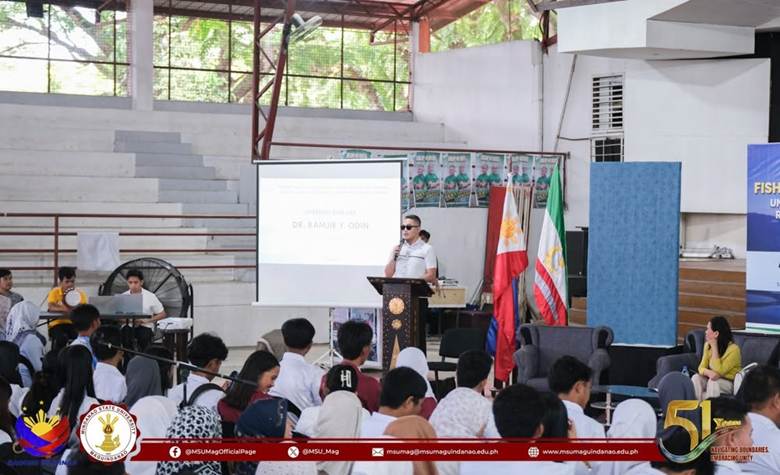
Strengthening Fisheries Education and Public Awareness on Overfishing, Illegal Fishing, and Destructive Fishing Practices
Promoting responsible fishing practices and strengthening fisheries governance require continued education, informed policy discussions, and active participation among fishing communities and other stakeholders. Through the College of Fisheries and its research and development initiatives, the University conducted and participated in educational and knowledge-sharing activities that addressed key concerns affecting aquatic resources, including overfishing, illegal, unreported and unregulated (IUU) fishing, and destructive fishing practices. These initiatives provided opportunities to discuss fisheries laws, share research findings, improve understanding of resource management, and emphasize the importance of protecting aquatic ecosystems and the livelihoods of small-scale fishers.Policy Education on Commercial Fishing and Municipal WatersA major local initiative was the policy seminar entitled “Understanding the Supreme Court Ruling Allowing Commercial Fishing in Municipal Waters,” held on May 5, 2025, at the Datu Odin Sinsuat Gymnasium, MSU–Maguindanao, Dalican, Datu Odin Sinsuat, Maguindanao del Norte. Organized by the College of Fisheries, the seminar aimed to strengthen participants’ understanding of fisheries laws and governance, particularly the implications of allowing commercial fishing activities in municipal waters and their potential effects on local fishing livelihoods.Dr. Ramjie Y. Odin delivers the opening remarks during the policy seminar at the Datu Odin Sinsuat Gymnasium, MSU–Maguindanao, on May 5, 2025.The seminar featured Atty. Mohammad Muktadir A. Estrella, Director General of the BARMM Ministry of Social Services and Development, who discussed the legal foundations of the Supreme Court ruling, the responsibilities of municipal governments under Republic Act No. 8550, or the Philippine Fisheries Code, and relevant provisions of the Bangsamoro Organic Law (Republic Act No. 11054). Dr. Mohammadtaha S. Pendaliday, Director of the BARMM Ministry of Agriculture, Fisheries, and Agrarian Reform (MAFAR), also shared insights on regional fisheries regulatory frameworks. The activity concluded with the signing of a Commitment Wall, expressing support for the protection and sustainable management of municipal fisheries.Atty. Mohammad Muktadir A. Estrella shares his insights on policy and small-scale fisheries governance during the seminar.The discussions provided students and faculty members with a better understanding of fisheries regulations, municipal water governance, and the importance of safeguarding the rights and livelihoods of small-scale fishing communities. They also emphasized the role of effective regulation and science-based fisheries management in preventing the overexploitation of aquatic resources and promoting responsible fishing practices.Community-Based Research Dissemination and Stakeholder Consultations through MinSuPala-IRDCCommunity-level research dissemination and stakeholder consultations were also carried out through the Mindanao Sulu Palawan – Innovative Research and Development Consortium (MinSuPala-IRDC) at MSU–Maguindanao. During its month-long activities in 2025, the consortium presented Phase 1 project results and policy recommendations across partner areas, including Cotabato City, Kabuntalan, Talitay, Northern Kabuntalan, and Datu Piang. These activities brought together representatives from local government units, barangay local government units, and community stakeholders to validate research findings, exchange insights, and identify priorities for the succeeding phase of the project.The Phase 1 research covered inland capture fisheries, water quality assessments, and socioeconomic surveys, generating baseline information on aquatic resources, environmental conditions, and community livelihoods. The presentations and consultations provided local stakeholders with opportunities to discuss the findings and their implications for resource management. Key Informant Interviews with fisherfolk, farmers, and cooperatives further helped identify priorities for Phase 2, including the development of initiatives involving indigenous fish species such as haluan, native katipa, and popoyu. Through these engagements, MinSuPala-IRDC promoted the use of research-based information in local planning and strengthened collaboration toward sustainable inland fisheries management and the protection of indigenous aquatic resources.MinSuPala-IRDC research team presents Phase 1 findings and policy recommendations to local government representatives and community stakeholders during the 2025 consultations.National Fisheries Education and Knowledge Exchange through the Second Philippine Small-Scale Fisheries National SymposiumAt the national level, the University, as a participating constituent university of the Mindanao State University System, contributed to the organization of the Second Philippine Small-Scale Fisheries National Symposium (PSSFNS2), held on October 21–23, 2025, at the MSU Main Campus in Marawi City. With the theme “From Recognition to Action: Advancing Sustainable Small-Scale Fisheries in the Philippines,” the symposium served as a venue for fisheries education, stakeholder engagement, and the exchange of knowledge and experiences on sustainable fisheries management.The three-day event gathered more than 300 participants, including fisherfolk, fisheries managers, researchers, local government representatives, policymakers, non-government organizations, and development partners. Through a keynote lecture, seven plenary sessions, and parallel discussions, participants examined issues concerning inland and marine fisheries, fisheries governance, climate resilience, technological innovations, and the socioeconomic conditions of fishing communities.The symposium also addressed major threats to aquatic resources, including overfishing, IUU fishing, and destructive fishing practices. Discussions covered the National Plan of Action for Small-Scale Fisheries, updates from the Food and Agriculture Organization (FAO) and the Bureau of Fisheries and Aquatic Resources (BFAR), and proposed amendments to the Philippine Fisheries Code. Research presentations on coral reef ecosystems, small pelagic fish, and interactions between small-scale and commercial fisheries further contributed to discussions on the ecological and governance challenges affecting fisheries resources.Mindanao State University–Maguindanao actively participates in and serves as one of the hosts of the three-day fisheries symposium held at Mindanao State University–MarawiThrough these local and national engagements, the University extended fisheries education and knowledge-sharing beyond the classroom by bringing together students, faculty members, fisherfolk, fisheries practitioners, government representatives, and other stakeholders. The activities highlighted the importance of responsible fishing practices, effective fisheries regulation, protection of municipal waters, and the sustainable use of aquatic resources. They also strengthened awareness of the challenges posed by overfishing, IUU fishing, and destructive fishing practices, reinforcing the University's contribution to fisheries education, aquatic biodiversity conservation, evidence-based fisheries management, and the protection of communities whose livelihoods depend on healthy aquatic ecosystems.
November 24, 2025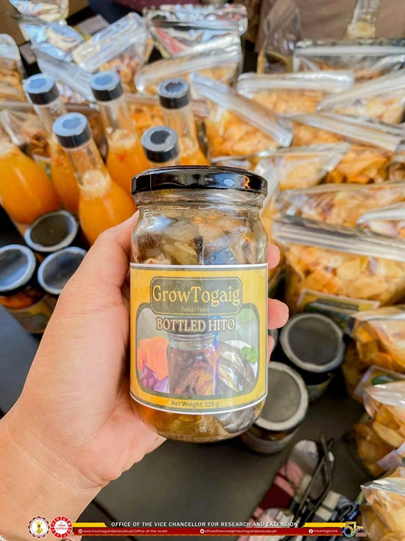
Programs and Incentives for Good Aquatic Stewardship
MSU–Maguindanao develops programs and incentives that make good aquatic stewardship worthwhile for the people who practise it.A market incentive for responsible fish farmingThrough the “A Taste of Peace” livelihood initiative, communities in Camps Abubakar, Badre and Omar that farm fish responsibly can process and sell their harvest. Products include bottled hito (325 g) marketed under the GrowTogaig brand at ₱150 per jar, tilanggit (processed tilapia), organically grown vegetables and other halal-processed foods. By turning responsibly farmed fish into income, the initiative gives households a direct, lasting reason to keep these practices.Bottled hito (325 g) under the GrowTogaig brand, produced by communities in Camps Abubakar, Badre and Omar.Community beneficiaries in fish production and sustainable farming activities supported by the University and OPAPRU.Recognising researchers and sustaining programsThe University’s 2025 Research Excellence and Academic Publication (REAP) Awards reward faculty for research and publication, including work on fisheries, aquaculture and aquatic biodiversity. At its 273rd meeting on 9 December 2025, the MSU Board of Regents acted on programs endorsed by MSU–Maguindanao, including five proposals under the Community Advancement through Research-Based Extension Services (CARES) Program and Project ILAW sa Ligawasan, the University’s continuing community program in the Ligawasan Marsh area, a wetland on which many fishing communities depend.Mindanao State University–Maguindanao formally recognized the scholarly achievements of its faculty and researchers during the 2025 Research Excellence and Academic Publication (REAP) Awards, held on January 15, 2026, at the Datu Odin Sinsuat GymnasiumThe Project ILAW sa Ligawasan, implemented in 2025 and continuing of the College of FIsheries was granted research grant under the Community Advancement through Research-based Extension Services (CARES), a banner program of the OVCRED that highlights the mutual complementation of research and extension services in MSU-Maguindanao
November 22, 2025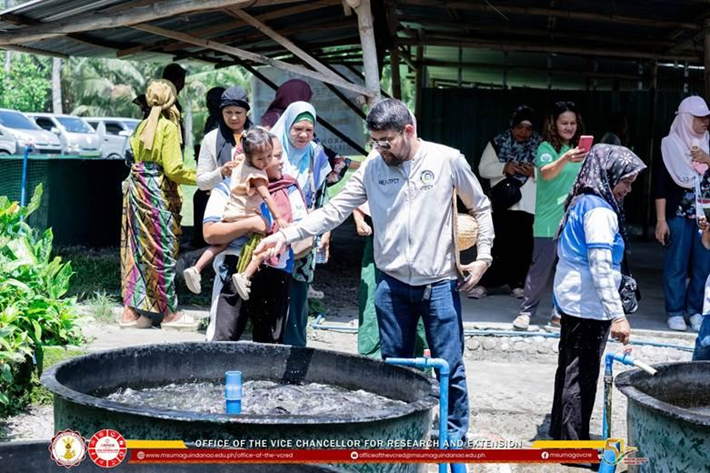
Sustainable Fisheries Knowledge for the Communities
MSU–Maguindanao brings sustainable fisheries and aquaculture knowledge to the communities that depend on them, from former combatants building new livelihoods to local governments managing inland fisheries. These training-workshops, demonstrations and learning sessions are provided free of charge to participating beneficiaries.Aquaculture training in Camps Abubakar, Badre and OmarIn partnership with the Office of the Presidential Adviser on Peace, Reconciliation and Unity (OPAPRU), and in support of the Comprehensive Agreement on the Bangsamoro (CAB), the University implemented two livelihood projects in 2024–2025: the Enhancement of Agri-Aqua Value Production and Value Chain of Economically Important Commodities in Camp Abubakar (₱12,000,000), and the Development of Science and Technology-Based Climate-Smart Mixed Farming System for Crop, Fish and Livestock Production in Camps Omar and Badre (₱10,182,314 for each site).Through lectures, hands-on demonstrations and learning visits, former Moro Islamic Liberation Front (MILF) former combatants, their families, farmers and community organizations learned tilapia and African catfish (hito) production, fish feeding and tank management, integrated farming, and the handling, processing, packaging and branding of fish products.Partner farmers in a hands-on demonstration on fish feeding and tank management.Returning research findings to local governmentsOver a month of consultations in 2025, the MinSuPala-IRDC team at MSU–Maguindanao presented Phase 1 results on inland capture fisheries, water quality and community livelihoods, with policy recommendations, to local and barangay governments and community stakeholders in Cotabato City, Kabuntalan, Talitay, Northern Kabuntalan and Datu Piang. Key informant interviews with fisherfolk, farmers and cooperatives identified priorities for the next phase of work on sustainable inland fisheries.The MinSuPala-IRDC MSU-Maguindnao research team presents Phase 1 findings and policy recommendations to local government and community stakeholders and provided an avenue to present the Phase 2 project Assessment of Indigenous Crop and Fish Species for 2025.National knowledge sharing and responsible tourismOn 24 April 2025, Dr. Ramjie Y. Odin, Dean of the College of Fisheries, presented “Fishing through Conflict: Unveiling the Socio-Economic Pulse of Ligawasan Marsh’s Small-Scale Fisheries” at the TBTI Philippines April 2025 Webinar Series, an open national forum for researchers, students and fisheries practitioners. University studies on the conservation value of the Philippine duck and community support for mangrove conservation in the Katunggan Coastal Ecopark inform responsible, nature-based tourism that protects the wetland and coastal habitats it depends on.𝗗𝗿. 𝗥𝗮𝗺𝗷𝗶𝗲 𝗬. 𝗢𝗱𝗶𝗻, Dean, College of Fisheries, Mindanao State University - Maguindanao as resource speaker during the free webinar series hosted by TBTI
November 13, 2025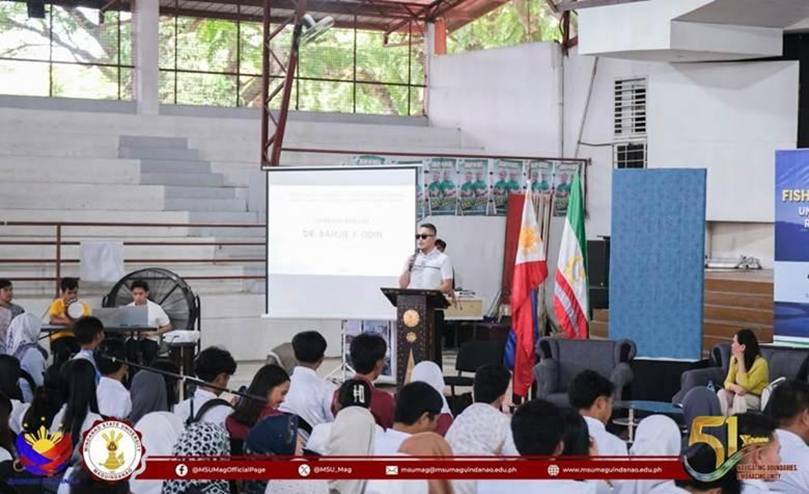
Defending Municipal Waters: Public Education Against Overfishing and Illegal Fishing
On 5 May 2025, the MSU–Maguindanao College of Fisheries held a free public policy seminar at the Datu Odin Sinsuat Gymnasium on small-scale fisheries governance and the protection of municipal waters. Open to students, faculty members and community stakeholders at no cost, the seminar examined the Supreme Court ruling on municipal waters and how effective regulation can prevent overfishing, illegal, unreported and unregulated (IUU) fishing, and destructive fishing practices.Atty. Mohammad Muktadir A. Estrella discussed the legal basis of the ruling, the responsibilities of municipal governments under the Philippine Fisheries Code (Republic Act No. 8550), and relevant provisions of the Bangsamoro Organic Law (Republic Act No. 11054). Dr. Mohammadtaha S. Pendaliday of MAFAR-BARMM explained regional fisheries regulations. Participants closed the seminar by signing a Commitment Wall pledging support for the protection of municipal fisheries.Dr. Ramjie Y. Odin opens the policy seminar on municipal fisheries at the Datu Odin Sinsuat Gymnasium, 5 May 2025Second Philippine Small-Scale Fisheries National SymposiumAs a constituent university of the MSU System, MSU–Maguindanao helped organize and co-hosted the Second Philippine Small-Scale Fisheries National Symposium on 21–23 October 2025 at the MSU Main Campus in Marawi City, under the theme “From Recognition to Action: Advancing Sustainable Small-Scale Fisheries in the Philippines.” More than 300 fisherfolk, fisheries managers, researchers, local officials, policymakers and development partners took part.The symposium confronted the main threats to fish stocks directly: overfishing, IUU fishing, destructive fishing practices, and conflicts between small-scale and commercial fisheries. Sessions covered the National Plan of Action for Small-Scale Fisheries, updates from the Food and Agriculture Organization and the Bureau of Fisheries and Aquatic Resources, proposed amendments to the Philippine Fisheries Code, and research on coral reefs and small pelagic fish.MSU–Maguindanao delegation at the Second Philippine Small-Scale Fisheries National Symposium, MSU Main Campus, 21–23 October 2025.
November 8, 2025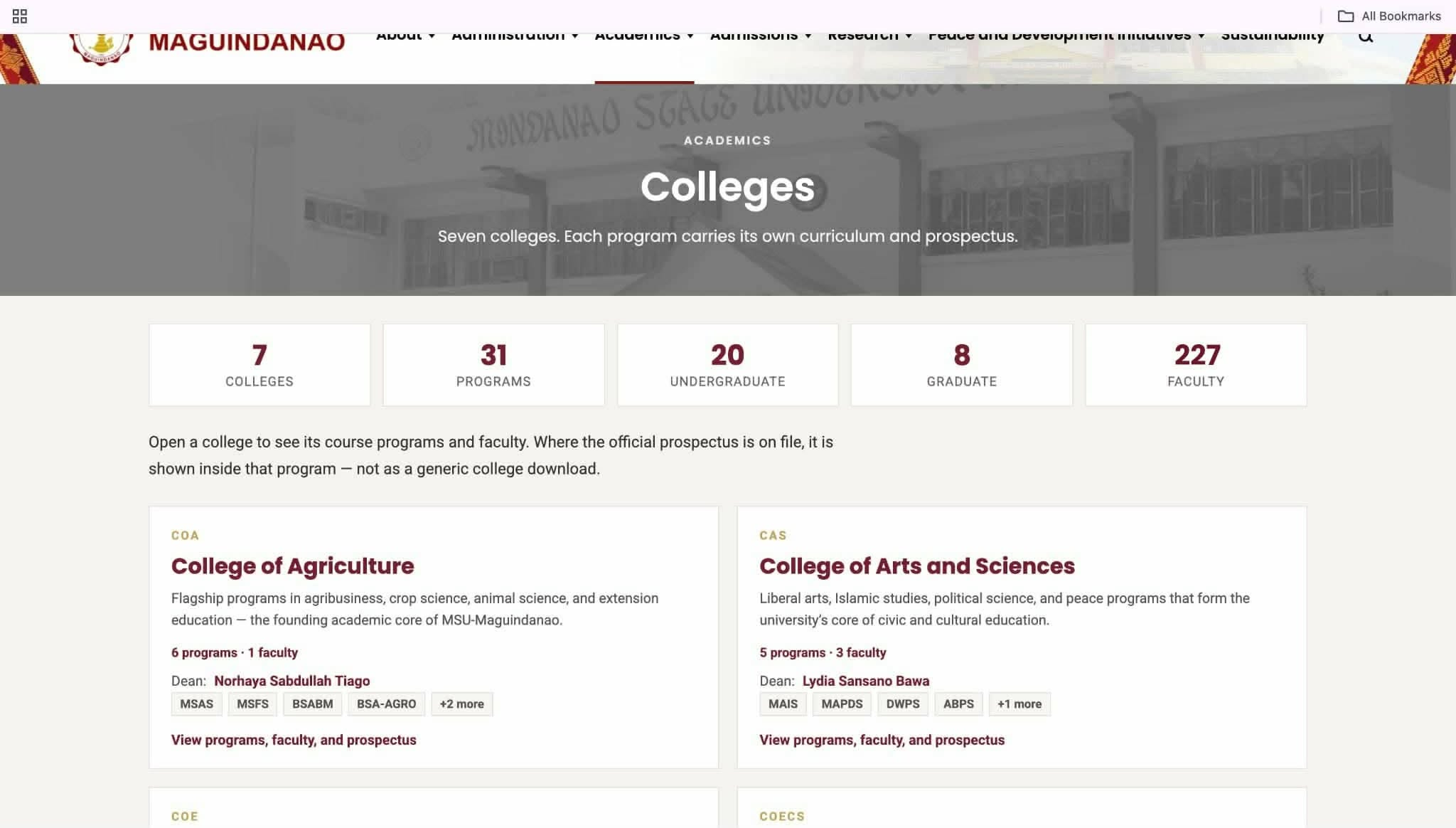
Dedicated Degrees and Courses Teach MSU–Maguindanao Students to Care for the Land, the Waters, and Lasting Peace
Thirty-one graduates in the first cohort of the Diploma in Women, Peace and Security (DWPS) show one of the dedicated degrees and courses through which Mindanao State University–Maguindanao addresses sustainability, alongside Fundamentals of Peace Education (FPE 101), its degree programs in agriculture, forestry, environmental science, fisheries, and sustainable community development, and graduate programs such as the Master of Science in Animal Science and the Master of Arts in Peace and Development Studies.Full Degree ProgramsThe University also offers full degrees in environmental sustainability, food security, and community development. The College of Forestry and Environmental Studies offers the BS Forestry, which produced 67 graduates in its Class of 2025, and the BS Environmental Science. Both address forest conservation, watershed protection, biodiversity, and climate change, and draw on field sites in the region such as the South Upi watershed. The College of Fisheries offers the BS Fisheries program, which produced 57 graduates in its Class of 2025, on sustainable fisheries and aquaculture for the coastal and inland waters of the Bangsamoro. The College of Agriculture offers the BS Agriculture with majors in Agronomy and Animal Science, which prepare students for sustainable crop and livestock production, and the College of Public Affairs and Governance offers the BS Sustainable Community Development, which prepares graduates for community-based development work. At the graduate level, the Master of Science in Animal Science extends the University’s agriculture program, and the Master of Arts in Peace and Development Studies extends its peace education. The prospectus of each program, listing its courses, is publicly available on the University website at https://msumaguindanao.edu.ph/colleges.The University’s Colleges page lists its seven colleges and 31 degree programs, including its programs in agriculture, forestry, and fisheries.Sustainability in the Flagship CurriculaBS ForestryThe prospectuses show how sustainability runs through these programs from the first year to the last. The BS Forestry (General Forestry) curriculum builds from Forest Ecology and Forest Wildlife and Biodiversity Conservation in the second year to Tropical Forestry and Climate Change, Watershed Management, and Protected Area Management in the third, and to Integrated Forest Resource Management and Agroforestry and Sustainable Upland Development in the fourth. Students also take Social Forestry and Community-Based Natural Resources Management, Forest Governance and Policy, and Forest Resource Economics, choose from electives such as Restoration of Degraded Ecosystems, Environmental Impact Assessment, Disaster Risk Reduction and Management, and Integrated Coastal Resources Management, and complete a six-unit Field Practicum.Excerpt from the Curriculum of Bachelor of Science in Forestry Major in General ForestryBS FisheriesThe 180-unit BS Fisheries curriculum follows the same path. It moves from Aquatic Ecology and Resources and two courses in Aquaculture to Fish Health Management, Capture Fisheries, and Fisheries Laws, Policies, and Institutions, and ends with Fisheries Management, Coastal Resource Management, Fishery Product Safety and Quality, Fisheries Entrepreneurship, and Fisheries Extension. Electives include Fish Stock Assessment and GIS and Remote Sensing for Fisheries, and every student completes 320 hours of on-the-job training.Excerpt from the Curriculum of Bachelor of Science in FisheriesBS Agriculture, Major in AgronomyAgriculture follows the same pattern. The 176-unit BS Agriculture major in Agronomy, for example, builds from Principles of Soil Science, Principles of Crop Protection, and Soil Fertility, Conservation and Management in the first year to Introduction to Organic Agriculture and Natural Resource and Environmental Management in the second, and to Introduction to Water Management and Irrigation, Introduction to Agricultural Policy and Development, Precision Agriculture, Postharvest Handling and Seed Technology, Introduction to Farming Systems, and Halal Practices for Agricultural Crops in the third and fourth. Students complete a 240-hour on-campus practicum and a 240-hour off-campus on-the-job training, and those who finish the first two years earn a Certificate of Agricultural Science that they can use for immediate employment. All three curricula also carry general courses that bring the University’s peace and sustainability commitment into every program: Fundamentals of Peace Education (FPE 101); Ekokritisismo at Pagpapahalaga sa Kalikasan (FIL 102), a Filipino course on ecocriticism and the value of nature; and the History of Muslim Filipinos and Indigenous Peoples of Mindanao, Sulu, and Palawan (HIS 003).Excerpt from the Curriculum of Bachelor of Science in Agriculture major in AgronomyKeeping the Programs CurrentThe University also keeps these programs current. On May 6 and 7, 2025, it hosted the 2nd Meeting on Curriculum Revisions and New Programs of the MSU System Curriculum Committee at its Institute of Management. Led by MSU Vice President for Academic Affairs Dr. Alma E. Berowa, faculty experts from MSU–Marawi, MSU–IIT, MSU–Sulu, MSU–LNAC, and MSU–Maguindanao reviewed revisions to programs in Animal Science, Farming Systems, Sustainable Community Development, and Environmental Planning, with attention to accreditation requirements and industry developments. Chancellor Limbona urged the committee to align the programs with the goals of 2030, particularly the employability of graduates.Diploma in Women, Peace and Security Courses Taken as Electives in Graduate ProgramsDeveloped with the Philippine Center for Islam and Democracy (PCID), the DWPS answers a need in the Bangsamoro, where women remain underrepresented in governance. When the Bangsamoro Transition Authority was formed, women held only 13 of its 80 seats, a gap documented by the University’s own researchers. The program trains government personnel, civil society practitioners, and community leaders in women’s participation in peacebuilding, conflict prevention, inclusive governance, gender-responsive policy, and mediation. Its curriculum draws on community knowledge, including the guidance of community elders, and students produce policy papers and program designs for their own organizations and communities. Its first 31 graduates completed the program on October 15, 2025, at the end of its first year of implementation.The program’s lectures and forums connect this training to the lived experience of the region. On March 8, 2025, during Women’s Month, the first cohort opened its second-semester DWPS Lecture Series with Atty. Cecilia Jimenez-Damary, Senior Professorial Lecturer at De La Salle University, former Government Representative to the Transitional Justice and Reconciliation Commission for the Bangsamoro, and former UN Special Rapporteur on the Human Rights of Internally Displaced Persons. She explained the four pillars of transitional justice (truth-seeking, accountability, reparations, and guarantees of non-recurrence) and called for a victim-centered approach that does not leave out Bangsamoro women affected by conflict. On October 13, 2025, the first cohort hosted HERStory of Courage, an on-site and online forum at the Simeon Datumanong Hall of the Institute of Management, where Director General Ruby Andong of the Ministry of Basic, Higher and Technical Education, Ms. Maimona Yu Hashim of The Moropreneur Inc., and Dr. Maimona Saglayan Lidasan, known as the first lady doctor of Parang, shared their stories of peacebuilding, humanitarian service, and women’s leadership in the Bangsamoro.Atty. Cecilia Jimenez-Damary leads the first DWPS cohort through the pillars of transitional justice in an online lecture, March 8, 2025.Bangsamoro women leaders share their stories of struggle and resilience at the HERStory of Courage forum hosted by the first DWPS cohort, October 13, 2025.DWPS faculty present the program’s learning materials to participants at the 2025 Philippine Conference on Women, Peace and Security.Fundamentals of Peace Education (FPE 101)FPE 101, offered through the Institute for Peace and Development in Mindanao, teaches peace, non-violence, and respect for cultural diversity, combining classroom study with community-based learning. On May 31, 2025, 37 students visited Camp Iranun in Barira, where they met survivors of the All-Out War in Bombaran, toured the historical residence of Ustadz Salamat Hashim, and then reflected on their own role in building peace in a structured debriefing.FPE 101 students and Institute for Peace and Development in Mindanao staff join partners from the Bangsamoro Youth Commission and the 1st Marine Brigade at Camp Iranun, May 31, 2025Graduates for Sustainable DevelopmentAcross all its undergraduate and graduate programs, the University produced 917 graduates in Academic Year 2024–2025, among them graduates of these programs prepared to work for peace, gender equality, and the sustainable use of forests and waters in the Bangsamoro. The University will keep reviewing these programs with the MSU System Curriculum Committee so that they stay responsive to the needs of the Bangsamoro and to sustainable development.
November 5, 2025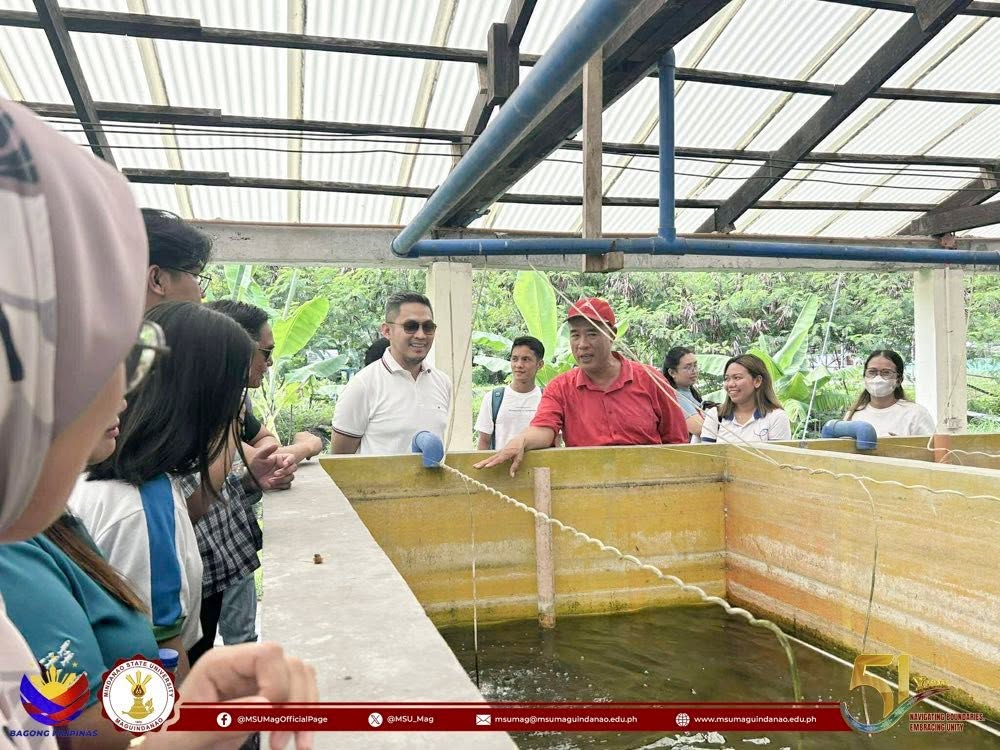
MSU-Maguindanao Leads National Collaborative Research Program to Advance Sustainable Tilapia Aquaculture
Mindanao State University–Maguindanao (MSU–Maguindanao), through its College of Fisheries, leads the National Tilapia R&D Program: Program B – Productivity Enhancement of SPIN Tilapia Culture Systems, a national research initiative supported by the Department of Science and Technology–Philippine Council for Agriculture, Aquatic and Natural Resources Research and Development (DOST-PCAARRD). The program's inception meeting was held on June 19, 2025, at Capiz State University, bringing together partner institutions to coordinate research activities aimed at improving saline-tolerant tilapia production, promoting sustainable aquaculture, and supporting food security.Dr. Ramjie Y. Odin, Dean of the College of Fisheries, MSU–Maguindanao, and Overall Program Leader and Project 1 Leader, conducts a field visit to the project area together with representatives of the Department of Science and Technology–Philippine Council for Agriculture, Aquatic and Natural Resources Research and Development (DOST-PCAARRD)The program focuses on Saline-tolerant Population of Improved Nilotica (SPIN). By improving the culture systems of this saline-tolerant strain, the initiative seeks to expand sustainable fish production opportunities while promoting the responsible management of aquatic resources.The program is led by Dr. Ramjie Y. Odin, Dean of the MSU–Maguindanao College of Fisheries, who serves as the overall Program Leader and Project 1 Leader. Partner institutions include Capiz State University, Northern Iloilo State University, Zamboanga State College of Marine Sciences and Technology, and the University of the Philippines. Through five interconnected research projects, the collaboration focuses on improving hatchery and grow-out systems, feeding strategies, microbial-based nursery production, acclimation and transport methods, and locally developed probiotics.The initiative advances research on aquaculture technologies and practices that support sustainable aquatic resource management and seek to minimize potential environmental impacts on aquatic ecosystems. By improving SPIN tilapia culture systems, production efficiency, and resource utilization, the program aims to promote responsible aquaculture practices, sustainable fish production, and livelihood opportunities for communities dependent on tilapia farming. The inception meeting established a coordinated framework for research implementation, methodology alignment, and project monitoring among participating institutions.MSU–Maguindanao remains committed to advancing research and collaborative innovation in sustainable aquaculture technologies and practices that help the fisheries and aquaculture industries minimize or prevent damage to aquatic ecosystems, conserve aquatic biodiversity, and promote the responsible utilization of aquatic resources for future generations.
October 20, 2025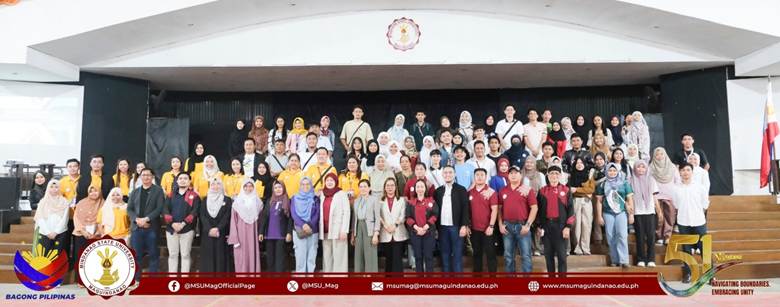
Strengthening Partnerships with Local Communities for the Protection and Sustainable Management of Shared Aquatic Ecosystems
Healthy rivers, lakes, wetlands, mangroves, and watersheds are essential to biodiversity, food security, and the livelihoods of communities. Their protection requires cooperation among academic institutions, government agencies, local government units (LGUs), and the people who depend on these resources. Through research collaborations, environmental monitoring, community consultations, and habitat conservation activities, the University works with local partners to promote the responsible management of shared aquatic and watershed ecosystems across the region.MinSuPala-IRDC: Bringing Research Institutions and Communities Together for Aquatic Ecosystem ManagementThrough the Mindanao-Sulu-Palawan Regional Research, Development, and Innovation Consortium (MinSuPala-IRDC), the University works with partner state universities and colleges, government agencies, LGUs, and community stakeholders to address environmental and resource-management concerns. On February 27, 2025, it hosted a stakeholders’ consultation that brought together researchers from four state universities and colleges, representatives of government agencies, local stakeholders, and fisherfolk associations. The discussions covered research findings concerning Ligawasan Marsh, Lake Buluan, the Rio Grande de Mindanao, and Lake Lanao, particularly on water quality, inland capture fisheries, watershed conditions, and socioeconomic factors affecting these ecosystems.The consultation provided an opportunity for researchers and stakeholders to discuss the implications of research findings and identify areas where scientific information could support local environmental planning and resource management. Participating institutions and agencies included representatives from MAFAR-BARMM, the Bangsamoro Planning and Development Authority, DOST-PCAARRD, and provincial environmental offices, among others. The discussions emphasized the importance of research-based recommendations in protecting aquatic habitats, conserving biodiversity, preventing pollution, and promoting sustainable inland fisheries.Researchers, government representatives, LGU officials, and community stakeholders participate in the MinSuPala-IRDC stakeholders’ consultation on research findings and environmental concerns affecting major inland water bodies in Mindanao.Partnership with Local Government Units for Indigenous Fish and Crop ConservationCollaboration with LGUs is also central to the second phase of the MinSuPala-IRDC initiative, titled “Establishment and Preservation of Indigenous Fish and Crop Products.” Supported by a ₱5-million (US$86,948.81) allocation from the Department of Budget and Management (DBM), the project seeks to identify and support the conservation and sustainable use of indigenous fish and crop resources.From July 23 to 25, 2025, project representatives conducted coordination meetings with LGUs in Cotabato City and the municipalities of Kabuntalan, Talitay, Datu Piang, and Northern Kabuntalan. These meetings helped establish coordination with local government partners and provided an opportunity to discuss community participation in the project.The team also conducted a Prioritization Tool Survey involving LGU representatives, community leaders, farmers, and fisherfolk. The activity gathered local perspectives on indigenous fish and crop species, biodiversity concerns, and conservation priorities. By involving communities and local institutions in identifying important resources and concerns, the initiative aims to ensure that research and development activities respond to local conditions and support the sustainable use of biological resources.Project representatives meet with LGU officials and community stakeholders during the July 2025 coordination activities and Prioritization Tool Survey for the MinSuPala-IRDC project on indigenous fish and crop products.Collaboration with MENRE-EMS for River Monitoring and ProtectionPartnerships with environmental agencies and local governments also support the monitoring and protection of rivers. On June 30, 2025, the College of Forestry and Environmental Science worked with the Ministry of Environment, Natural Resources and Energy–Environmental Management Services (MENRE-EMS) in launching the Brar River Pilot Water Sampling Program and continuing water-quality monitoring activities in the Simuay River.The activity included an orientation on standardized water-sampling procedures and waterbody classification for faculty members, students, and LGU personnel. The discussions provided participants with guidance on the proper conduct of water sampling and the assessment of river conditions, consistent with the principles and requirements of Republic Act No. 9275, or the Philippine Clean Water Act of 2004. The involvement of local government personnel and community stakeholders helps strengthen coordination and awareness of the importance of maintaining river water quality.This collaboration builds on the University's participation in the Adopt-an-Estero program, established in 2022. Under this partnership, MENRE-EMS conducts regular water sampling at three established monitoring stations along the Simuay River, with the University serving as an institutional partner. These activities provide a continuing basis for cooperation in environmental monitoring and river protection.MSU-Maguindanao faculty members, MENRE-EMS personnel, and local stakeholders participate in an orientation and knowledge-sharing session on Brar River waterbody classification and the pilot water-sampling activity in 2025.Partnership with Indigenous Teduray Communities and Local Stakeholders for Watershed ProtectionThe protection of aquatic ecosystems also requires attention to the watersheds and surrounding landscapes that influence the condition of rivers and other inland water bodies. In 2025, the University supported the development of the South Upi Forest Watershed Enhanced Protection and Management Plan for 2025–2030, funded by the Ministry of Science and Technology–BARMM (MOST-BARMM).The initiative covers approximately 1,894 hectares across five barangays—Romangaob, Looy, Bongo, Kigan, and Pandan—in the Municipality of South Upi, Maguindanao del Sur. The planning process involved consultations with LGUs, Indigenous Teduray communities, farmers, and other local stakeholders. Baseline data gathering, GIS mapping, biodiversity and habitat profiling, and field observations were undertaken to help establish the basis for watershed planning.The proposed management framework identifies priority directions for watershed protection, including sustainable land use, agroforestry, assisted natural regeneration, native species planting, habitat conservation, and community-based environmental protection. By involving Indigenous communities and local institutions in the planning process, the initiative recognizes the importance of local knowledge and participation in managing forest and watershed resources. Protecting these areas also supports the long-term condition of connected rivers and aquatic habitats.MSU–Maguindanao and MOST–BARMM research team members, together with local stakeholders, during the field assessment and consultation for the South Upi Forest Watershed Enhanced Protection and Management Plan.Collaboration with Partner Universities and Communities for Mangrove Habitat RestorationCooperation among academic institutions and local stakeholders was further demonstrated through a mangrove-planting activity at the Baluan Mangrove Sanctuary on November 28, 2025. The activity was conducted with partner state universities and colleges under MinSuPala-IRDC as part of the environmental action component of the 1st Mindanao Forum on Waters and Natural Resources, held from November 26 to 28, 2025, in General Santos City.A total of 107 mangrove seedlings were planted during the activity. The initiative provided a practical opportunity for participating institutions and partners to take part in mangrove habitat conservation and promote awareness of the importance of coastal and aquatic ecosystems. It also complemented the forum's broader discussions on water resources, watershed resilience, inland fisheries, aquatic biodiversity, sustainable livelihoods, and environmental governance.Representatives of partner universities and participating stakeholders plant 107 mangrove seedlings at the Baluan Mangrove Sanctuary on November 28, 2025, as part of the environmental action activity of the 1st Mindanao Forum on Waters and Natural Resources.Sustaining Partnerships for Shared Ecosystem ProtectionThese collaborations demonstrate the importance of working with local communities, LGUs, government agencies, Indigenous groups, and partner academic institutions in addressing shared environmental concerns. From river monitoring and watershed planning to biodiversity prioritization and mangrove planting, the activities provide opportunities to combine research, local knowledge, and community participation in environmental management.
October 20, 2025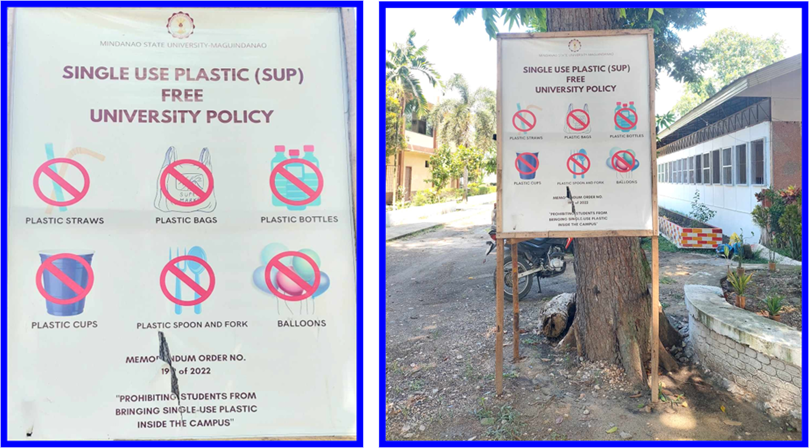
Toward a Single-Use-Plastic-Free Campus
MSU–Maguindanao acts on plastic waste through three instruments: the MSU Sustainability Policy (BOR Resolution No. 358, s. 2023), the Zero Single-Use Plastics Policy (BOR Resolution No. 18, s. 2024), and the Chancellor’s Memorandum Order No. 149, s. 2022.Article VII, Section 1 of the Sustainability Policy sets out the specific measures: reduce food and plastic waste from the campus food system (Section 1(f)); use reusable, renewable and recyclable food packaging (Section 1(g)); prohibit Styrofoam, single-use plastic bags and disposable food accessories (Section 1(h)); and promote “Bring your own tumbler/container/utensil” and “Clean as you go” (Section 1(i)). The Zero Single-Use Plastics Policy applies across the MSU System and requires each campus to set implementing rules for its own operations.Memorandum Order No. 149, s. 2022, issued on 21 October 2022, prohibits students from bringing single-use plastics onto campus and directs the Security and Investigation Office to check bags for compliance. Campus signage declares MSU–Maguindanao a single-use-plastic-free university, banning plastic straws, bags, bottles, cups, spoons and forks, and balloons.The action plan applies these rules to campus offices, canteens, concessionaires, meetings and events: eliminating Styrofoam and disposable food accessories, requiring reusable containers and utensils, promoting recyclable packaging, and strengthening waste segregation and disposal, supported by information campaigns and monitoring of compliance.Campus signage for MSU–Maguindanao’s Single-Use Plastic-Free University PolicyMemorandum Order No. 149, s. 2022, prohibiting single-use plastics on campus.
September 27, 2025