SDG11
Sustainable Cities and Communities
Make cities and human settlements inclusive, safe, resilient and sustainable.
MSU–Maguindanao Promotes Indigenous Peoples’ Rights, Cultural Heritage, and Inclusion
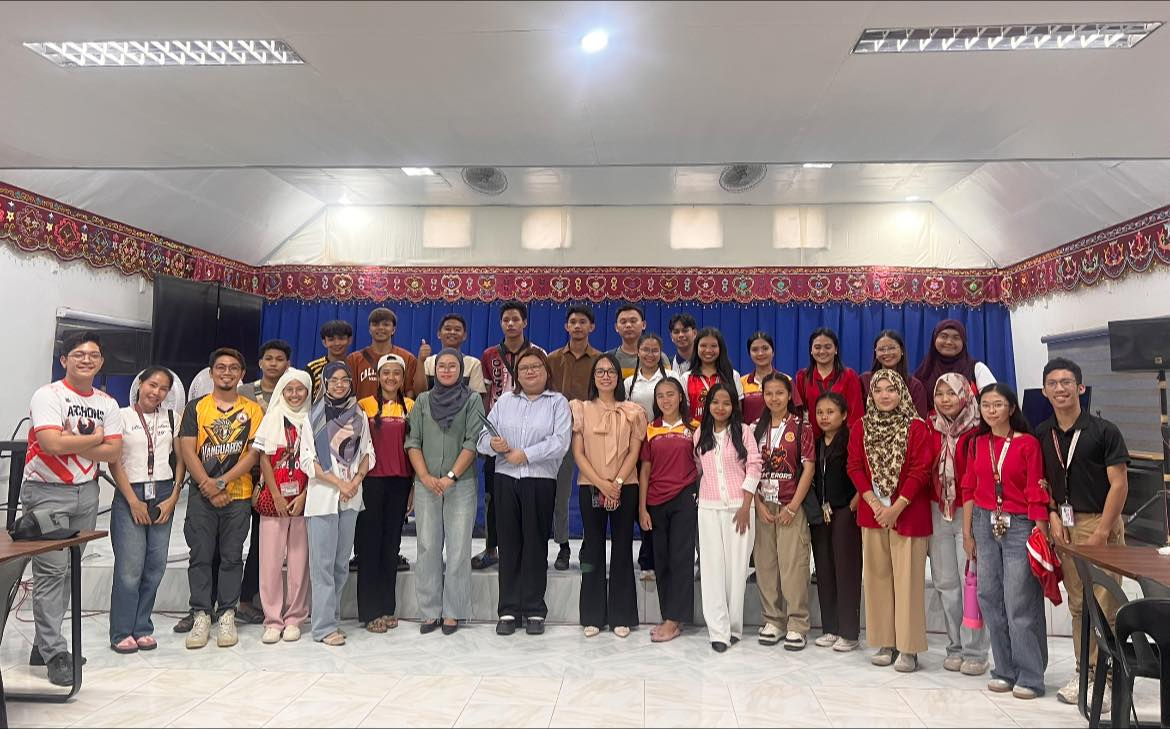
The Mindanao State University–Maguindanao (MSU–Maguindanao), through its Center for Cultural Affairs (CCA) and in collaboration with the Institute for Peace and Development in Mindanao (IPDM), held a dialogue on Indigenous Peoples’ rights at the University Training Center as part of the celebration of Indigenous Peoples’ Month.The event featured Atty. Rojean Romanes, faculty member of the MSU College of Law–Maguindanao Extension, who discussed the Indigenous Peoples’ Rights Act (IPRA), emphasizing the protection of ancestral domains, self-governance, social justice, and cultural integrity. Participants also engaged in discussions on the importance of recognizing Indigenous voices and protecting their rights within academic and community settings.IPDM Director Prof. Alvin Lois Pemberat highlighted the importance of inclusion and empowerment, while CCA Director Jihad A. Pelmin provided Indigenous students with an opportunity to share their experiences and challenges. Members of the Kétindég Indigenous Peoples Students Organization (KIPSO), the University Peace Club, the Sining Kandidilimudan Ensemble, and other students participated in the activity. Free legal consultations were also made available to students.By providing a platform for dialogue, cultural expression, and access to legal information, the initiative promotes inclusive and sustainable communities that respect the rights, identities, and heritage of Indigenous Peoples. These efforts support the broader objectives of Sustainable Development Goal 11 (SDG 11): Sustainable Cities and Communities, particularly strengthening inclusive and sustainable human settlements and safeguarding cultural heritage.The activity benefits Indigenous students and communities by increasing awareness of their legal rights, encouraging participation in institutional and community affairs, and fostering understanding among people from different cultural backgrounds. In the long term, such initiatives can help strengthen cultural preservation, reduce barriers to inclusion, and promote more equitable and respectful communities.Through initiatives like this, MSU–Maguindanao continues to foster a learning environment where cultural diversity is valued, Indigenous voices are heard, and respect for human rights contributes to peaceful and sustainable community development.
November 28, 2025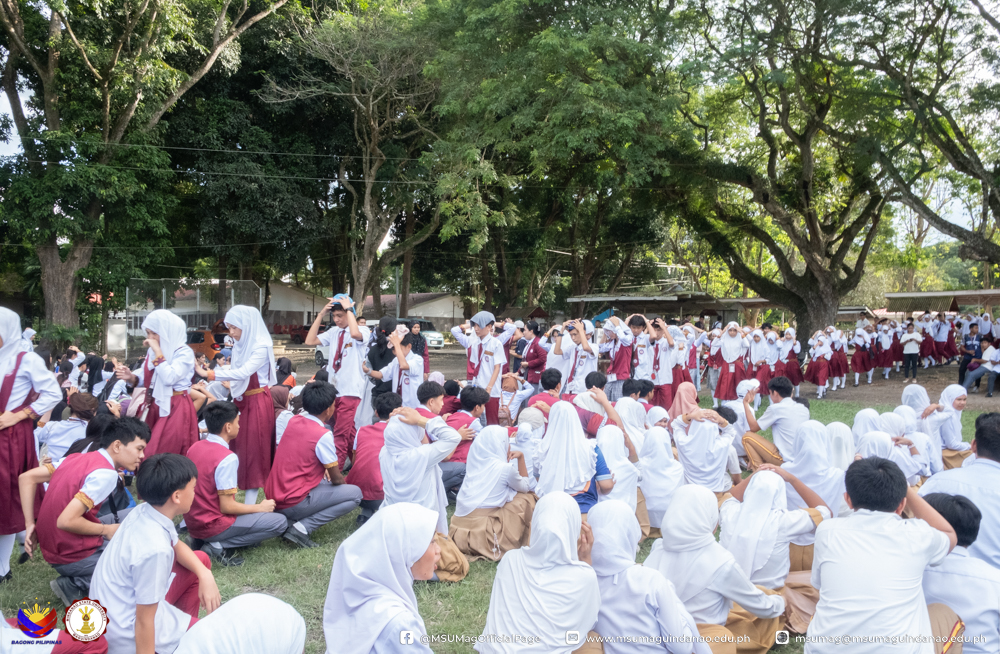
MSU–Maguindanao Conducts Earthquake Drill to Strengthen Campus Safety and Disaster Preparedness
The Mindanao State University–Maguindanao (MSU–Maguindanao) conducted an Earthquake Preparedness and Response Drill at the University field in partnership with the Bureau of Fire Protection–Datu Odin Sinsuat (BFP-DOS) and the Office of Civil Defense–Bangsamoro Autonomous Region in Muslim Mindanao (OCD-BARMM).The activity was conducted in line with National Disaster Risk Reduction and Management Council Memorandum No. 027, series of 2025, which called for participation in the Third Quarter Nationwide Simultaneous Earthquake Drill. Led by the University’s Disaster Risk Reduction and Management Office (DRRMO), the exercise began with an orientation on evacuation procedures and safety protocols before proceeding to the emergency simulation.Faculty members, staff, and students from the Integrated Laboratory Science High School, College of Public Affairs and Governance, College of Arts and Sciences, and other university offices and facilities participated in the drill. The activity aimed to strengthen awareness, reinforce proper emergency responses, and assess the effectiveness of campus evacuation procedures.Chancellor Bai Hejira Nefertiti M. Limbona emphasized that the safety of students and employees remains a priority of the University. Through regular drills and coordination with emergency response agencies, MSU–Maguindanao seeks to build a campus community that is informed, disciplined, and prepared to respond to earthquakes and other emergencies.The initiative supports the broader objectives of Sustainable Development Goal 11 (SDG 11): Sustainable Cities and Communities, particularly Target 11.5, which focuses on reducing deaths, the number of people affected, and economic losses caused by disasters, and Target 11.b, which promotes integrated policies and plans for disaster risk reduction and resilience.Students, faculty, staff, patients, and other campus stakeholders benefit from improved emergency awareness and clearer evacuation procedures. In the long term, consistent preparedness activities can help reduce risks, minimize injuries, and strengthen the University’s capacity to protect lives during emergencies.Through its continued collaboration with disaster management and emergency response agencies, MSU–Maguindanao reinforces its commitment to creating a safer, more resilient, and disaster-ready learning environment for the university community.
October 22, 2025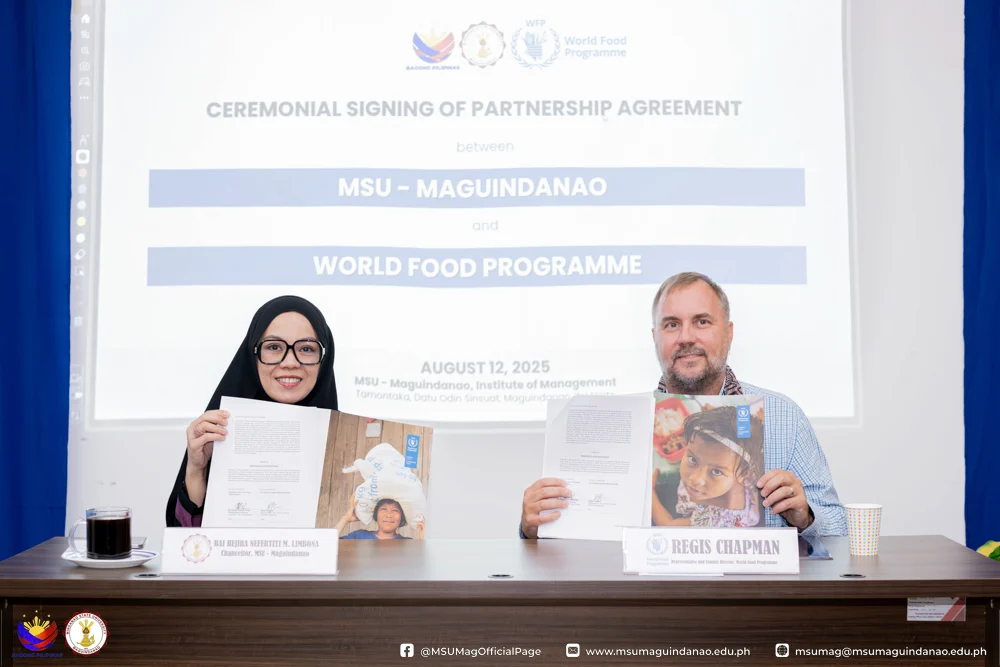
MSU–Maguindanao and WFP Strengthen Food Security and Climate Resilience in BARMM
The Mindanao State University–Maguindanao (MSU–Maguindanao) and the United Nations World Food Programme (WFP) formalized a partnership to strengthen food security, improve local livelihoods, and build climate-resilient communities across the Bangsamoro Autonomous Region in Muslim Mindanao (BARMM).The Memorandum of Agreement (MOA), signed at the MSU–Maguindanao Institute of Management by Chancellor Bai Hejira Nefertiti M. Limbona and WFP Representative and Country Director Regis Chapman, brings together the University’s research and academic expertise with WFP’s international experience in addressing hunger, nutrition, and climate-related challenges.Under their 2025–2027 cooperation work plan, the partners will support smallholder farmers through climate-smart agriculture training, promote food security and nutrition education, develop Local Climate Change Adaptation Plans (LCCAPs) in priority barangays, and strengthen watershed management, post-harvest loss reduction, agricultural value addition, and cooperatives. These initiatives build on earlier community-based planning activities that identified livelihood challenges and environmental pressures in Maguindanao del Sur and Maguindanao del Norte.The partnership recognizes that sustainable communities depend on reliable food supplies, resilient livelihoods, responsible natural resource management, and effective preparation for environmental risks. Its intended beneficiaries include smallholder farmers, agricultural cooperatives, rural households, and vulnerable communities whose livelihoods are affected by food insecurity and climate change.These efforts support the broader goals of Sustainable Development Goal 11 (SDG 11): Sustainable Cities and Communities, particularly strengthening resilience to disasters and reducing the environmental pressures that threaten communities. By equipping local communities with practical knowledge, improving agricultural practices, and supporting climate adaptation planning, the collaboration can help create safer, more inclusive, and more sustainable settlements.Chancellor Limbona emphasized the University's commitment to developing research-based solutions that respond to the needs of the Bangsamoro people, particularly vulnerable and underserved communities. WFP Representative and Country Director Regis Chapman likewise highlighted the value of combining global expertise with local knowledge to address hunger and strengthen community resilience.Through this partnership, MSU–Maguindanao and WFP aim to deliver lasting benefits by strengthening local capacities, supporting sustainable livelihoods, and helping communities prepare for future environmental challenges. The collaboration reinforces the University's role in advancing research, extension, and inclusive development toward a more resilient and sustainable BARMM.
September 4, 2025Progress and Info
Make cities and human settlements inclusive, safe, resilient and sustainable.
Sustainable Cities and Communities