SDG7
Affordable and Clean Energy
Ensure access to affordable, reliable, sustainable and modern energy for all.
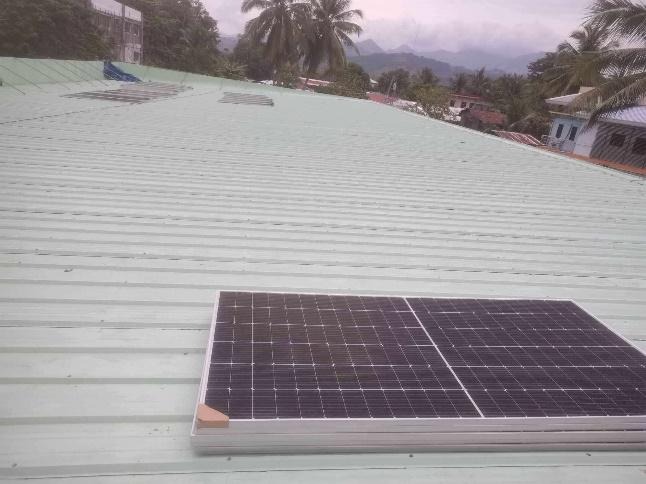
Augmentation of Energy Source Through Solar Power of Infirmary Hospital
The Mindanao State University–Maguindanao upgraded its campus health infrastructure by installing a dedicated solar power system at the Infirmary Hospital. The project integrated high-capacity solar panels and advanced inverter storage units directly onto the facility's roof and utility rooms to guarantee uninterrupted medical power.Solar Panel installed at the Roof of the InfirmaryThis setup harnesses renewable energy to strengthen daily grid stability, protecting essential health services from sudden power disruptions. By turning to clean solar technology, the hospital cuts down on conventional electricity expenses while maintaining steady, reliable care for students and staff.This infrastructure milestone directly supports substantially increasing the share of renewable energy in the global energy mix. Through these targeted campus upgrades, MSU–Maguindanao ensures that clean energy directly powers essential community services when they matter most.
December 31, 2025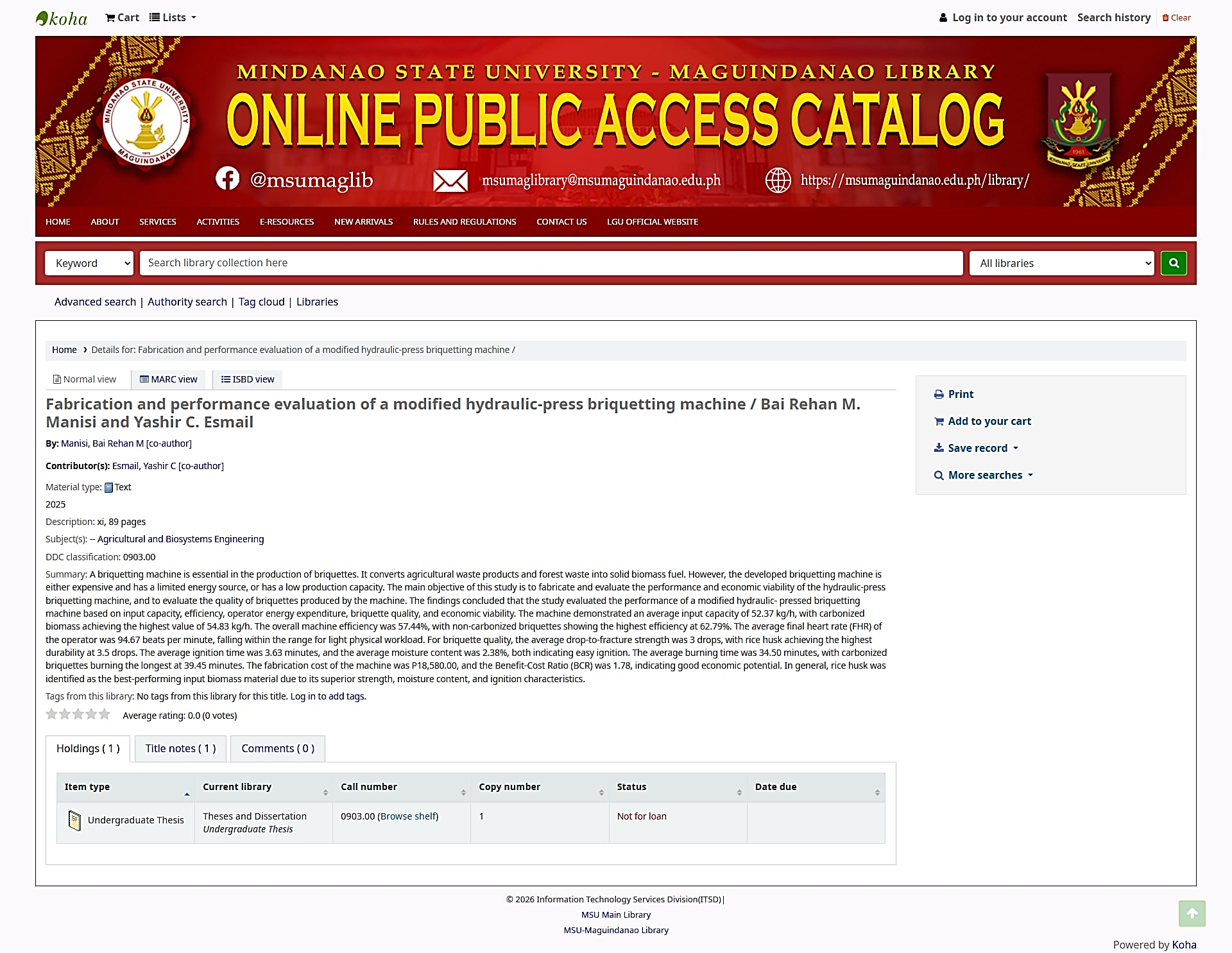
A Modified Hydraulic-Press Briquetting Machine
Bai Rehan M. Manisi and Yashir C. Esmail from Mindanao State University–Maguindanao engineered a modified hydraulic-press briquetting machine to transform rural agricultural residues like rice husk and sawdust into valuable biomass fuel. The researchers built a locally accessible press designed to curb improper waste disposal while offering a practical resource-recovery solution by seeking an alternative to expensive or energy-intensive commercial models.Research found in Online Public Access CatalogThe team systematically tested the machine's operational performance, input capacity, briquette quality, and economic viability through structured trials. Their evaluation demonstrated an average input capacity of up to 54.83 kg/h with carbonized biomass, alongside high overall briquetting efficiency and strong economic potential. Furthermore, performance metrics revealed that rice husk yields exceptional durability, easy ignition, and steady burning characteristics.This initiative supports universal access to affordable, reliable and modern energy services. By converting agricultural by-products into efficient solid fuel, this locally developed machine empowers rural communities to turn farm waste into reliable energy.ReferenceManisi, B. R., & Esmail, Y. C. (2025). Fabrication and performance evaluation of a modified hydraulic-press briquetting machine [Unpublished undergraduate thesis]. Mindanao State University–Maguindanao.
December 21, 2025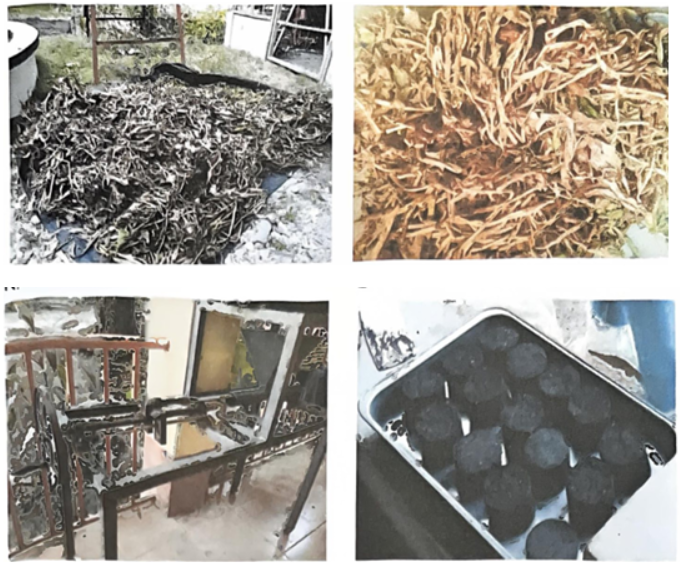
Production and Characterization of Biomass Charcoal Briquettes
Angelica F. Dumaguite from Mindanao State University–Maguindanao examined the dual challenge of clearing invasive aquatic weeds and curbing dependence on wood charcoal by converting problematic water hyacinths into renewable solid fuel. Gathering plants from local waterways near the Pulangi River, the research investigated how different biomass-to-binder formulations affect the quality and burning efficiency of alternative charcoal briquettes.Biomass CharcoalThe study evaluated the physical, combustion, and thermophysical properties of briquettes produced using corn starch and cassava starch binders across multiple mix ratios. Utilizing a manually operated briquetting machine developed on campus, the work demonstrated a practical engineering approach to resource recovery. Results showed that binder selection significantly influenced structural durability, with specific ratios delivering optimal moisture content, ignition speed, and steady combustion performance.This research directly advances the substantial increase in the share of renewable energy in the global energy mix. By turning waterway weeds into a viable energy source, this initiative provides communities with a sustainable alternative to conventional wood charcoal. ReferenceDumaguite, A. F. (2024). Production and characterization of biomass charcoal briquettes from water hyacinth (Eichhornia crassipes) using different binders at various ratios [Unpublished undergraduate thesis]. Mindanao State University–Maguindanao.
December 20, 2025Progress and Info
Ensure access to affordable, reliable, sustainable and modern energy for all.
Affordable and Clean Energy