SDG6
Clean Water and Sanitation
Ensure availability and sustainable management of water and sanitation for all.
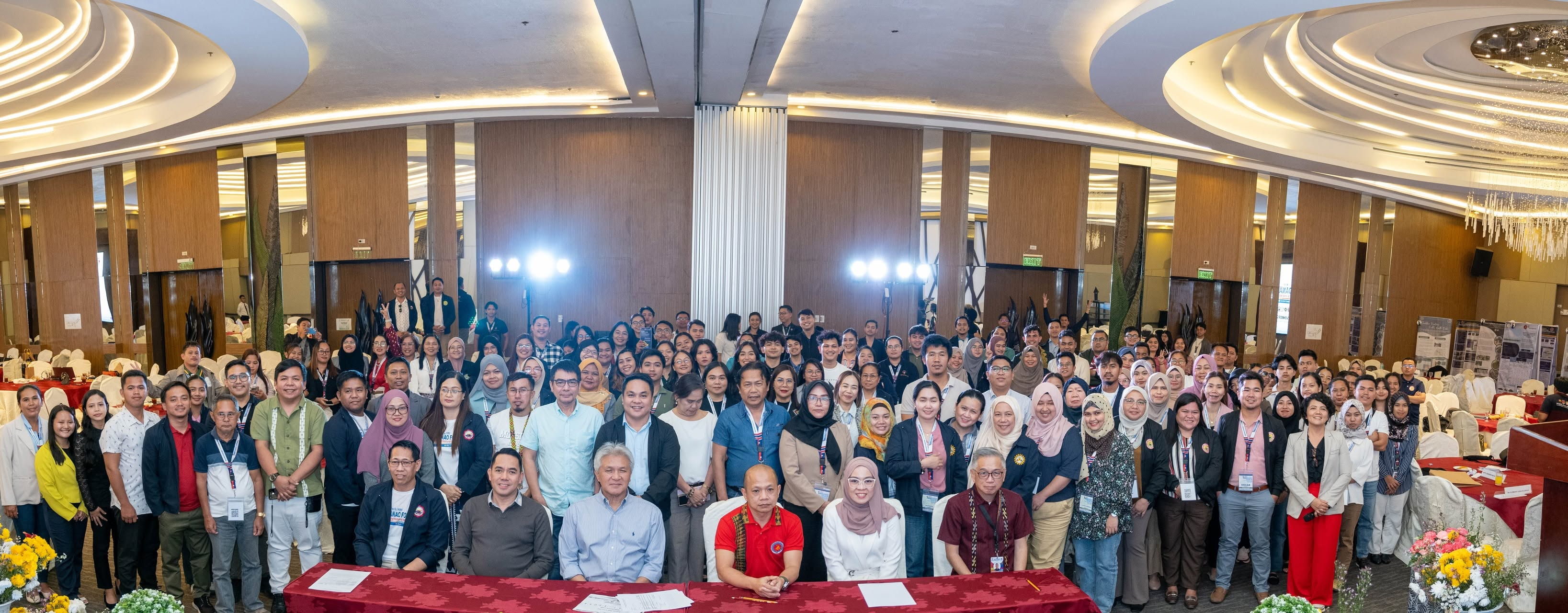
Cross-Sectoral Dialogues on Mindanao’s Waters and Women, Peace and Security Initiated and Joined with Government, NGOs, and Industry
Over 190 researchers, policymakers, and community leaders met at the 1st Mindanao Forum on Waters and Natural Resources, the largest of the conferences, forums, and workshops on sustainable development with government, non-government organizations, and industry that Mindanao State University–Maguindanao initiated or joined between January and November 2025. Together, these dialogues covered water governance, biodiversity, peace and security, elections and governance, education, and institutional planning.1st Mindanao Forum on Waters and Natural ResourcesThe University convened the forum at the Greenleaf Hotel in General Santos City from November 26 to 28, 2025. The University leads the Mindanao-Sulu-Palawan Innovative Research and Development Consortium (MinSuPala-IRDC), a network of state universities funded by the Department of Budget and Management to study Mindanao’s inland waters. Decisions about the region’s lakes, rivers, and marshes have often been made without reliable local data, and the forum was organized to put research findings in front of the officials who manage these resources. Held with the Mindanao Development Authority (MinDA) and the National Research Council of the Philippines under the theme “Empowering Mindanao through M.I.N.A.: Mobilized Collaboration, Integrated Knowledge, Nurtured Innovation, and Amplified Local Wisdom,” it brought these groups together with faculty experts, local government officials, and development partners.Chancellor Bai Hejira Nefertiti M. Limbona, as Consortium Lead, opened the forum by setting its purpose: to move from gathering data to producing policy solutions for Mindanao’s water basins. MinDA Executive Director Undersecretary Dr. Janet M. Lopoz delivered the keynote, and plenary speakers included Dr. Gisela P. Concepcion of the University of the Philippines Diliman, Dr. Rex Victor O. Cruz of the University of the Philippines Los Baños, and Cardinal Orlando B. Quevedo, OMI, of the Mindanao River Basin Management Council. Industry partners Shimadzu Philippines Corporation and Guill-Bern Corporation presented technology and laboratory innovations. Researchers presented findings on Lake Lanao, Ligawasan Marsh, Lake Buluan, Lake Sebu, the Rio Grande de Mindanao, and the Pulangi River, and the MSU–Maguindanao team presented five studies on Ligawasan Marsh and the Sifaran Watershed. Policy workshops then asked government and community participants to turn the findings into local conservation strategies; the Innovate for Mindanao Hackathon invited young people to design technology-based solutions; and the consortium turned over its Phase 1 reports to DBM Region XII Director Akmad J. Usman, CPA, CESO III. Delegates closed the program by planting 107 mangrove seedlings at the Baluan Mangrove Sanctuary.Participants for the 1st Mindanao Forum on Waters and Natural Resources, General Santos City, November 26-28, 2025.An MSU–Maguindanao poster shares water quality findings from Ligawasan Marsh with policymakers and fellow researchers.The forum built on a year of workshops with the people who manage these waters. On February 27, 2025, the University hosted the MinSuPala–IRDC Stakeholders’ Consultation, where four state universities and colleges presented findings on Ligawasan Marsh, Lake Buluan, the Rio Grande de Mindanao, and Lake Lanao to MAFAR–BARMM, the Bangsamoro Planning and Development Authority, DOST–PCAARRD, the provincial environment office, environmental organizations, fisherfolk associations, and six local governments, who helped turn them into policy recommendations. On July 30, 2025, the Chancellor and DBM Region XII Director Akmad J. Usman planned the forum with MinDA Secretary Leo Magno and Executive Director Janet M. Lopoz, and in October 2025 the University’s team held validation workshops with the local governments of Cotabato City, Kabuntalan, Northern Kabuntalan, Talitay, and Datu Piang.4th Biennial Conference on Tropical BiodiversityThe University also co-hosted an international scientific conference. On July 23, 2025, it joined the Faculty of Forestry of Hasanuddin University in Indonesia, Tomsk Polytechnic University in Russia, Universiti Teknologi MARA in Malaysia, and the University of North Sumatra as co-host of the 4th Biennial Conference on Tropical Biodiversity, held in Makassar and online under the theme “Mainstreaming Multidisciplinary Approaches to Biodiversity Studies for Sustainable Development.” Ten University faculty researchers presented 13 studies on biodiversity, forest management, watershed protection, carbon stocks, and climate change adaptation to researchers and practitioners from Indonesia, Russia, Malaysia, Germany, and the Philippines.MSU–Maguindanao faculty present their studies at the 4th Biennial Conference on Tropical Biodiversity, co-hosted with Hasanuddin University, July 23, 2025.Women, Peace and Security Dialogue at the Philippine ConferenceOn October 29, 2025, the University convened “From Classroom to Community: Localizing Women, Peace and Security through Education,” one of 20 side events of the 2025 Philippine Conference on Women, Peace and Security at Summit Hall 2 of the Philippine International Convention Center in Pasay City. University officials and faculty from planning, research and extension, and the Diploma in Women, Peace and Security (DWPS) Technical Working Group explained how the national Women, Peace and Security agenda is built into the University’s instruction, research, and extension, and how the DWPS curriculum draws on community knowledge, including the guidance of community elders. They also presented the University’s extension work with about 161 women in Camps Abubakar, Badre, and Omar. The session closed with the launch of the DWPS learning book “Dialogue Beyond Borders.” Its 18 participants came from government, civil society, the financial sector, BARMM institutions, and the DWPS alumni community. A University delegation led by Chancellor Limbona took part in the full conference from October 28 to 30, where the Chancellor shared the program’s materials with Solicitor General Darlene Berberabe.University officials and DWPS faculty lead a dialogue with government, civil society, and academic participants on Women, Peace and Security education, Summit Hall 2, PICC, October 29, 2025.Stakeholders’ ConsultationCloser to campus, more than 200 participants from local governments, civil society organizations, health and public works agencies, parents, and alumni joined the annual Stakeholders’ Consultation of the Office of the Vice Chancellor for Planning and Development on February 28, 2025, at the DOS Gymnasium, reviewing the University’s proposed 2026 programs and its draft Research, Extension, and Development Agenda 2025–2030.Students raise their questions with a resource person during the Stakeholders’ Consultation, February 28, 2025.Local government, health agencies, civil society, parents, and alumni review the University’s 2026 plans at the Stakeholders’ Consultation, February 28, 2025.Forums on Elections and GovernanceThe University also convened forums on elections and governance. On January 31, 2025, the Institute for Peace and Development in Mindanao and the Supreme Student Council, with the Bangsamoro Youth Commission (BYC), held the Voters’ Empowerment Forum for the Youth at the DOS Gymnasium for about 1,300 students. BYC Commissioner Nasserudin D. Dunding, COMELEC Election Officer III Bai Maceda L. Abo, Gerardo T. Concepcion III of the Speakers’ Bureau on the Bangsamoro Electoral Code, and Mr. Saiful Islam Gayak spoke on youth voting, the Bangsamoro Electoral Code of 2023 and the Bangsamoro Parliamentary Districts Act of 2024, election offenses, and a religious perspective on elections, and students practiced voting on an Automated Counting Machine. On November 14, 2025, the BA Political Science Program hosted the 1st PPSA President’s Lecture Forum with the Philippine Political Science Association, the professional association of the country’s political scientists, where Prof. Dennis C. Coronacion spoke on political dynasties, patronage, and corruption before students, faculty of Ateneo de Davao University, and Grade 12 learners from four public schools, and the two institutions signed a Memorandum of Understanding.COMELEC Election Officer III Bai Maceda L. Abo demonstrates the Automated Counting Machine to students at the Voters’ Empowerment Forum for the Youth, January 31, 2025.Chancellor Bai Hejira Nefertiti M. Limbona and PPSA President Dr. Reynold D. Agnes sign the partnership agreement after the forum.Dialogues with Government, International Agencies, and NGOsThe University also joined dialogues convened by others. On September 25, 2025, two student leaders joined the Third-Party Monitoring Team’s multi-sectoral youth dialogue on the implementation of the peace agreements between the Government of the Philippines and the Moro Islamic Liberation Front, in Cotabato City. On October 30, 2025, Vice Chancellor for Academic Affairs Dr. Marissa N. Parcon and the program chairs of the College of Engineering and Computing Sciences met the Japan International Cooperation Agency (JICA) and Zuitt Learning Institute under the Industry Development through Engineering Education in BARMM initiative to explore how industry-based training could be brought into the University’s laboratory courses. On October 6, 2025, Chancellor Limbona met Islamic Relief Philippines, a humanitarian non-government organization, to explore joint research, psychosocial assessments in flood-affected areas, livelihood and Halal food system training, and capacity-building for its beneficiaries, and the two agreed to hold a Training of Trainers for barangay officials and an internship for FPE 101 students.Students of MSU-Maguindanao sharing their insights on the implementation of the peace agreementsMSU–Maguindanao academic officials consult JICA and Zuitt Learning Institute on industry-aligned engineering education, October 30, 2025The University also brought an international non-government organization to campus. On October 11, 2025, the Division of Student Affairs and the Supreme Student Council, with Initiatives of Change, held the 3rd International Values Transformation Leadership Training at the University’s Training Center, where speakers from South Korea, Taiwan, India, and Lebanon discussed ethical leadership, values formation, and inner transformation with student leaders.Student Supreme Council members' discussions with the speakers during the 3rd International Values Transformation Leadership TrainingWhat the Dialogues AchievedThese dialogues produced concrete results. In October 2025, five local governments around Ligawasan Marsh validated the consortium’s findings and selected priority indigenous crops and fish for conservation. Stakeholder comments shaped the final research agenda, which the Board of Regents approved on June 10, 2025. The University, JICA, and Zuitt agreed on laboratory instruction as their first joint area of work. The consortium will carry the forum’s recommendations into its 2026 work, and the University plans to hold the forum regularly. The University will continue to convene and join such dialogues, using its annual Stakeholders’ Consultation and the consortium’s forums to bring the results of its research and planning back to the agencies, industries, and communities that use them.
November 29, 2025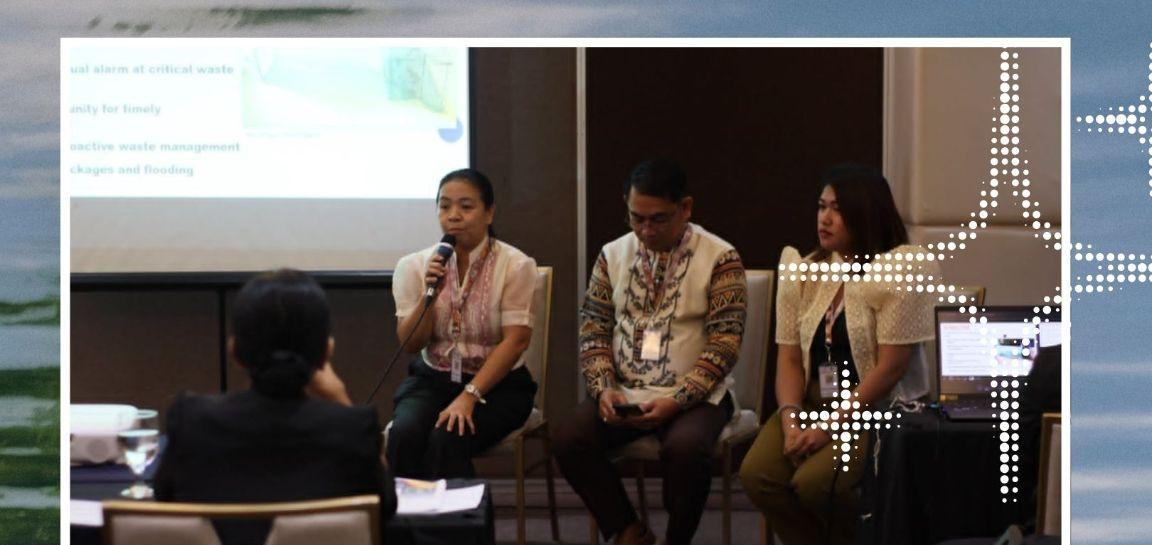
MSU-Maguindanao Researcher Builds Low-Cost Sensor to Catch Clogged Drainage Before It Floods Cotabato City
“S.A.L.A.: Smart Automatic Alert System for Solid Waste Drainage Filters,” a research project presented at the ATU-Net International Conference on Innovation and Entrepreneurship in Computing, Engineering, and Science Education (ATU-Net InvENT 2025) in Cagayan de Oro City in July 2025, introduces a low-cost early-warning device for one of Cotabato City's persistent problems: drainage canals that clog with solid waste and send floodwater into residential streets. The project was developed by Asst. Prof. Always A. Germo of Mindanao State University-Maguindanao (MSU-Maguindanao), carried out through an interschool collaboration that paired the University's own research capacity with partner institutions to design a practical, locally built response to the clogging that routinely afflicts the city's drainage system, particularly the flood-prone barangay of RH 8.Asst. Prof. Germo (left, with microphone) discussing the S.A.L.A. prototype during the conference's panel session.Germo's team built a drainage filtration prototype around an Arduino-based capacity sensor, paired with a buzzer and LED indicators that trigger once waste buildup in a filter reaches a critical level, programmed using the Arduino and Processing platforms. Using a descriptive quantitative design built on grand-mean analysis, the researchers field-tested the prototype at RH 8, measuring how far the buzzer's sound and the LED's light could still be reliably detected: the buzzer registered as “highly audible” within 15 meters and remained “moderately audible” at 30 meters, while the LED signal held “very good visibility” out to 21 meters and stayed visible at the full 30-meter test distance. The device was then evaluated on sensing accuracy, buzzer performance, its effectiveness at flagging clogging, accessibility and ease of use, and alarm reliability.Across every one of those measures, the prototype scored “high functionality,” giving Germo's team evidence that a simple, inexpensive sensor can catch a clogging drainage filter before it fails outright. That early catch is the point: by flagging a blockage before it floods a canal, the device supports cleaner water flow, keeps solid waste from building up unseen in drainage systems, and gives maintenance crews the lead time to clear a filter instead of responding to a flood already underway, work aimed squarely at reducing pollution and improving water quality at the neighborhood level.Presented under the conference's Sustainable Development theme, the research gave MSU-Maguindanao a venue to share a homegrown engineering solution with an international academic audience and positions the prototype for further testing and possible field deployment. Cotabato City's drainage-dependent barangays stand to gain a low-cost monitoring tool once that next step is taken, and Germo's work adds to MSU-Maguindanao's growing body of practical, locally grounded research on water and sanitation management in BARMM.
August 31, 2025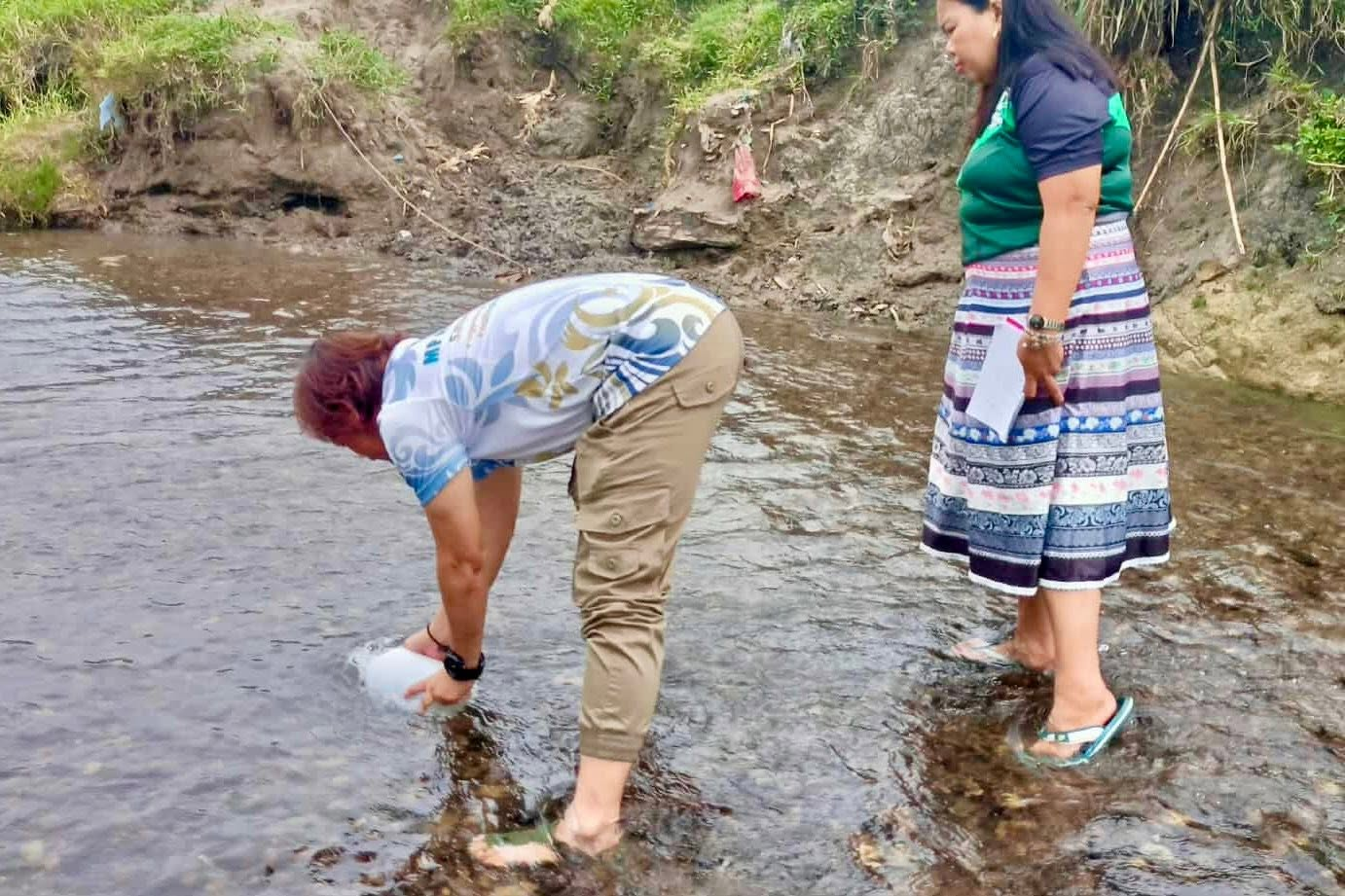
MSU-Maguindanao Joins BARMM MENRE in Launching Brar River Pilot Water Sampling Program
TAMONTAKA, Maguindanao del Norte - Mindanao State University-Maguindanao (MSU-Maguindanao), through its College of Forestry and Environmental Studies (CFES), joined the BARMM Ministry of Environment, Natural Resources and Energy (MENRE) and the local government of Datu Odin Sinsuat for the launch of the Brar River Pilot Water Sampling Program, with an orientation session held at the CFES Hall on June 30, 2025.Water Sampling in Brar RiverLed by MENRE's Environment Management Services (EMS) under Minister Akmad A. Brahim, the orientation introduced faculty, students, and partner stakeholders to waterbody classification and standardized protocols for water sampling and monitoring, in line with Republic Act No. 9275, the Clean Water Act. CFES Dean Dr. Rowena Benavides led the MSU-Maguindanao contingent, alongside Engr. Muslimin Paglala representing the LGU of Datu Odin Sinsuat, building on the two institutions' Adopt-an-Estero partnership formalized in 2022.Consistent, standardized water sampling is what turns isolated readings into evidence that can guide real water-resource decisions, and that is exactly what this program is built to produce, feeding directly into efforts to improve water quality through regular monitoring and to strengthen the region's capacity for sustainable water-resource management. EMS continues to track Simuay River through three established sampling stations under the same standards, giving MSU-Maguindanao faculty, students, and researchers a live setting to apply their training, the LGU of Datu Odin Sinsuat and MENRE a shared technical basis for environmental decisions, and Bangsamoro communities along the river a growing body of evidence to support the protection of the water they depend on.The program extends MSU-Maguindanao's environmental role beyond the campus, with the University expecting the Adopt-an-Estero partnership and its continuing river monitoring to open further collaboration with schools, civil society, and other stakeholders working on water-resource protection across BARMM.
July 5, 2025Progress and Info
Ensure availability and sustainable management of water and sanitation for all.
Clean Water and Sanitation